
August 18, 2023
I have lived in Minnesota most of my life, but have never visited the state’s only national park. We are staying at a place near Orr, MN, only an hour’s drive, so today, we took off to remedy this.
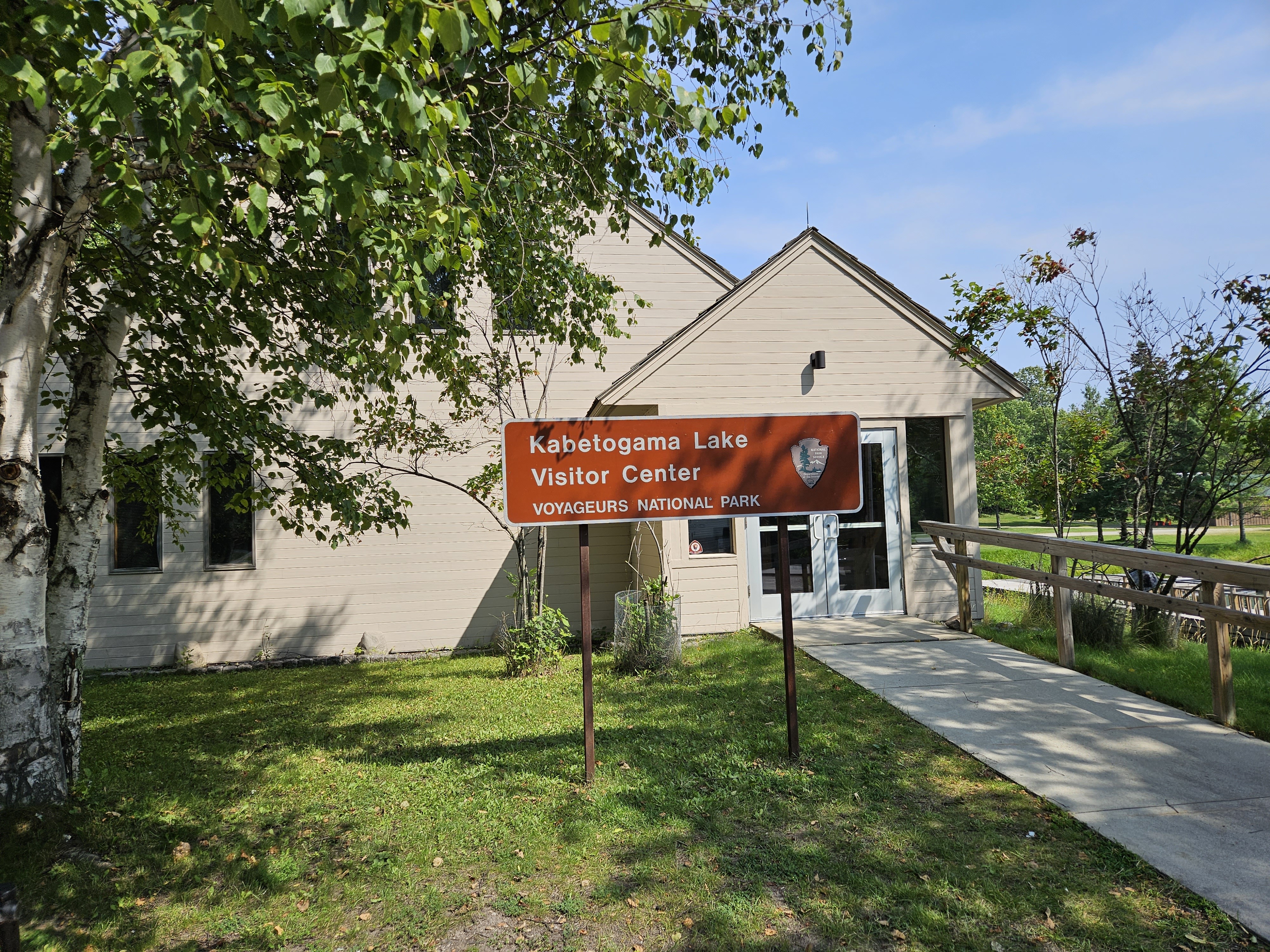
Voyageurs National Park was established in 1975, and includes dozens of lakes, the four largest of which are: Rainy, Kabetogama, Namakan, and Sand Point. The park has 655 miles of shoreline, more than 500 islands, and several campsites and over 50 miles of trails. The northern edge of the park is on the Canadian border in Ontario Province. There are three visitor centers: Ash River, Kabetogama and Rainy Lake. Kabetogama was closest, so we headed there. There are a few exhibits in the visitor center, and we watched a short film about the park’s history.
This area has been occupied by humans for almost 10,000 years, moving here after the glaciers receded. Around 8,000 years ago, nomadic peoples hunted, gathered grains, and fished here. French fur traders, called voyageurs, came in the late 1600s. During the 1700s, demand for beaver fur, increased their presence. These voyageurs traded and interacted with the Ojibwe who where the primary Native American residents. The voyageurs paddled their canoes through these lakes and rivers, transporting goods east and west. A 1783 treaty established part of the trade route as the boundary between the US and Canada. Boaters need to be aware of the boundary so they don’t accidentally cross between countries.
Rainy Lake experienced a mini-gold rush in the late 1800s. George Davis found a vein of gold-bearing quartz on Little American Island in 1893. The Little America Mine was developed, along with Rainy Lake City. Several more mines followed (there are 13 mining sites in the northwestern part of the park,) but very little gold was found here. The industry went bust after only five years, and Rainy Lake City disappeared.
Voyageurs was first proposed as a park in 1891, by people who wanted to keep encroaching industry at bay. It took 80 years for Congress to authorize it as our nation’s 36th National Park in 1975.
This was just a day trip. The best way to explore the park would be by boat, and rangers do lead seasonal boat tours. In lieu of that, there are several local firms that rent boats, including houseboats. Still, we walked along the shore line at a couple of locations, and enjoyed the views. Sadly, the day was a little hazy due to the wildfires in western Canada. There are some active fires as close as Thunder Bay, only a couple hundred miles away. Today’s air quality was moderate.


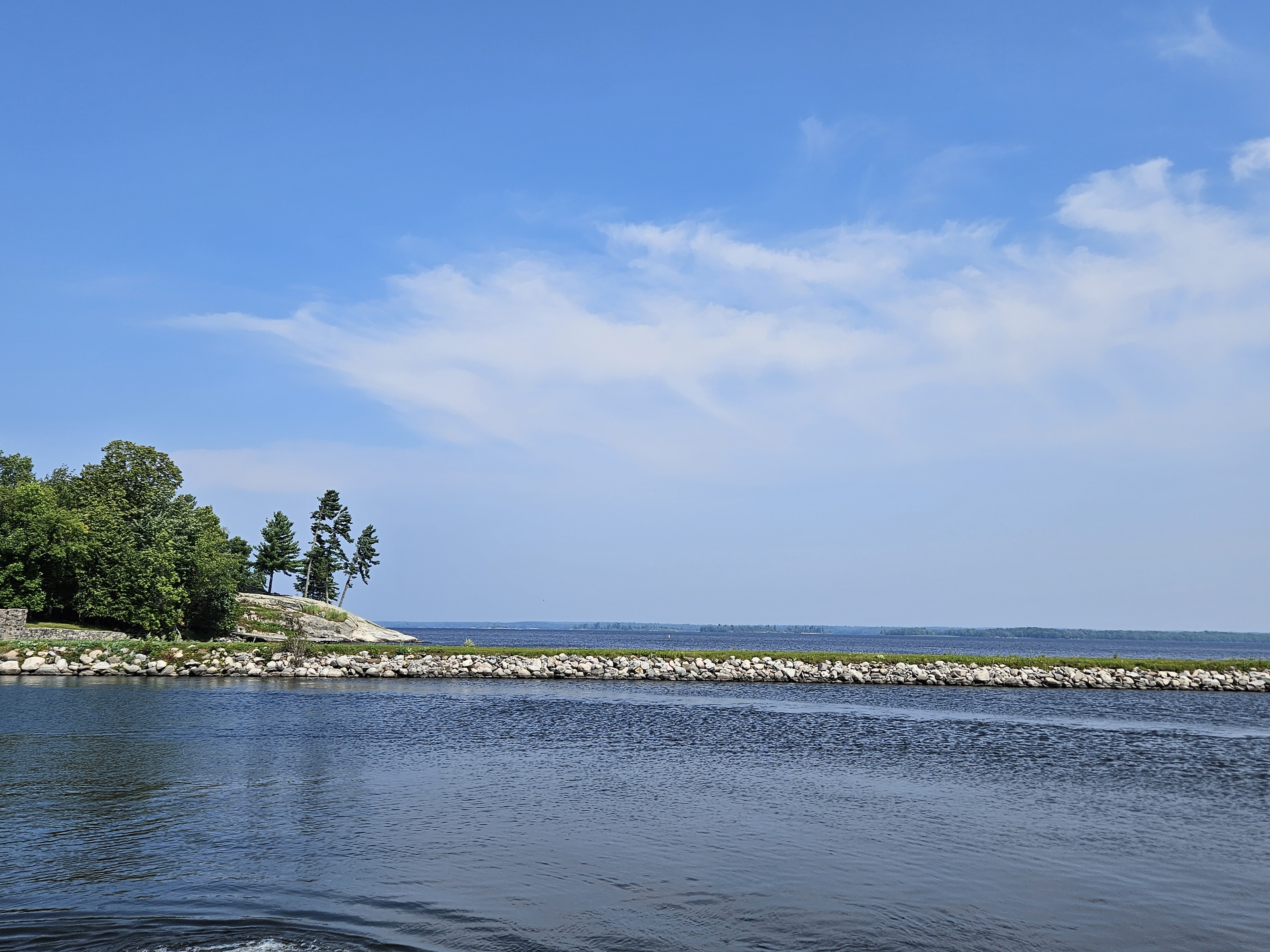
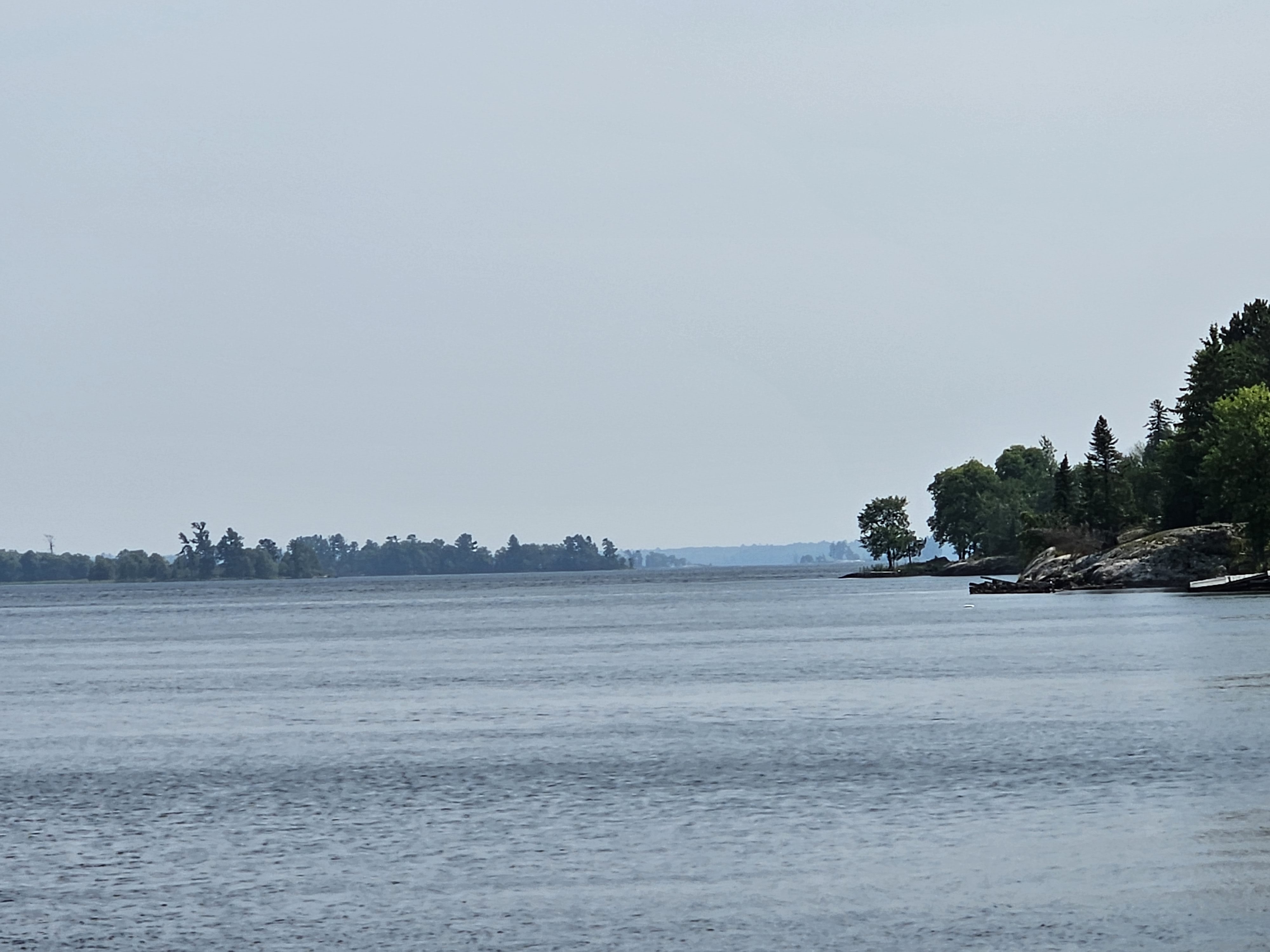
The park is also popular in the winter, with 16 miles of trails for cross-country skiing and snowshoeing, and 110 miles of marked snowmobile trails. When the ice gets thick enough, two ice roads, one from Rainy Lake Visitor Center, and one that runs between the Kabetogama and Ash River visitor centers.
You will find people fishing here year round, including ice fishing in the winter, as the lakes are populated with many species, including walleye, northern pike, crappies, smallmouth bass and more.


 So Many Exciting and Beautiful Places!
So interesting to read this. We spent some time at Lake Kabetogama when I was a child. Dad and Mom along with Lloyd Schreier’s parents took a fishing trip there. Don’t remember much as I was so young but the name made me think of that time.
LikeLike
That was a very long drive from Barnum, Iowa. It must have been before the park was established.
LikeLike