
Monday, April 22
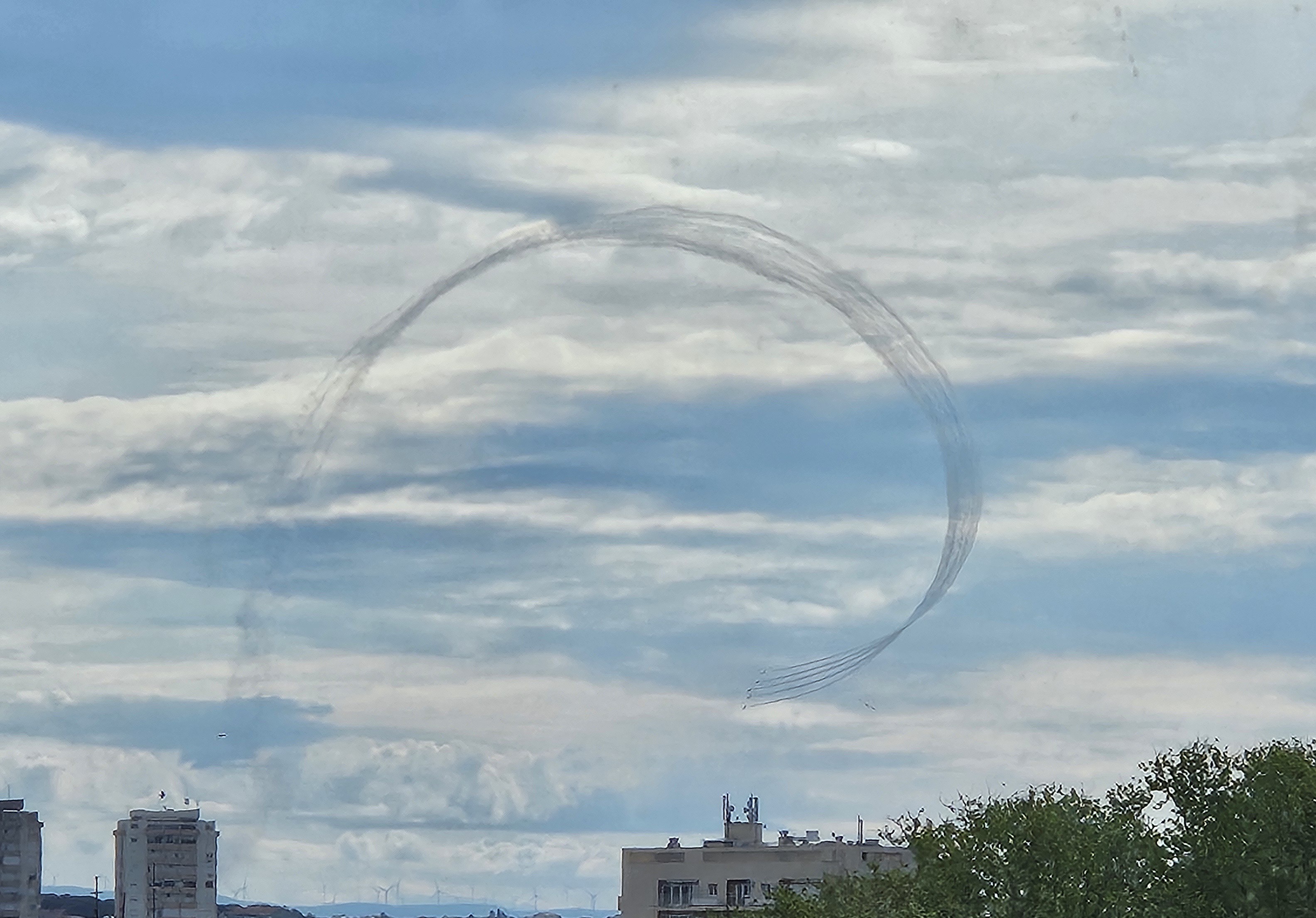
At breakfast this morning, I just happened to look up in time to see several jets flying in formation over the city of Zadar. It was the “Wings of Storm,” the Croatian Air Force acrobatic display team, similar to the US Navy’s Blue Angels. It appeared they were practicing their maneuvers this morning, flying loops and swoops, as well as flying straight up into the clouds. They were using colored smoke to mark their paths. I believe there were six jets in the pack.



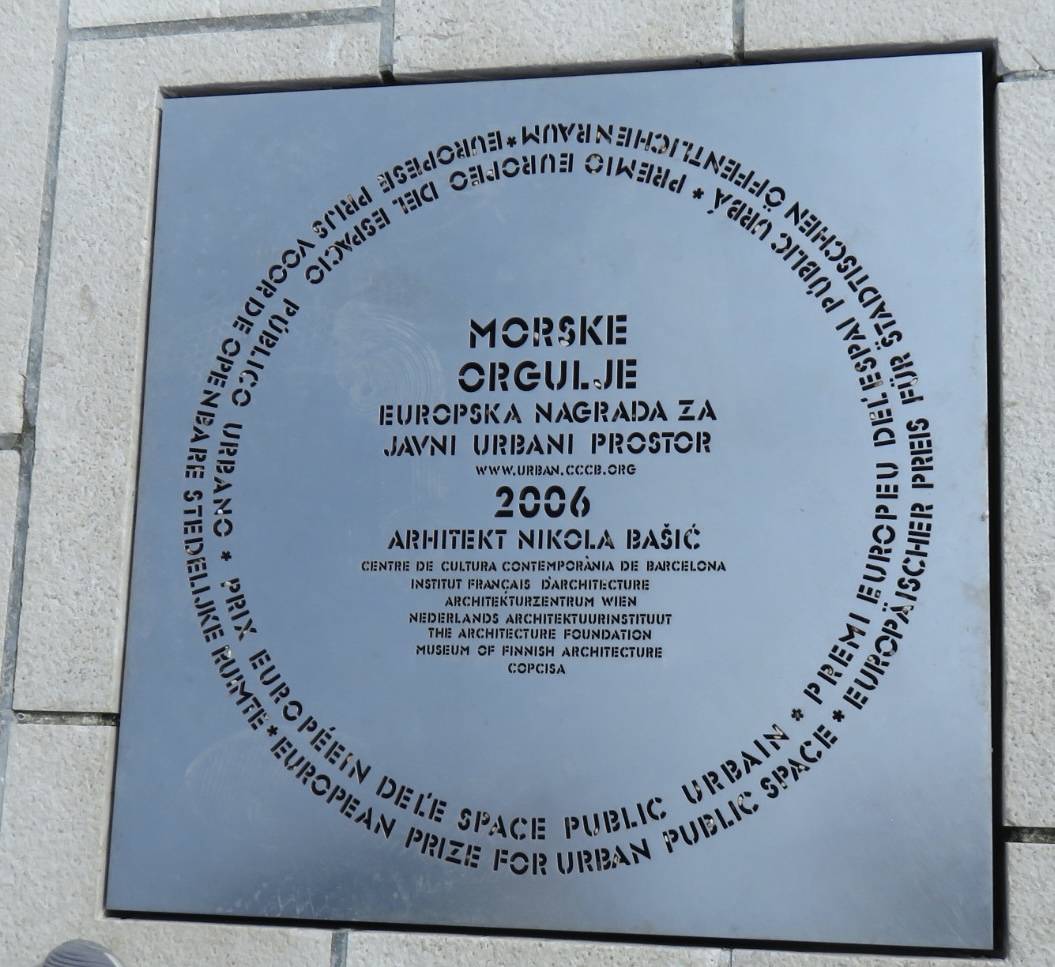
Next to the dock in Zadar is the Sea Organ, an architectural sound art feature on Zadar’s coastline. Tubes are located underneath large marble steps, and sea waves cause the musical tones that reverberated around us. This feature was designed by Nikola Basic as part of a redesign project in 2005.


Next to the Sea Organ is the Greeting to the Sun, which consists of 300 solar panels within a 72-foot diameter circle. Designed by the same architect who designed the Sea Organ, there are also smaller circles representing the planets. The sizes of the circles are proportional to the sun and planets, as are the distances from one to the next. The solar panels power lights that are turned on a night to produce a light show. Sadly, we will have left port by the time they are lit today.

Once the capital of Dalmatia, Zadar has been occupied since at least the late Stone Age. The town was laid out in the 9th century BC by Liburnians, built on a stone islet and connected to the mainland by a narrow isthmus. Liburnians, an Illyrian tribe, were sailors and merchants, and perhaps pirates as well.
Like many other countries in the area, control of Croatia moved back and forth between more powerful peoples – Romans, Ottomans, Austrians, among others. Like Slovenia, they attained their independence in the 1990s, although their war lasted four years rather than ten days.
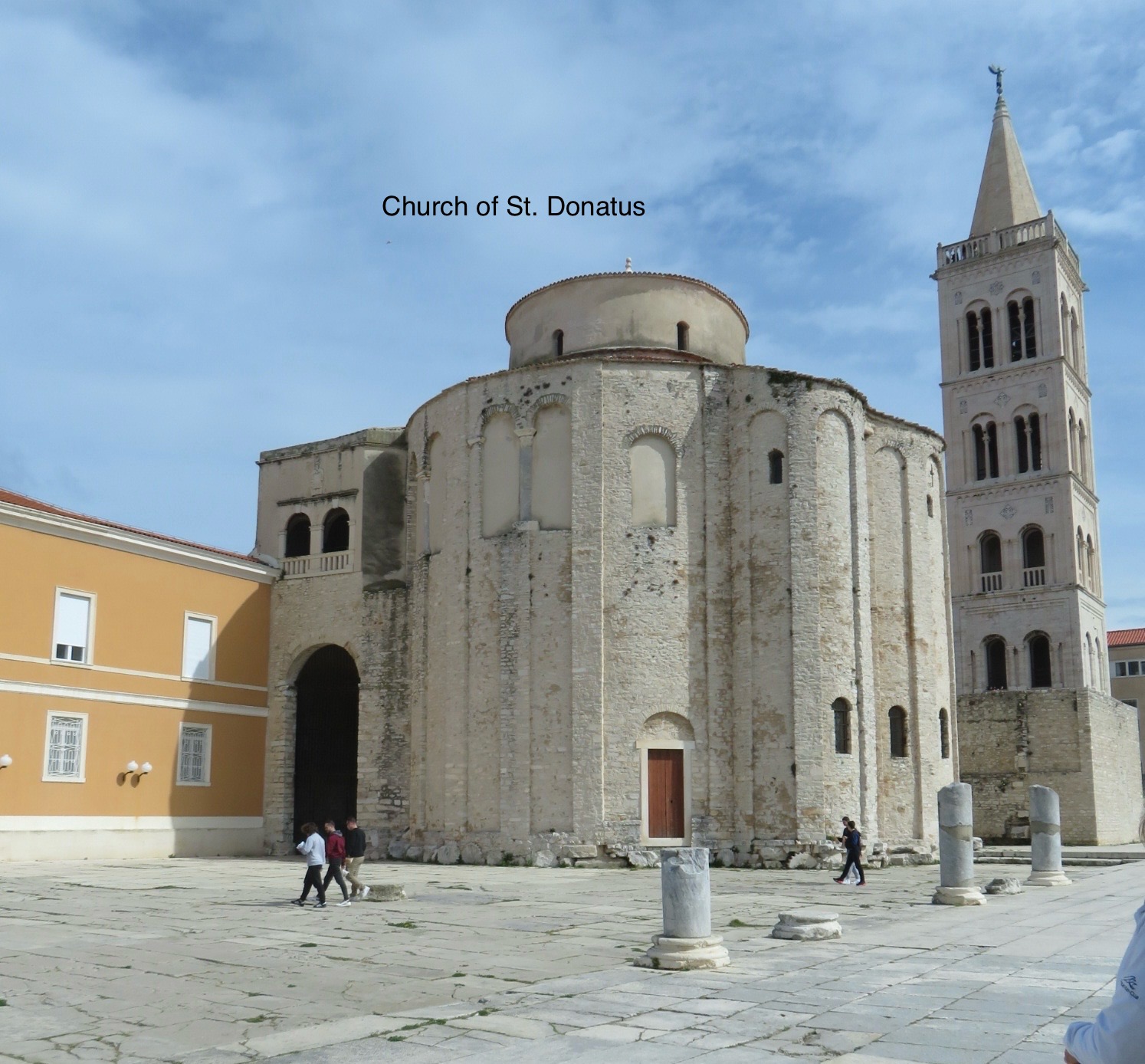
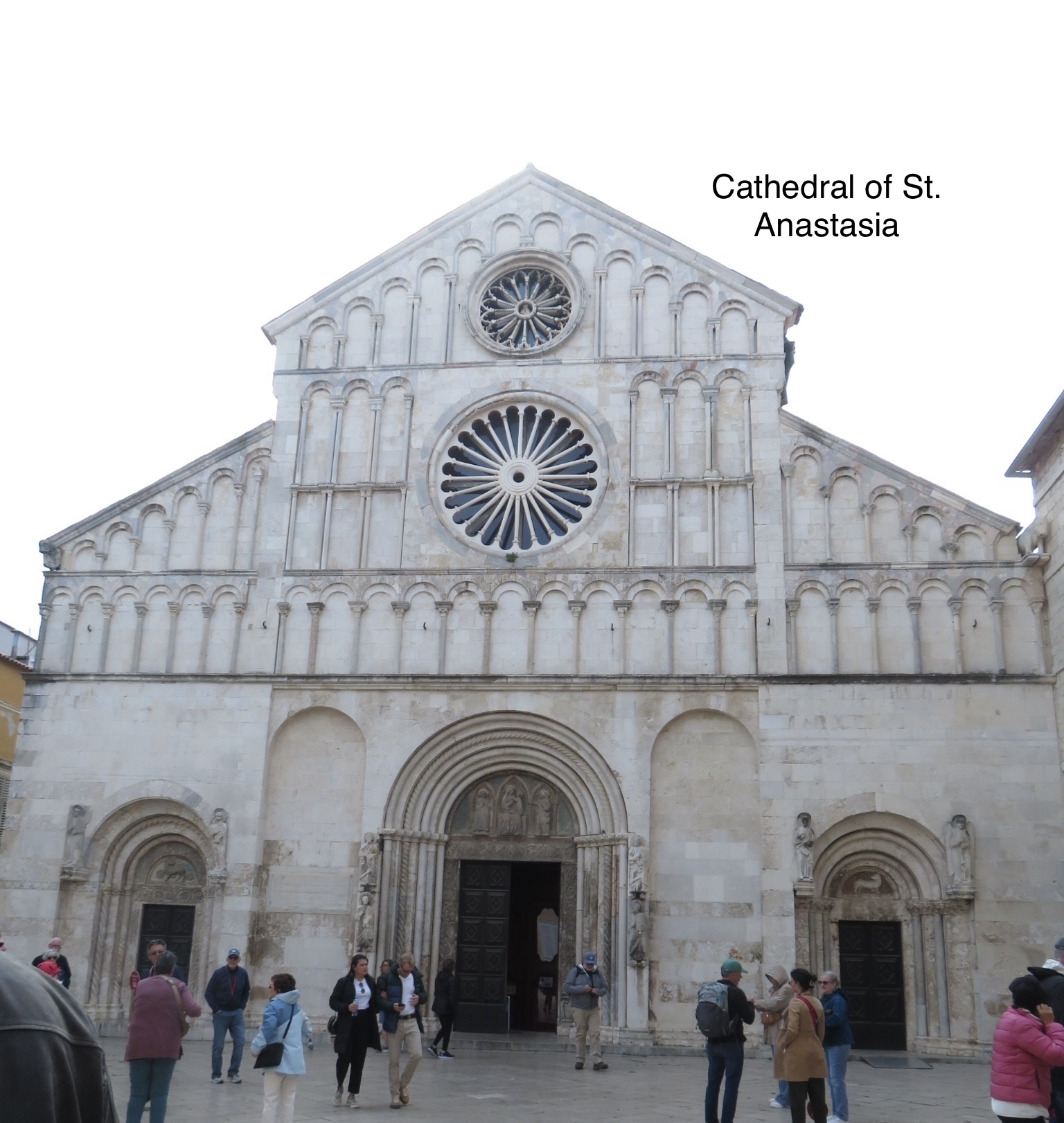
On our walking tour of Zadar, we walked through the Roman Forum, which was constructed between the 1st century BC and 3rd century AD, and is now surrounded by churches, including St. Donatus, the Cathedral of St. Anastasia and St. Mary’s Church. Although we could go inside, no photos were allowed.


The Cathedral of St. Anastasia was originally built in the 4th and 5th centuries AD. During a siege by Venetians and Crusaders in 1202, the cathedral was heavily damaged. It was under repair for most of the 13th century, and is now considered a fine example of Romanesque architecture.
The Church of St. Donatus dates to the 9th century. Donatus was a bishop and diplomat for the city-state of Zadar. He is credited with the construction of the church. This circular church is typical of the the early medieval age in Dalmatia. In addition to its initial use as a church, it has served as a warehouse, an archaeological museum, and currently as a concert venue for the annual Festival of Medieval Renaissance Music.
The newest church we visited today was built in the 11th century – St. Mary’s Church. Founded as a Benedictine monastery, it functioned for several centuries, and was rebuilt in the 16th century. It was destroyed in World War II, then was rebuilt after the war. The bell tower dates to the 16th century. The church houses many ecclesiastical artifacts, dating back to the 16th century. Relics from several saints are enclosed in reliquaries, and on display. We were not able to take photos inside the museum.



The Church of St. Simeon holds the body of St. Simeon who, when he met the infant Jesus, said that he could die now that he had seen the Messiah. His mummified body was acquired by the church in 1203, and is housed in a silver and gold sarcophagus. The sarcophagus was donated by a wealthy woman around 1380. There are several stories about why she gave this gift. Did she steal the saint’s finger, conceal it by her breast, and did it cause her skin to become infected so she had to return it to the church? Or did she pray to St. Simeon to grant her a son, and gift the sarcophagus to seal the deal? Who knows? And does it really matter?
For trivia lovers: The cravat, a scarf worn by dapper men, sort of like a tie or an ascot, comes from Croatia. The word comes from French cravate, meaning from Croat, because of the scarf worn by Croatian mercenaries in France. The Cravat Regiment is an honor guard based in Zagreb. Their uniforms are replicas of those worn by the Croat military forces during the Thirty Years’ War of the 1600s.


 So Many Exciting and Beautiful Places!