Wednesday, April 24, 2024
Another UNESCO World Heritage Site, Kotor is a small town in a secluded part of the Bay of Kotor, at the southernmost part of historical Dalmatia. We were alerted yesterday that we would be sailing through a 19 mile fjord (actually a river canyon that has collapsed and been submerged by the Adriatic Sea.) We arose at 5am to witness this passage, and it was well worth the effort. The sun was beginning to rise over the bay, providing enchanting views all around.

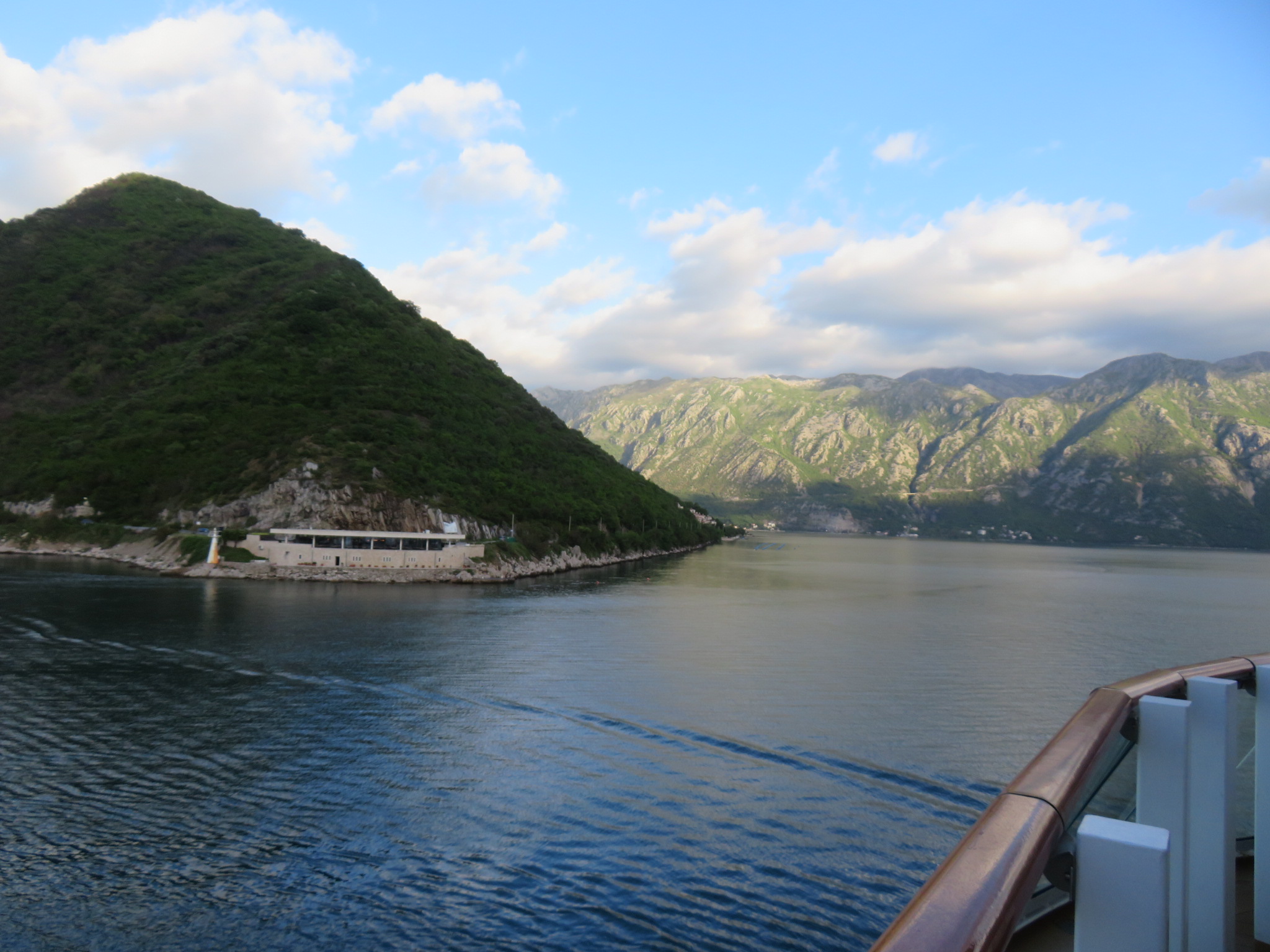
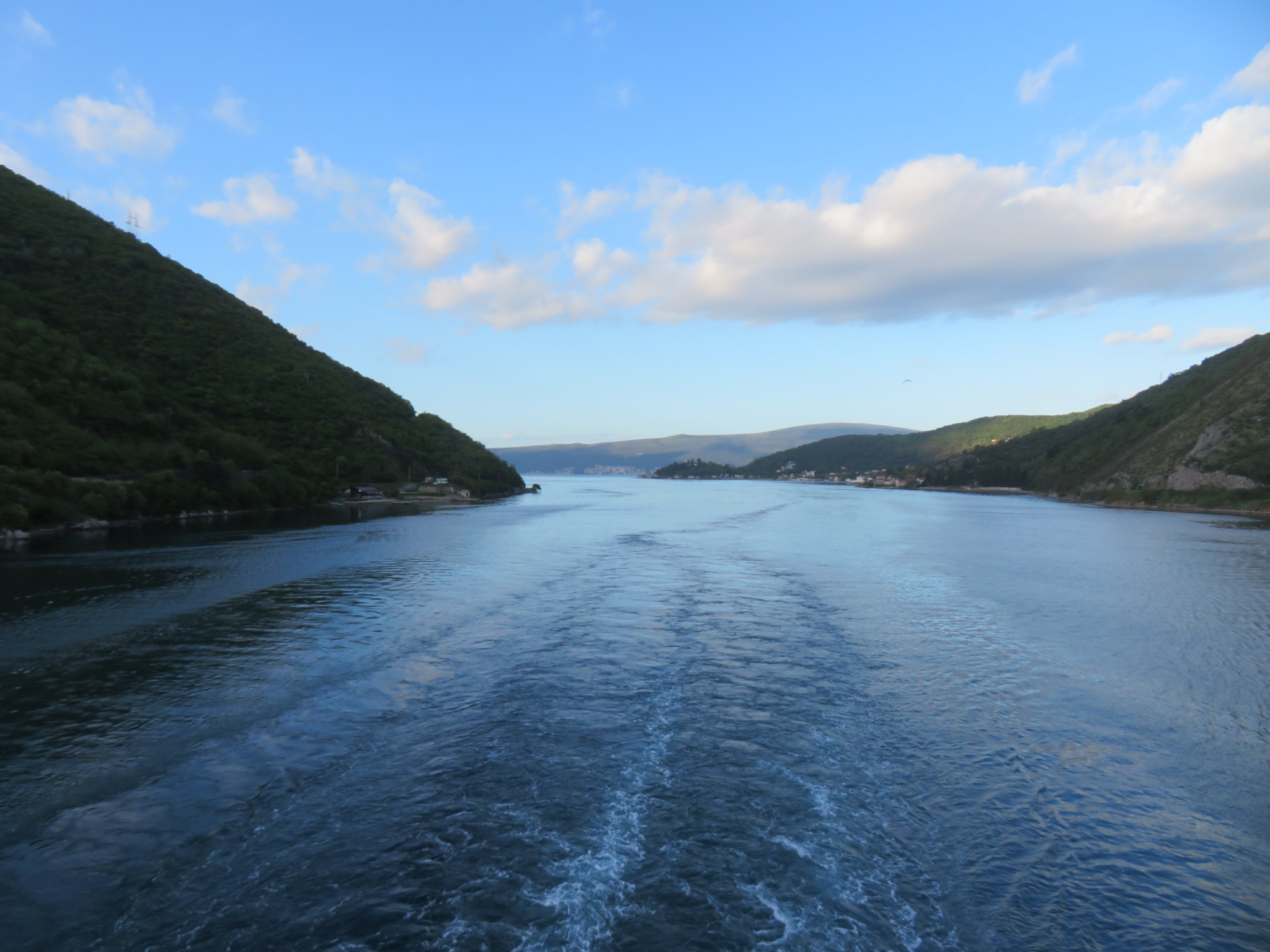
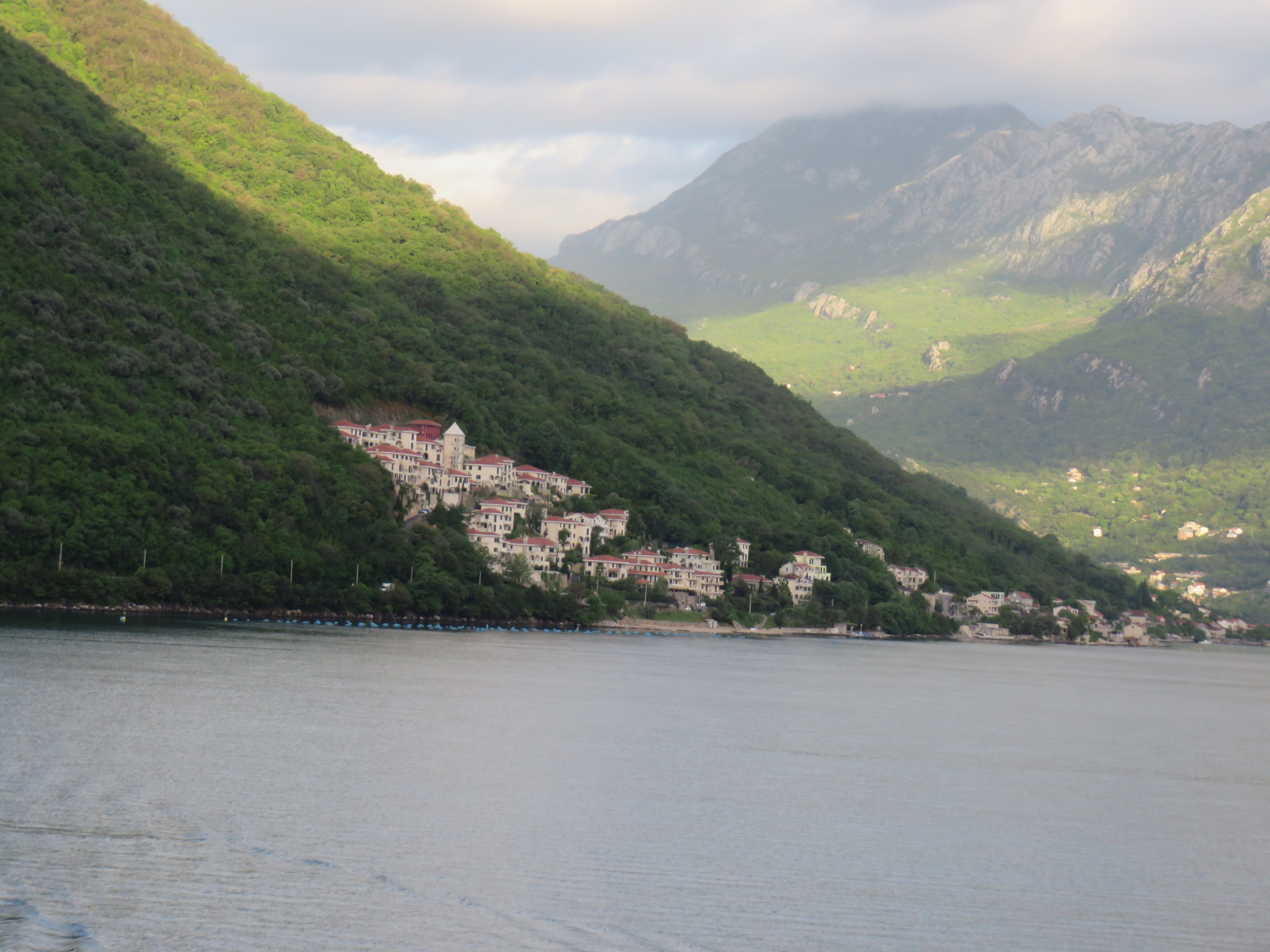

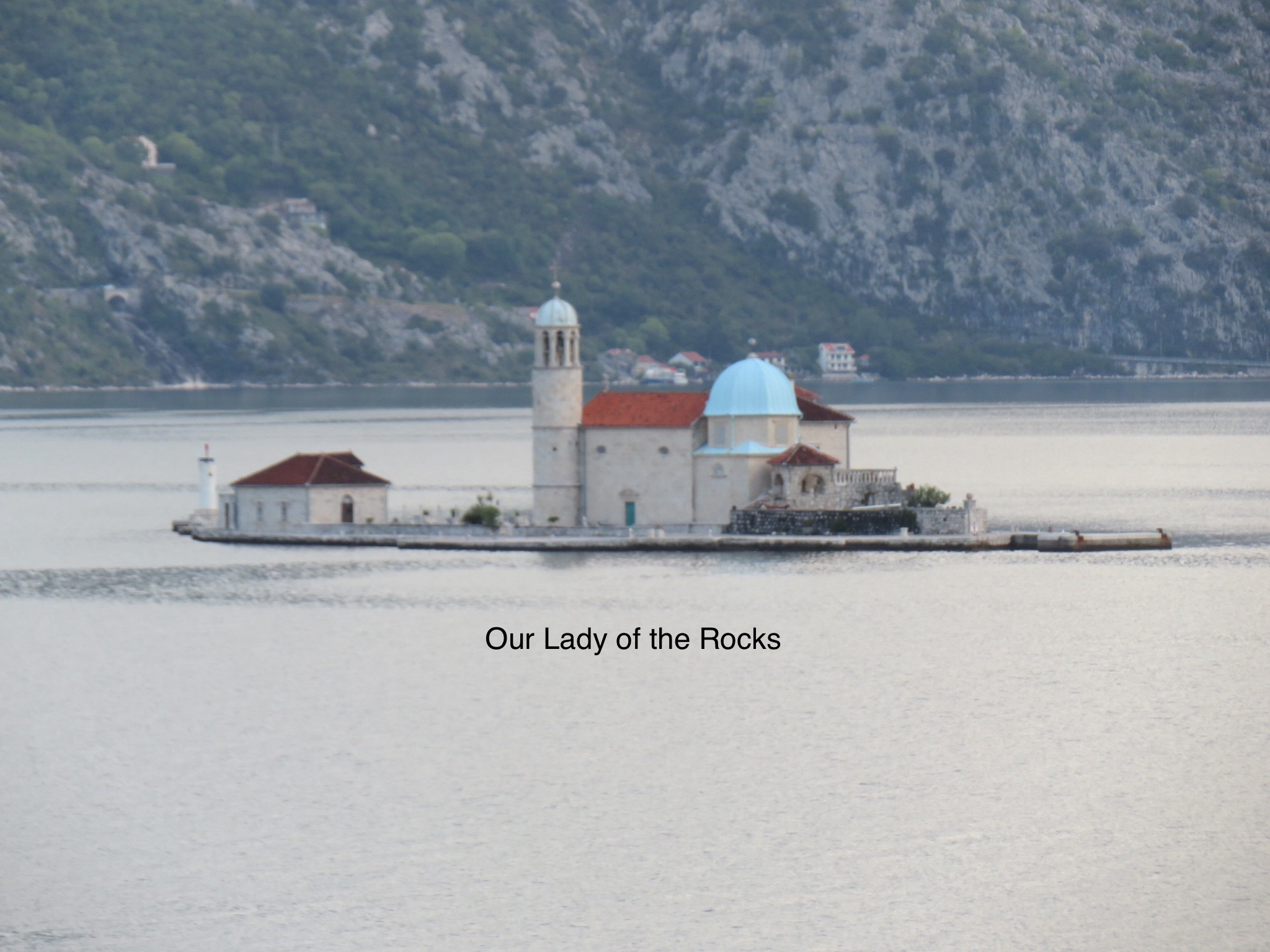
As we approached Kotor, we passed by two islands, one natural and one artificial. Our Lady of the Rocks was created after local seamen found an icon of the Madonna and Child on the rock in the sea on July 22, 1452. After returning from a successful sea voyage, sailors would lay another rock in the bay. Over time, the accumulation of rocks resulted in an artificial island. At some time, a tiny Orthodox chapel was built here, then replaced by the Venetians with a Catholic chapel in the 1600s. Every year, on July 22, local citizens take their boats there and throw rocks into the sea.The other island, St. George, is home to the Monastery of St. George, built in the 12th century.

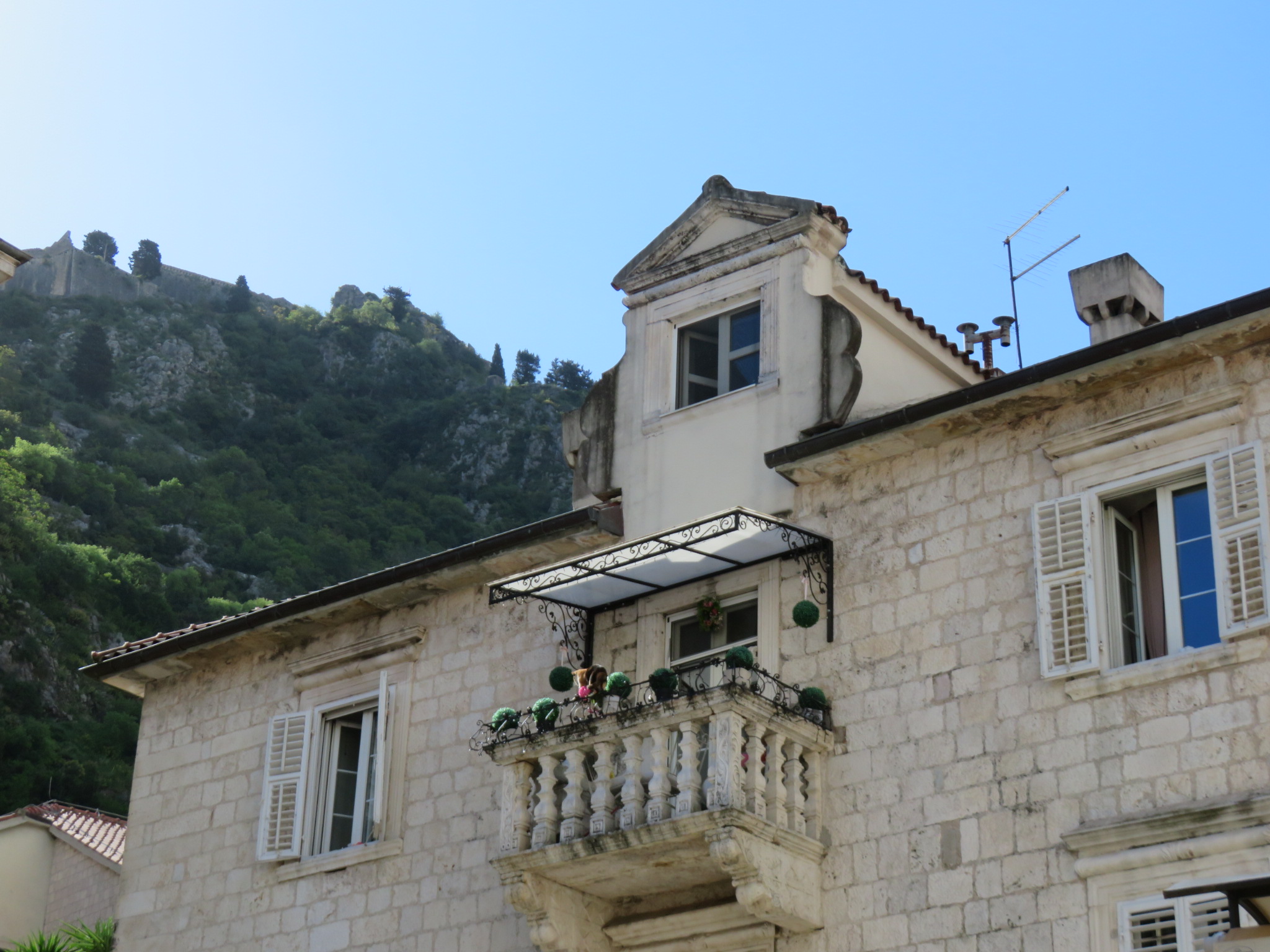
The town of Kotor is surrounded by fortifications built in the 16th and 17th centuries by the Republic of Venice. The Venetians built several polygon-shaped fortresses throughout their territories.
Our guide this morning addressed our group as “My Dear and Beautiful People,” and we did indeed feel dear and beautiful for an entire day. As part of our walking tour of Kotor, we visited the Cathedral of St. Tryphon, constructed in the Romanesque style around the 12th century AD. It is one of the largest and most ornate buildings in the town. It had been seriously damaged in the earthquake of 1667, and was partly reconstructed. Another earthquake, in 1979, caused more damage. Restoration was completed only a few years ago.The Cathedral contains frescoes from the 14th century, as well as many ornaments and figures in relief (including saints in gold and silver.)



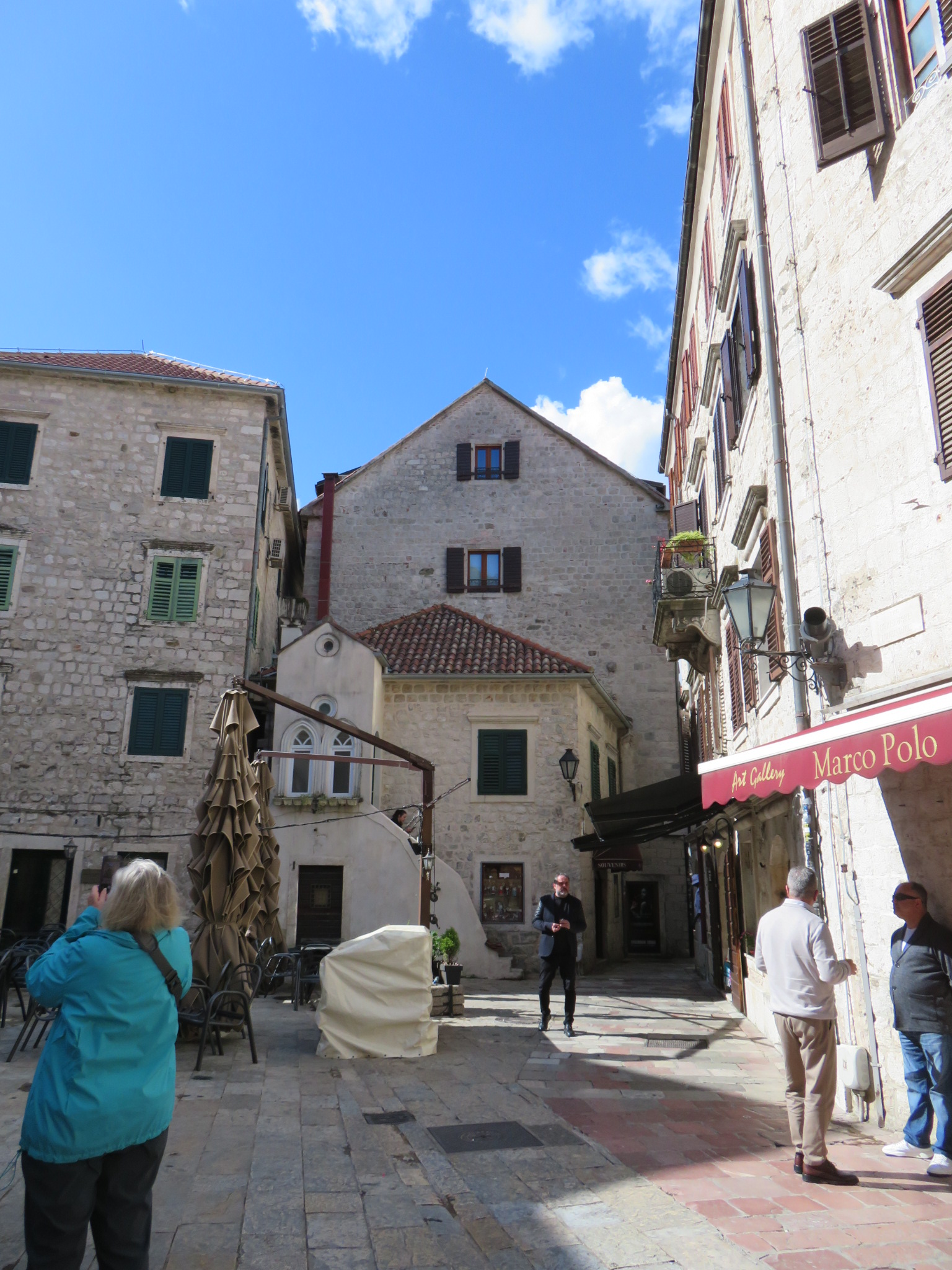
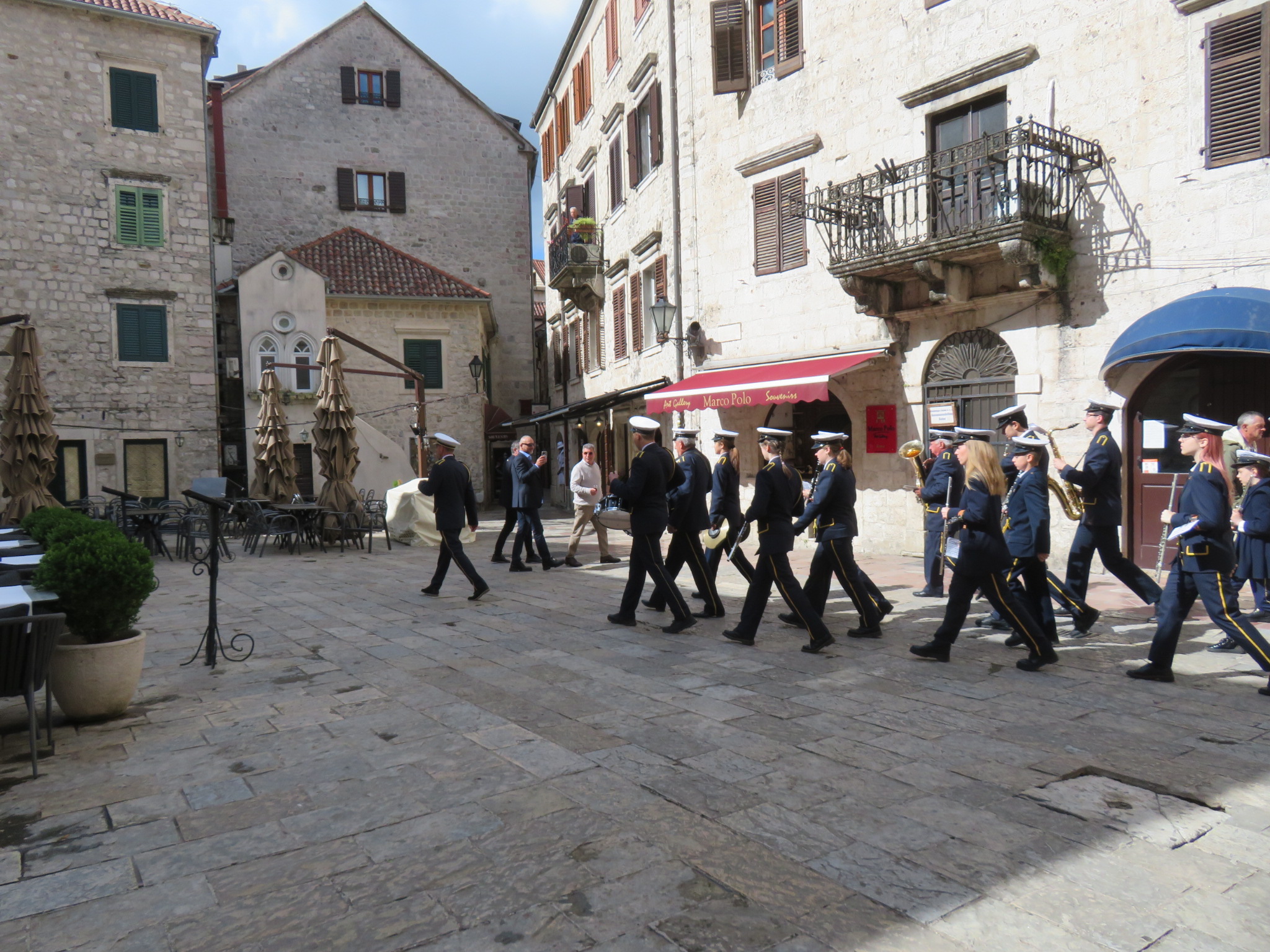
We also visited the Kotor Maritime Museum, established around 1880 with many artifacts from that time and earlier, most related to the maritime industry, but also some cultural items such as furniture, dishes and regional costumes. Before viewing the exhibits, we were distracted by a small marching band that marched through the square outside the front door. We don’t know what the occasion was, but we enjoyed the very short performance.

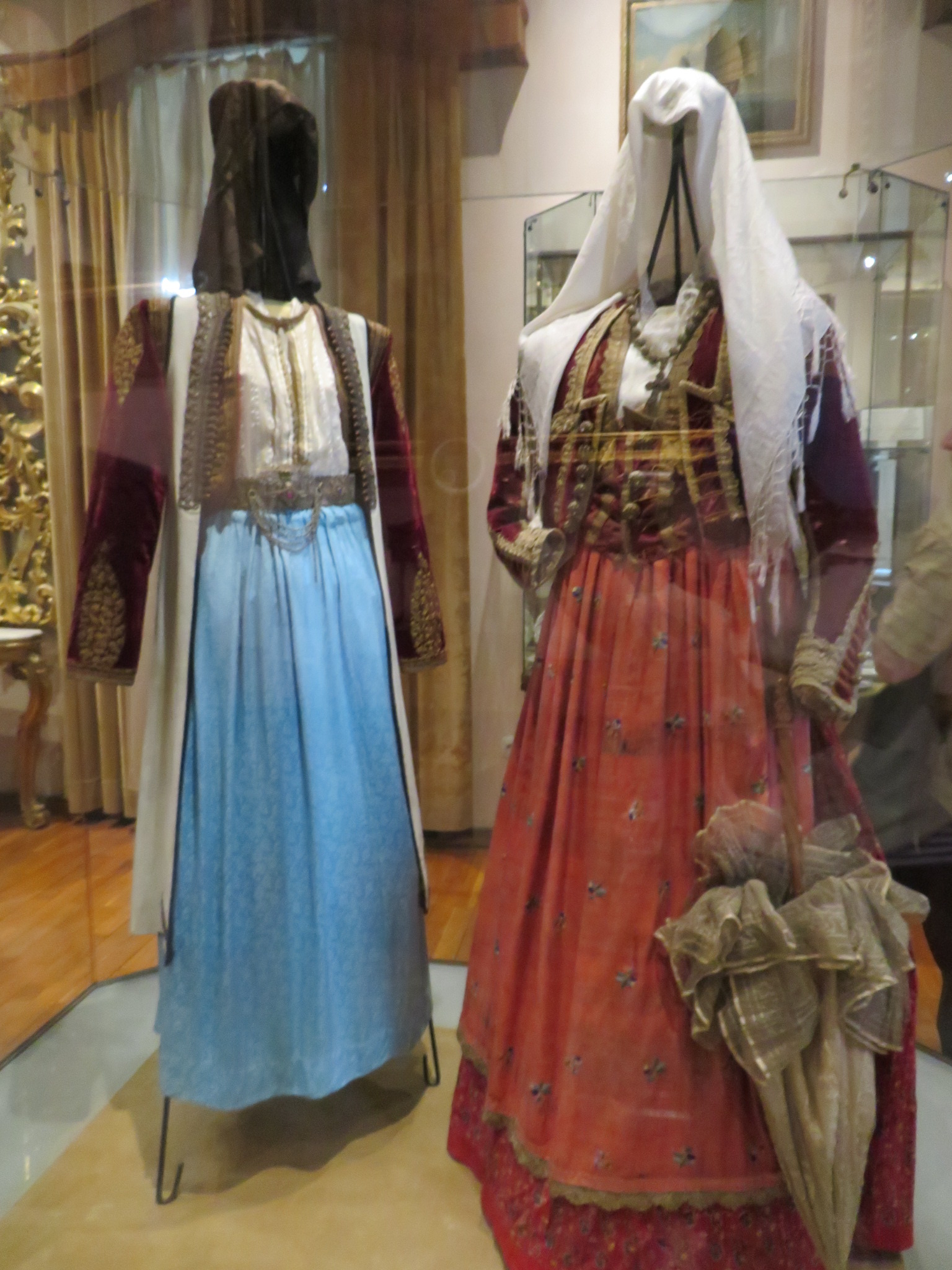


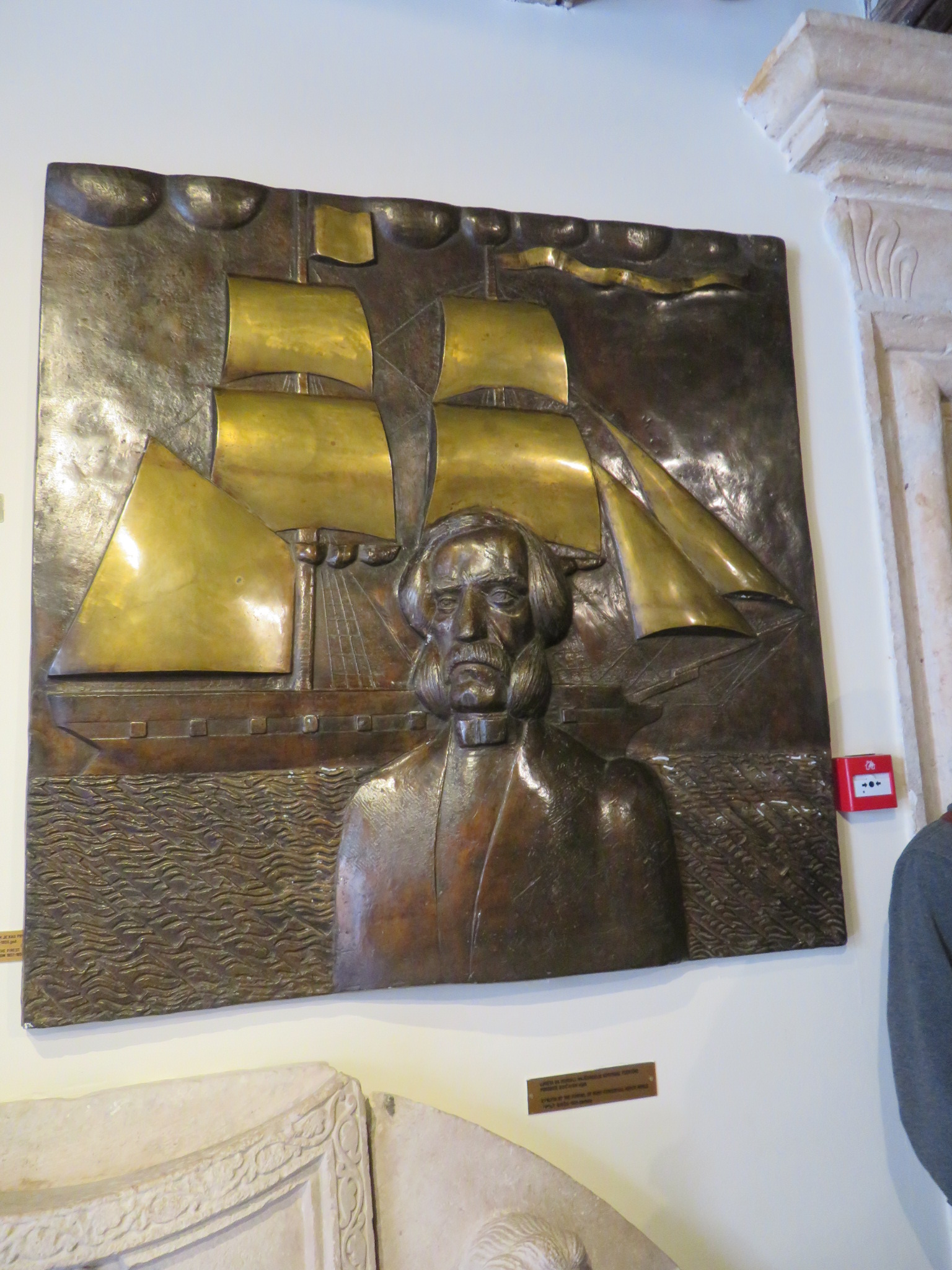
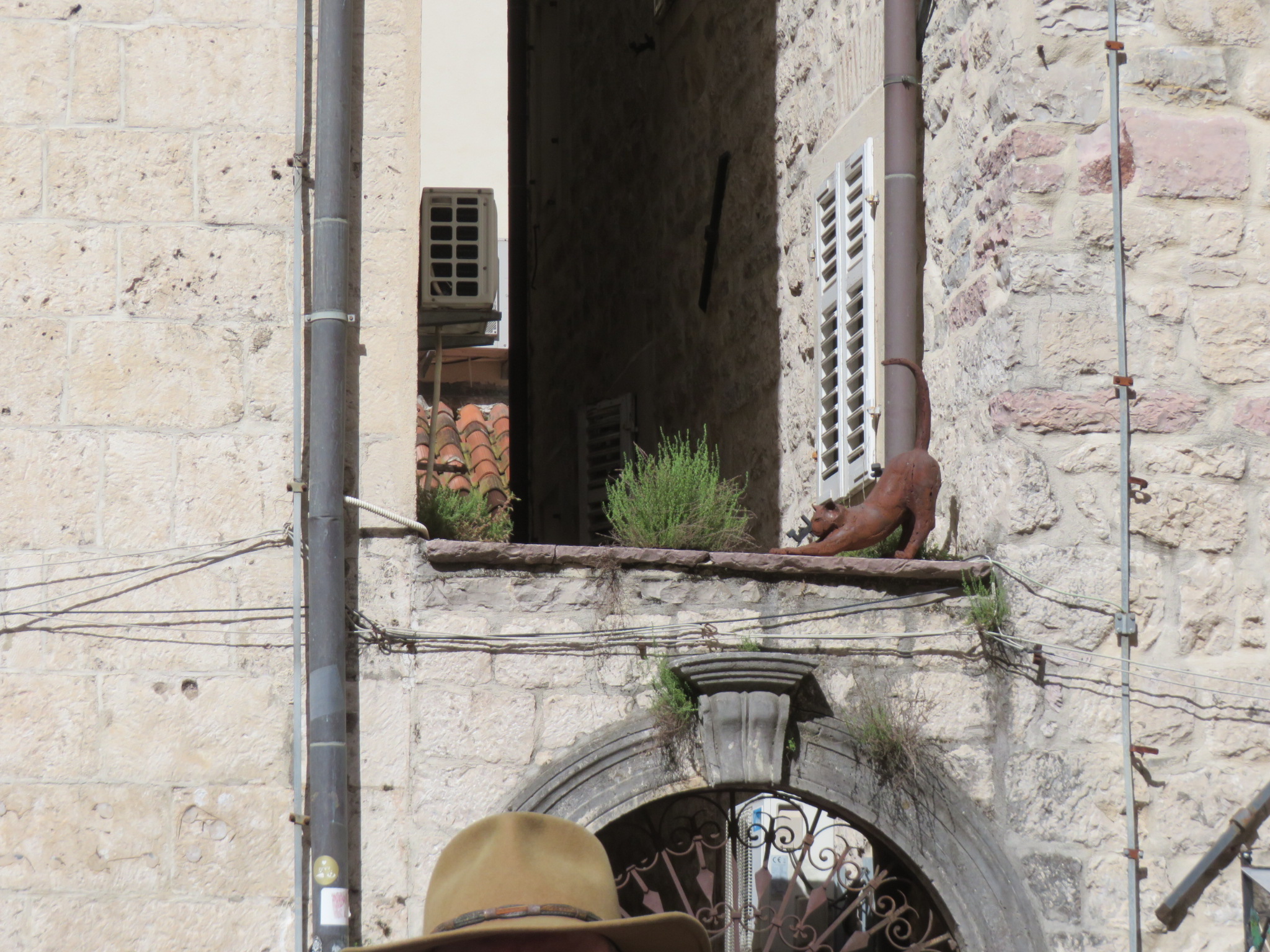
We did not, however, visit the Cat Museum. Kotor loves its cats; they are everywhere! Signs outside the museum proclaim that they feed the cats daily. Do those cats have homes? Or do they disdain that sort of conformity (being cats after all,) and simply rely on the kindness of strangers.


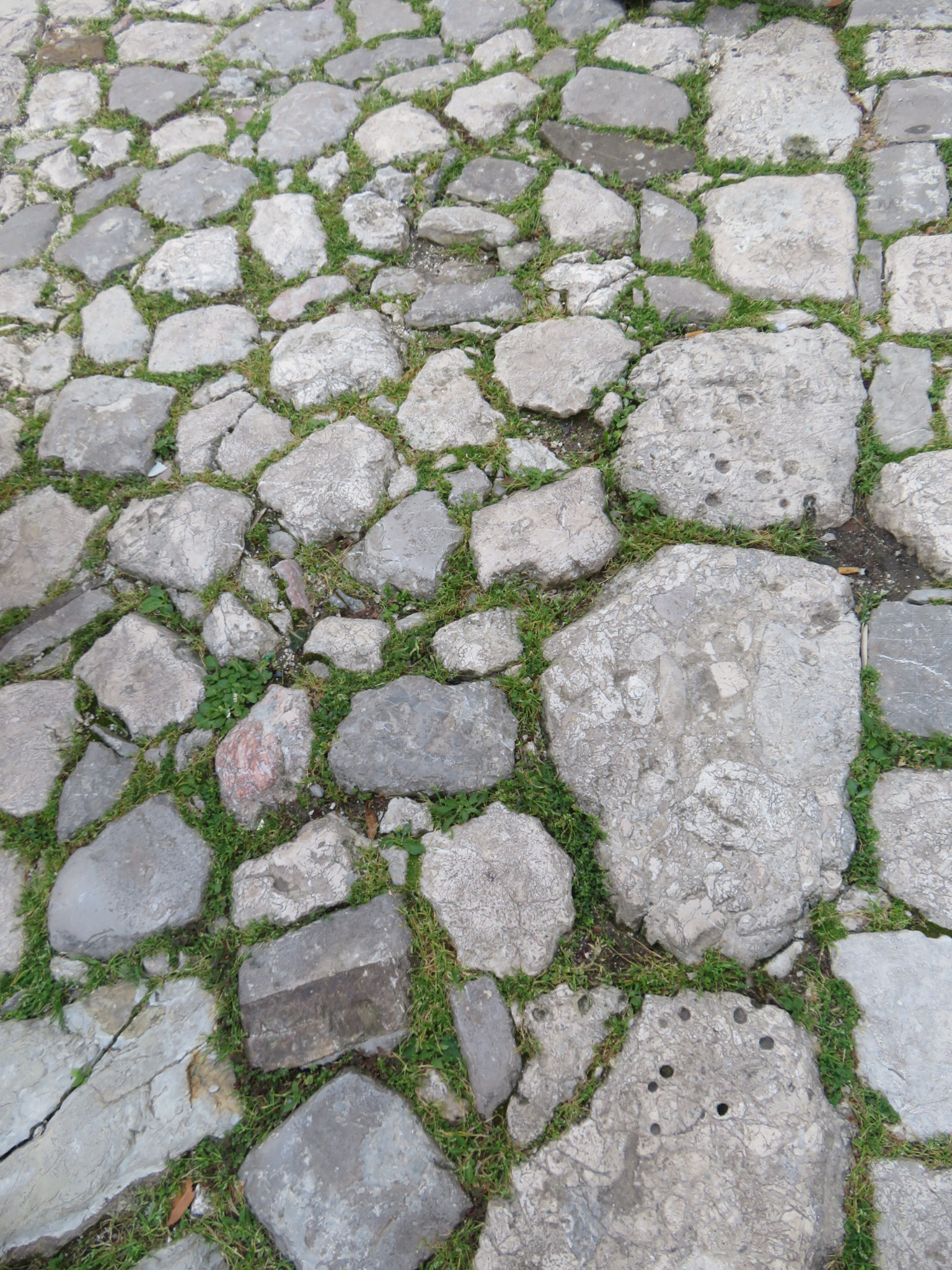
The 1667 Dubrovnik earthquake affected many of the communities we have been visiting on this cruise. It was one of the most devastating in over two millenia. Although there have been more recent quakes in these areas, they were far less powerful. After 1667, the architecture changed to more Baroque styling, and the cobbled streets were paved with larger stones. We did manage to see a few (very few) examples of the old style.

In the afternoon, we enjoyed a concert performance at St. Nicholas Franciscan Monastery in Perast, a seaside town not far away. This church was built in 1616, possibly replacing an earlier church. A second church was begun in 1740, but never completed. The two structures are combined to form one church. The impressive belfry was constructed by Ivan Skarpa from the island of Hvar, and given to the church by archbishops Andrija and Matija Zmajevic.
The concert was performed by guitarists from Montenegro – Srdjan Bulatovic and Darko Nikcevic. The music was beautiful. Their CDs sold out before we could even reach the table.


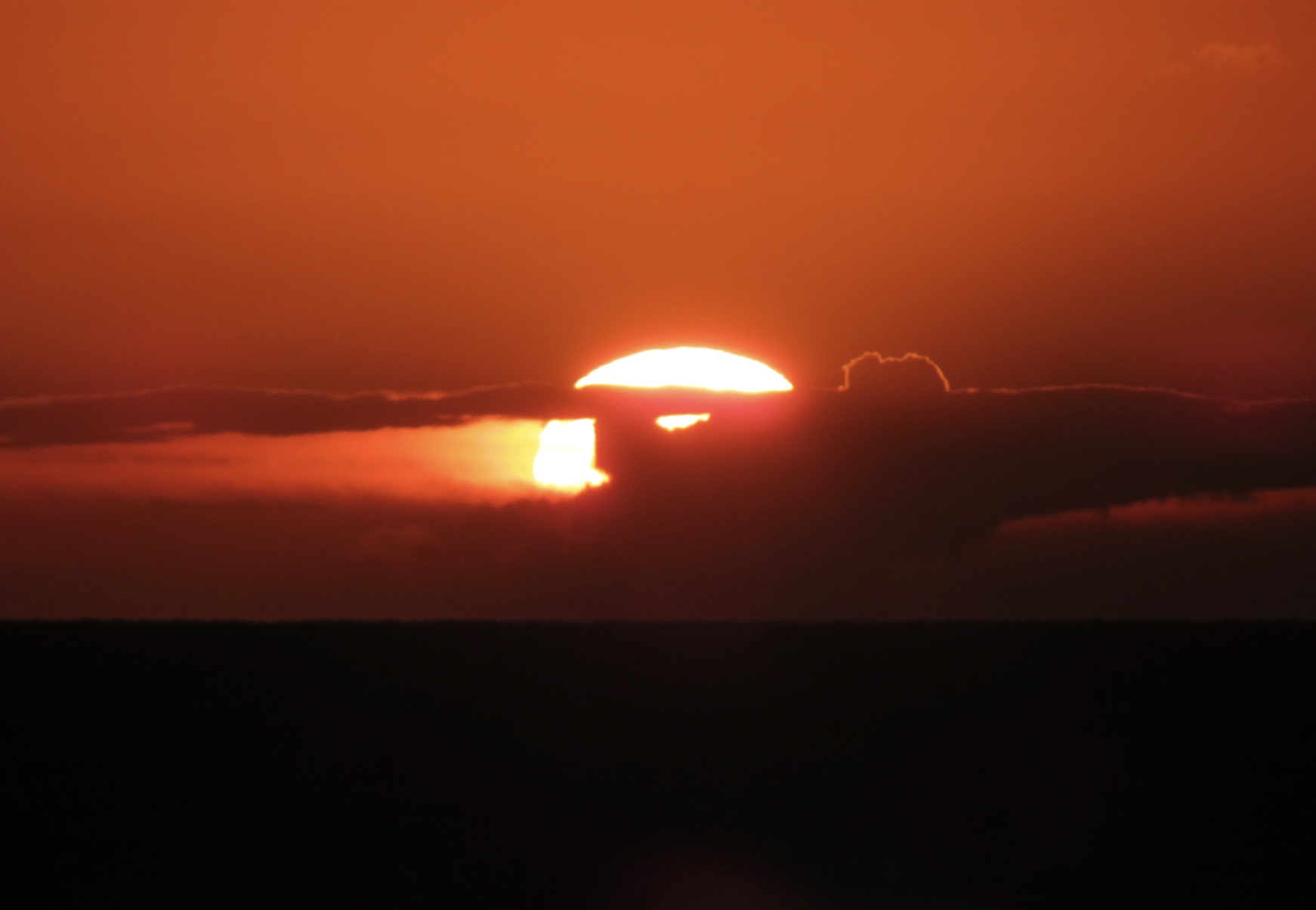
Getting up at 5am definitely paid off. By evening, heavy rain had started, and we would not have been able to see any of the beauty that surrounds us. The rain did stop, however, in time for an interesting sunset.


 So Many Exciting and Beautiful Places!