
Friday, April 26, 2024
When we visited Athens in 2012, we visited the site of the first modern Olympic Games in 1896, which is located about 60 miles east of the ancient site of Olympia. Today, we got to visit the original site, another UNESCO World Heritage Site.
On our way, we passed many olive groves, which comprise a large part of the area’s agricultural products. Many families have productive olive trees in their yards. Three types of olive are grown here: koroneiki for olive oil, green olives (unripe) and kalamata. We drove by the town of Kalamata on our way to Olympia. The drive was lovely, all around us was lush and green. We were told that the Greeks call this the “Blessed Land,” for its fertility; that they have one of the most fertile soils in the world.


Legend has it that Heracles (also known as Hercules), son of the god Zeus, established the games after completing his twelve labors. He is said to have built the Olympic Stadium as an honor to Zeus, and established the custom of holding them every four years. The games took place during the festival of Zeus at Olympia.
Another story is that Pelops, from which the region gets its name of Peloponnese, had come here to court the daughter of King Oenomaus, but the king, afraid of a prophecy that he would be killed by his son-in-law, made all suitors participate in a chariot race with him. If the suitor lost, he would be killed. Eighteen suitors had already met that fate before Pelops showed up. Pelops had an advantage, though. Poseidon was fond of Pelops, and gave him a chariot drawn by untamed winged horses. When King Oenomaus caught up to Pelops in the race, and made ready to kill him, the wheels of the king’s chariot fell off, and he was dragged by his horses to his death.
Pelops organized chariot races to celebrate his victory and to honor Oenomaus, in order to be purified of the king’s death. These chariot races are said to be the beginning of the ancient Olympic games.
The earliest evidence of the games dates to 776 BC, from inscriptions that listed the winners of a footrace held every four years starting in that year, but the games may actually date to 1100 BC. The Ancient Olympic games included running, pentathlon, boxing, wrestling and equestrian events. These events took place alongside ritual sacrifices honoring Zeus and Pelops, mythical king of Olympia. The games continued for about 1200 years, although they had been diminishing in success after the Romans gained power and influence in Greece.
The site suffered heavy damage from a series of earthquakes in the 3rd century AD. In addition, invading tribes caused more destruction. The last Olypmiad was held in 393 AD. After that, the Christian emperor Theodosius I banned the games because of the pagan influence. His son, ,Theodosius II, later ordered the destruction of the site. Over time the site was buried under alluvial deposits, up to 25 feet deep, possibly caused by sea water during repeated tsunamis. These deposits helped to preserve what we saw today.
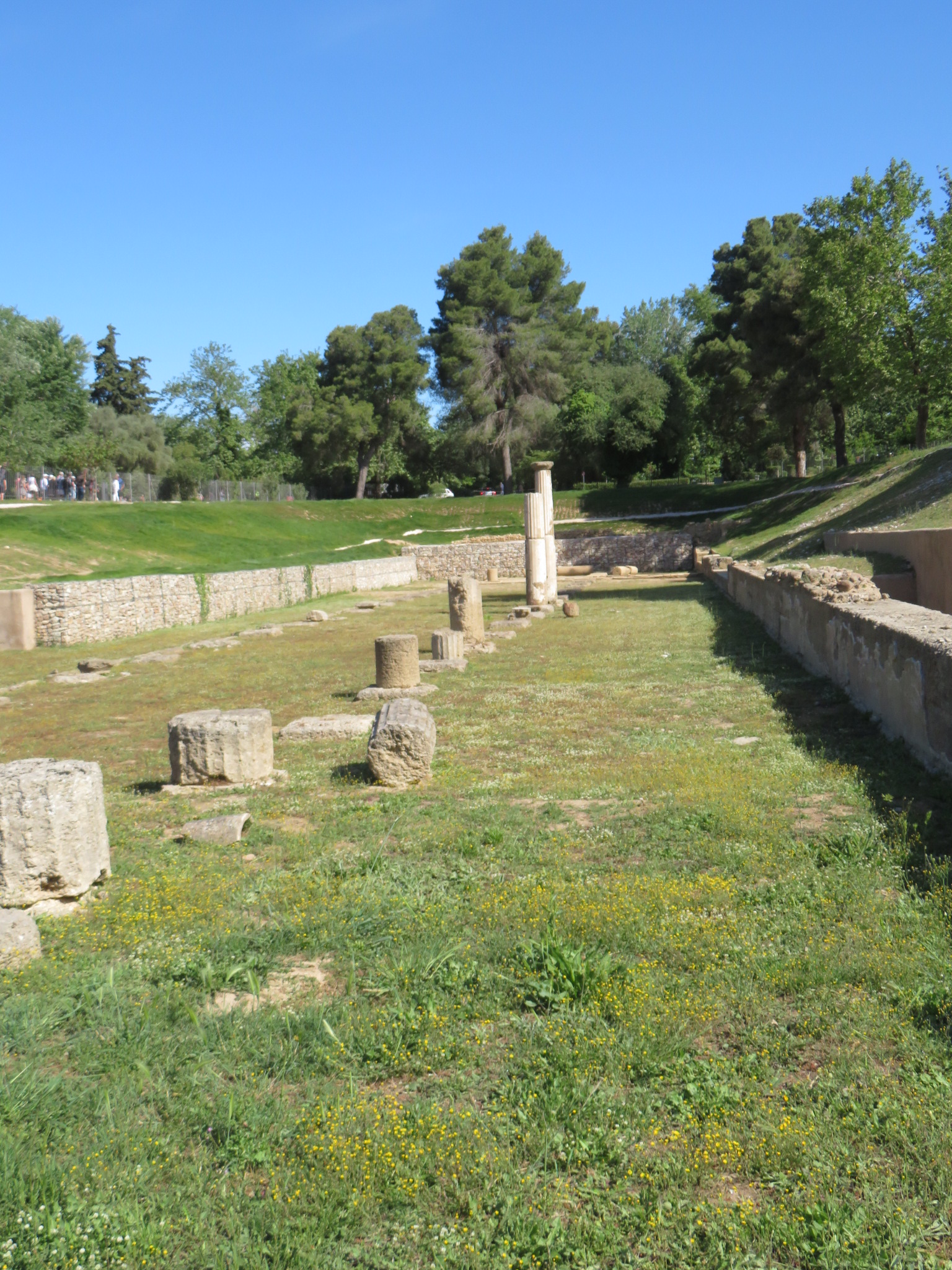


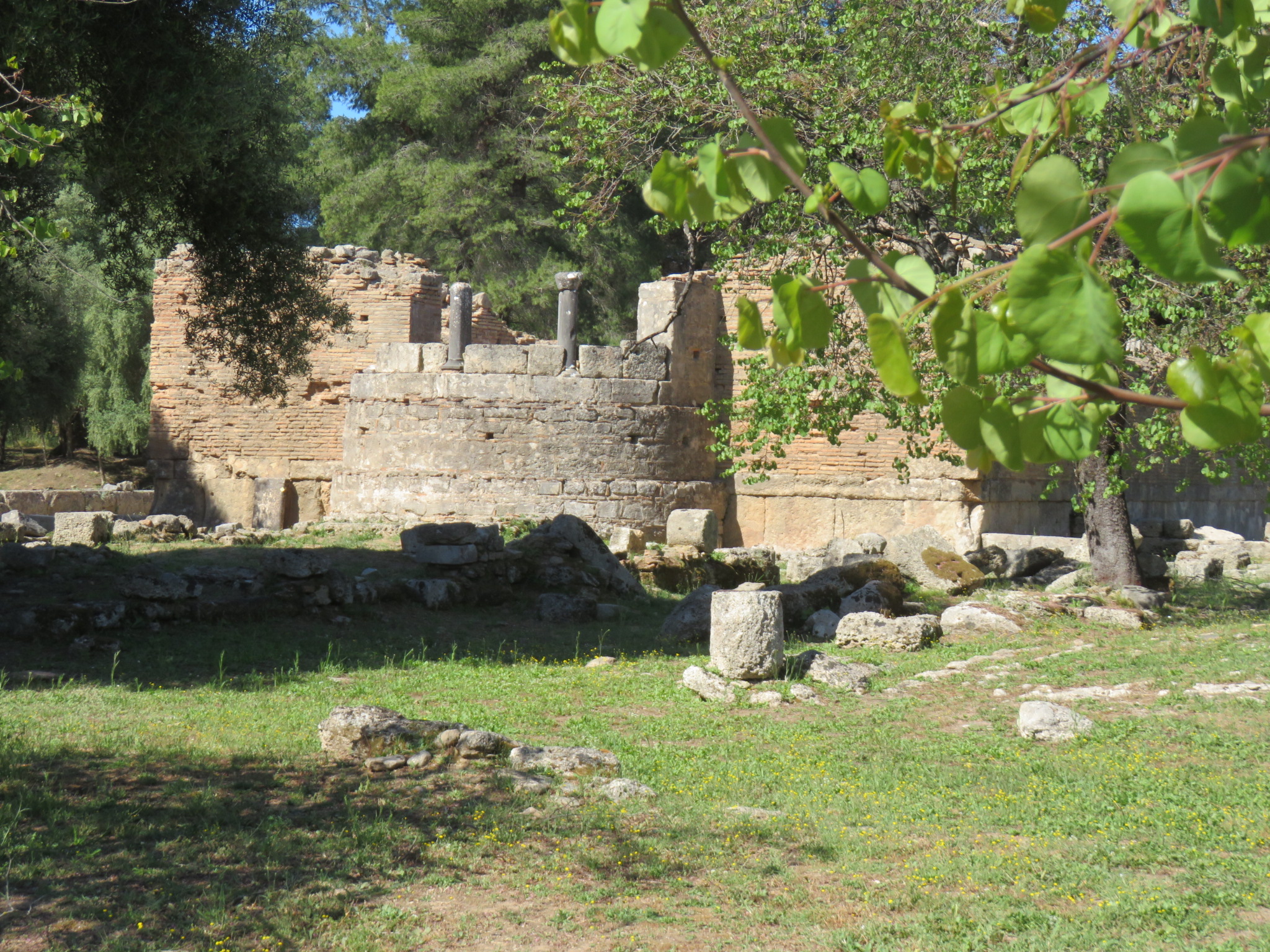
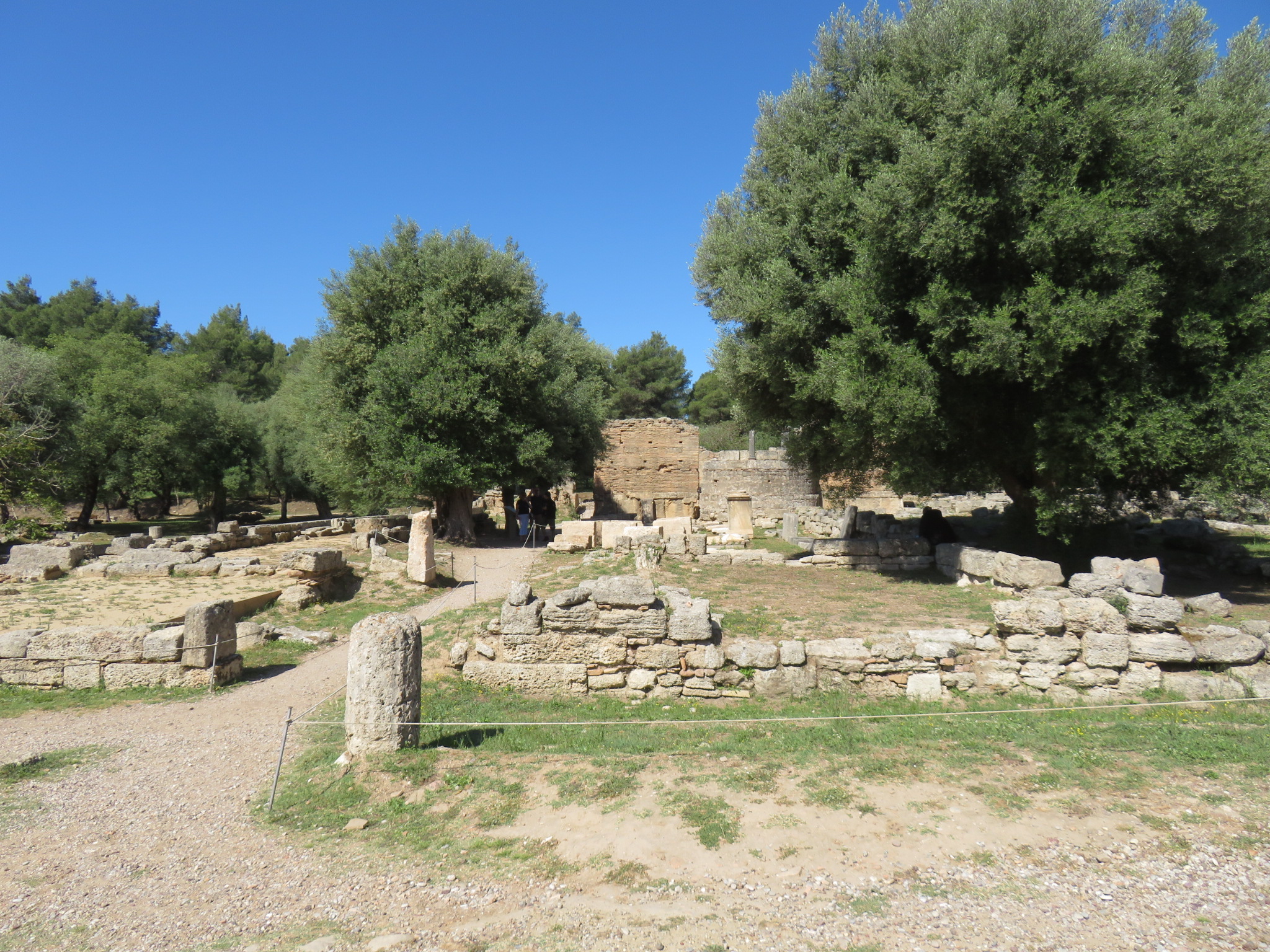
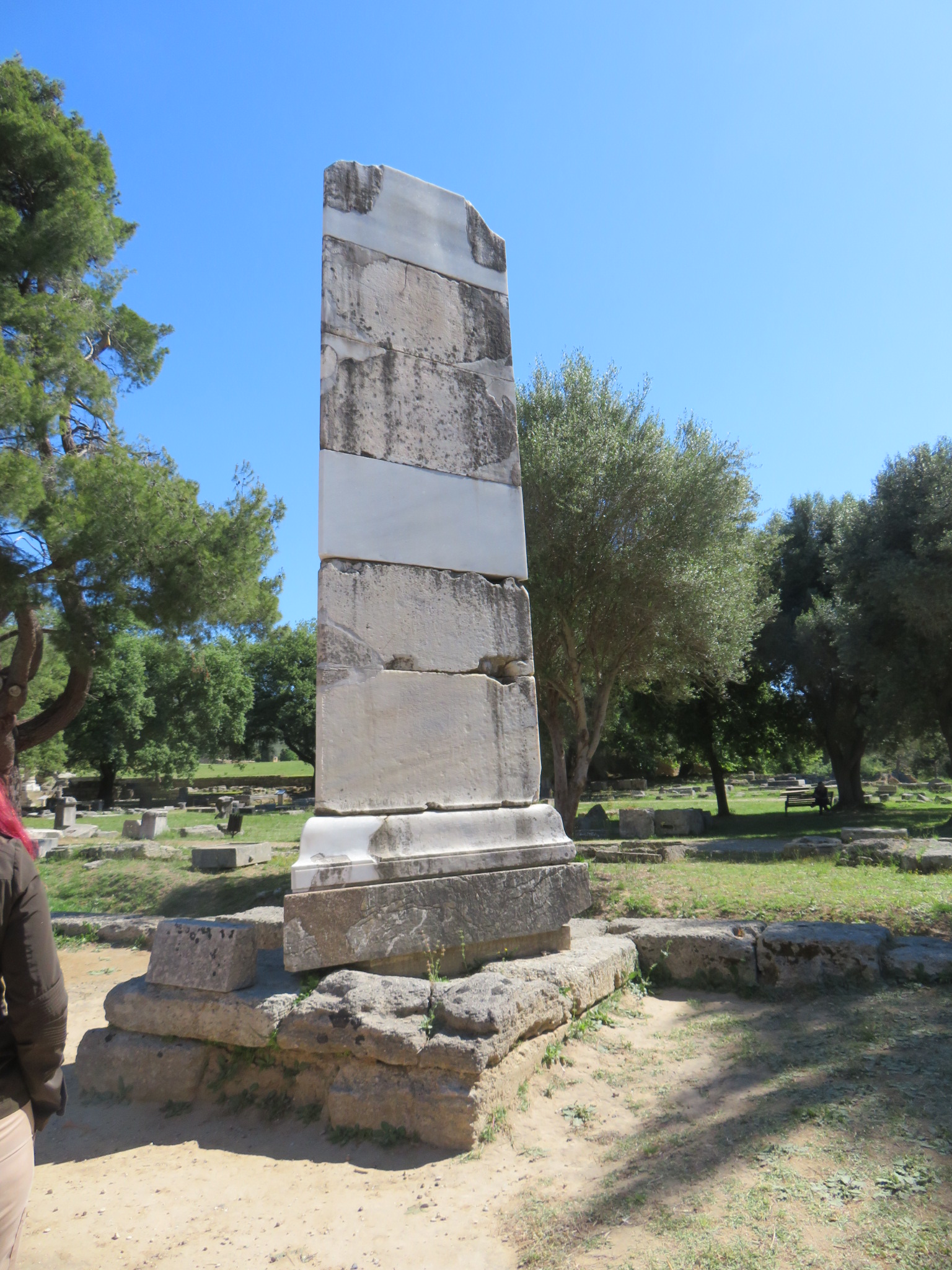

The first archaeological excavations occurred in 1829, and excavation continues today. The site held over 760 buildings, including 70 temples, over 14,000 bronze artifacts, and several marble and terracotta sculptures.
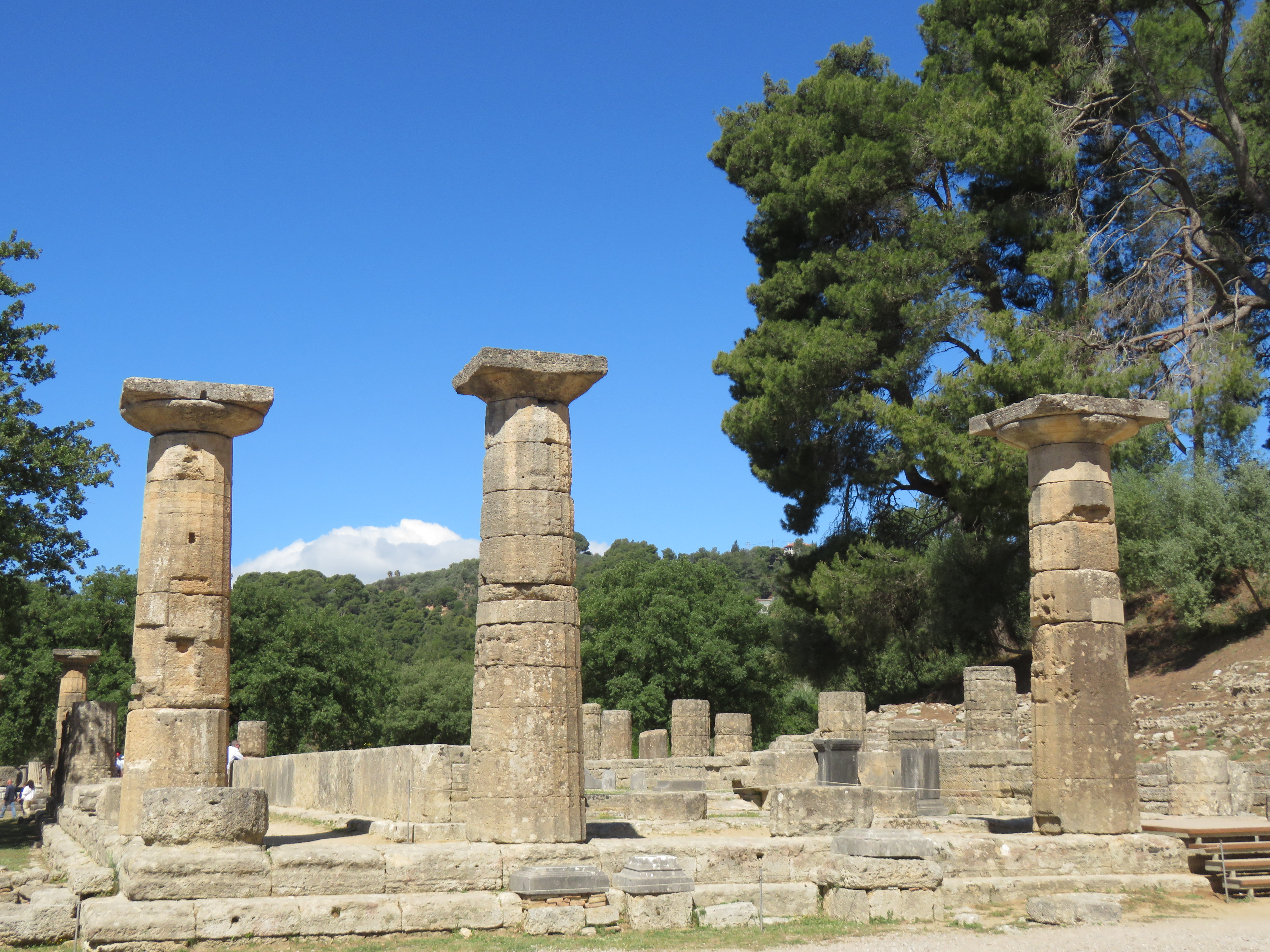
Just 10 days ago, on April 16, the Olympic flame was lit here at the Temple of Hera. Usually, the Greek priestess (actress) uses the sun to ignite a silver torch, but the skies were cloudy, so a backup flame was used to light the torch. From here, the flame is being carried along a 3,100 mile route through Greece until it was handed over to the Paris Game organizers in Athens today. Temple of Hera at right:
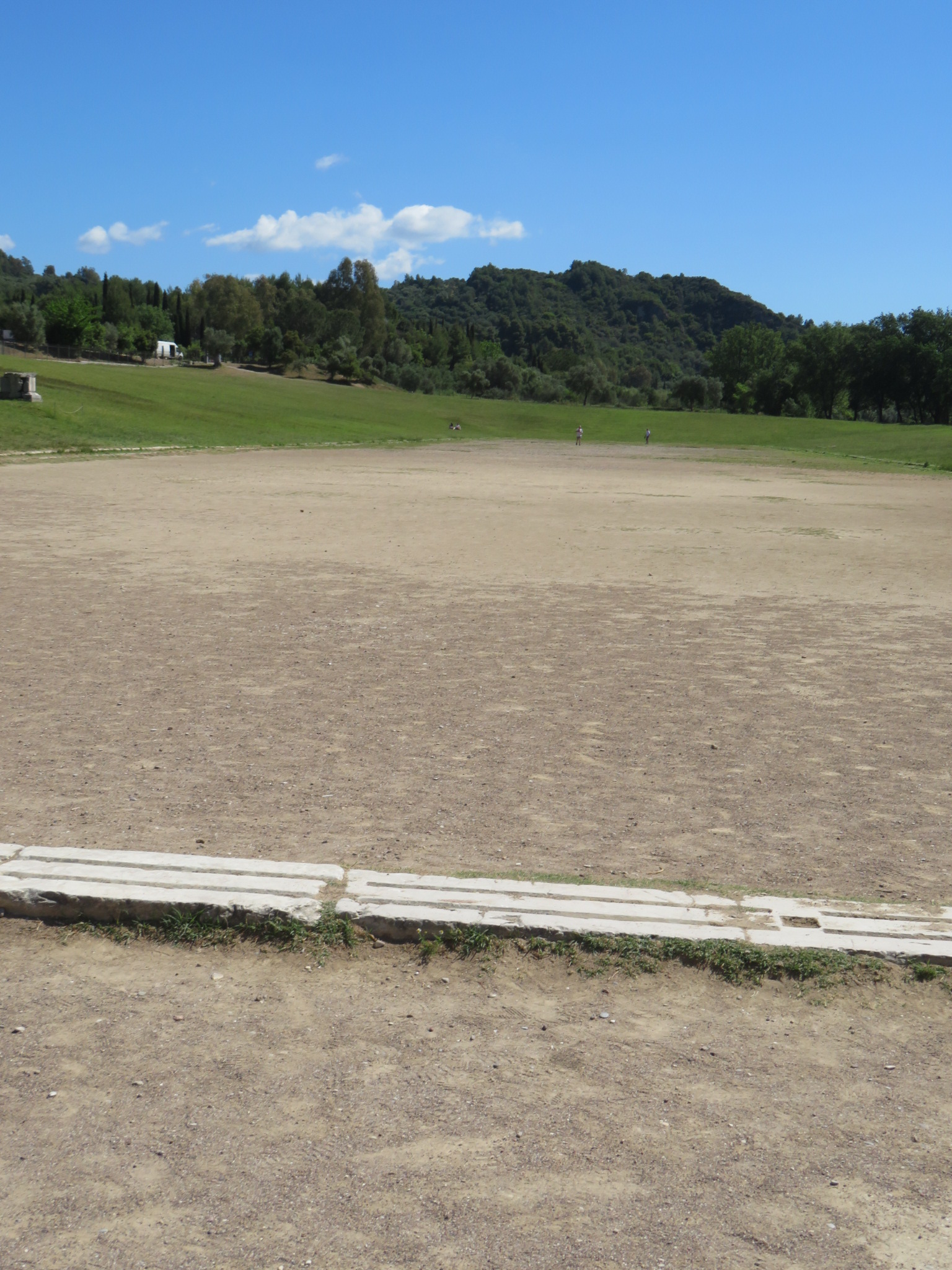
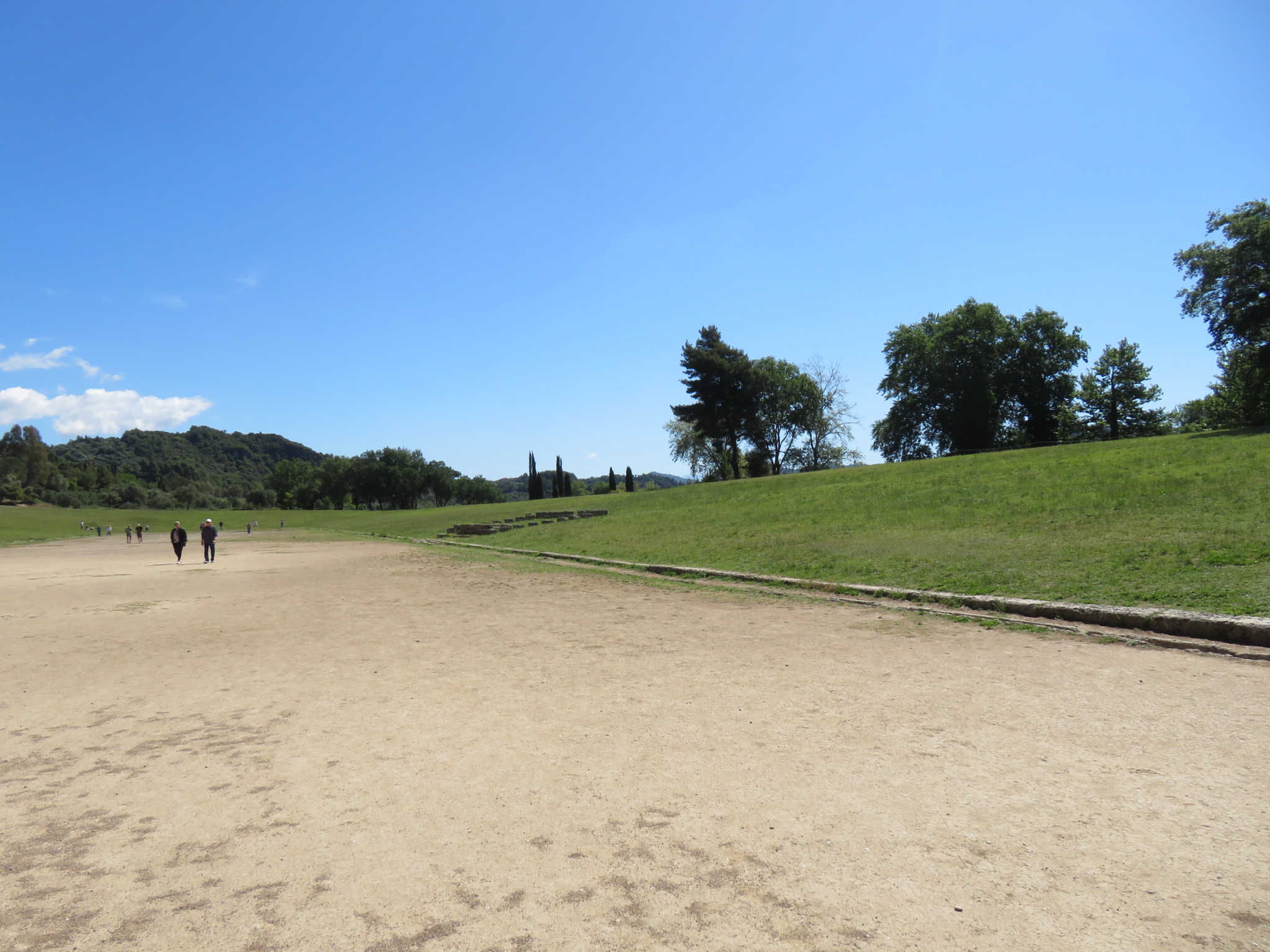
The ancient stadium is a field with start and end lines marked off. Athletes entered under an archway at the start, with spectators sitting on the field’s sloping sides. The length of the field was called a stadion, an ancient Greek unit of distance, which is estimated to be somewhere between 170 – 230 yards.

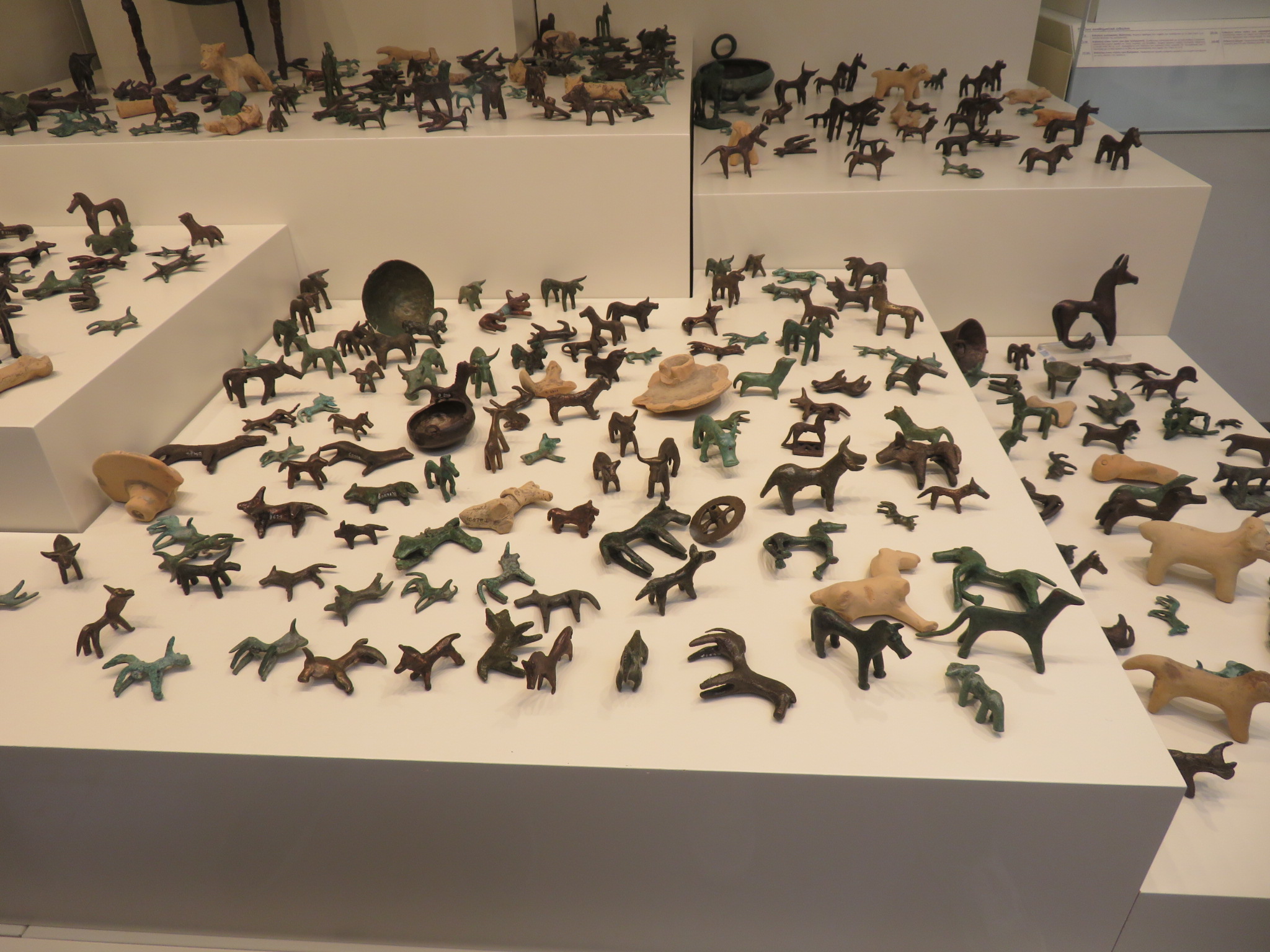
The nearby Archaeological Museum of Olympia is considered one of Greece’s most important museums. It contains one of the richest collections of bronze in the world, with figurines of humans and animals, griffins, sphinxes, cauldrons, weapons and more. There are also many terracotta statues, as well depictions of the labors of Heracles.


When we returned to the ship, we were greeted by a reception line from the ship staff. They were holding red umbrellas, dancing, and welcoming us back with glasses of champagne. We are certainly being made to feel special by Viking.


 So Many Exciting and Beautiful Places!