Saturday, April 27, 2024
Santorini is one of the seven Ionian Islands, and is named for St. Irene. We tendered from the ship this morning to Santorini’s main port at Athnios, then took a ride to the village of Oia on the north end of the island. Oia, pronounced Ee-ya by the locals, enjoyed prosperity in the 19th and 20th centuries with its merchant fleet that traded in the Eastern Mediterranean, from Alexandria to Russia. Oia had suffered extensive damage from an earthquake in 1956, and it was redeveloped into a tourist town. In 1976, Oia was included in a program for preservation and development of traditional settlements, and has received a number of prizes for its work.
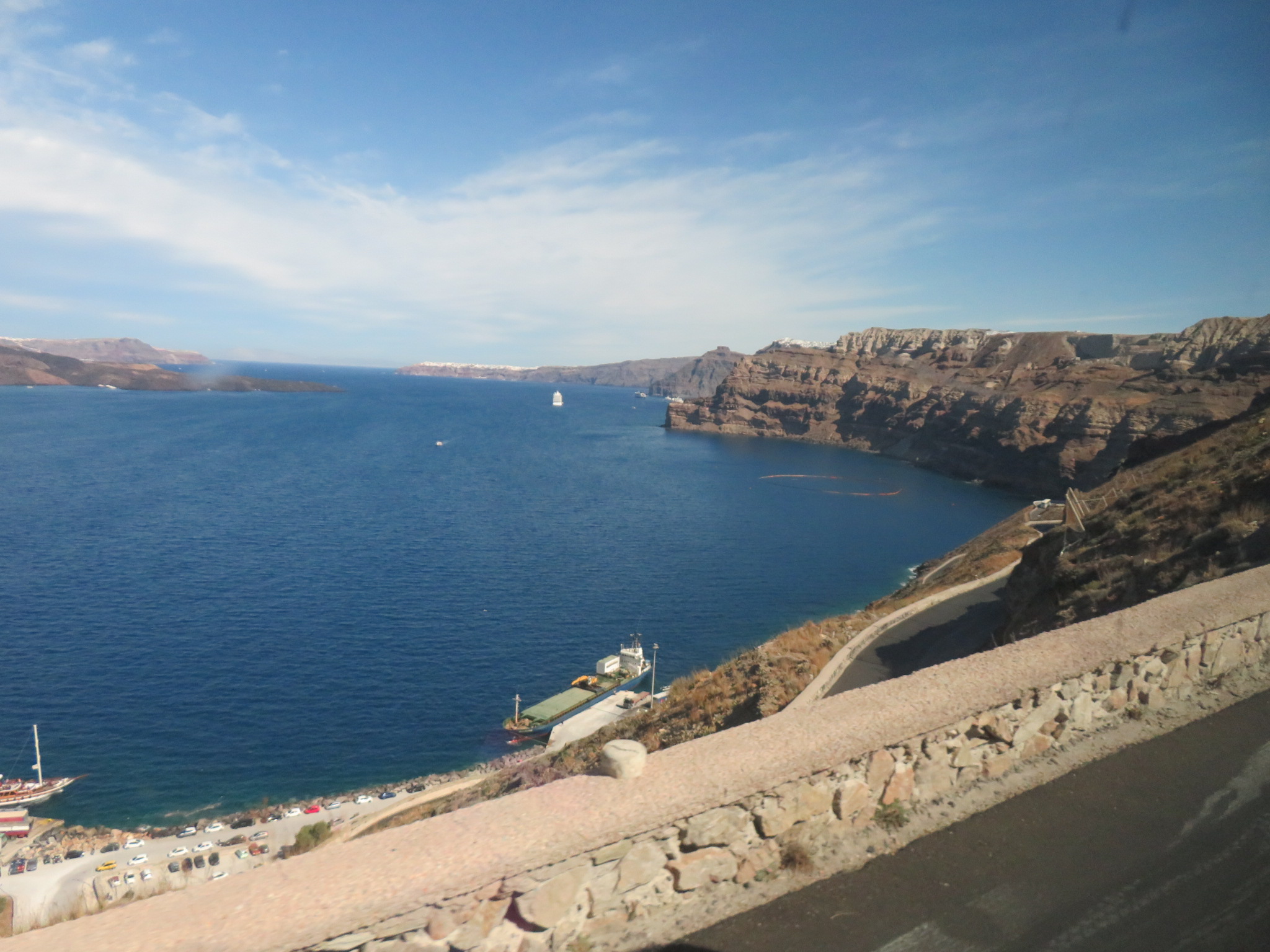
Oia is built on the steep slope of the caldera that forms the island of Santorini. The roads to get there have several hairpin curves. Oia’s houses and restaurants are built into niches carved into the caldera. The homes are typically painted white, and trimmed and roofed in blue. Many of the churches have blue roofs as well. The buildings are freshly painted twice a year, just before Christmas, and just before Easter. Since their Easter is next week, everything is very bright.

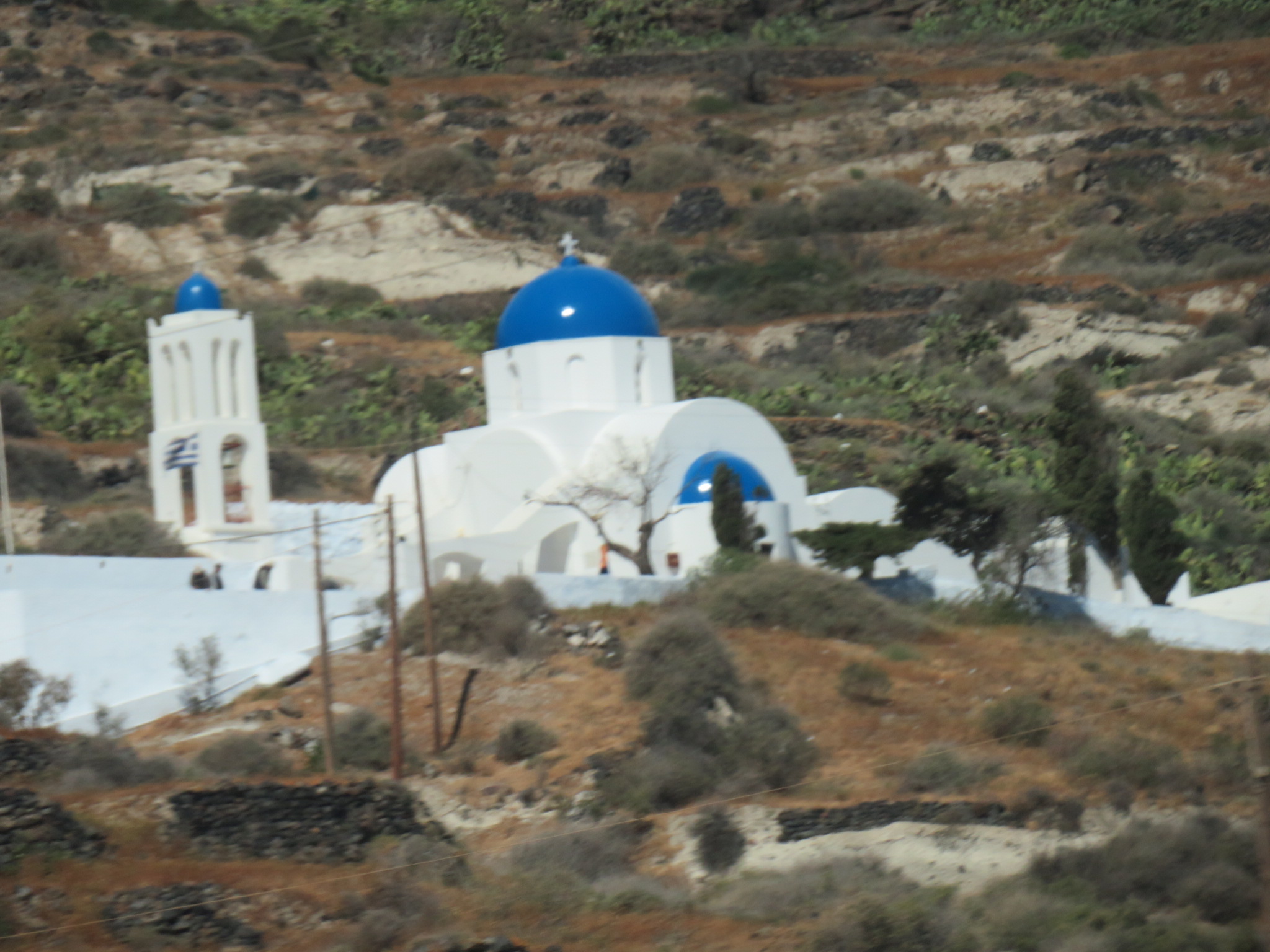
In 1970, the government decided to bring electricity here. Churches got priority for the connections, at no charge. The residents here decided to improve their positions in line for electricity, so many of them built small churches on their property.

At the pinnacle of the village of Oia is a ruined castle which was the seat of the Argyri family during Venetian rule. With its 360 degree view, it serves as a lookout point. An old windmill in town often appears on postcards. This windmill can only be seen from a house in the town, so tourists don’t get to replicate that shot.
Our time in Oia was very short. We went to the area that’s billed as the best scenery, then did a “point, focus and shoot” one more time. We did have enough time to enjoy gelatos at Lolita’s. Our guide said it was the best gelato in Santorini, and it was very good indeed! As we traveled between cities, we noted that most of the houses have arched roofs, which are resistant to earthquakes.


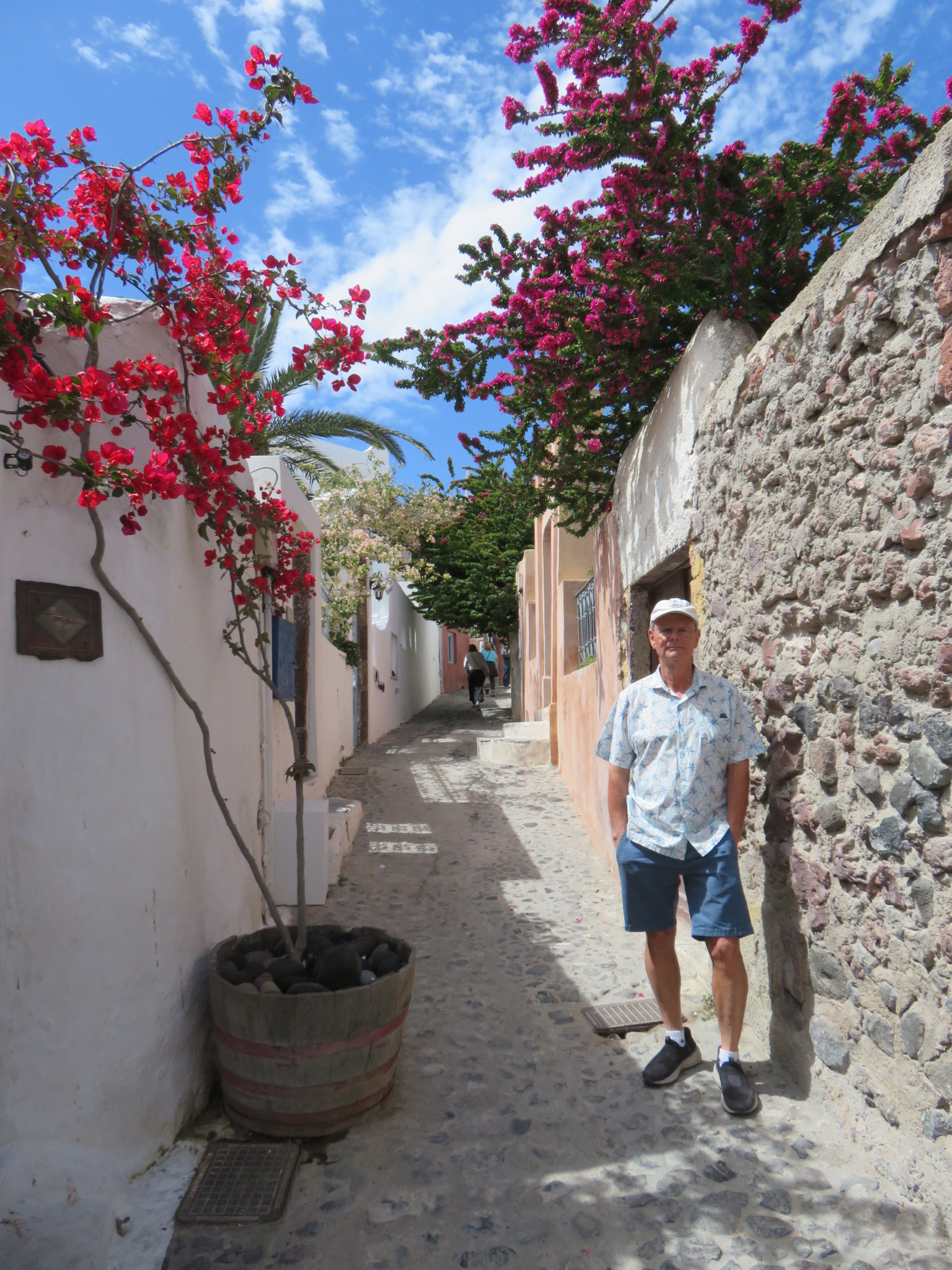
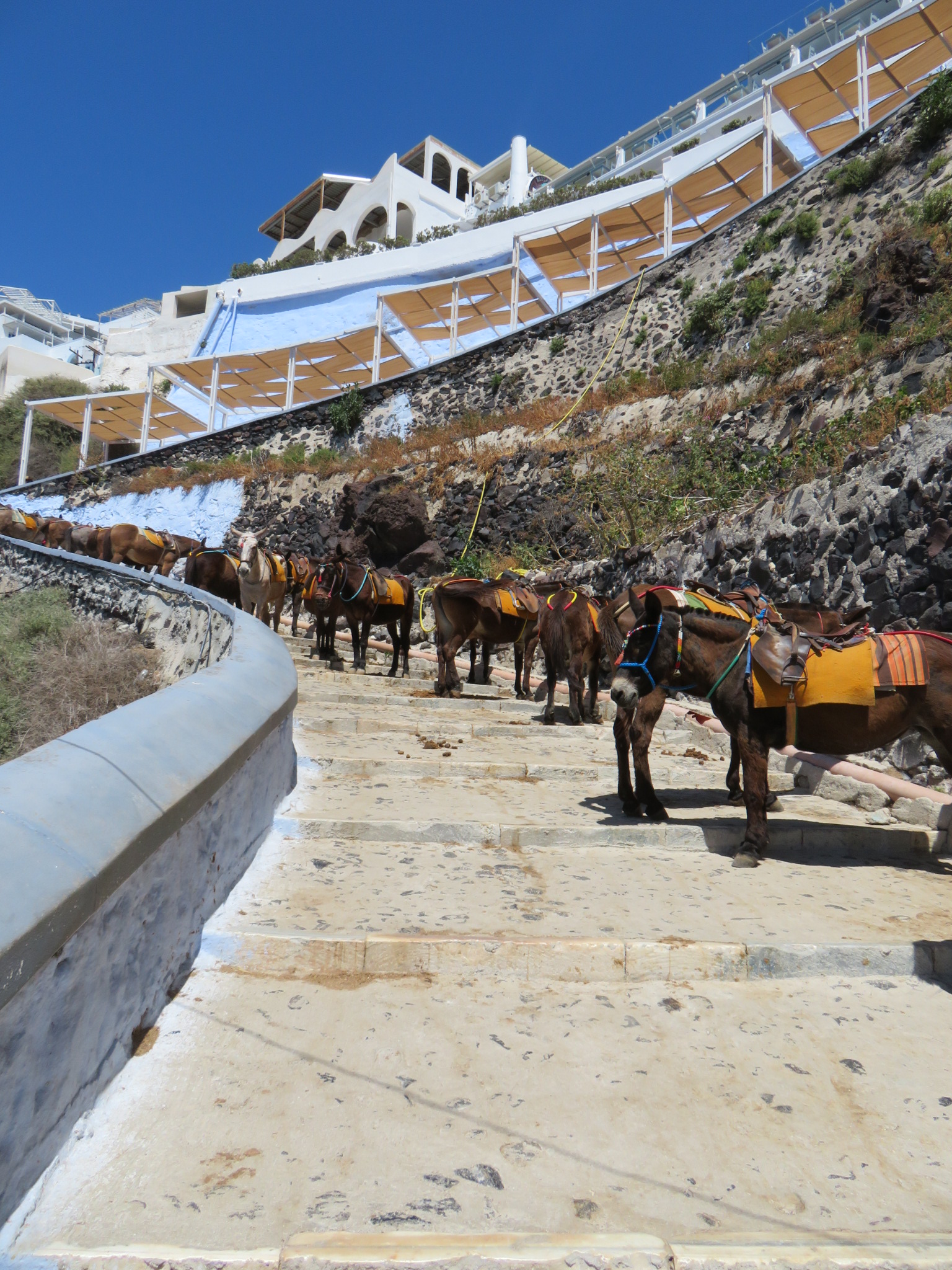
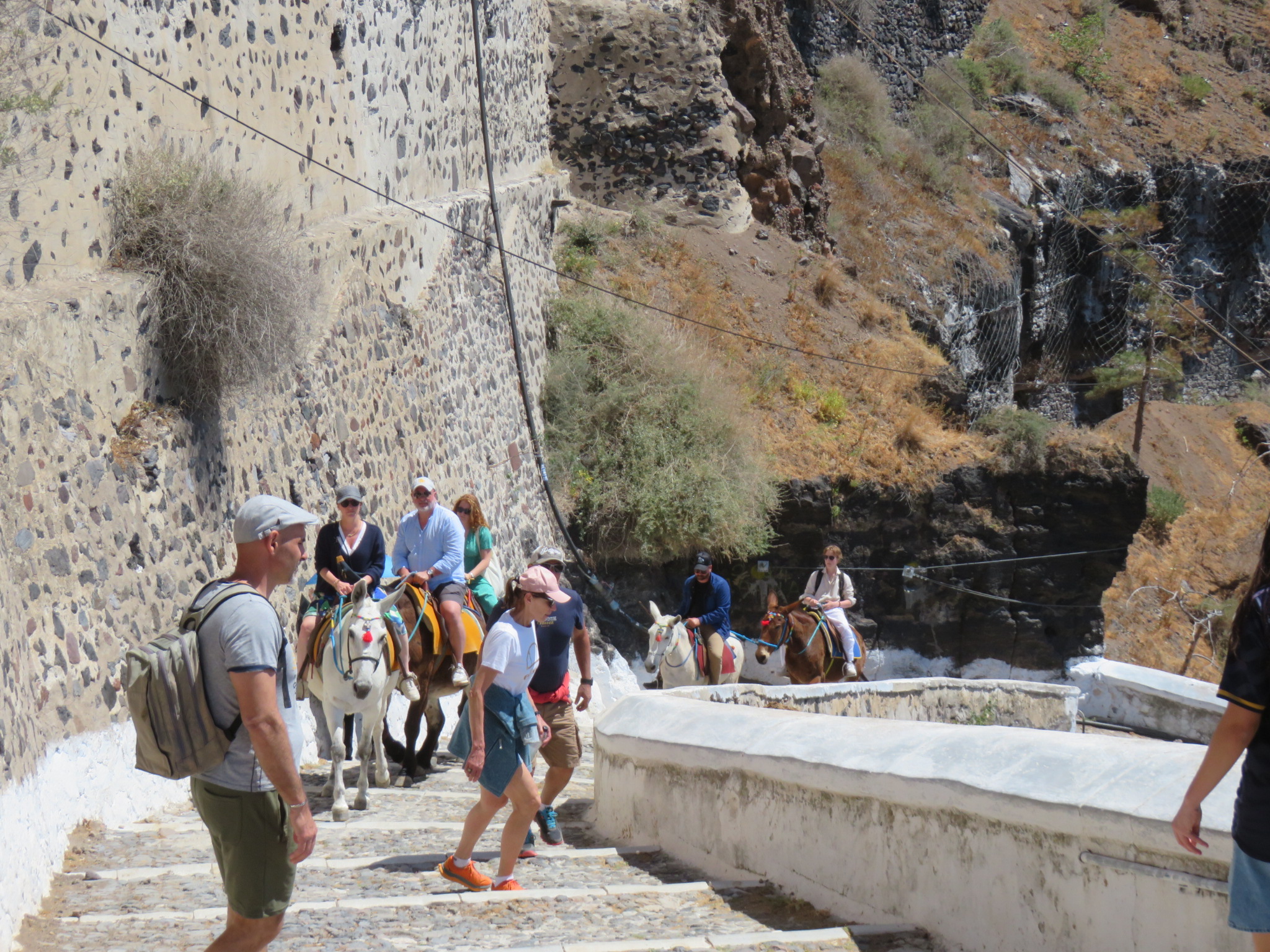
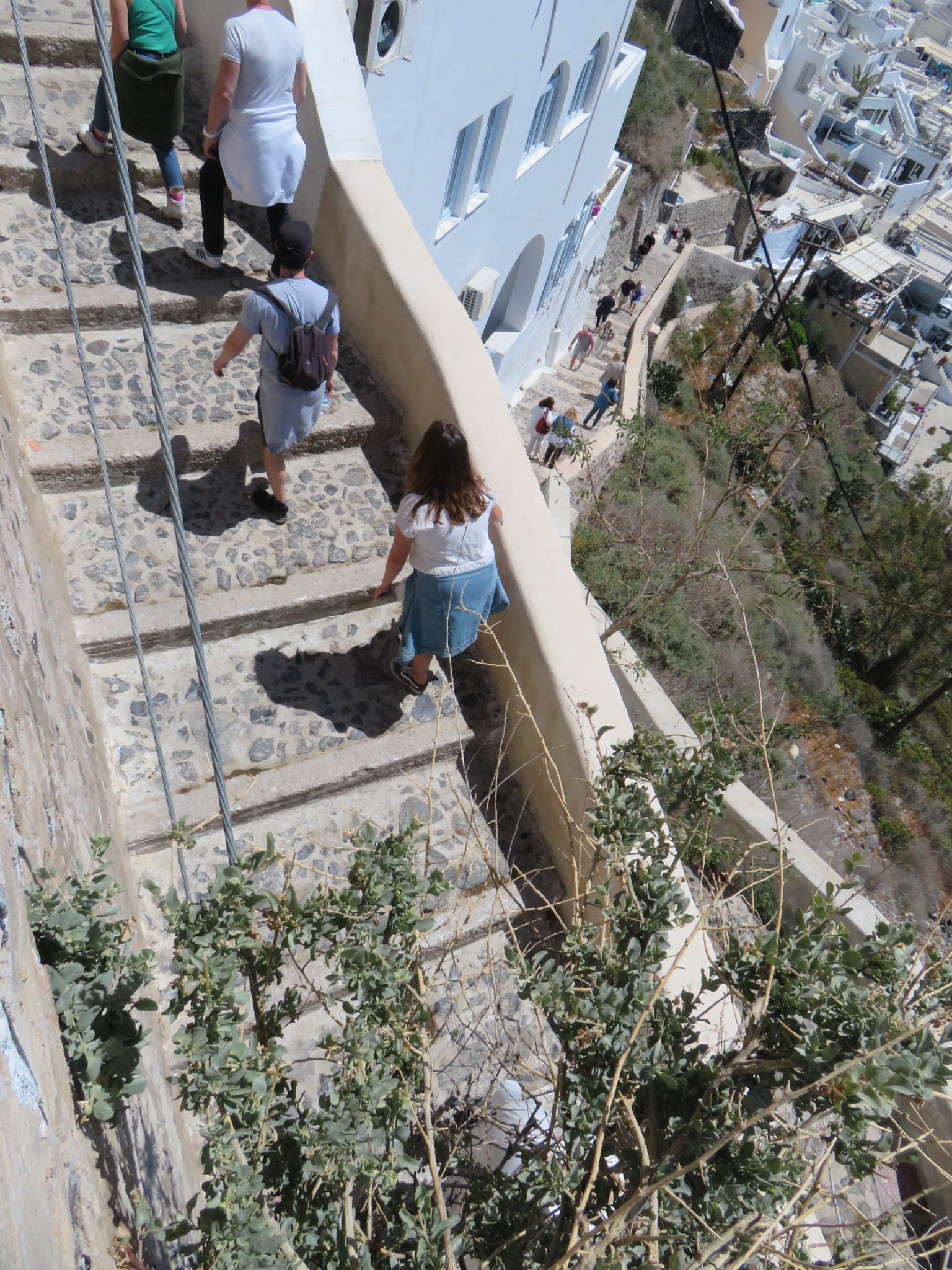
Our second stop was at the city of Fira, mostly to give us a chance to purchase souvenirs. To get from Fira back to the old port, we had three options: ride a donkey down (very smelly,) ride a cable car (long, long line waiting,) or walk down 600 steps (trying to avoid the donkey leavings on the way.) We chose the steps, a switchback route which took about 30 minutes. Those steps are well spaced, so our actual footsteps were much greater than 600. They are also somewhat treacherous, between the donkey droppings and the slope, so I think we should get credit for 3,000!


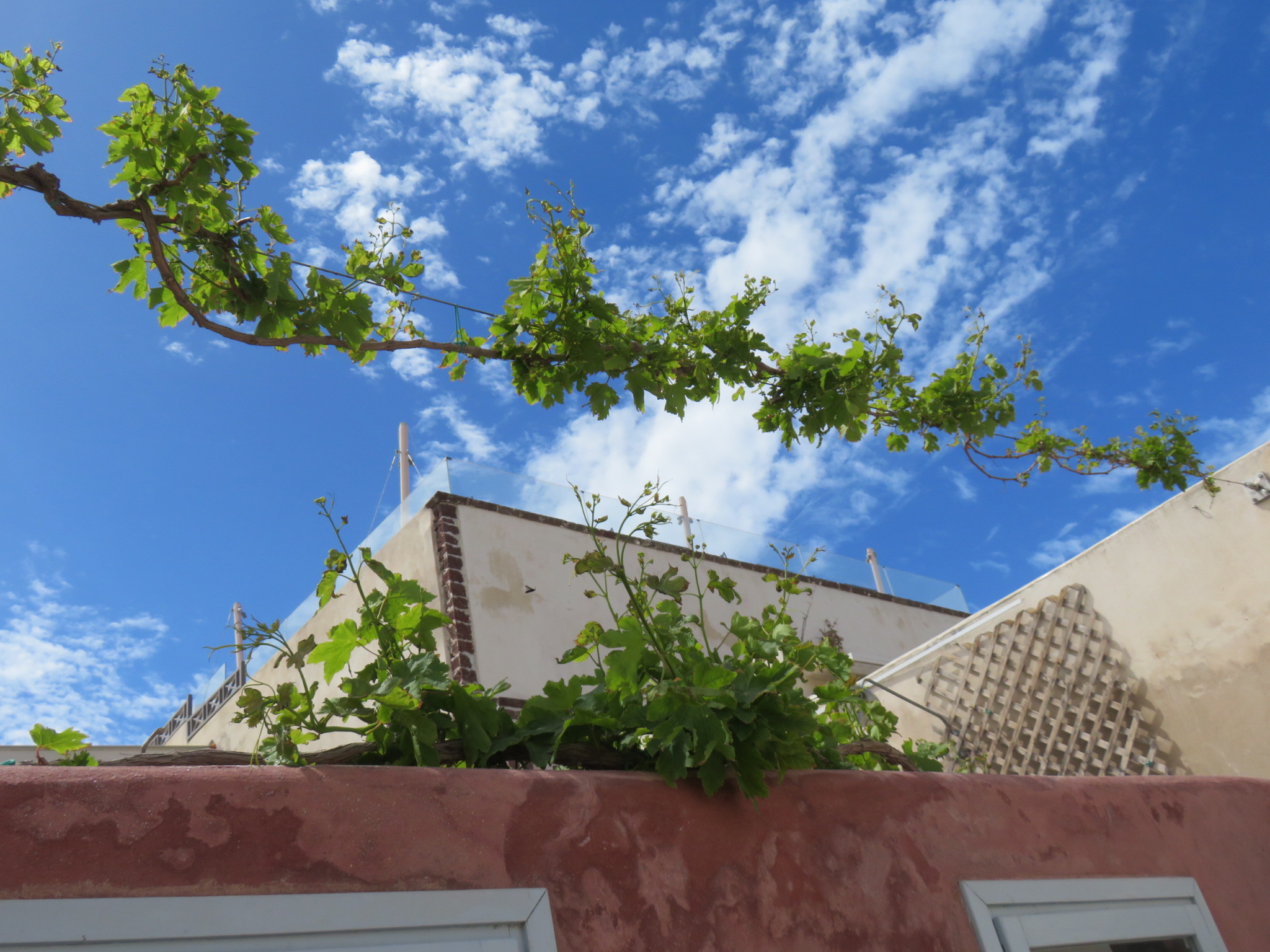
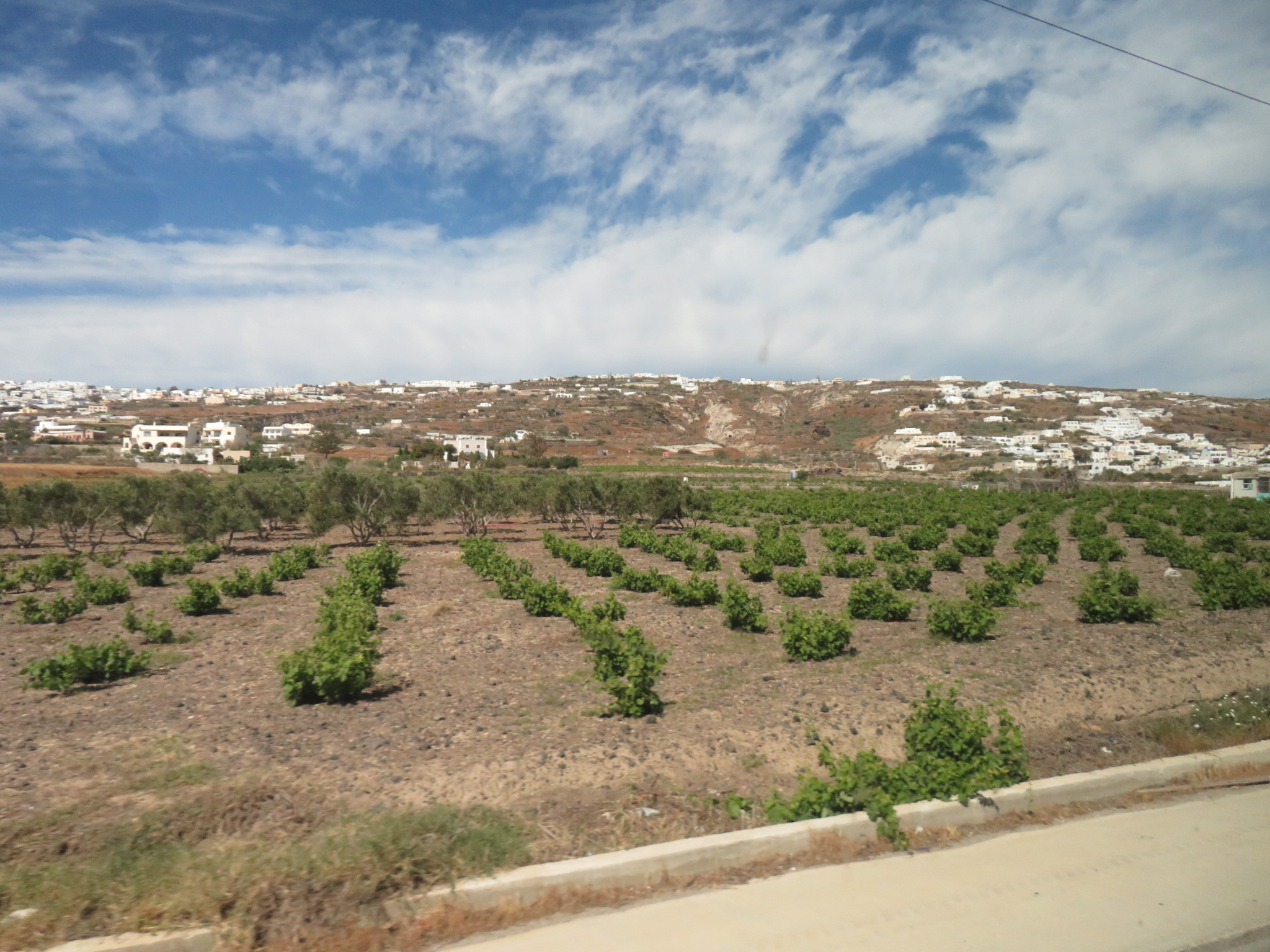
There are many vineyards here on Santorini, with roots that can be several centuries old. These old vines are very valuable because the roots have grown deep into the soil, allowing them to reach any moisture that is available. Rather than the grapevines we are used to, the grape growers here use a bush-training system (koulara). The vines are woven into baskets with the grapes facing the center of the ring. Leaves and vines protect the grapes from harsh winds and sunlight. Dew will accumulate in the baskets bringing much needed moisture to the plants as well. Santorini has no natural source for fresh water, so it had to be brought in to the island. Now there is a desalination facility on the island so they can use water from the sea.


Sunsets are spectacular in Oia, which is located on the northern part of the island, and people gather every evening at Sunset Serenade point to enjoy it. We will have left port before that time – alas! At the southern end is the Akrotiri archaeological site. Akrotiri was a Minoan settlement that was destroyed by a volcanic eruption around 1600 BC, one of the largest in human history. After that eruption, the islands of Santorini formed a continuous ring of islands, with only one entrance from the outside. Later eruptions caused the form we see today, with a few islands surrounded by Santorini and Thirasia. Approximately 200 feet of volcanic materials. Archaeological excavations were started in 1870. Unfortunately, we were not able to visit the site today. Too much to see, too little time!!


 So Many Exciting and Beautiful Places!