
Wednesday, May 1, 2024
Rhodes was home to one of the Seven Wonders of the Ancient World – the Colossus of Rhodes. Constructed in 280 BC, after Rhodes successfully fought off an attack by Macedonia, it was said to be over 100 feet tall, about the size of the US Statue of Liberty. It was a statue of the Greek sun god, Helios. Unfortunately, it collapsed during an earthquake about 50 years later, and was not rebuilt. During an Arab attack in 653 AD, it was completely destroyed and the remains were sold.
The island of Rhodes is in an active earthquake area where the African Plate is sliding under the Aegean Sea Plate, so it is rising on the south side, and sinking on the north. The movement is occurring at about 1.5 inches per year.
The Medieval City of Rhodes was named a UNESCO World Heritage Site in 1988, for its outstanding universal value.
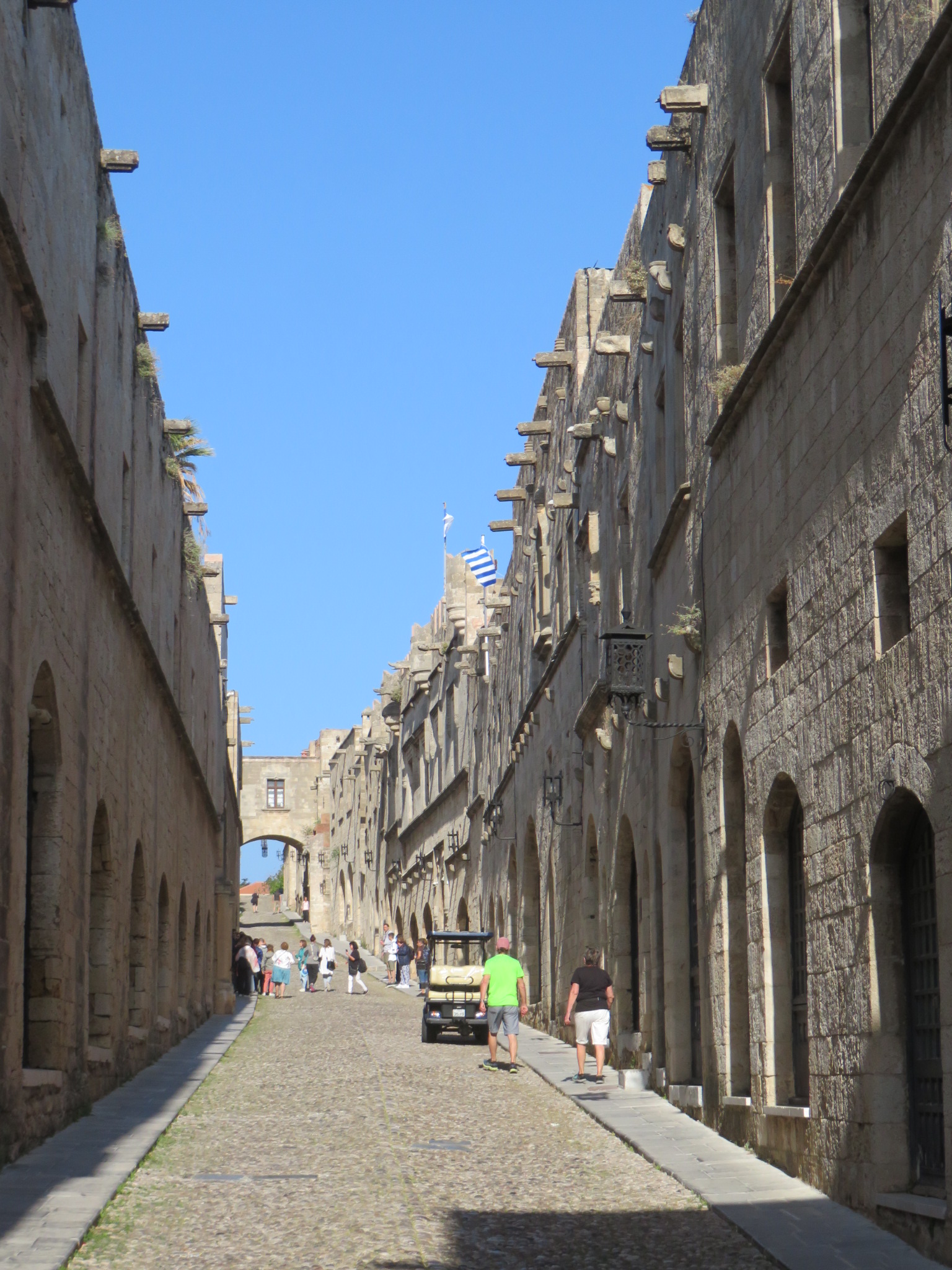
We walked through one of the three gates to the Old City, then made our way to the Street of the Knights. The Knights Hospitaller, or Order of Knights of the Hospital of Saint John of Jerusalem, was a Catholic military order formed in the 11th century in Jerusalem, to defend the Holy Land during the Crusades. After Islamic forces reconquered Jerusalem, the Knights relocated to the island of Rhodes, where they were able to withstand several sieges until finally falling to Suleyman II after a 6-month siege in 1522.
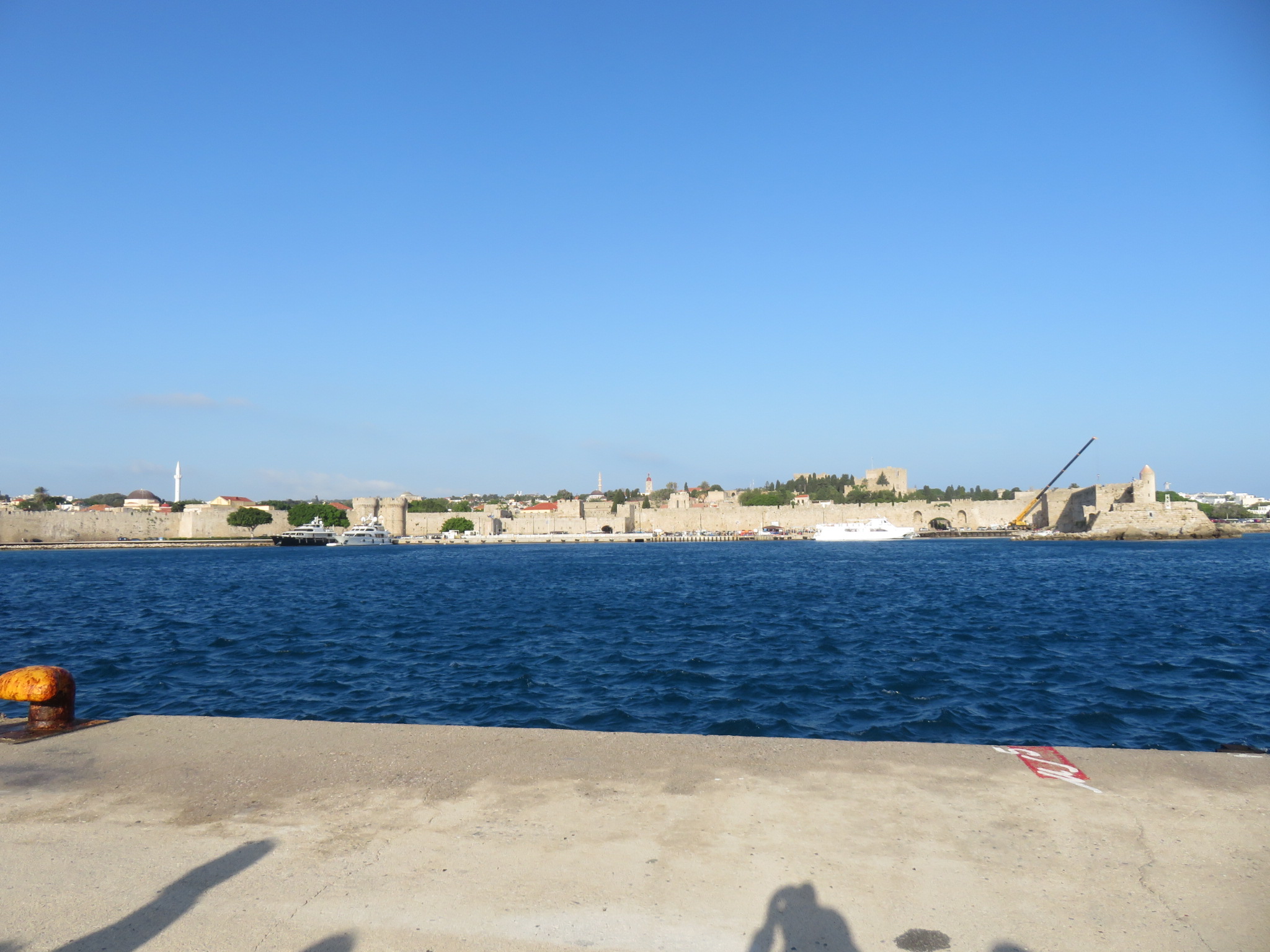

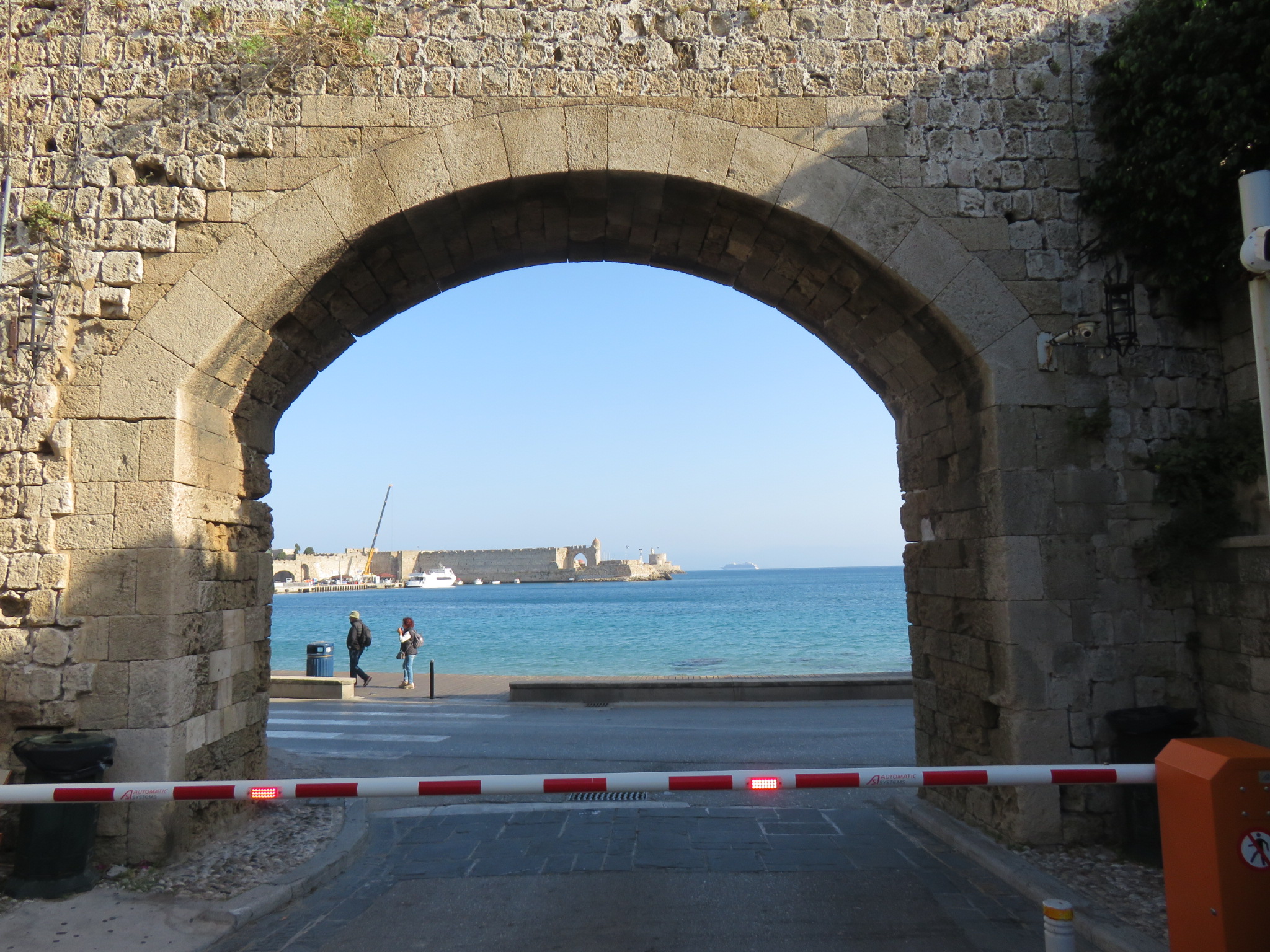

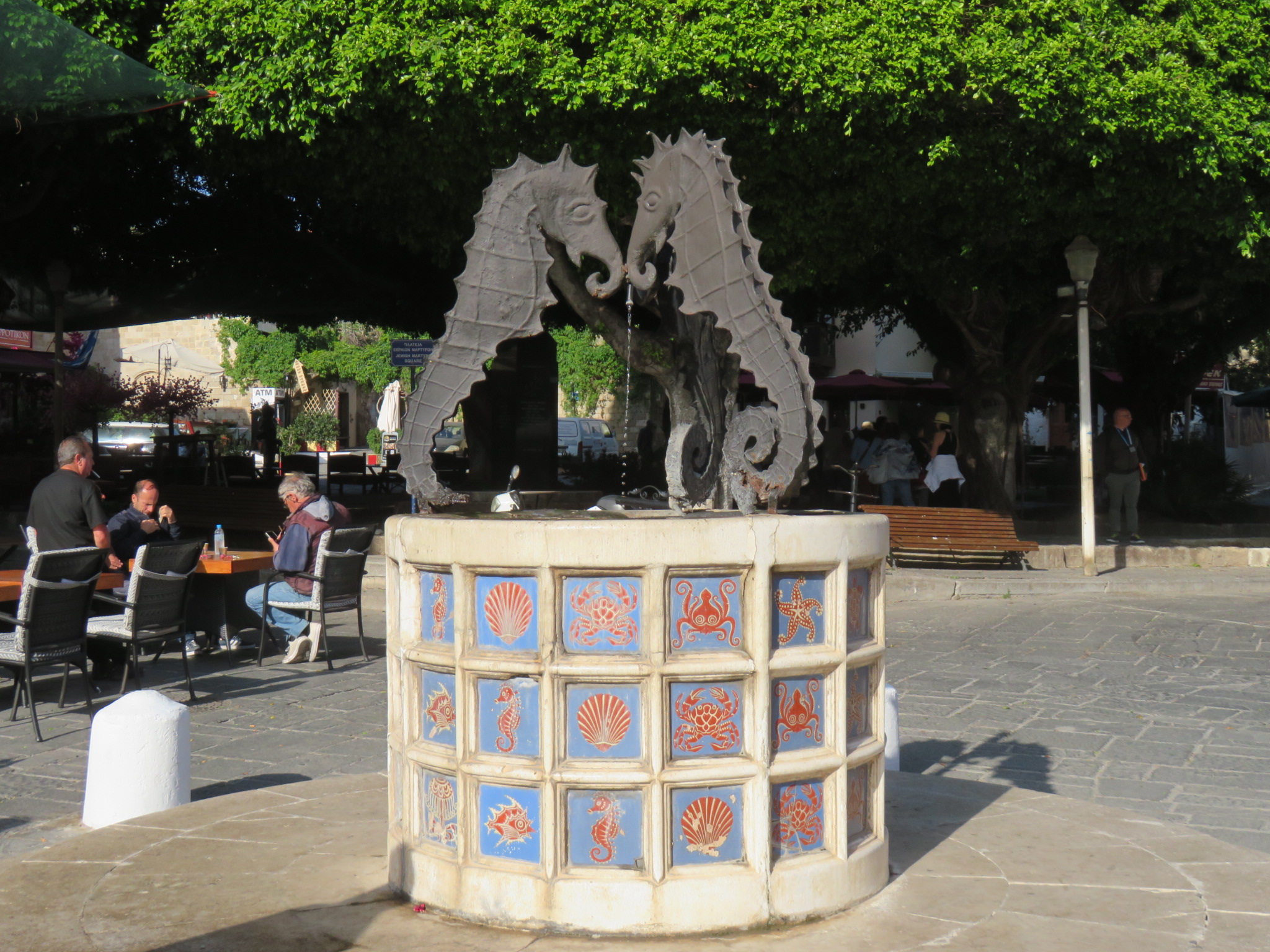
The Palace of the Grand Master was originally built in the 7th century as a Byzantine citadel, possibly on the site of the original Collosus. In 1309, the Knights converted it to their administrative headquarters and palace of their Grand Master. It was later used as a command center and fortress by the Ottomans following their capture of the island. The palace was severely damaged in 1856 when a gunpowder magazine stored there was struck by lightning. The current building was reconstructed between 1937 and 1940 with little regard for historical accuracy.


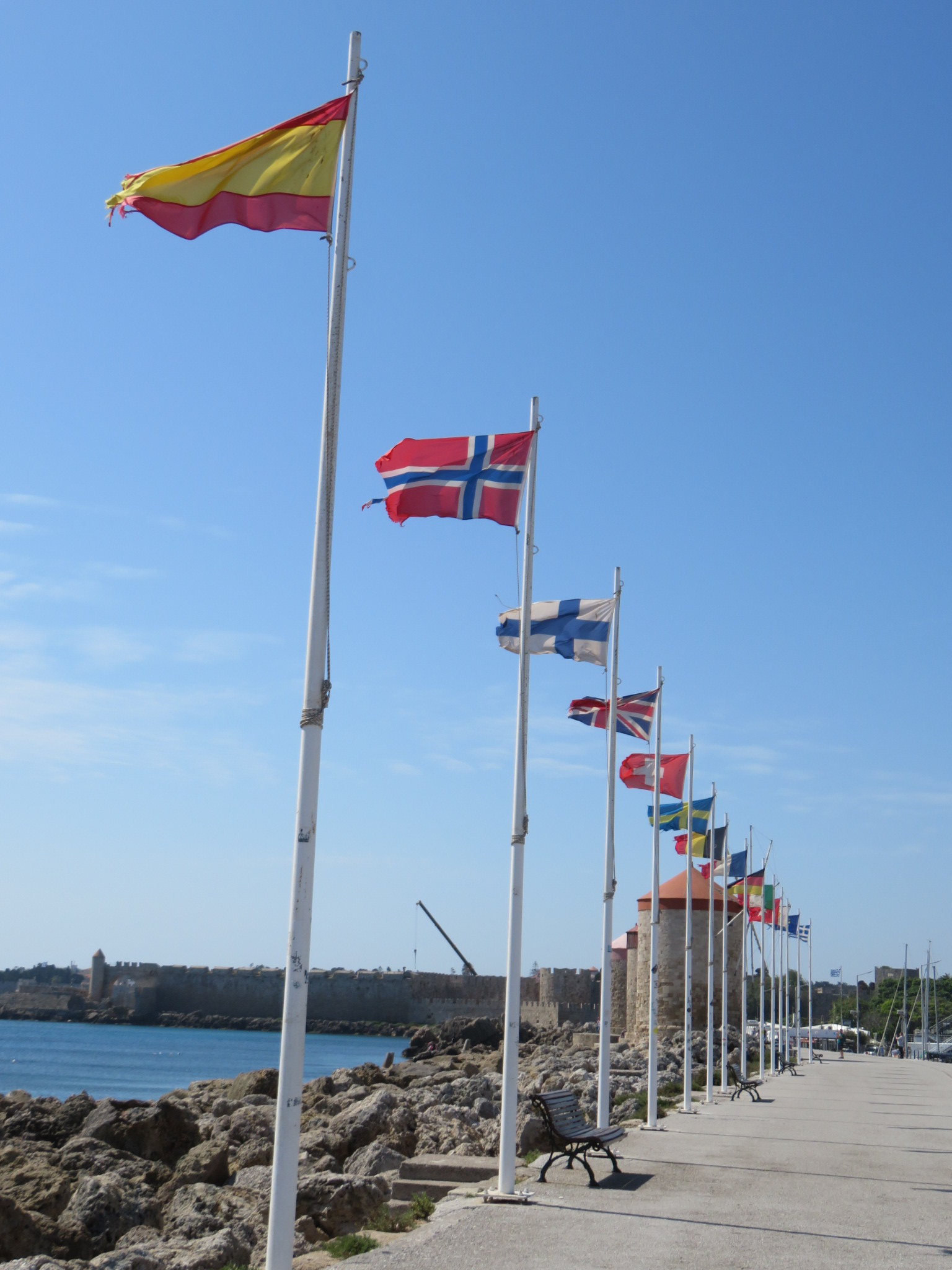
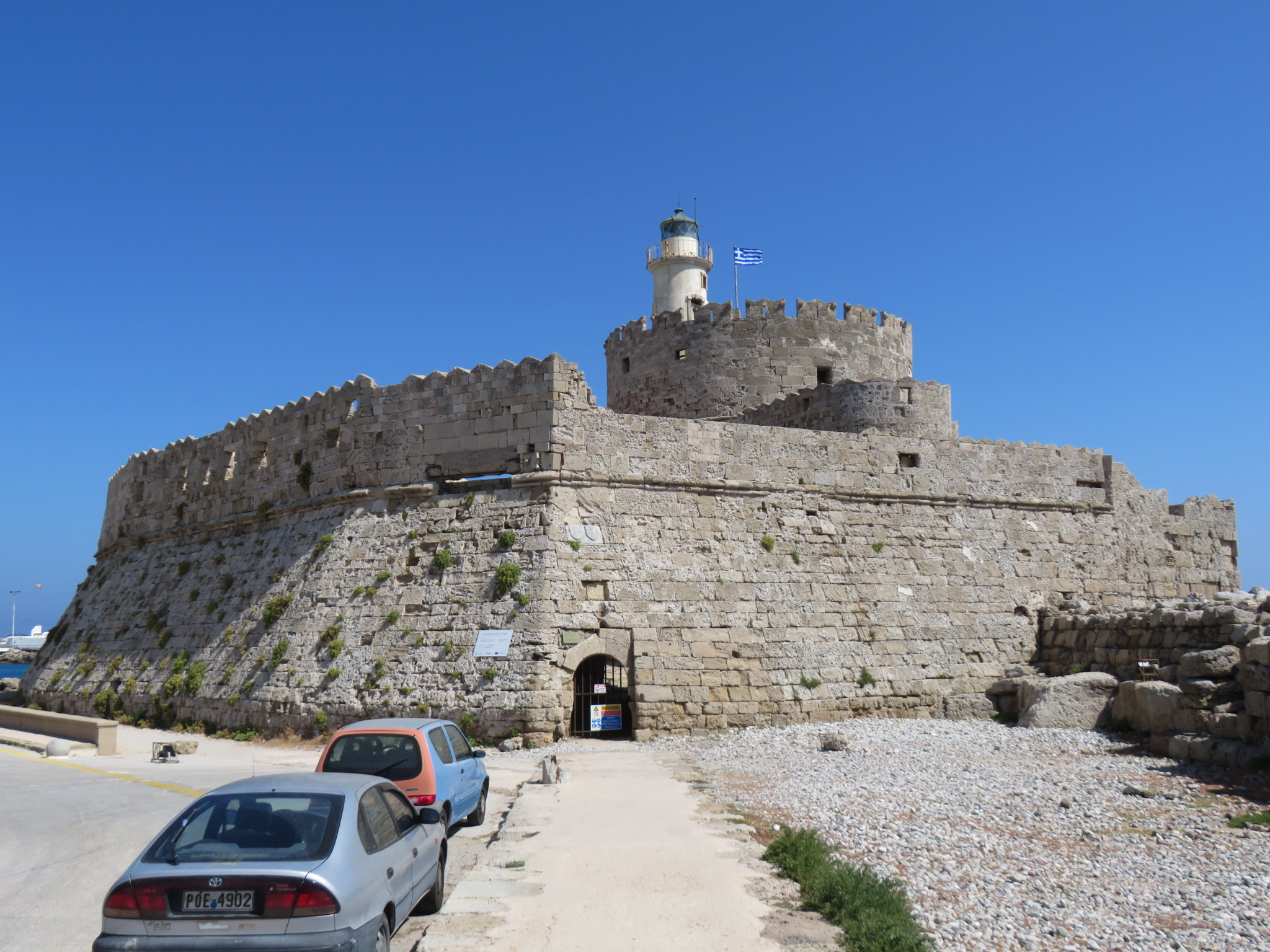
We strolled down to the Fort of St. Nicholas, a Byzantine structure in the Mandraki Harbor at the north end of the city and the island. A tower had been built by the Grand Master around 1465 AD.
The Mandraki (in Greek Μανδράκι) was the military harbor and was guarded by a tower built between 1464 and 1467 by the Grand Master Zacosta at the end of the natural mole (breakwater). After the first Ottoman siege of Rhodes in 1480, the Grand Master d’Aubusson added a bastion around the tower.
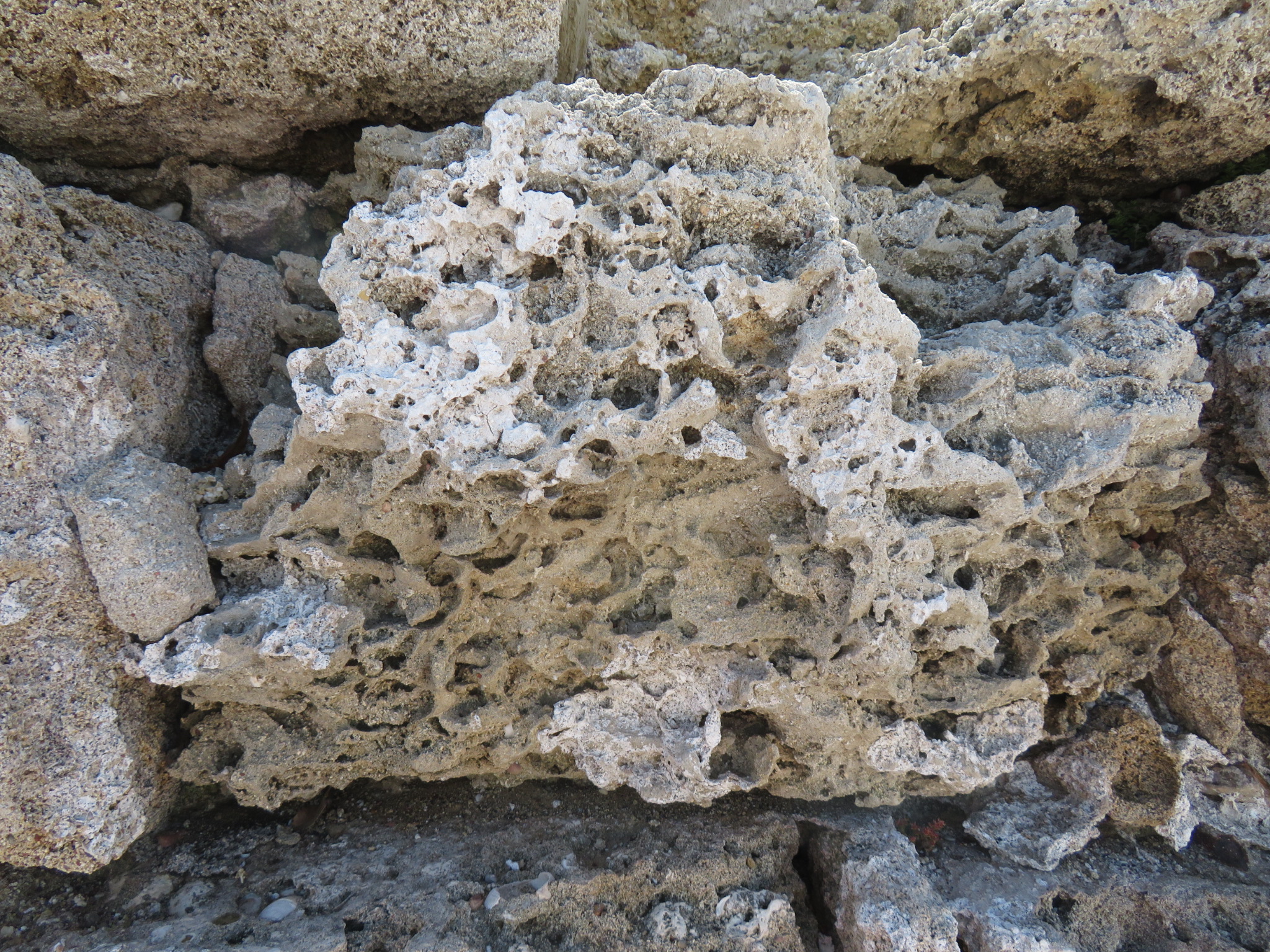
The lighthouse was added in 1863 by the French. Most of the buildings here are made of sandstone, which deteriorates over time. The lighthouse tower had to be rebuilt in 2007. The lantern was updated then as well, and is visible for 14 miles. The lighthouse is closed to the public.



 So Many Exciting and Beautiful Places!