Thursday, May 2, 2024
Heraklion (Iraklio in Greek) is the largest city and principal port of Crete, and sits just northwest of the ancient Minoan capital of Knossos. The town’s name has changed a few times over the years: Heracleum for the ancient Roman port; Khandaq, a Saracen word meaning moat around the 9th century; Candia by the Venetians; Megalokastro under the Turks in 1669; then Heraklion in the late 1800s.
Like many of the ports we have visited on this trip, Heraklion has an Old Town. Some of the sites there include the Koules Fortress from the 16th century, the Jesus Gate and the Venetian City Wall. The Fortress may have been established by Arabs in the 9th century. Later, the Byzantines built a tower on the site, which was destroyed by a 1303 earthquake. In 1462, the Venetians destroyed the Byzantine tower, and built the Castella a Mare, later renamed Koules.
The Jesus Gate is a public gate into the city of Heraklion. It takes its name from a church that once stood nearby. The water that supplied the city came through this gate via a large Venetian aqueduct that started from the springs of Mount Juktas and ended at the Morosini fountain. Dating back to 1628, this fountain is a popular meeting point in Old Town. Four lions support the beautiful fountain, and the base is decorated with icons from Greek mythology.

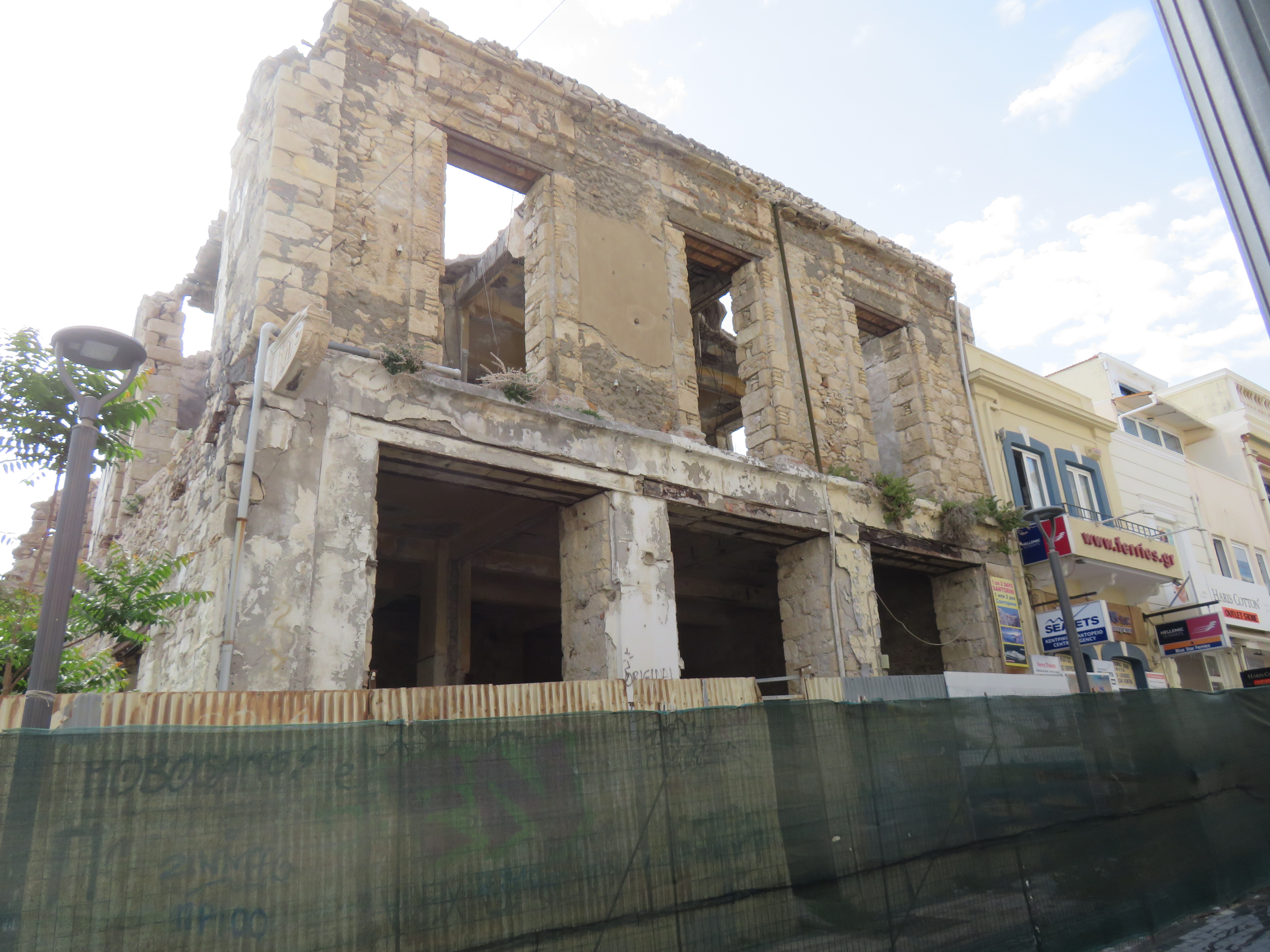
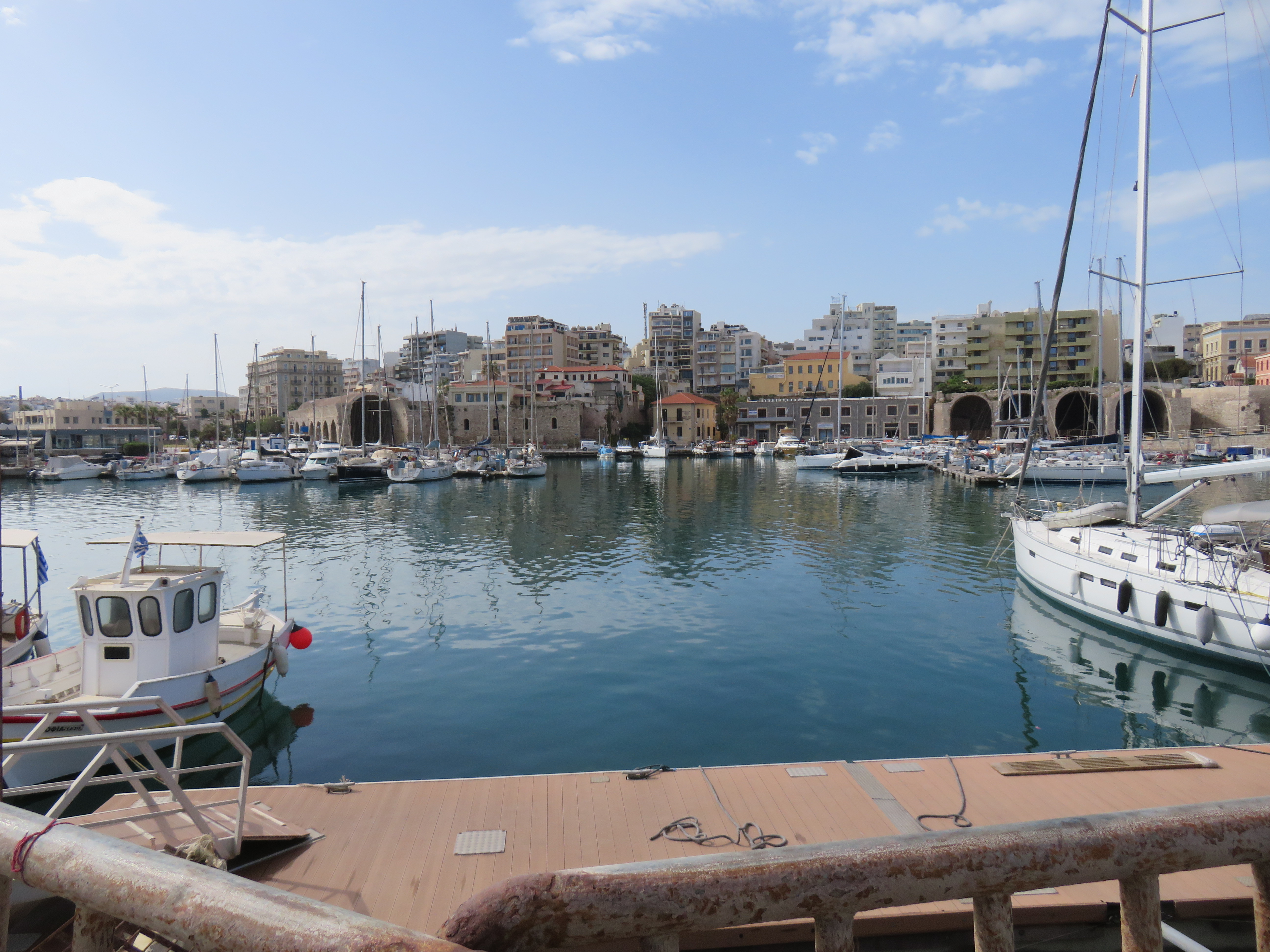

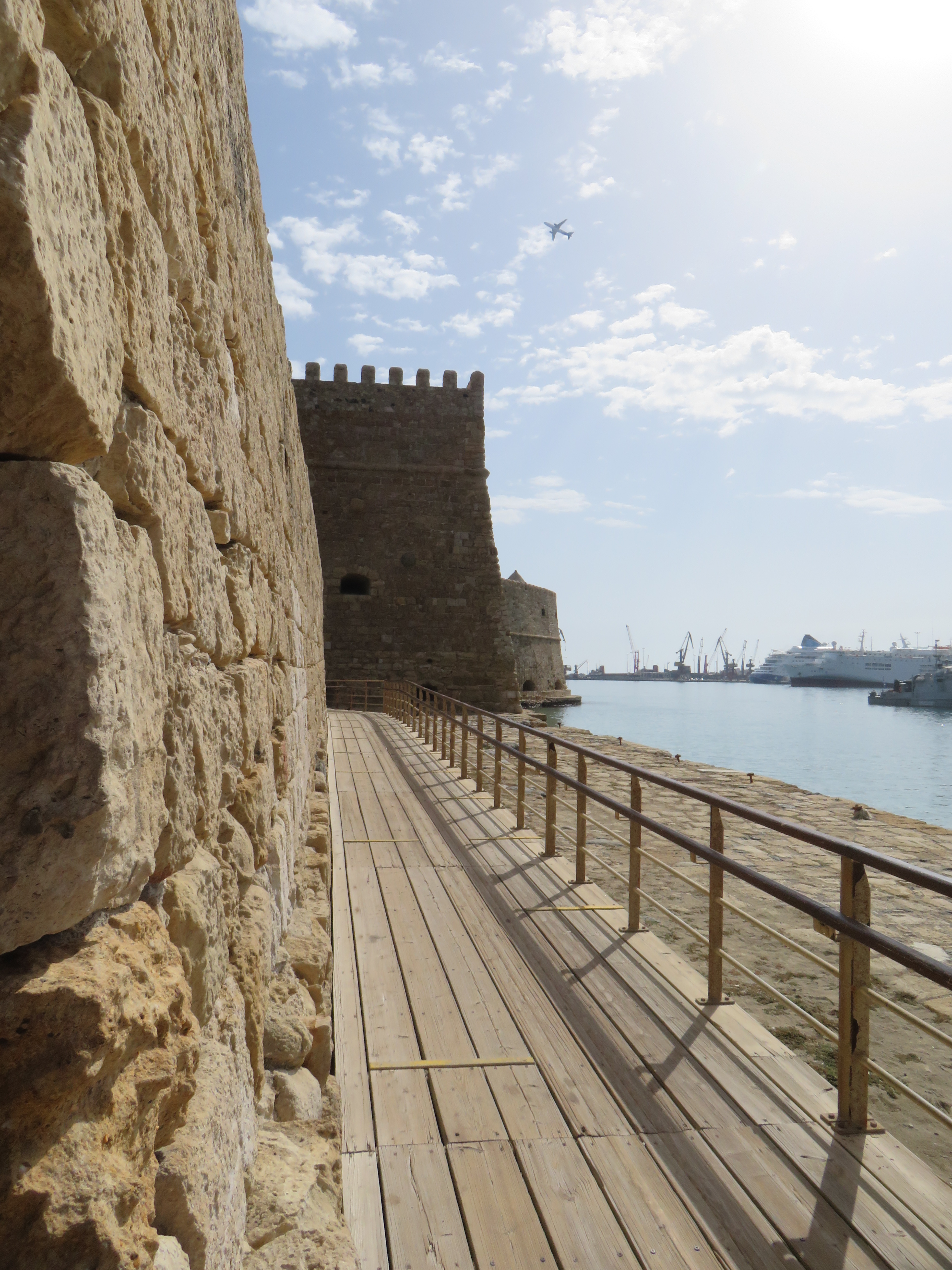
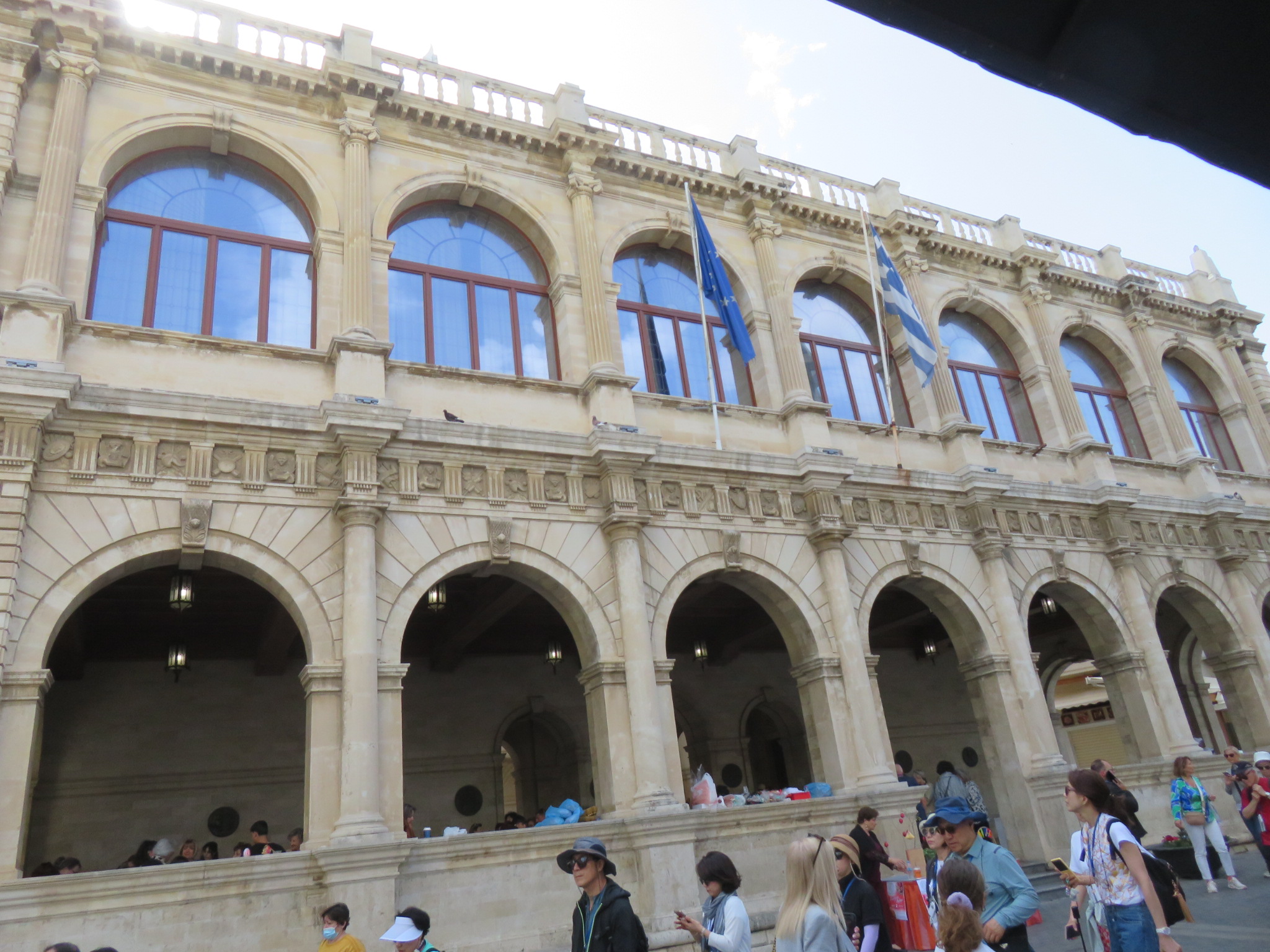
We had very little time here today, just a couple of hours, but that’s cruising for you. We simply get a taste of each port, so we can decide whether or not we want to return for time in the future. We did walk into the city for a look around, plus a gelato. While there, we came across a “pop-up” market at the Heraklion City Hall. This is Holy Week in Greece, and the market was selling breads, decorated eggs, candles, anything you might need for Easter.


Back to Santorini
This afternoon, we returned to Santorini, a semicircular archipelago of volcanic islands in the Aegean Sea. They surround a large caldera, with an active volcano in the middle. This volcano, Nea Kameni, last erupted in 1950. We actually sail over the volcano as we approach the port. The name Nea Kameni means “new burnt” in Greek.


The most famous eruption, the Minoan eruption, was one of the largest eruptions in history, five times more powerful than the Krakatoa eruption of 1883. The Minoan eruption occurred sometime between 1645 BC – 1500 BC. That powerful eruption may have inspired later tales of the lost continent of Atlantis. It may also have played a part in the Bible story of Moses and the Jewish exodus from Egypt.
At one time, Santorini was all one island. Numerous volcanic eruptions over millenia caused the island to be separated into its current configuration: Santorini, Palea Kameni, Nea Kameni, and Therasia, plus numerous tiny islands.
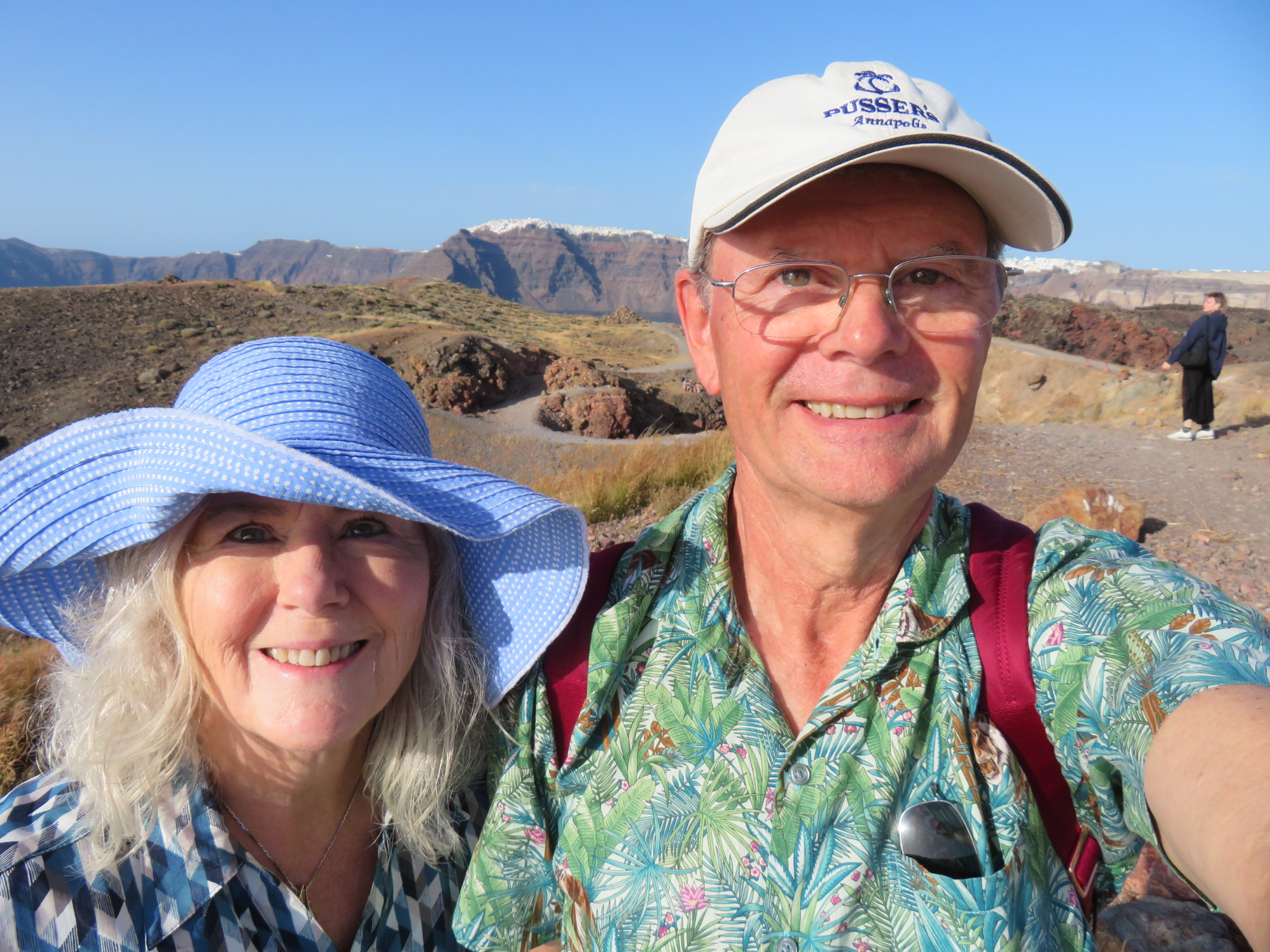
Today, we visited Nea Kameni, still considered an active volcano, with several craters, but dormant since 1950. We hiked uphill about 3/4 mile to the summit, and then around it. There are a number of sulfur vents at the newest crater, which give off steam and carbon dioxide. The volcano is monitored closely by scientists from the Institute for the Study and Monitoring of the Santorini Volcano (ISMOSAV), and is a protected scientific site.

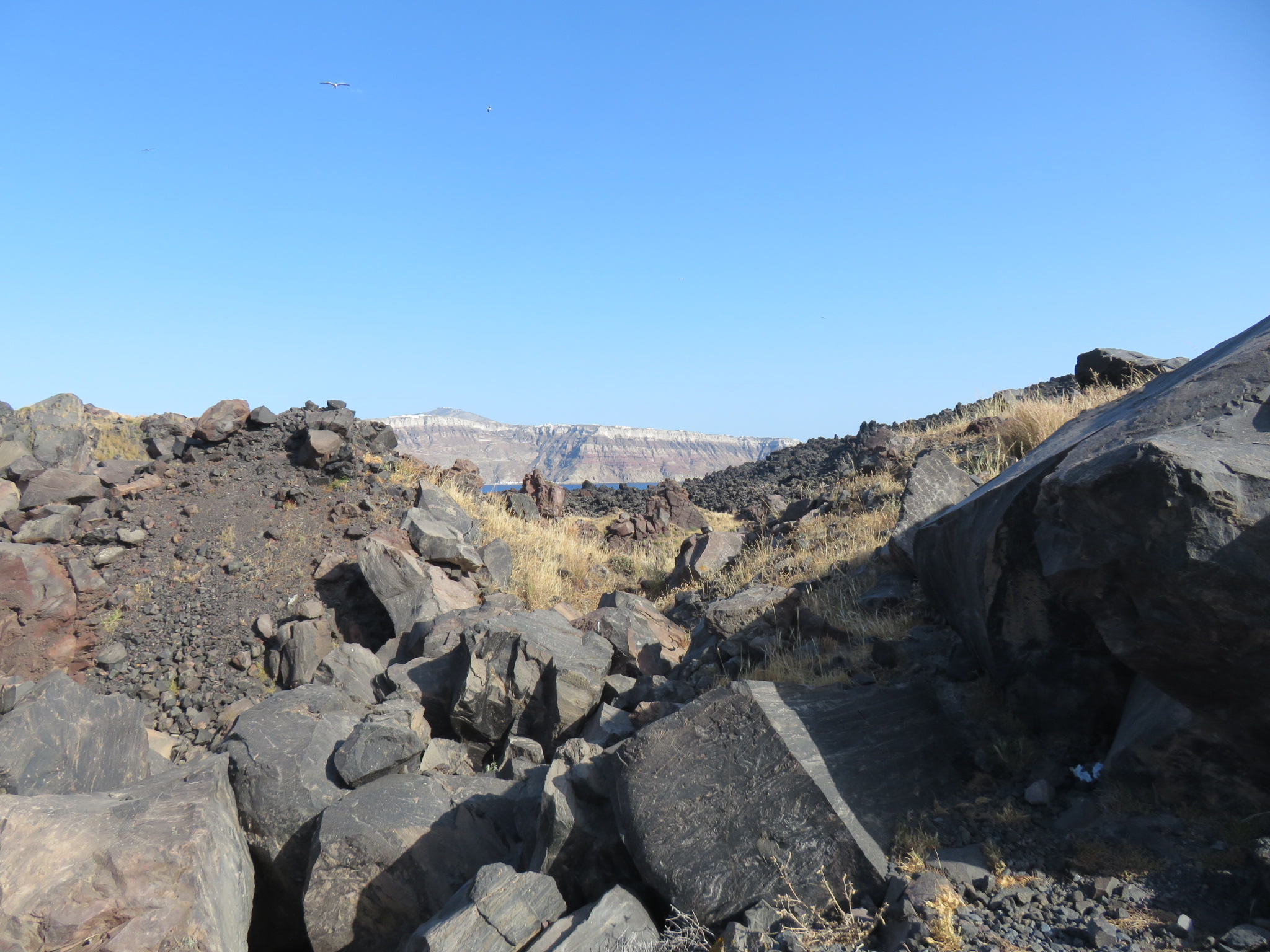
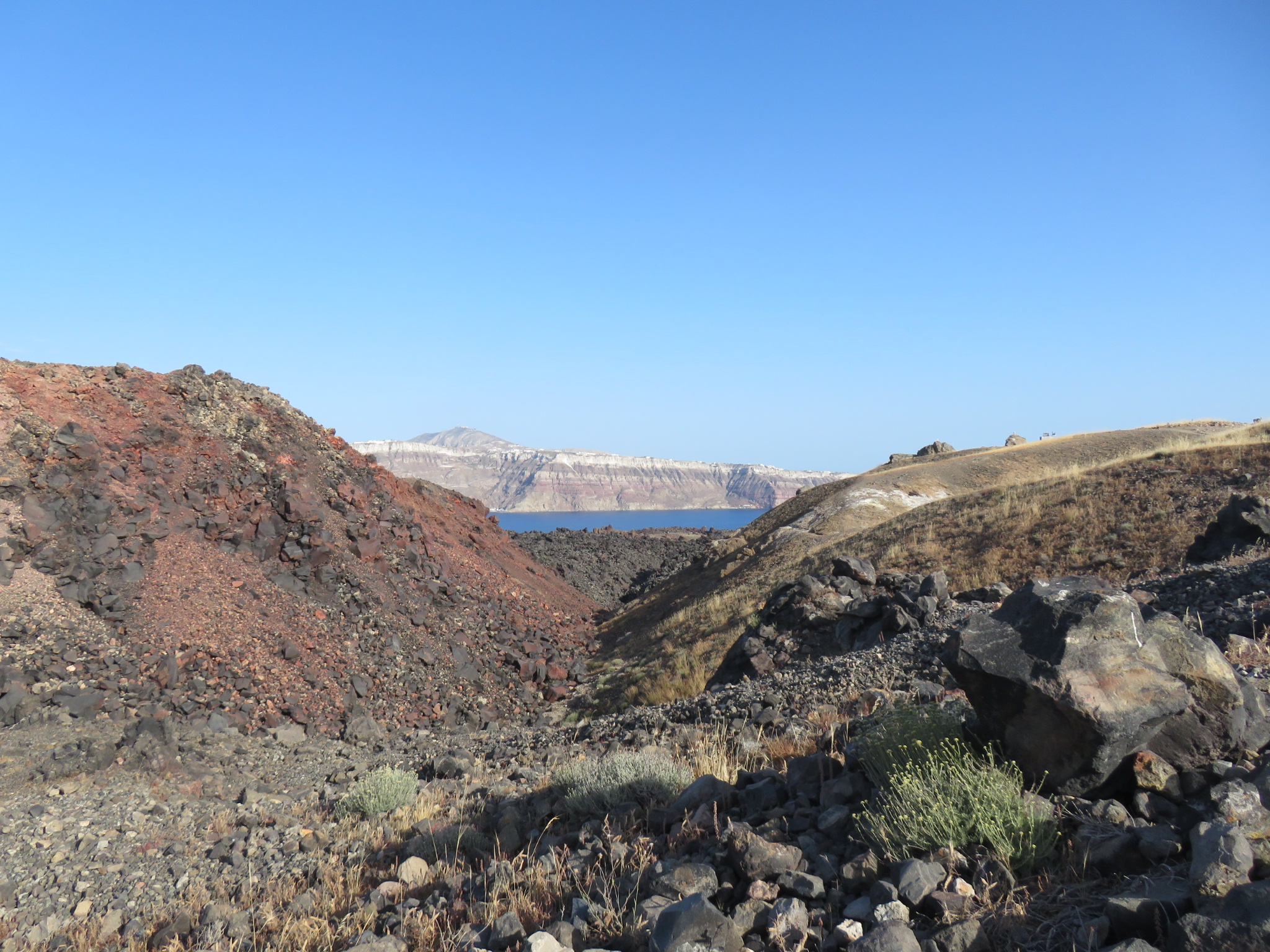
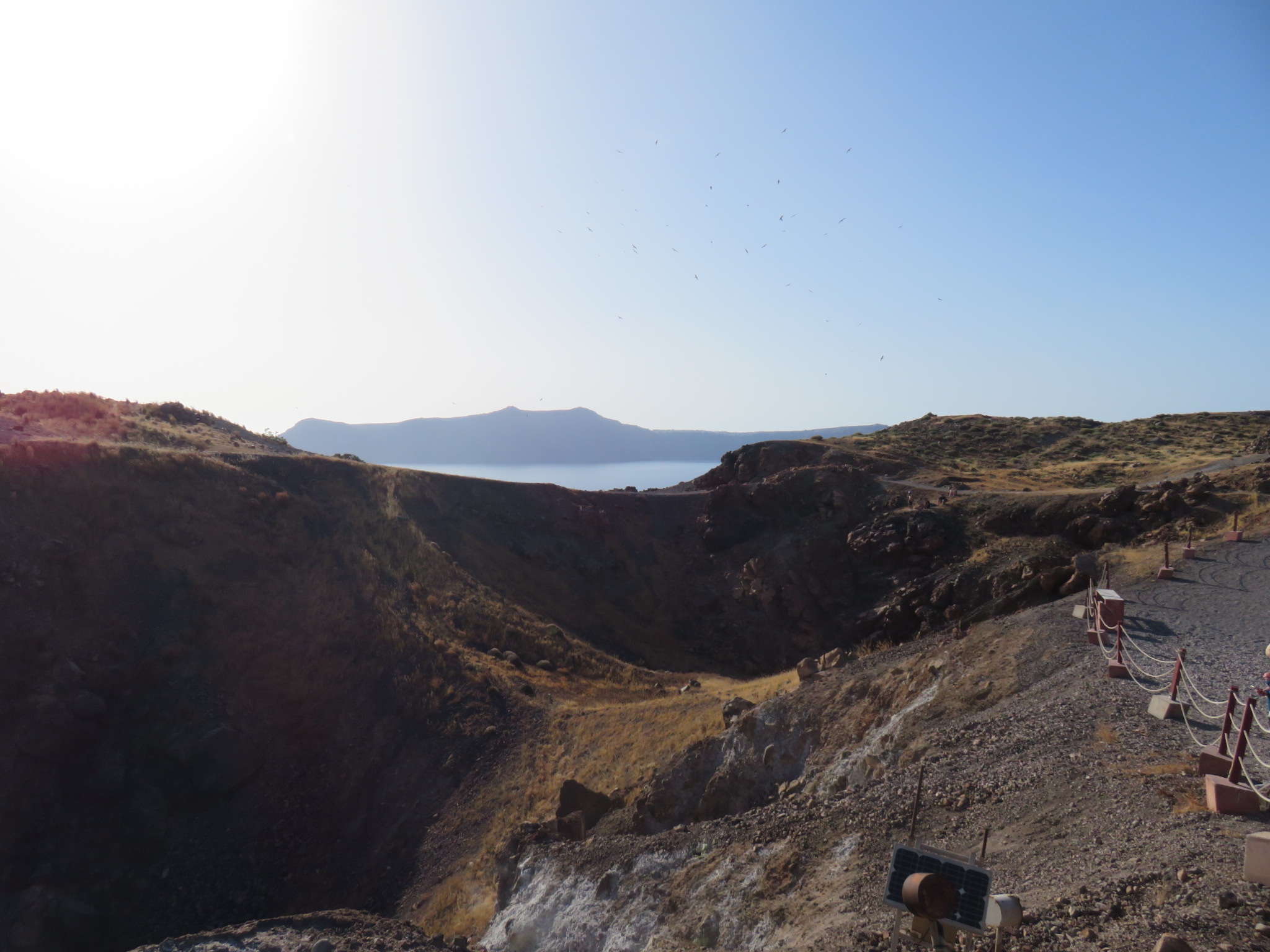
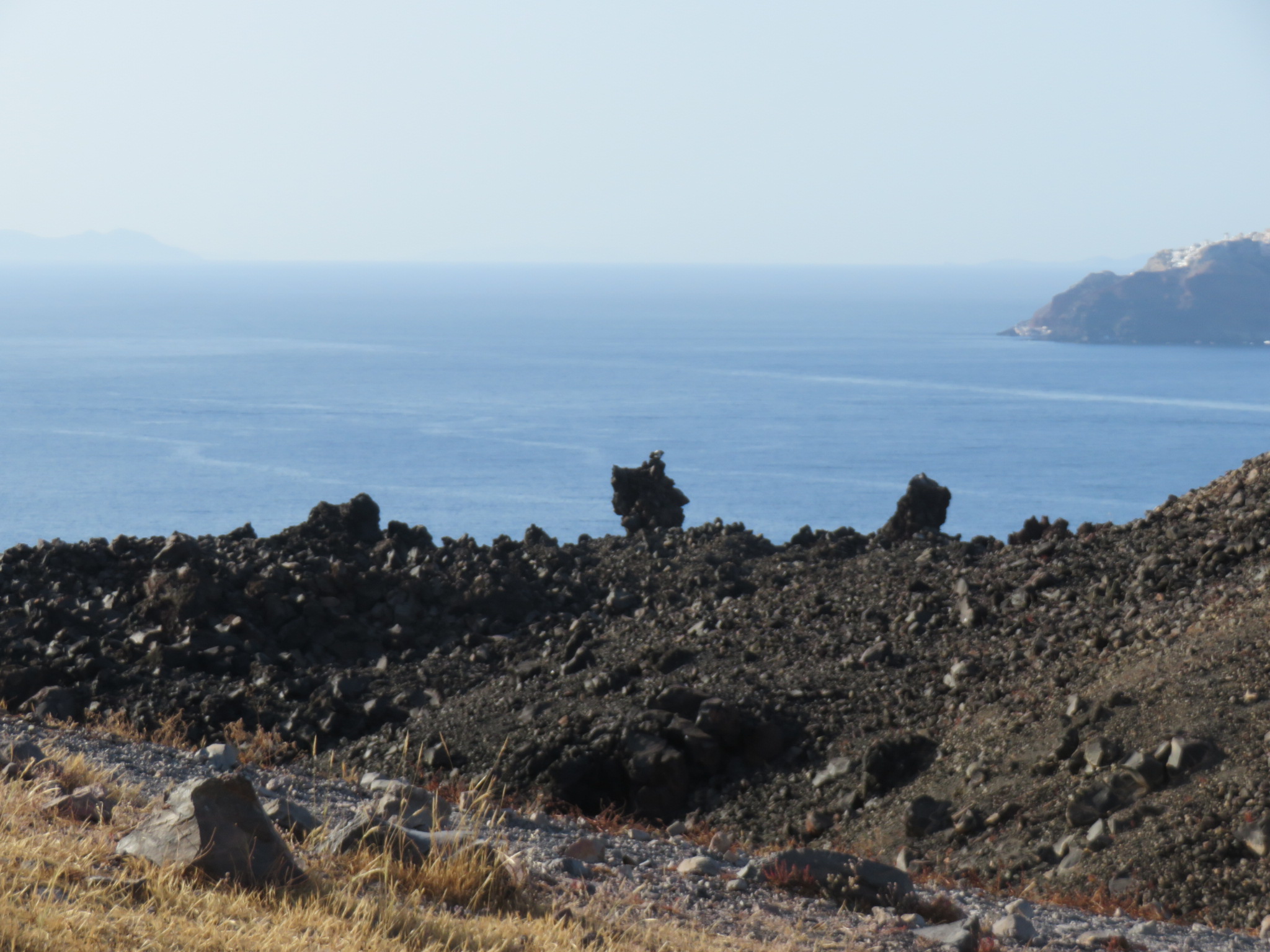


The views from here are pretty amazing!
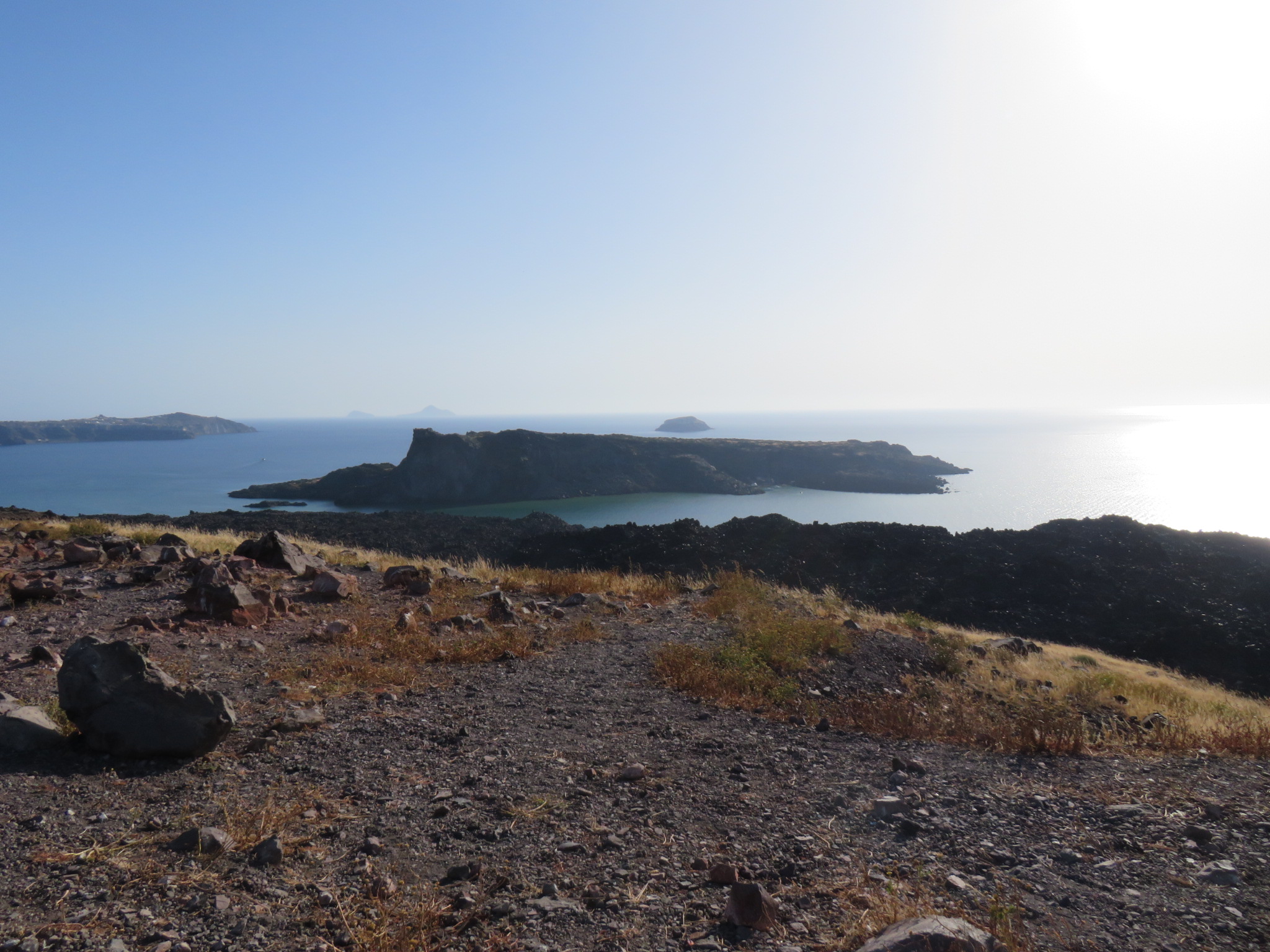

After Nea Kameni, we stopped at Palea Kameni (old burnt), another small island, where the sea temperature close to the island is five degrees higher than elsewhere, and sulphur gives the water a yellow-green color. A few of the others on our boat decided to jump in and swim to the warm spot. They said it was warm, but not as warm as a hot spring would be. The island is uninhabited except for a few goats. If there were people living there, they would have a small church to attend near the water.


 So Many Exciting and Beautiful Places!