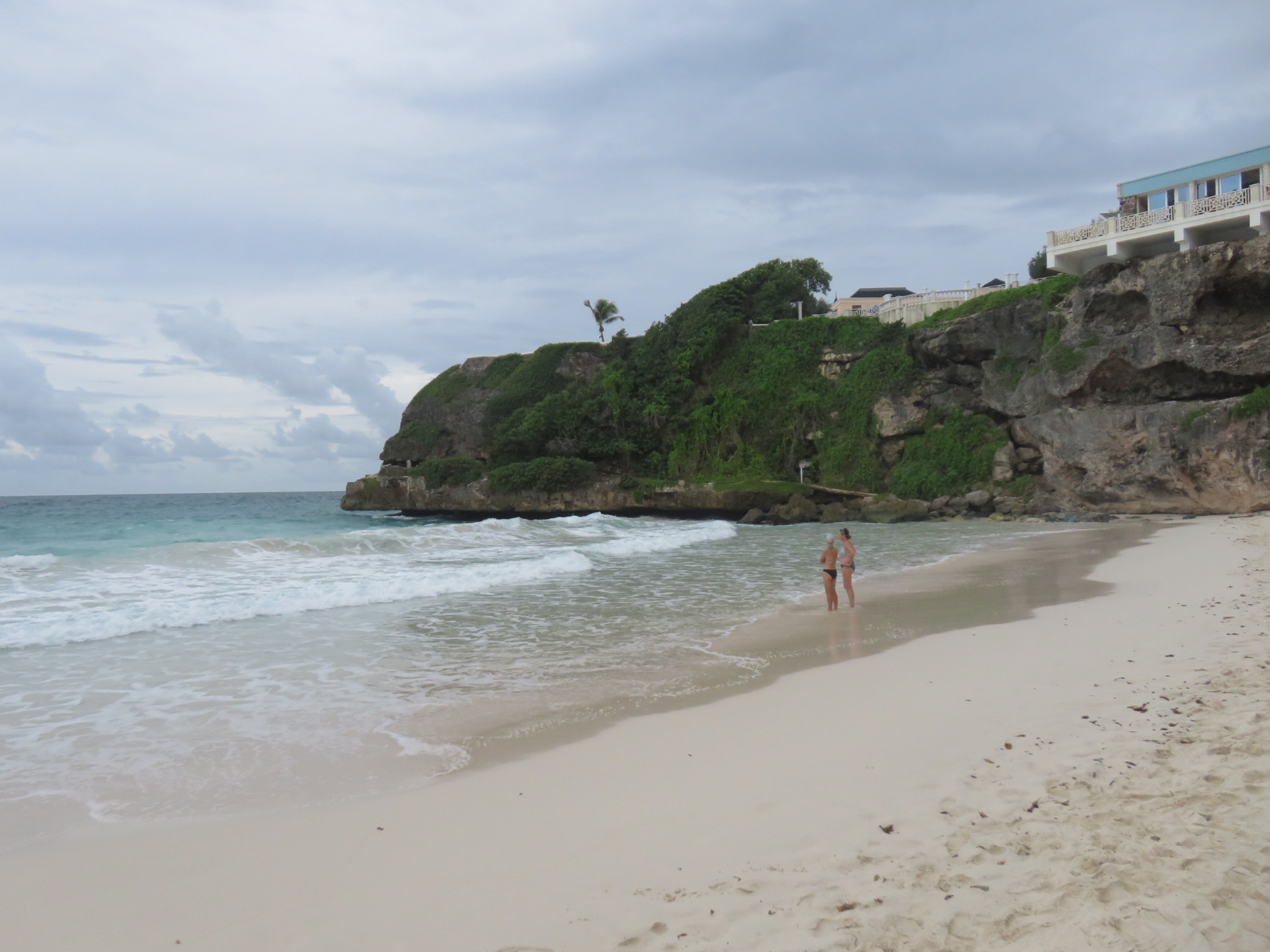
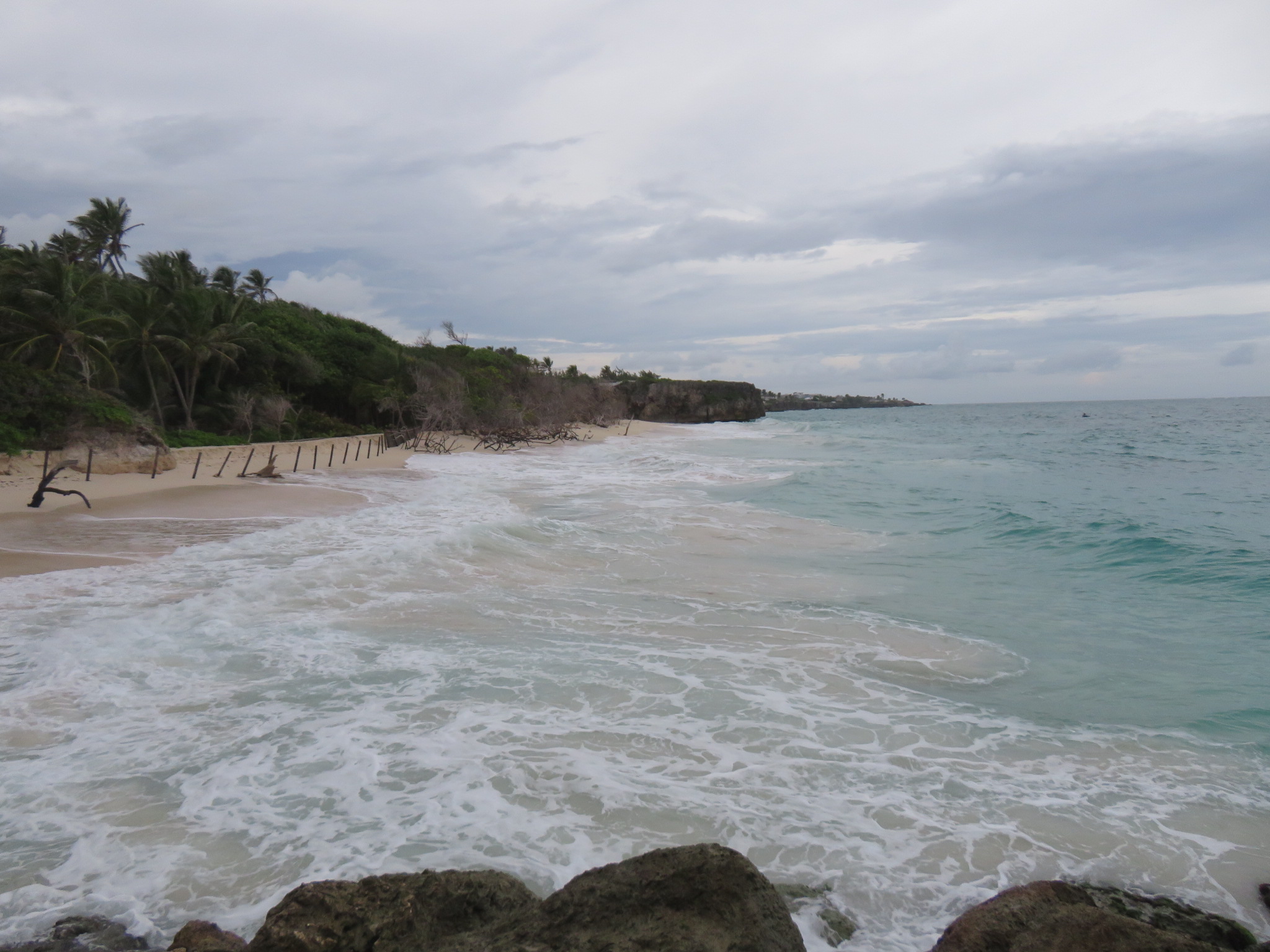
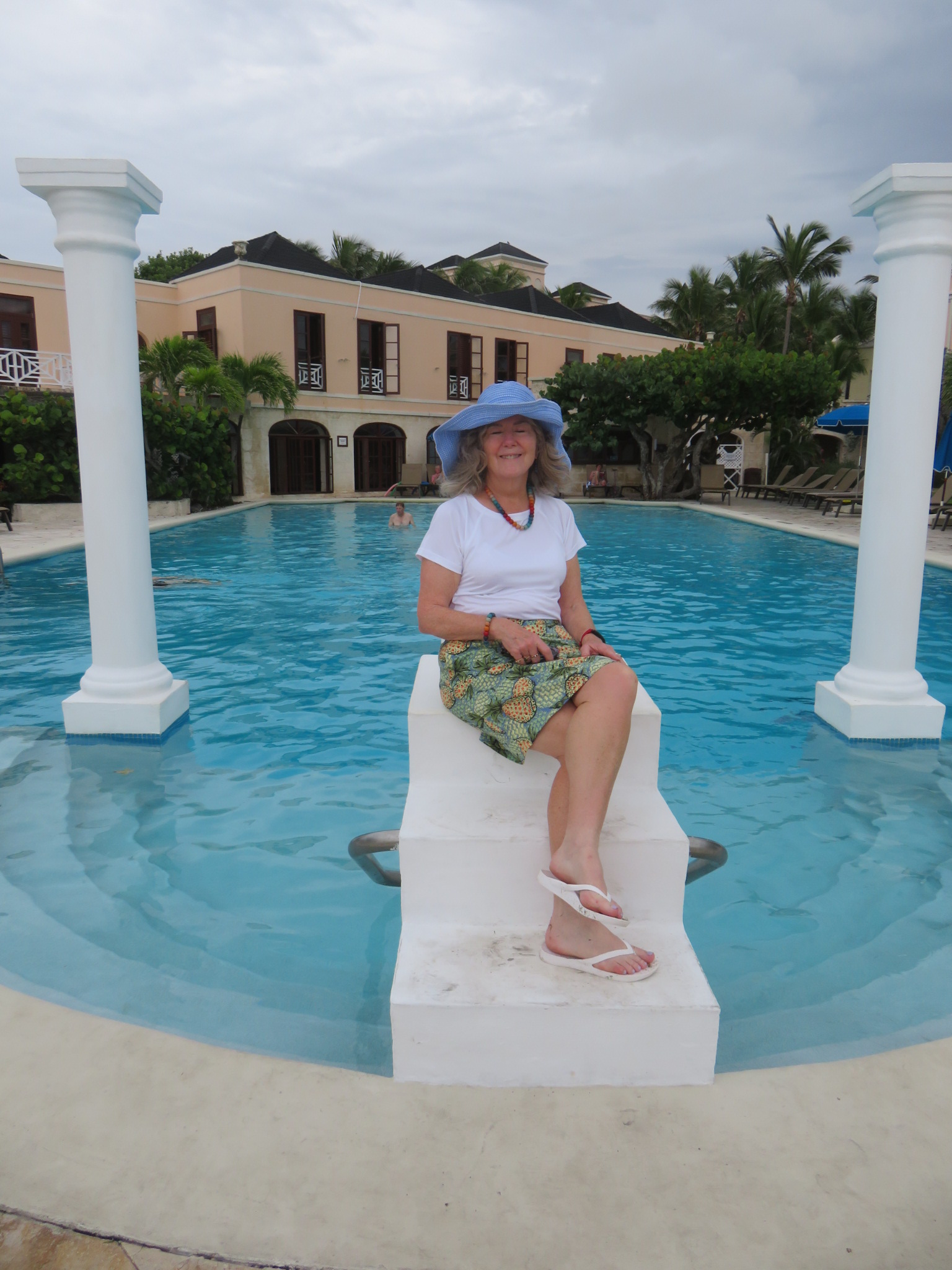
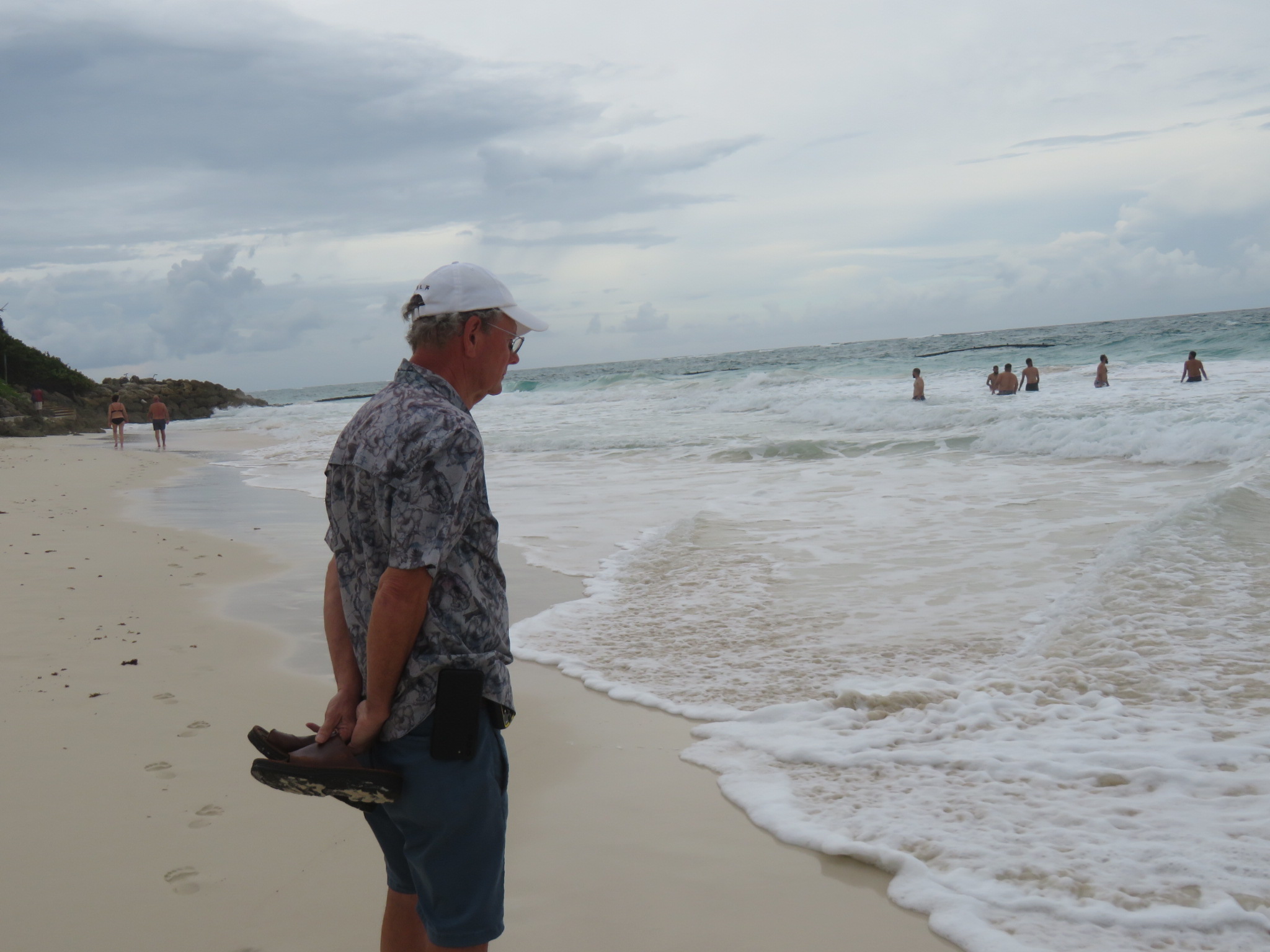
We have been owners with Hilton Grand Vacations Club for quite a few years. They have several locations throughout the world, and we can often find one when we travel. The Crane Resort is located at Crane Beach on the southeast side of the island. The beach has been rated as one of the 10 best beaches in the world. The pale pink sand feels like powder under our feet. The waters, though somewhat rough, are truly turquoise.
Crane Beach was the site of a small commercial port in the mid-18th century, Its name refers to the cranes used to raise and lower cargo between ship and land, not romantically for the bird. Crane Beach attracted the island’s plantation owners and prosperous merchants who sought the reputed ‘healing powers’ of its waters.
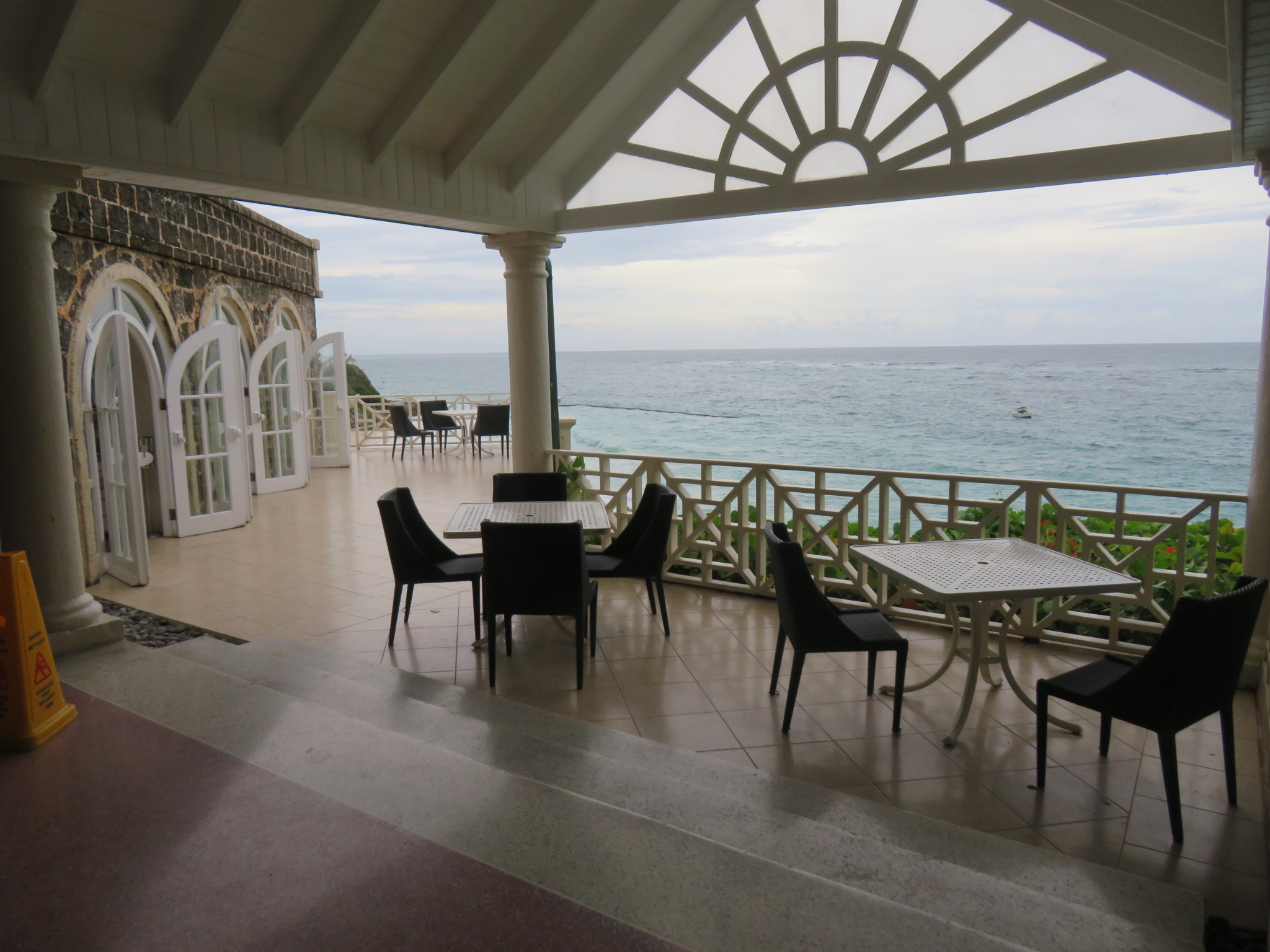
Opened in 1887 by Donald Simpson, a civil engineer, the Crane Resort is the oldest continuously operating hotel in the Caribbean. One of its more famous guests was Buffalo Bill Cody, who paid for his room with a gold watch chain and fob. The chain and fob remain in the Simpson family to this day.
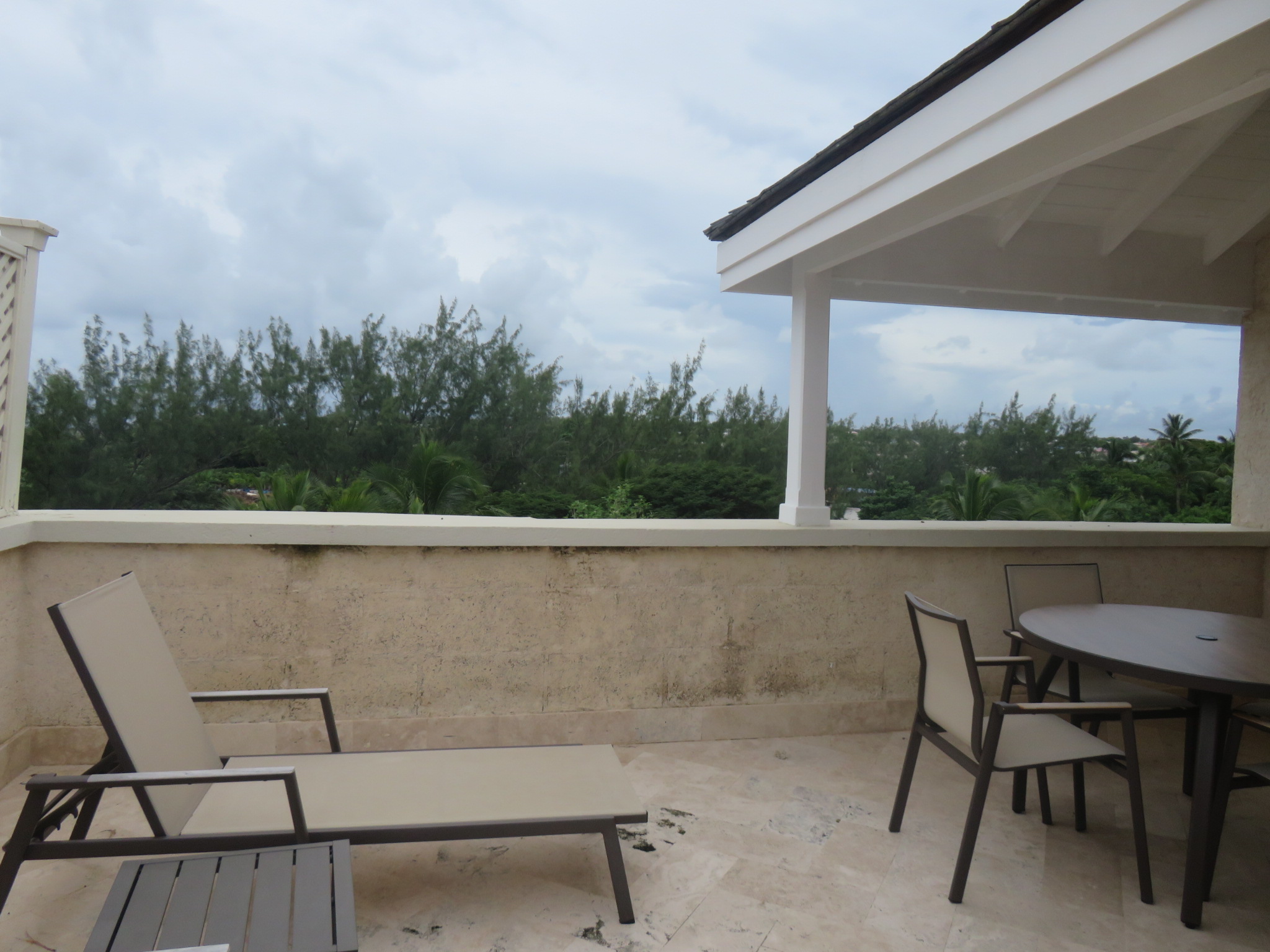
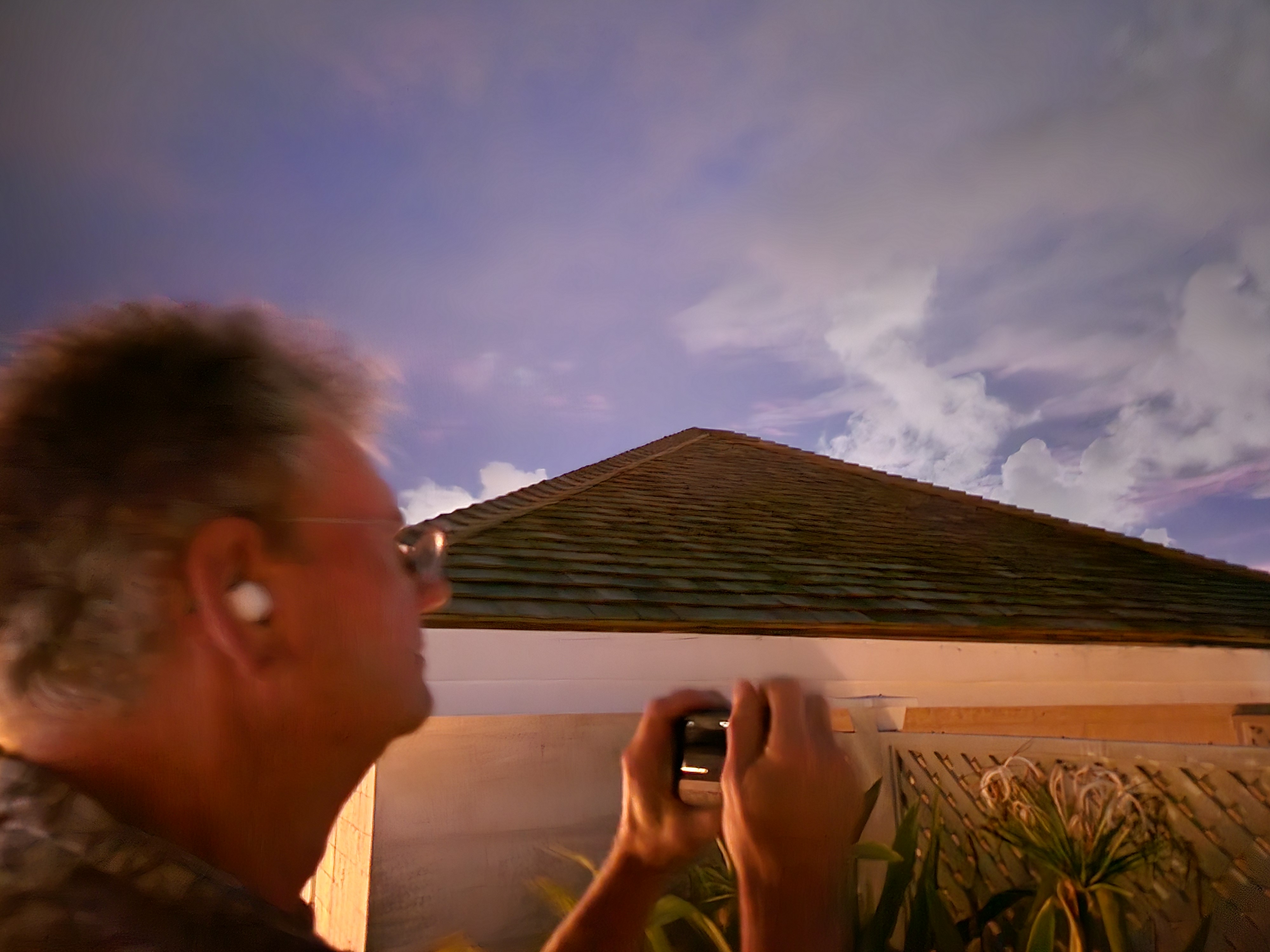
Mark was hoping to glimpse the SpaceX Starship test flight #6 scheduled for late afternoon at the site, early evening here. We watched from our rooftop deck.
We were able to see the launch live from the camera on our deck on South Padre Island. Isn’t technology great!!?? Unfortunately, we couldn’t see it pass by Barbados 15 minutes later, on its way to the Indian Ocean. Sigh…
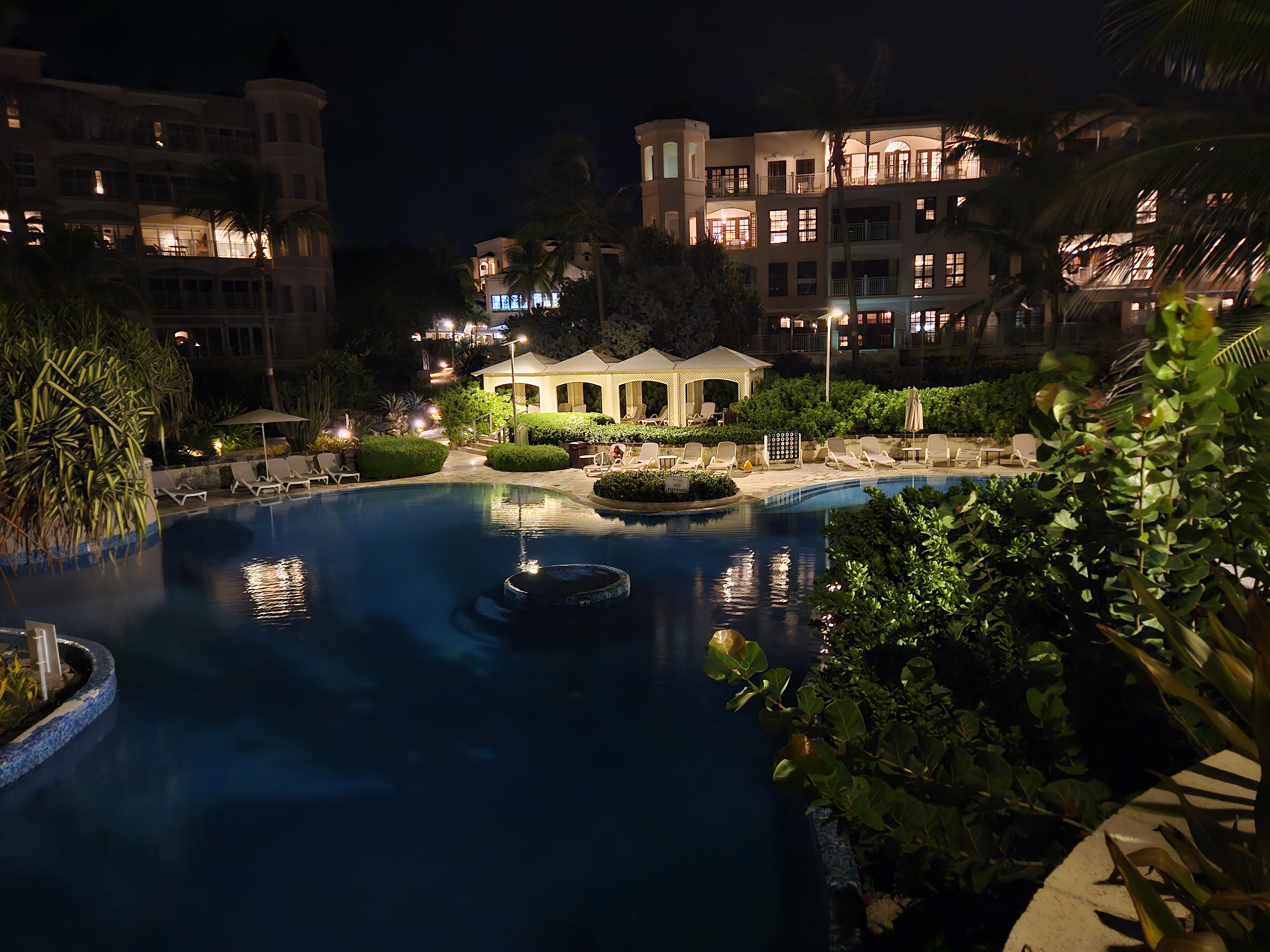
After dinner, we took a stroll through the resort, finding the sites we hadn’t seen yet. Lovely evening. Everything looks different at night.
Our cruise ended this morning at Bridgetown. We will be staying at The Crane Resort for the next few days. It started raining shortly after we arrived, not enough to keep everyone out of the water.
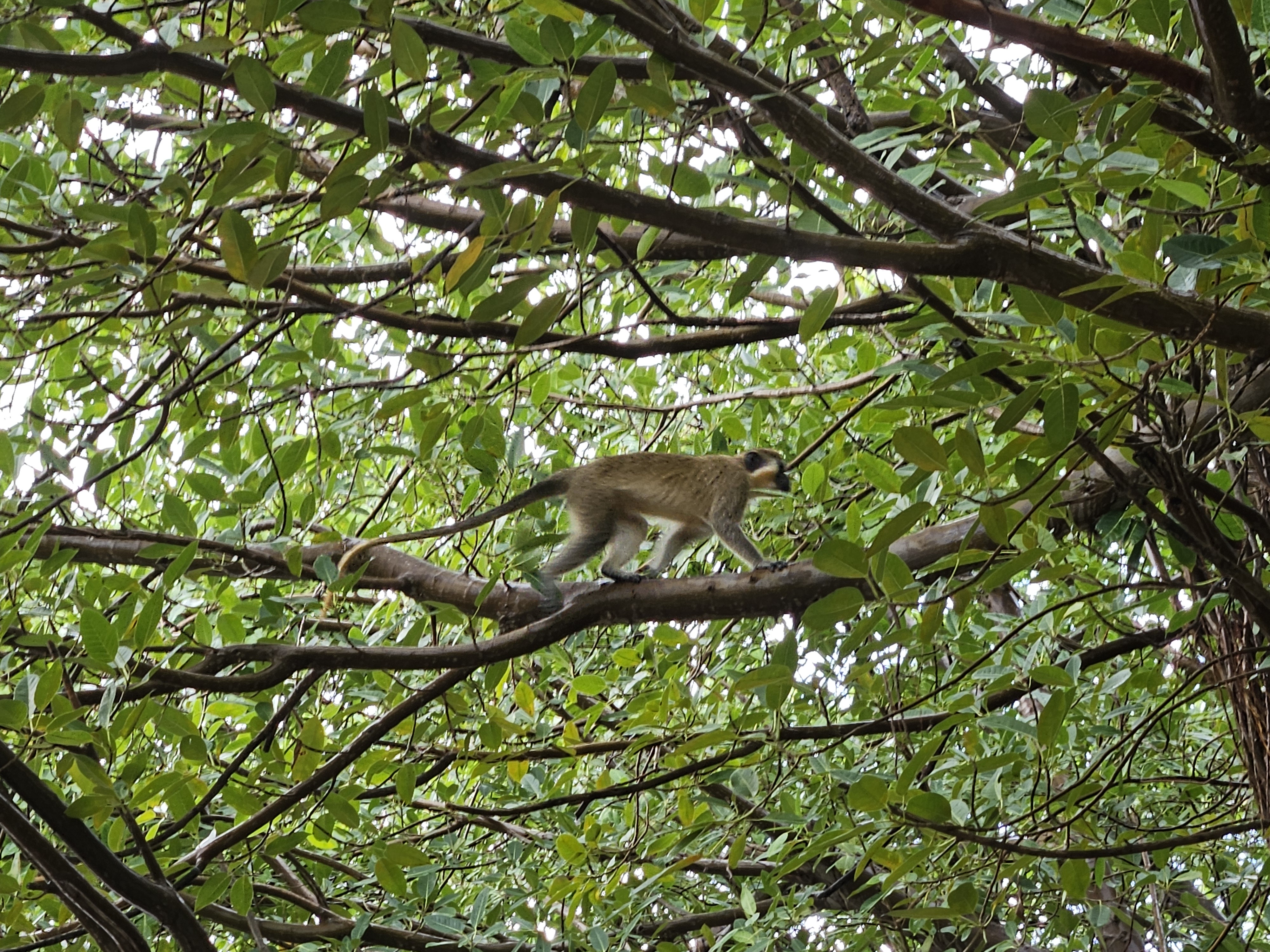
While waiting to check in, we spied a monkey in a tree just outside the front door. Pretty cool!
Barbados means “the bearded ones” in Portuguese and Spanish. It’s possible the name refers to the long hanging roots of the bearded fig tree, or to the bearded Kalingo peoples who once inhabited the island, or possibly to the spraying sea foam that resembles a beard. Take your pick. The original name was Ichirouganaim, meaning (again there are multiple candidates) “red land with white teeth,” “redstone island with teeth outside,” or simply “teeth.” The teeth refer to the coral reefs that surround much of the island. Locals call their island “Bim,” which might mean “my home, my kindred, my kind.”
Humans may have first visited the island around 1600 BCE, with permanent settlements coming about 2000 years later. Europeans arrived in the 15th or 16th century AD, probably the Portuguese on their way to Brazil. The English came later, along with Irish indentured servants. The Dutch introduced sugar cane in 1640, and brought African slaves to do the work. Most residents today are of Afro-Caribbean ancestry, with Indo-Guyanese, English, Irish, Portuguese, Spanish, Chinese, Lebanese and others contributing to the mix.
The official language is English, but Bajan Creole is the everyday language for most of the people living here.
The Spanish had claimed the island in the 1530s, but abandoned it shortly after that. The English established a proprietary colony around 1625, and retained control until 1966, when Barbados became a Commonwealth realm, with Queen Elizabeth II being its queen. The monarchy was replaced with a ceremonial president in 1921.
Barbados’ economy was traditionally reliant on sugarcane, but the country has diversified into manufacturing and tourism, along with offshore financial and information services. They enjoy a moderately high standard of living. We’ll be learning more about their tourism in the next few days.
The rain did stop about mid-afternoon, at least for a while. By nightfall, the frogs began announcing their presence, singing to each other, looking for love. I think we will enjoy our time here in Barbados.
We arrived in port at 8 am, greeted by another sunny day.
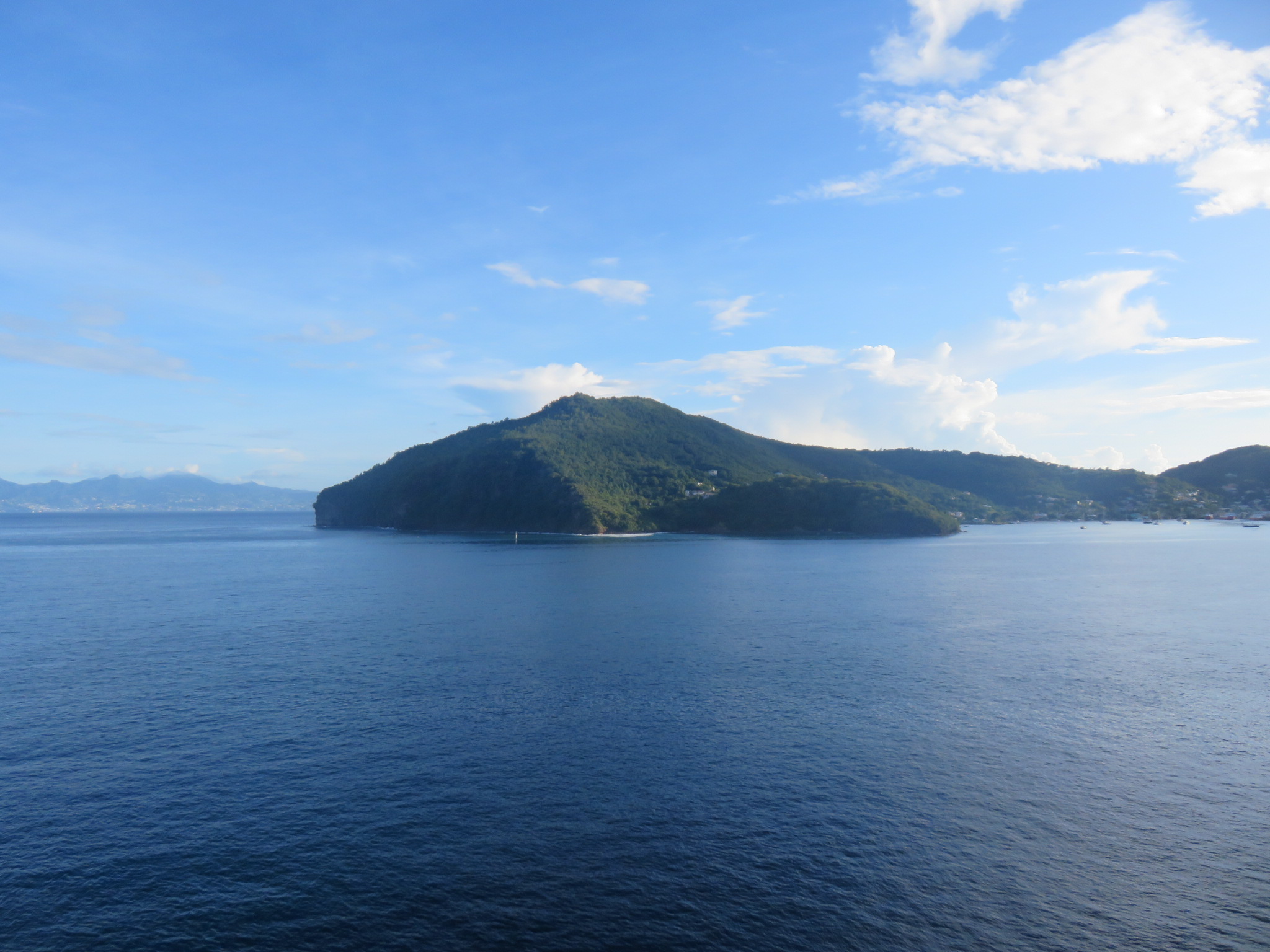
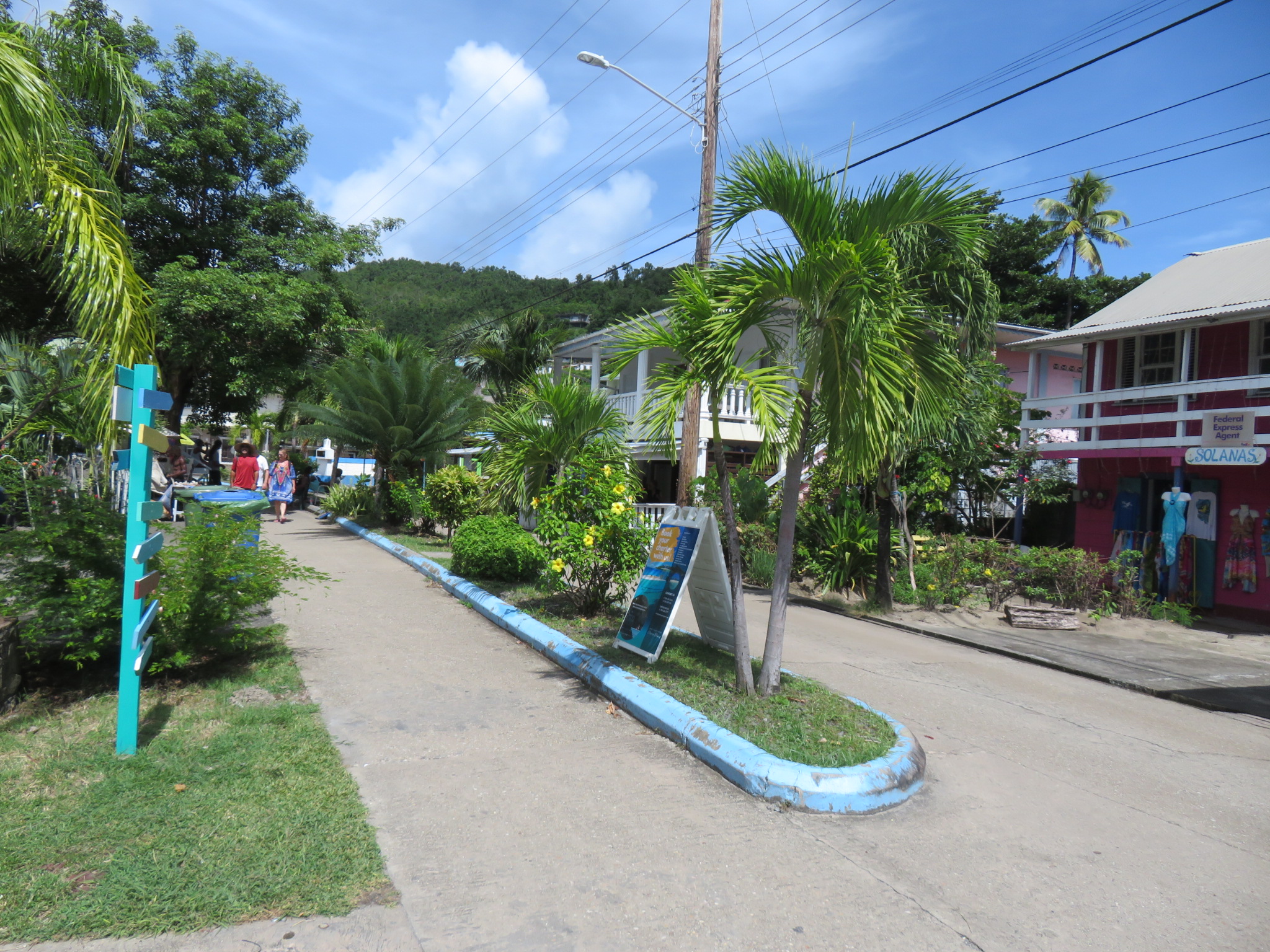
The second largest island in St. Vincent and the Grenadines, Bequia (pronounced Beck-way and meaning Island of the Cloud) is about seven square miles in area. Some people believe Edward Teach, the pirate Blackbeard, had his base in Bequia. Another privateer, Henry Morgan, for whom Captain Morgan Rum was named, may also have spent time here. Admiralty Bay, on the southwestern side of the island, was a safe natural harbor during hurricane season.
Whaling was introduced here in the 19th century, and the island is one of the few places in the world where limited whaling is still allowed. Natives are allowed catch up to four humpback whales per year, using only traditional hunting methods, as overseen by the International Whaling Commission. Whaling of humpbacks by natives started in 1876 to supplement their diet and income. The natives use traditional open whaling boats, similar to those used by Yankee whalers in the 1800s. The equipment, too, is identical to that of the 1800s: harpoons, bombs, guns, lances, and other implements. Once the whale is dead, the whalers enter the water to sew up the mouth of the whale to prevent water from entering the stomach, causing the whale to sink and be lost.
There has been some discussion about introducing whale watching tours, but the waters are often too rough for the boats.
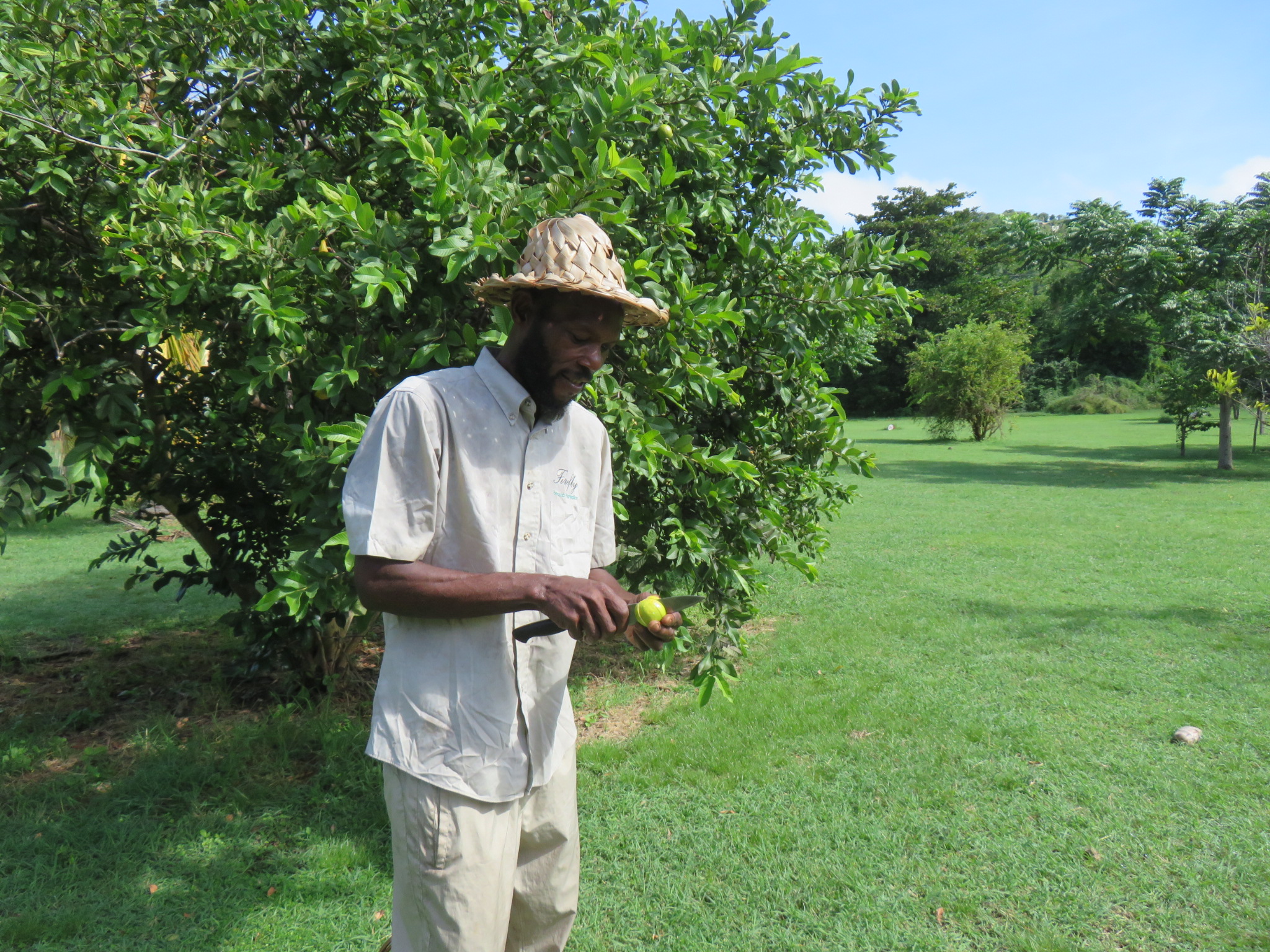
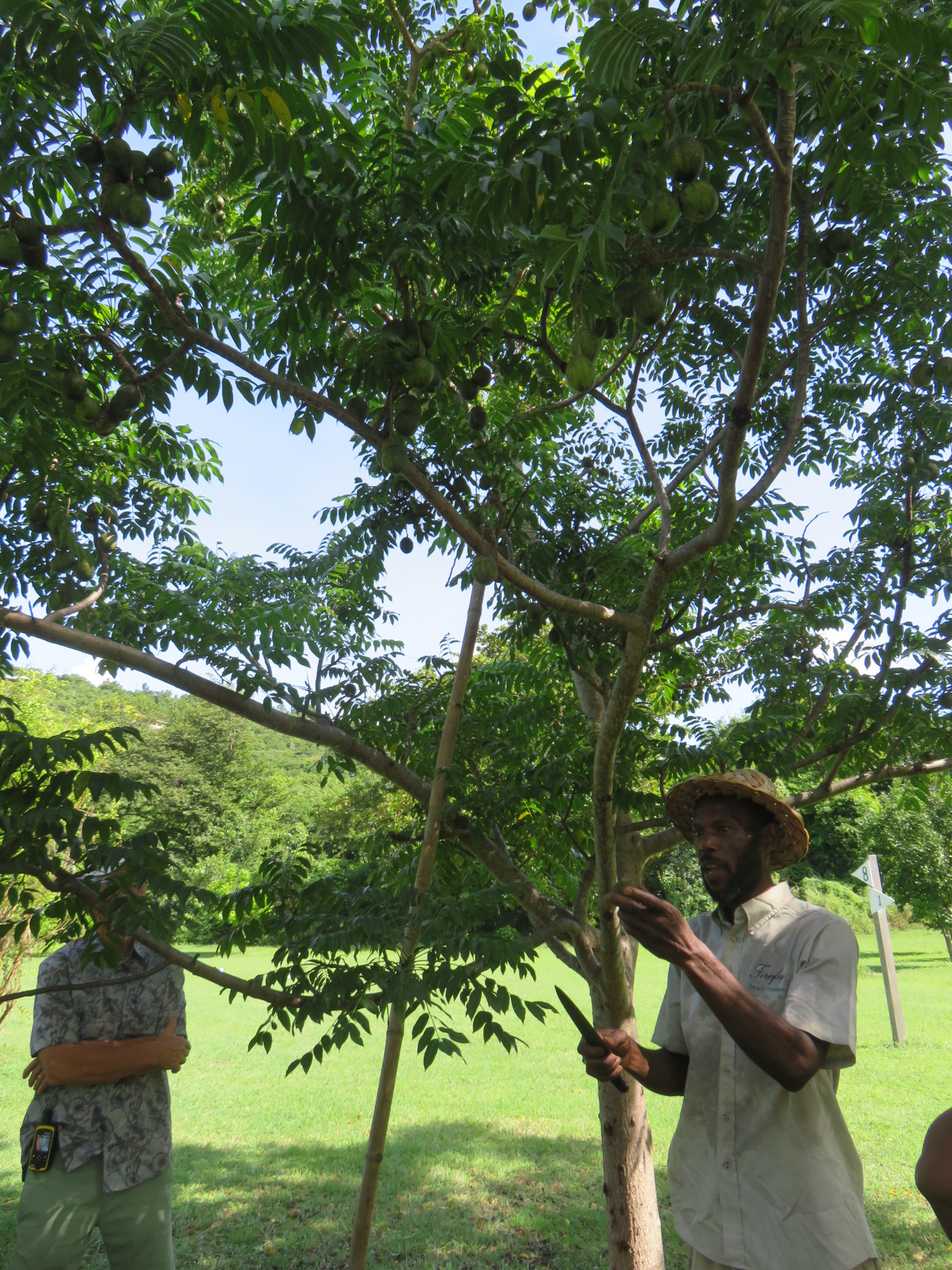
We took a tour to the Firefly Plantation, a 30-acre complex on the eastern side of the island, with hotel, golf course, croquet lawn, swimming pool, trails, fruit orchards, and an old sugar mill. We sampled several fruits from the trees on the plantation: guava, golden apple (actually a type of plum), and coconut. We drank coconut water from the coconut, and sampled juice from the sugar cane.
After our tour, we enjoyed lunch in the Firefly Restaurant. Much of the food came from the plantation – plantain, honey, salad, coconut – and was supplemented by fish or chicken, and rum punch as well. The views here were lovely.
This was our final full day of the cruise. We left port at 6 pm, heading to Bridgetown, Barbados, where we will spend the next few days before going back to cold Minnesota.
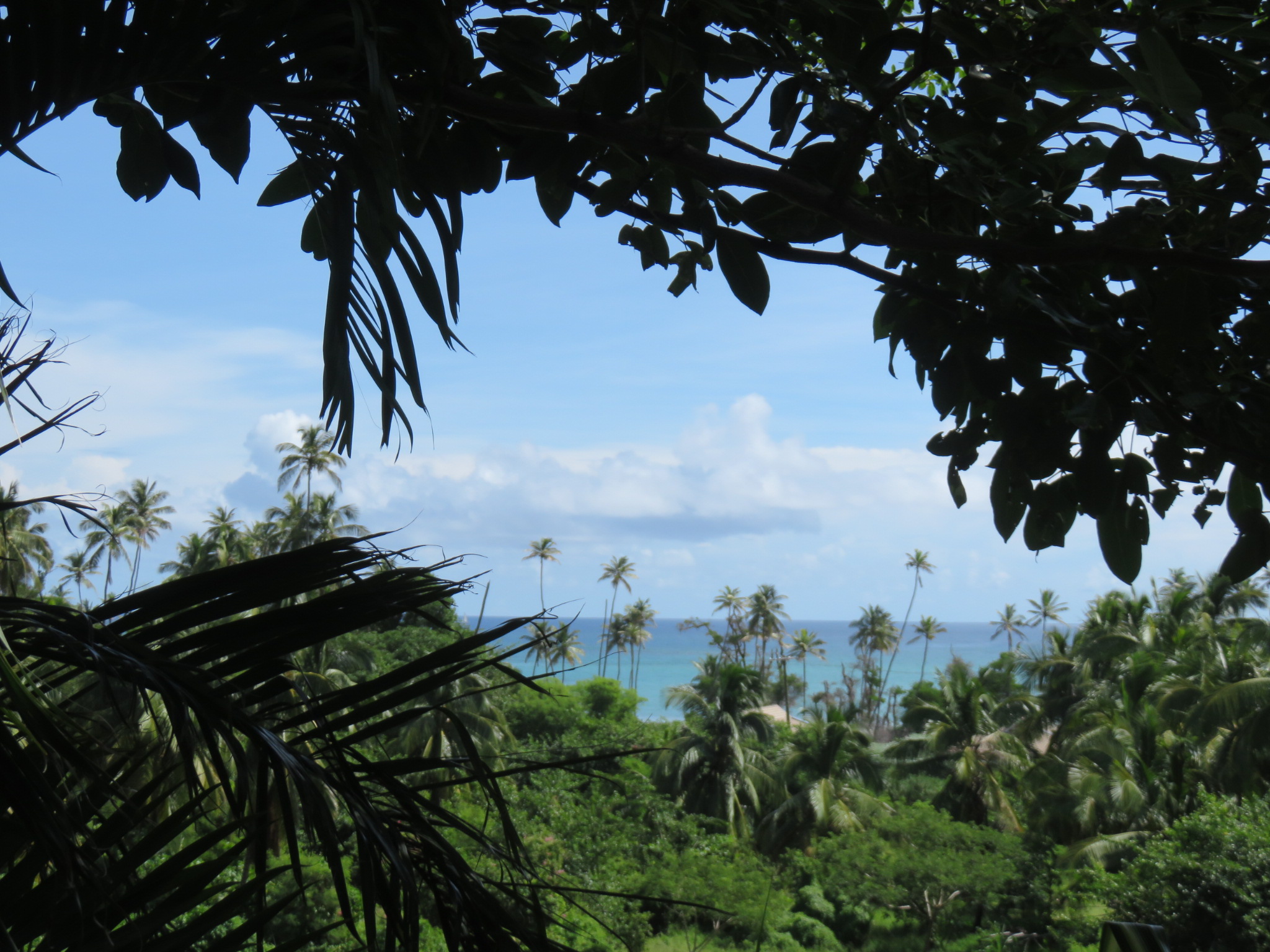
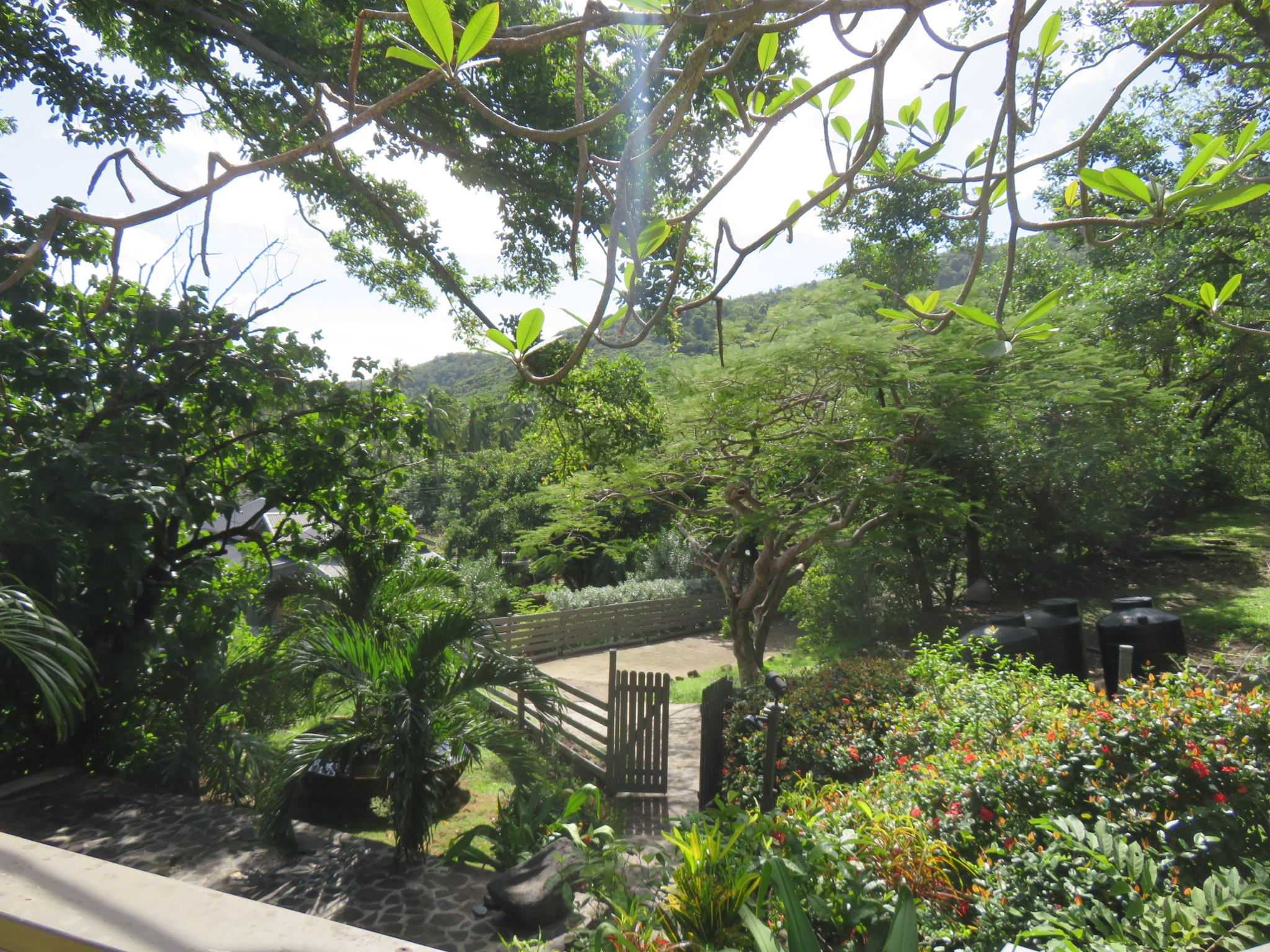
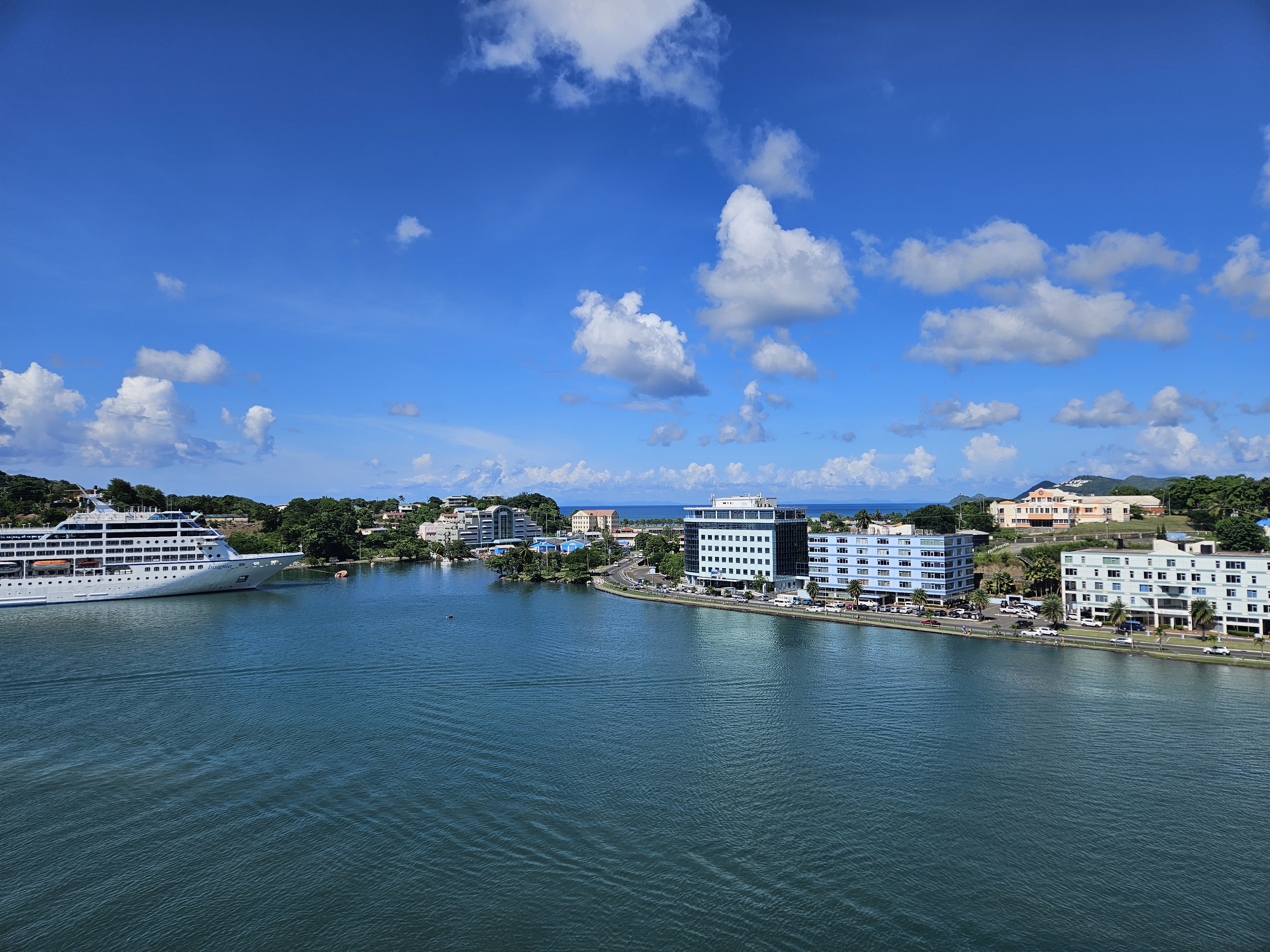
St. Lucia is named for Saint Lucy of Syracuse. Supposedly, French sailors were shipwrecked here on Lucy’s feast day, sometime in the late 1400s or early 1500s, so gave the island her name. Like many other Caribbean islands, domination switched back and fort between the British and the French. The island gained its independence in 1979, but remains a part of the British Commonwealth.
We had no tours scheduled for today, so headed out to explore on our own, before it got too hot for us Minnesotans. It didn’t take long.
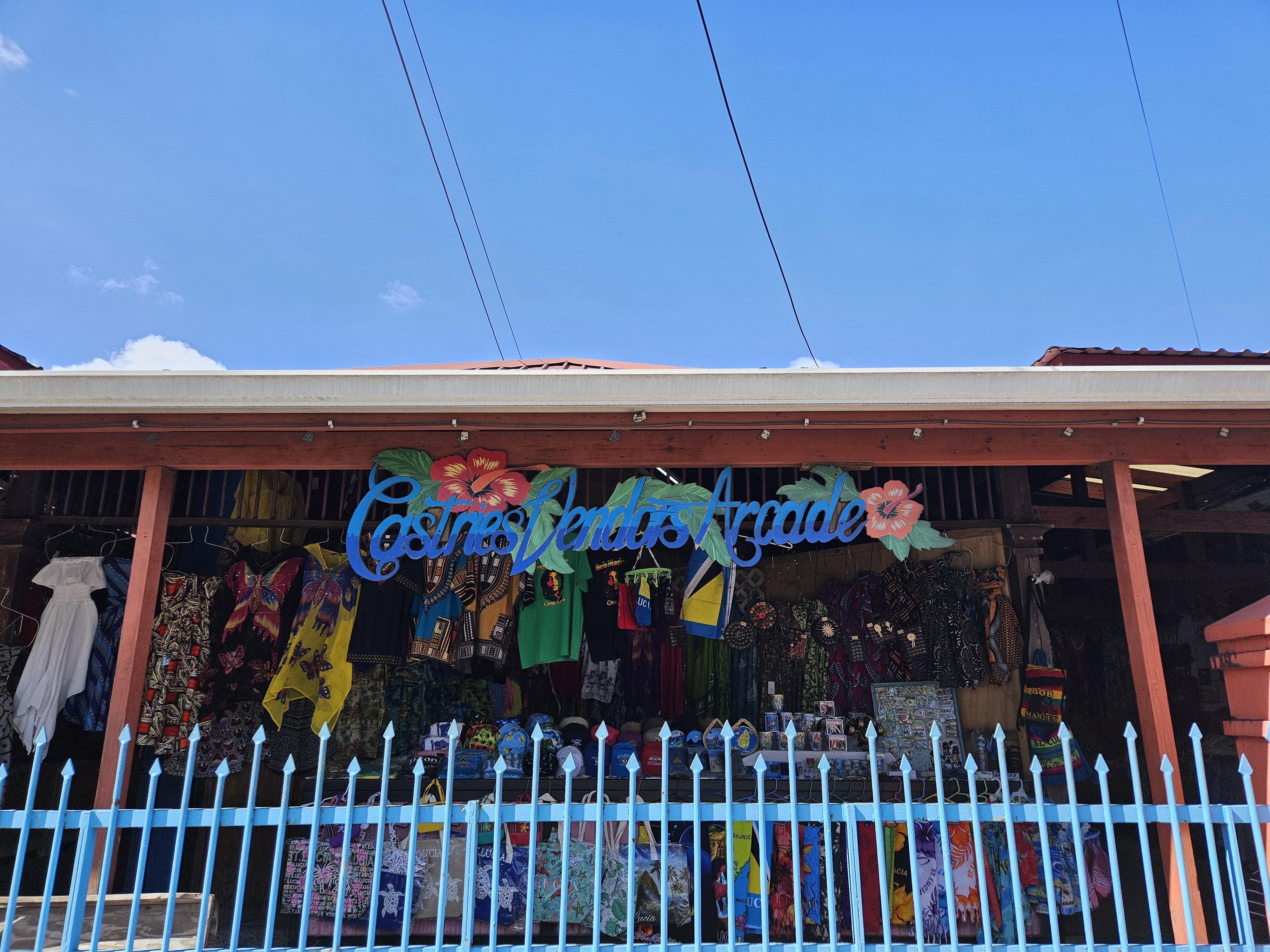
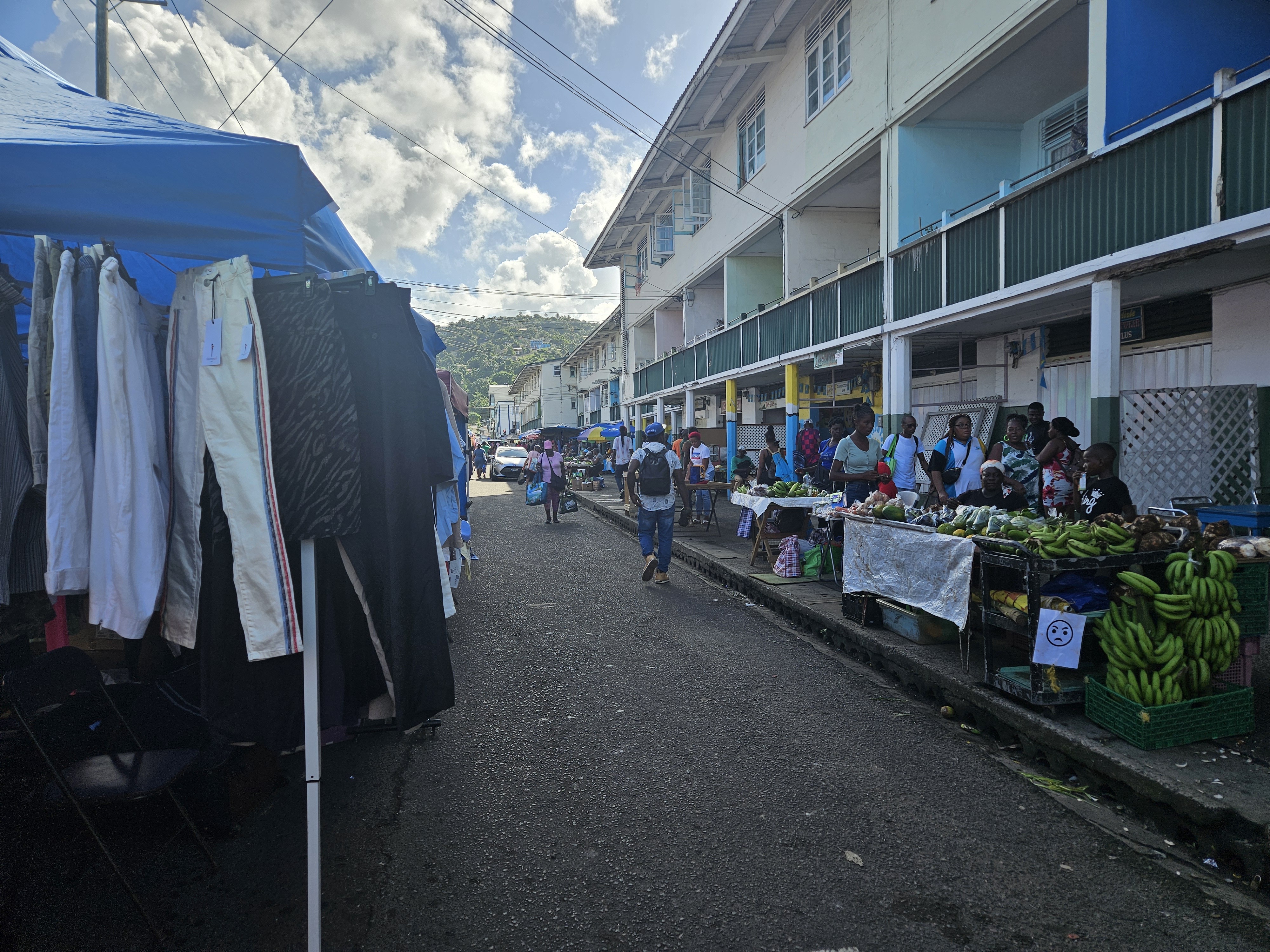
The Castries Market is listed by US News as one of the best things to do in St. Lucia, and it’s located less than a mile from the cruise port. They have everything you could need: spices, clothing, fruits and vegetables, even sugar cane! Next door is a Craft Market, with plenty of souvenir shopping: hats, shirts, dresses, dolls, carvings. No one will go home empty-handed. St. Lucia is also listed as a destination for chocolate lovers! Expensive, but it should make nice gifts for the folks back home.
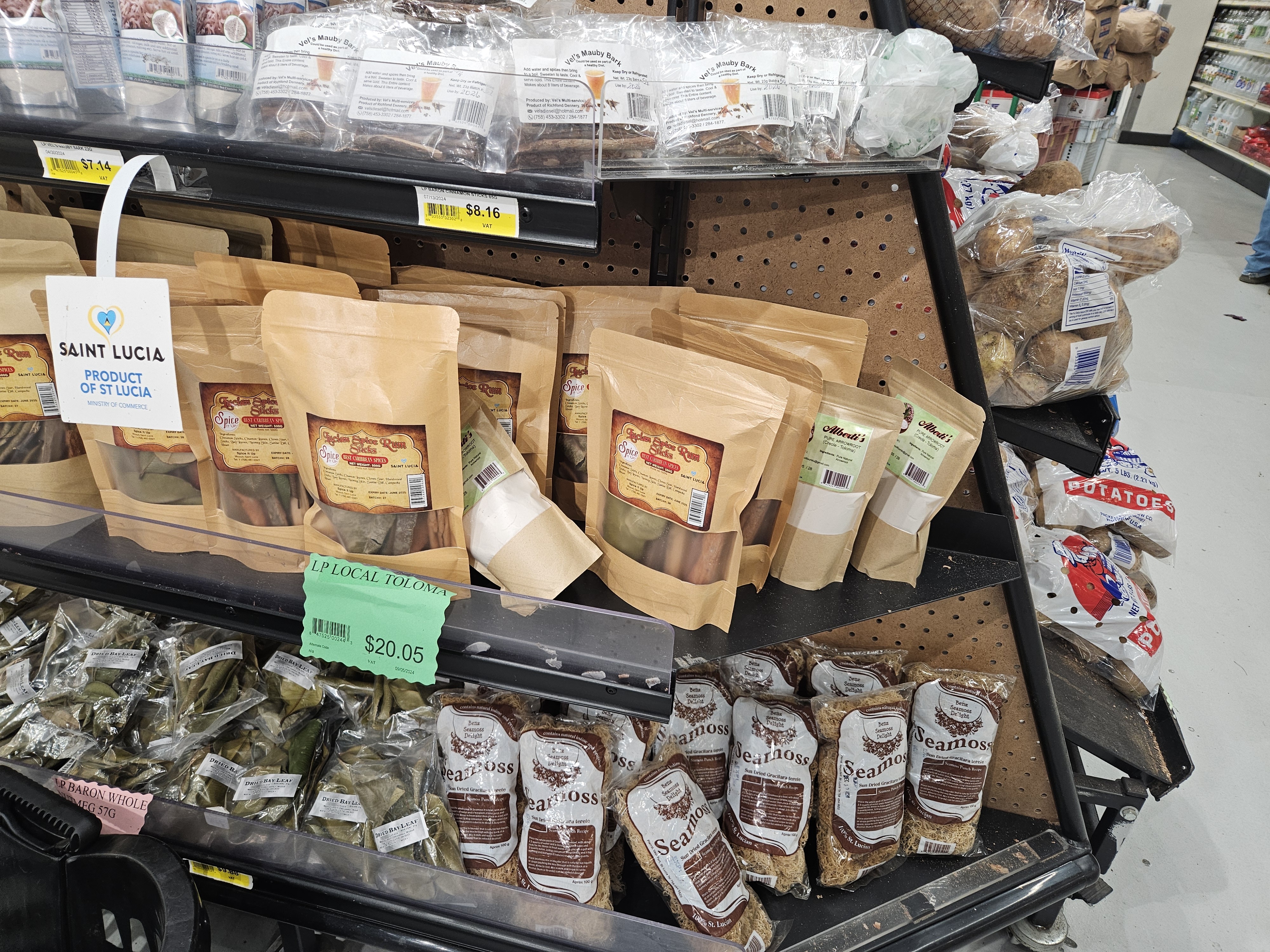
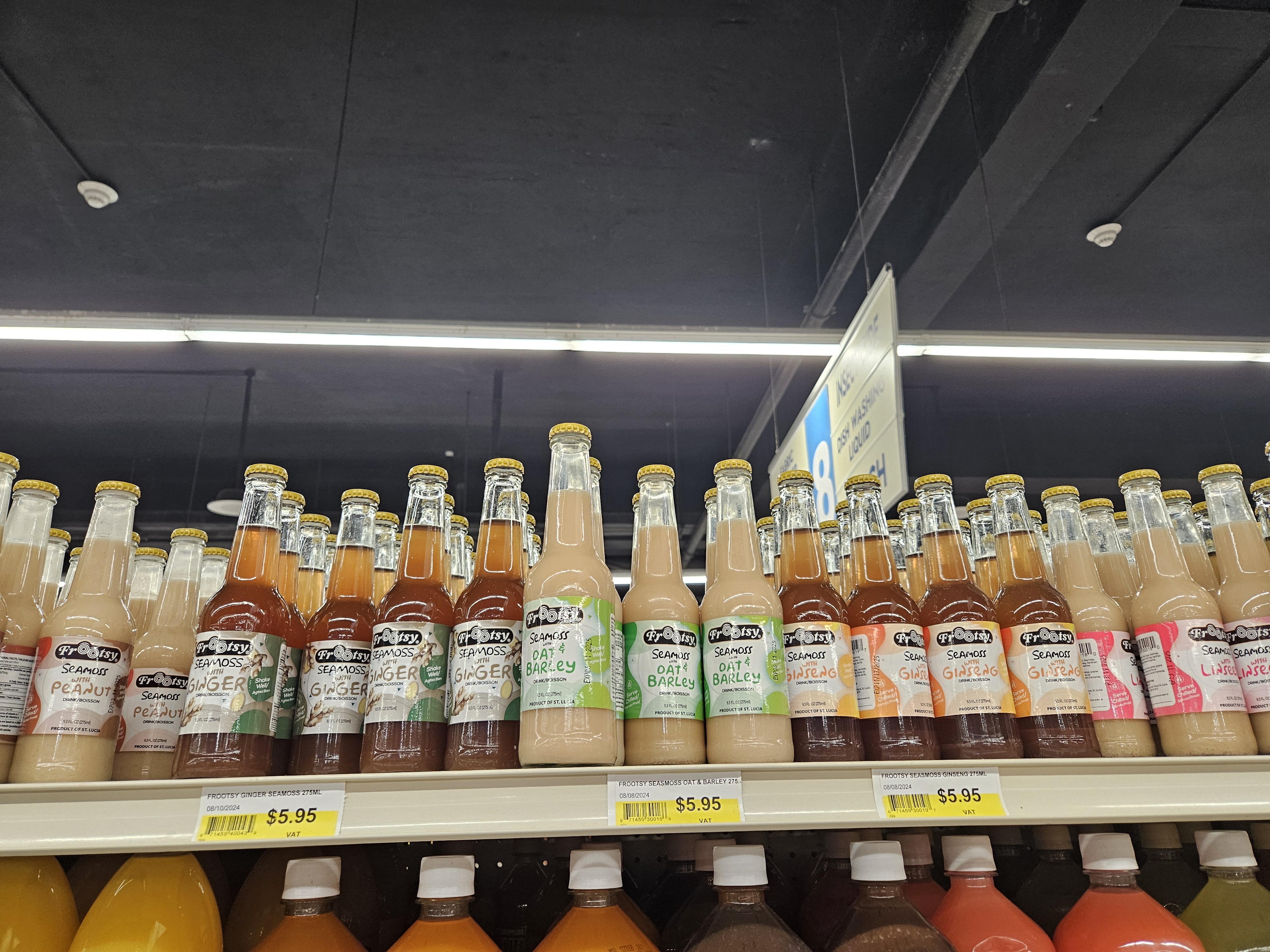
We always enjoy stopping into the local markets to see what’s different from home. Besides the fact that the fruits and vegetables are bigger than at home, we found that sundried seaweed, and seaweed infused beverages are a big thing. Didn’t buy any, though. Saturday is a busy shopping day for groceries.
We left St. Lucia around 6pm, with rain clouds in our path.
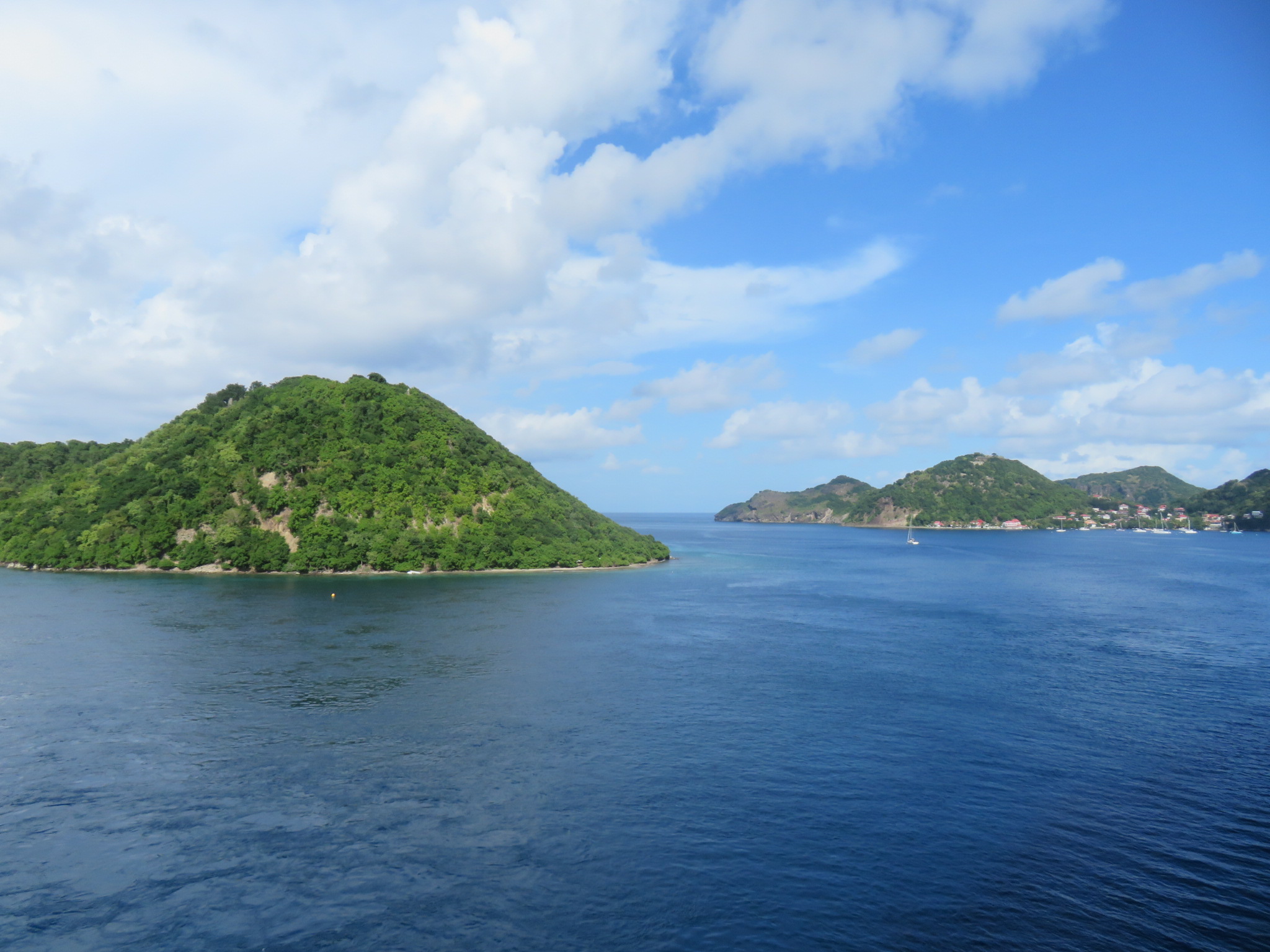
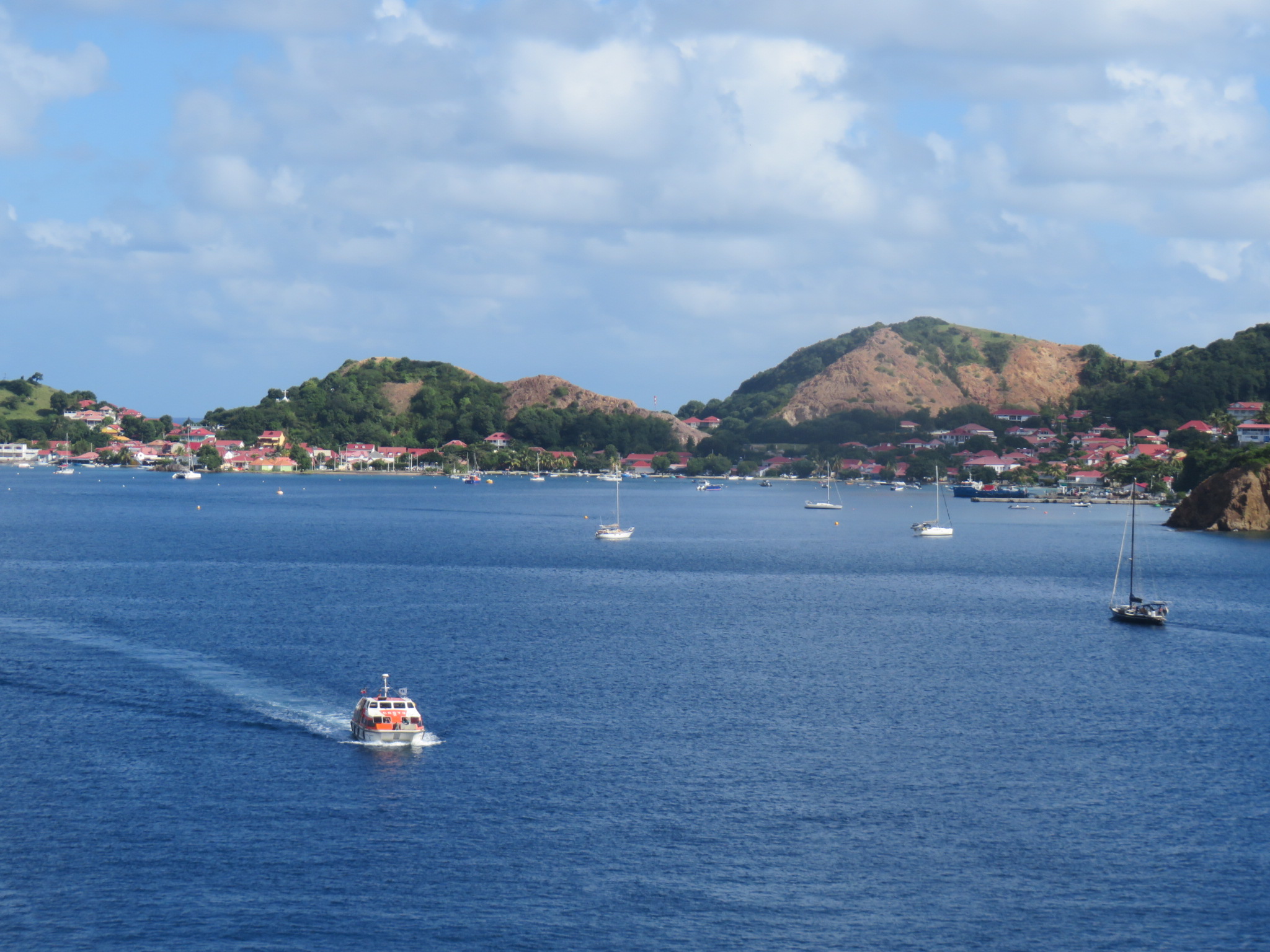
We arrived at harbor in Les Saintes (pronounced Lay-sonts) at around 8am. Les Saintes is one of the nine islands in the Guadeloupe Archipelago.
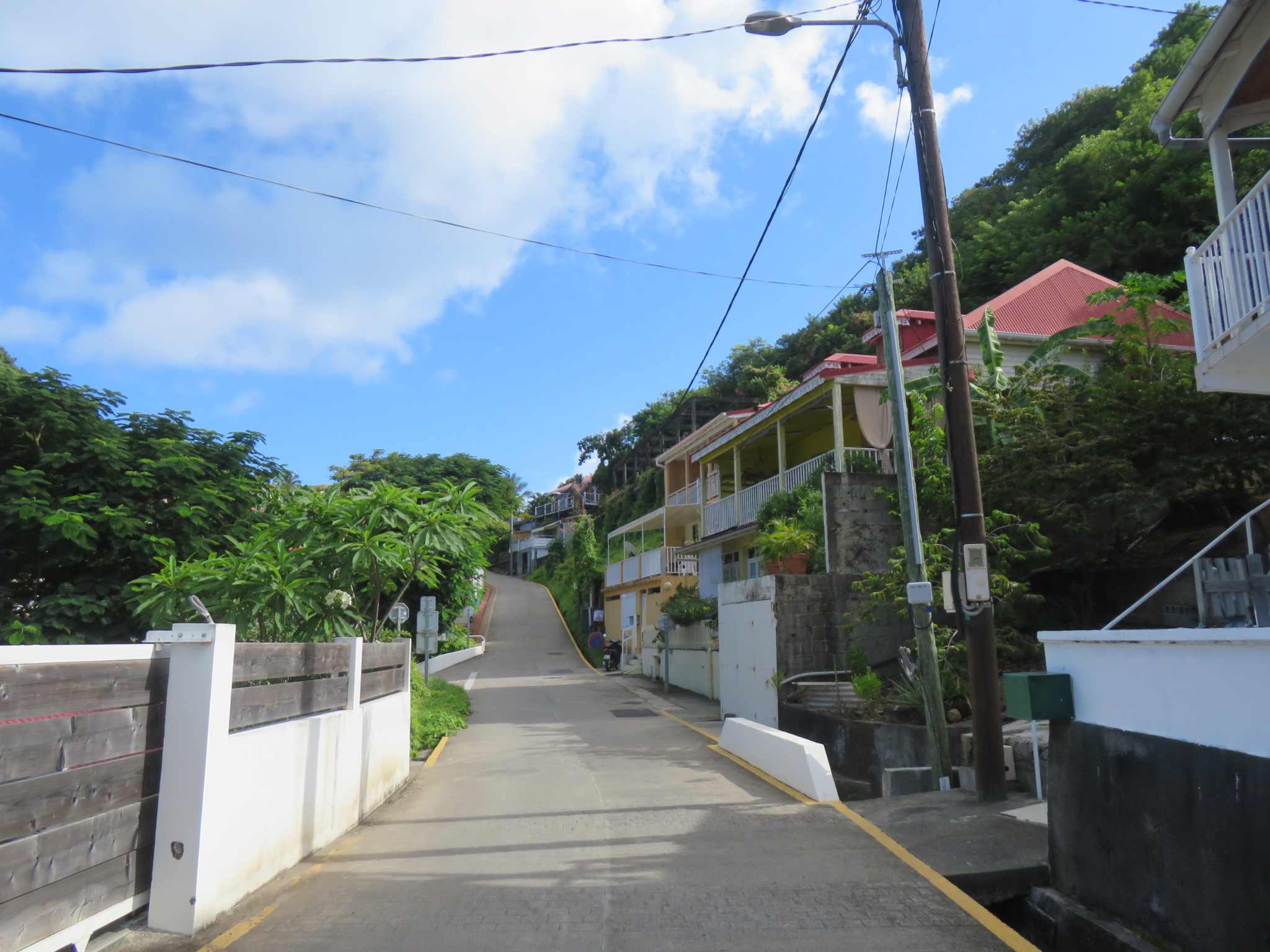
Shortly after arrival, we tendered to shore and joined a guided hike in Terre-de-Haut (“high lands.”) This tiny island, just under 5 square miles, is one of the islands Christopher Columbus landed on during his second voyage to the New World. No cars are allowed on the island, except electric cars, golf carts and motorcycles, which is not a problem since the island is only two square miles in area.
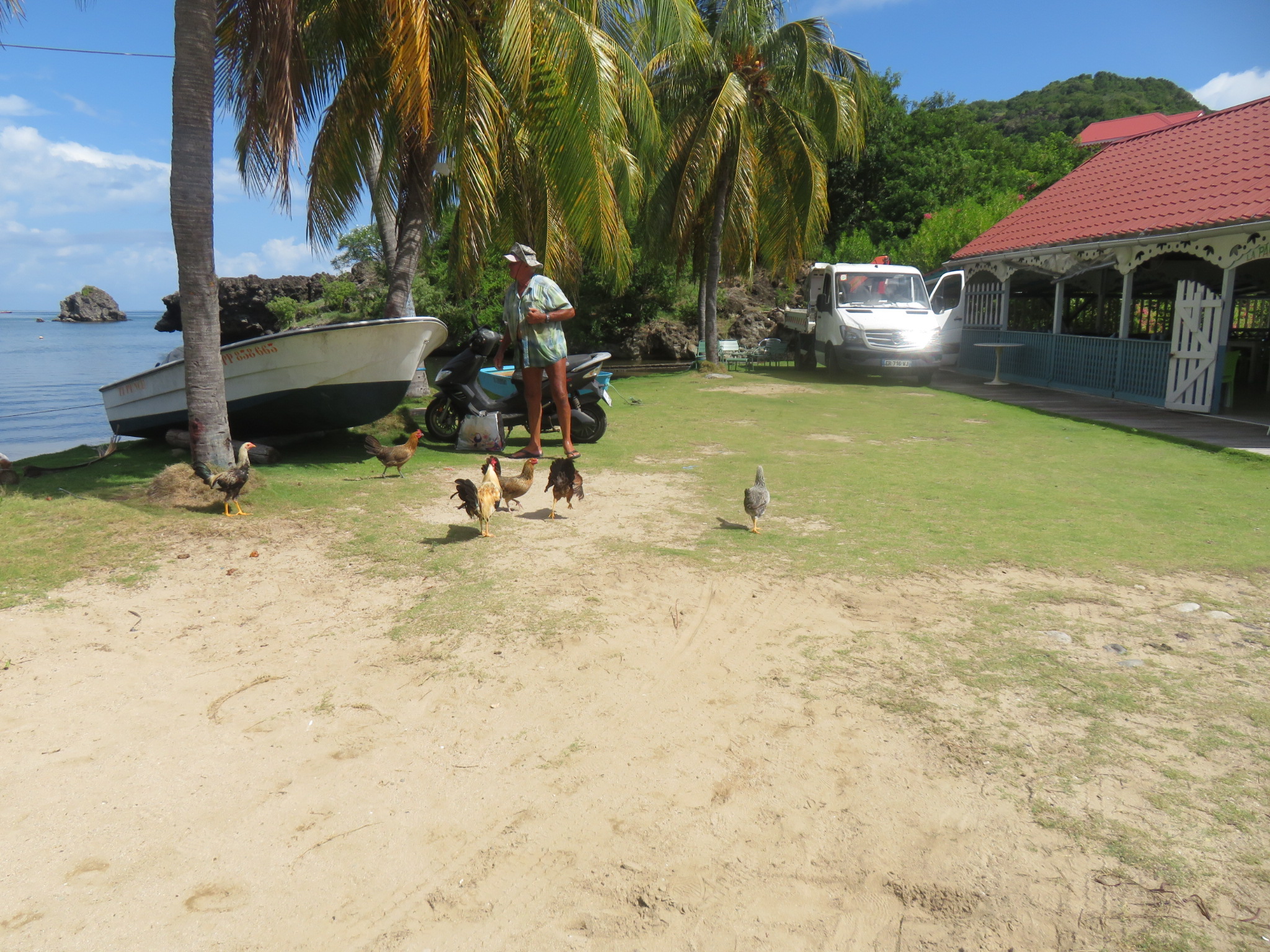
We hiked most of the way up to Mount Morel, on the north part of the island, but one of us found she couldn’t tolerate the heat, so we turned back. Heat stroke just isn’t fun! Although we missed out on the best views, we still were able to see quite a bit. We did see some goats and chickens along the way, as well as a few crabs (pretty far from water.)
Our guide warned us away from the only poisonous tree on the island, the Manchineel tree, which emits a highly toxic sap. Never stand under one in the rain, and don’t eat its berries. Many of these trees are marked by red paid by the locals, so were fairly easy to see and avoid. He also told us that many of the plants here are medicinal, and showed us what he called the headache plant.
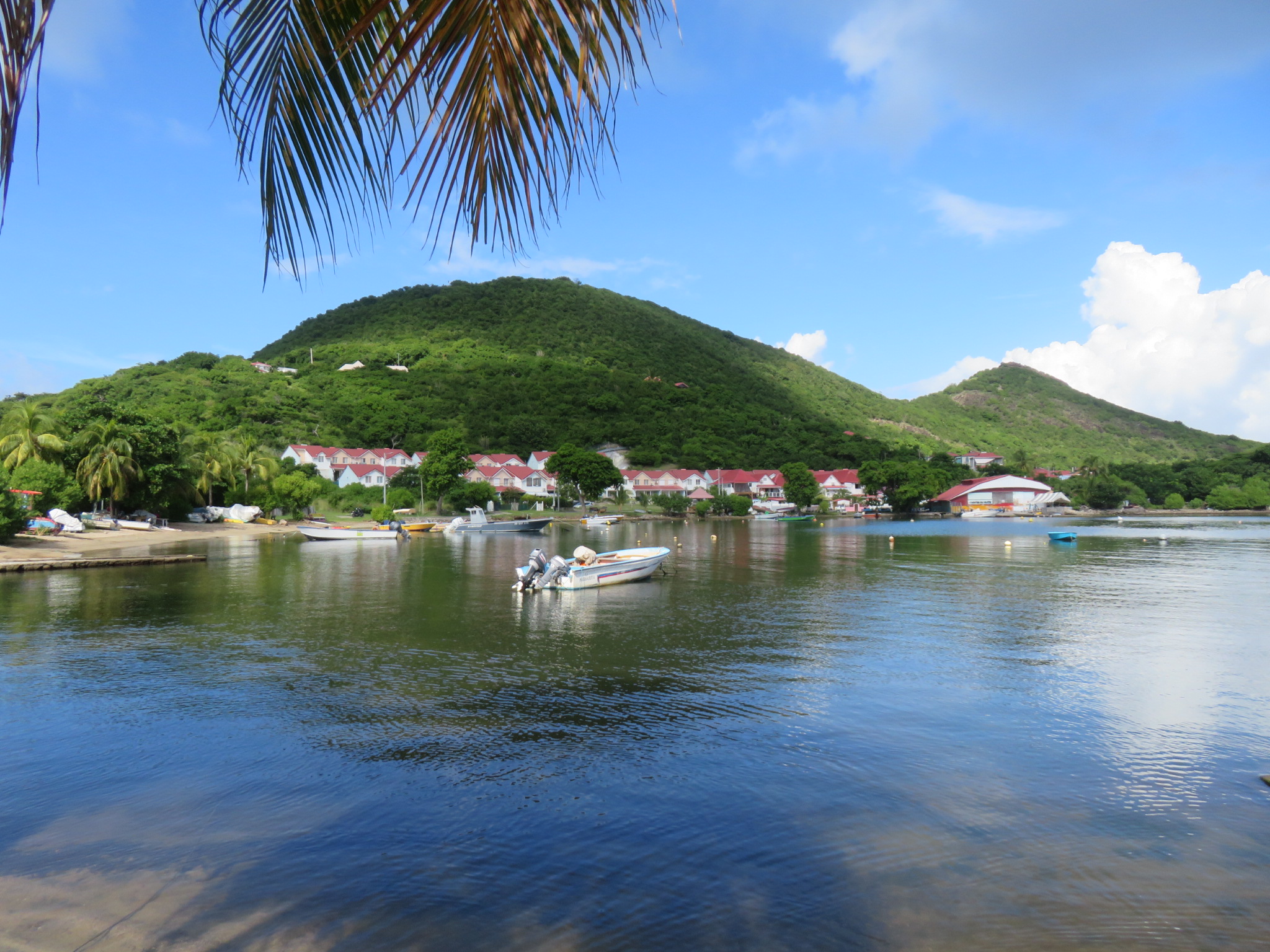
Terre-de-Haut is home to what UNESCO has listed as one of the most beautiful bays in the world – Les Saintes Bay. Not only is it beautiful, it is home to thriving coral reefs. The half-mile long Pompierre Beach is shaded by coconut palms, and sheltered from trade winds by Les Roches Percées, an islet to the west. This bay is classified as a natural site, with motor boats and sail boats prohibited from entering or anchoring in it. The beach does welcome iguanas, though, and many can be seen basking in the coconut trees.
We arrived early this morning at St. John’s Deep Water Harbour, which was redeveloped between 2018 and 2022, adding a new cruise berth, cargo and logistics facilities, as well as office for Customs and Excise, Immigration and other services. Barbuda is slated to get a deep water harbor in the near future. Antigua and Barbuda are two separate islands about 40 miles apart. Two ferry services run between the islands.
St. John’s is the capital city of the nation of Antigua and Barbuda. Antigua means “ancient,” and Barbuda means “bearded” in Spanish. Antigua was home to Island Caribs, who called the island Wadadli, meaning “our own,” when the island was colonized by British Europeans in 1632. Barbuda may have been called Wa’omoni, “Island of Herons,” by the Caribs.
The European settlers raised tobacco, indigo, ginger and sugar cane. Within a few decades, sugar took over as the primary agricultural product. Today, the economy depends mostly on tourism.
The islands gained their independence from the UK in 1981, but remain part of the Commonwealth of Nations, as a constitutional monarchy, with Charles as their king.
We traveled from St. John’s through Antigua’s countryside, to the English Harbour at the south end of the island. It was at this location that British Royal Navy established its base in the Caribbean. Nelson’s Dockyard, a former British Navy base, and a UNESCO World Heritage Site since 2016. The dockyard was constructed in 1725. There were wooden storehouses, slave quarters, naval housing, boathouses, stores and a hospital were among the buildings.
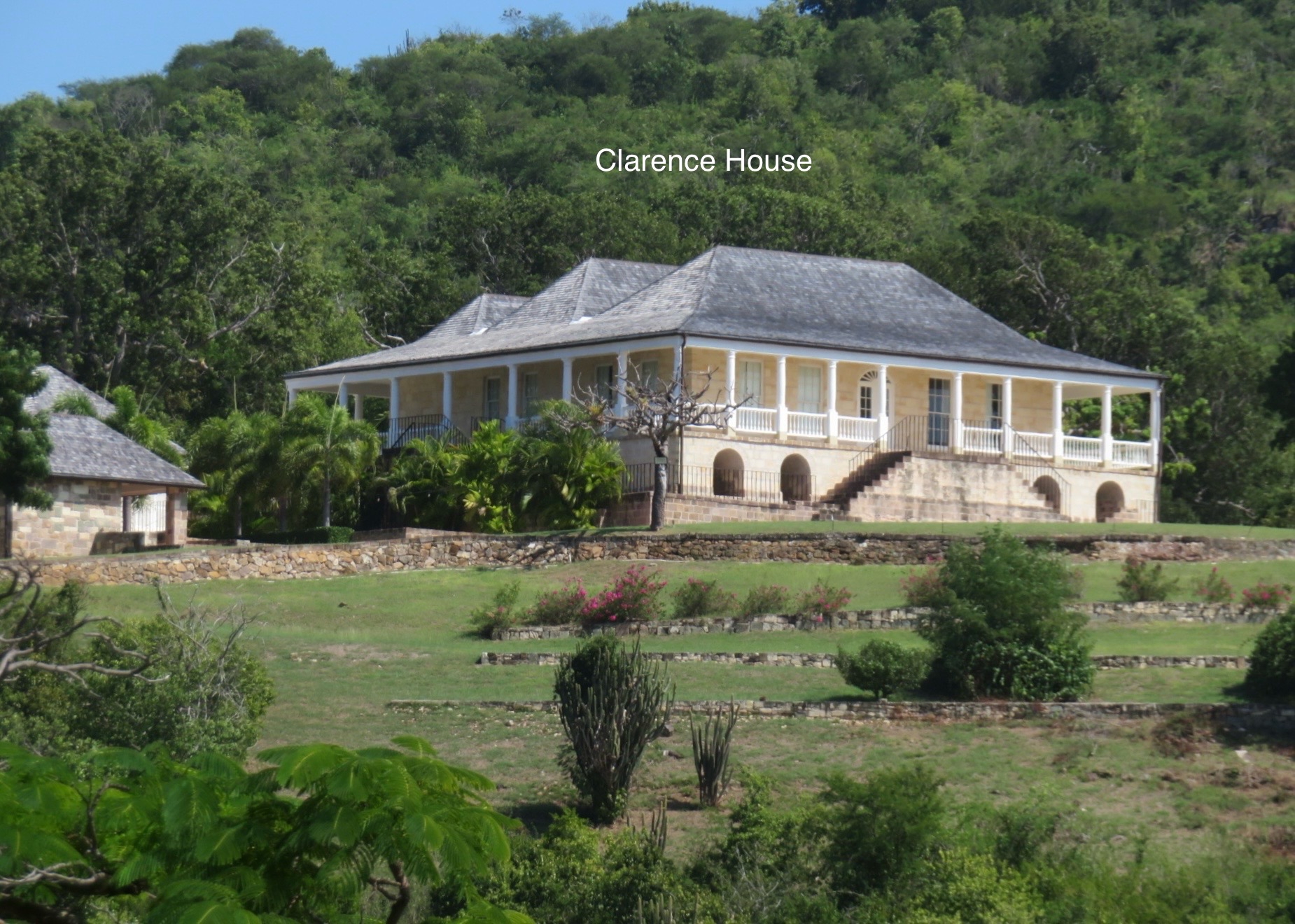
Overlooking the English Harbour is Clarence House, a colonial era house built for the Navy Commissioner. It later became the official country residence of the governor of Angigua.
The Dockyard was operational until 1889, when it became difficult for newer, larger ships to navigate the narrow English Harbour. Attempts to create a heritage site began as early as 1920, but it was not opened as an historic site until 1961. With the passage of a National Parks Act in 1984, the Nelson’s Dockyard National Park was established.
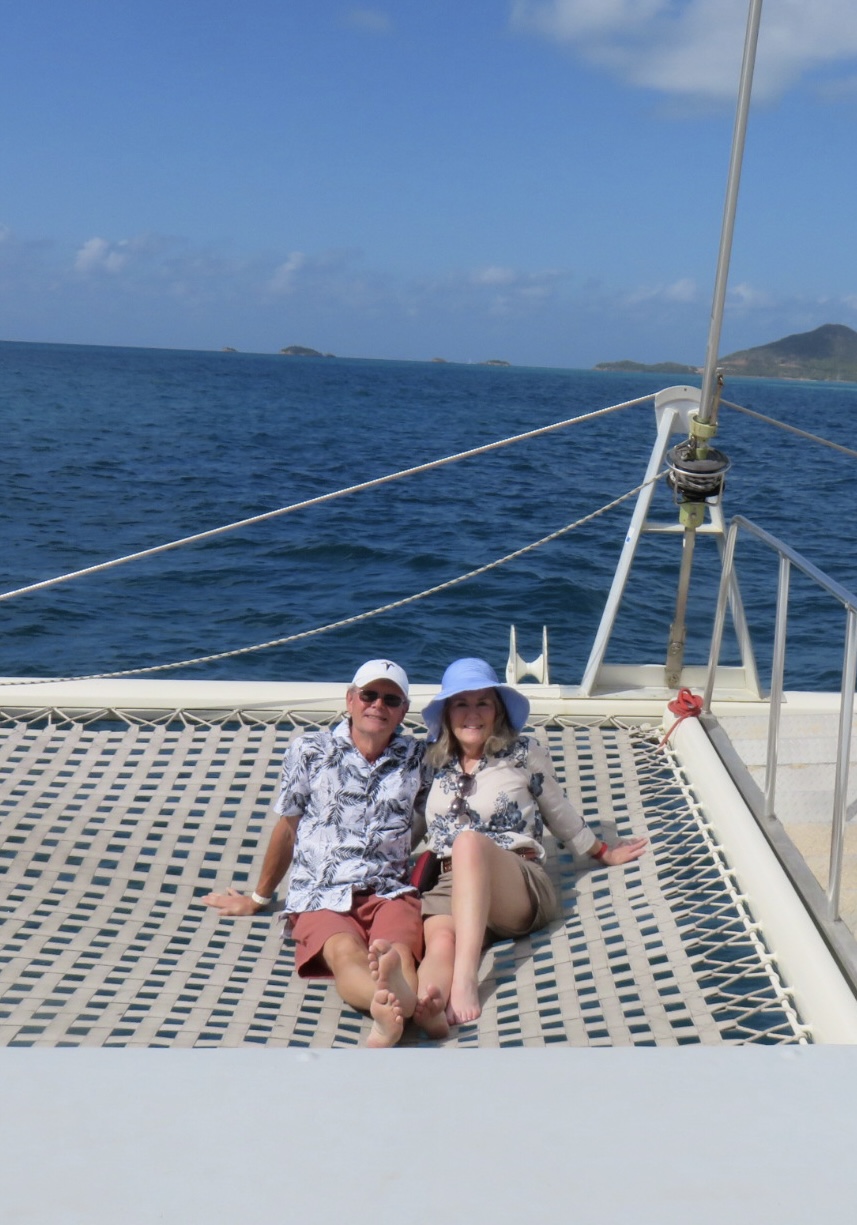
After visiting the Dockyard, we rode along Fig Tree Drive (named not for figs, but for banana figs, small bananas), which runs through a Rainforest area, on our way to Carlisle Bay, where we would be boarding a catamaran for a leisurely sail back to port.
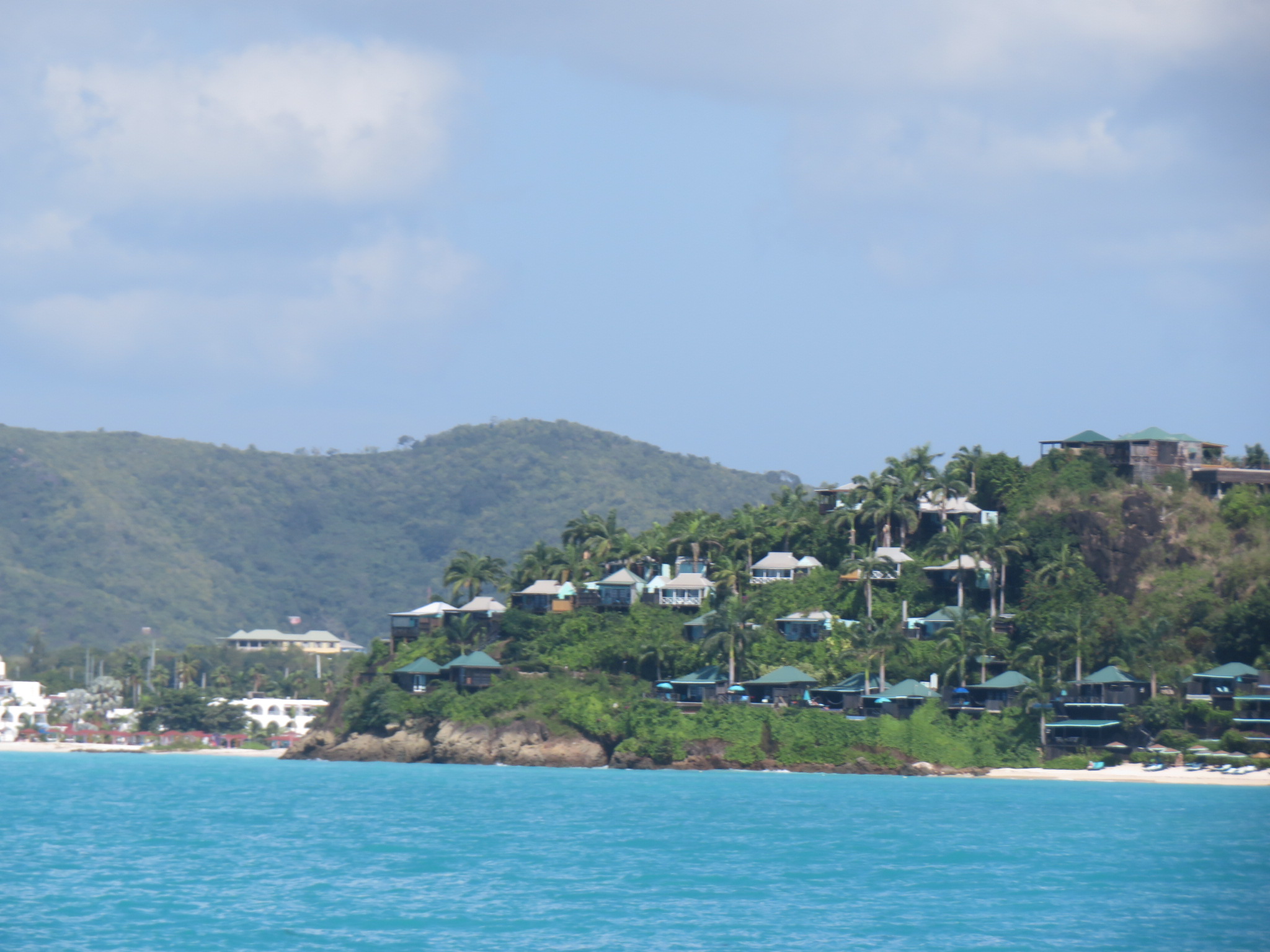
From there, we enjoyed a guided tour of Antigua, passing many lovely beaches, homes and exclusive hotels, then north to St. John’s Harbour, passing colorful villages and white sand beaches. Antigua has 365 beaches along its 54 miles of coastline. All of them are open to the public.
We even stopped for a swim, a welcome respite from the heat of the day. It really was a lovely day.
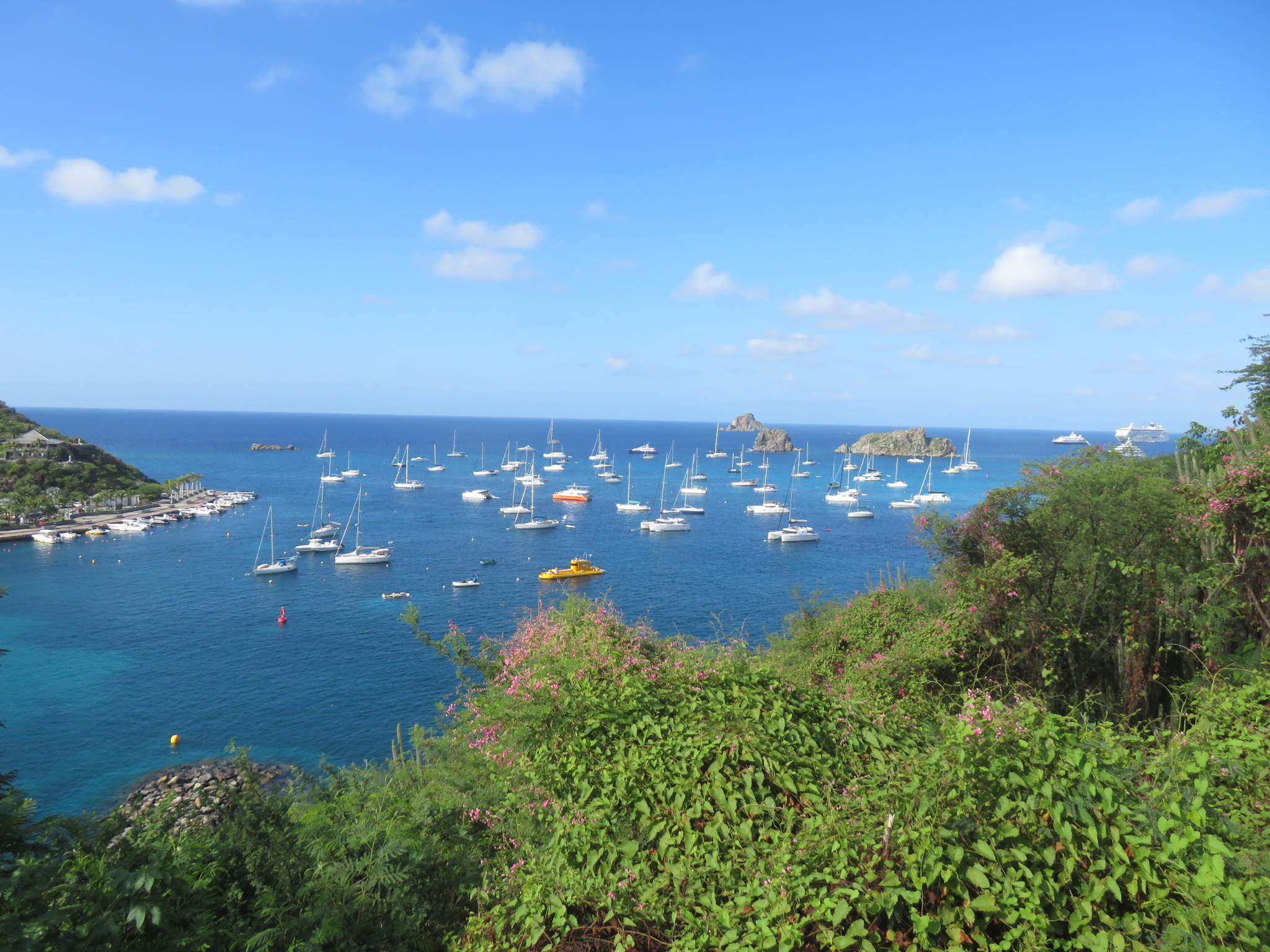
We arrived in port this morning around 8 am, and set anchor in the harbor. The harbor at Gustavia is too small for cruise ships to dock. Some cruise ships dock at nearby St. Martin, then passengers take a ferry to St. Barths. Crystal tenders us between the ship and land, which is much more convenient for us.
This volcanic island is circled by shallow reefs, with small islands dotting the surrounding waters.
Saint Barthélemy, aka St. Barts or St Barth, is a sovereign state of France. We’ll get to use up some of our Euros while we’re here. The island was given its current name by Christopher Columbus for his brother Bartolomeo. The Caribbean name for the island is Ouanalao, which means “pelican.”This was the name used by the Arawak and Taino tribes that visited here. It is thought that the island wasn’t permanently settled by them because of the poor soil and lack of fresh water.
First encountered by Europeans on Christopher Columbus’ second voyage to the Americas in 1493, this small island remained largely ignored by Europe until the mid-1600s, when a French settlement was started. Europeans quickly eliminated the few Arawak peoples who lived here. The island came under British control in 1744, reverted to the French in 1764, traded to Sweden in 1784, then sold back to France in 1878. Islanders were given full French citizenship in 1946.
The Nature Reserve of Saint Barthélemy (Réserve Naturelle de Saint-Barthélemy), which consists of almost 3000 acres of area on and around the island, was founded in 1996. The Preserve contains 45 species of coral, 165 species of fish, as well as sea sponges, anemones, sea turtles, and more.
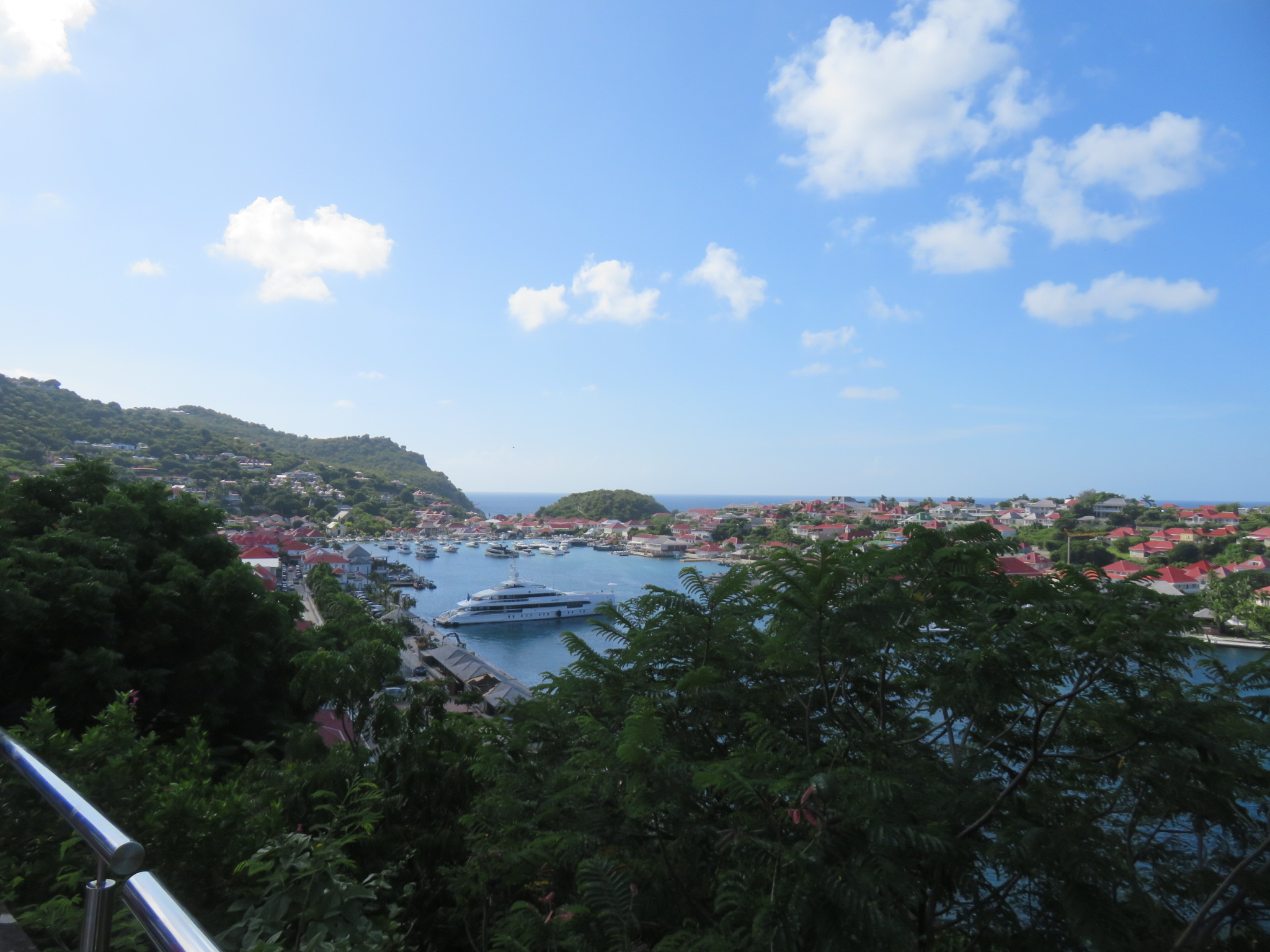
Today, we took a short tour of the island, visiting a few beaches and attractions. The island is less than 9 square miles in area, so we could see most of it in an hour or so. We enjoyed panoramic views of the harbor.
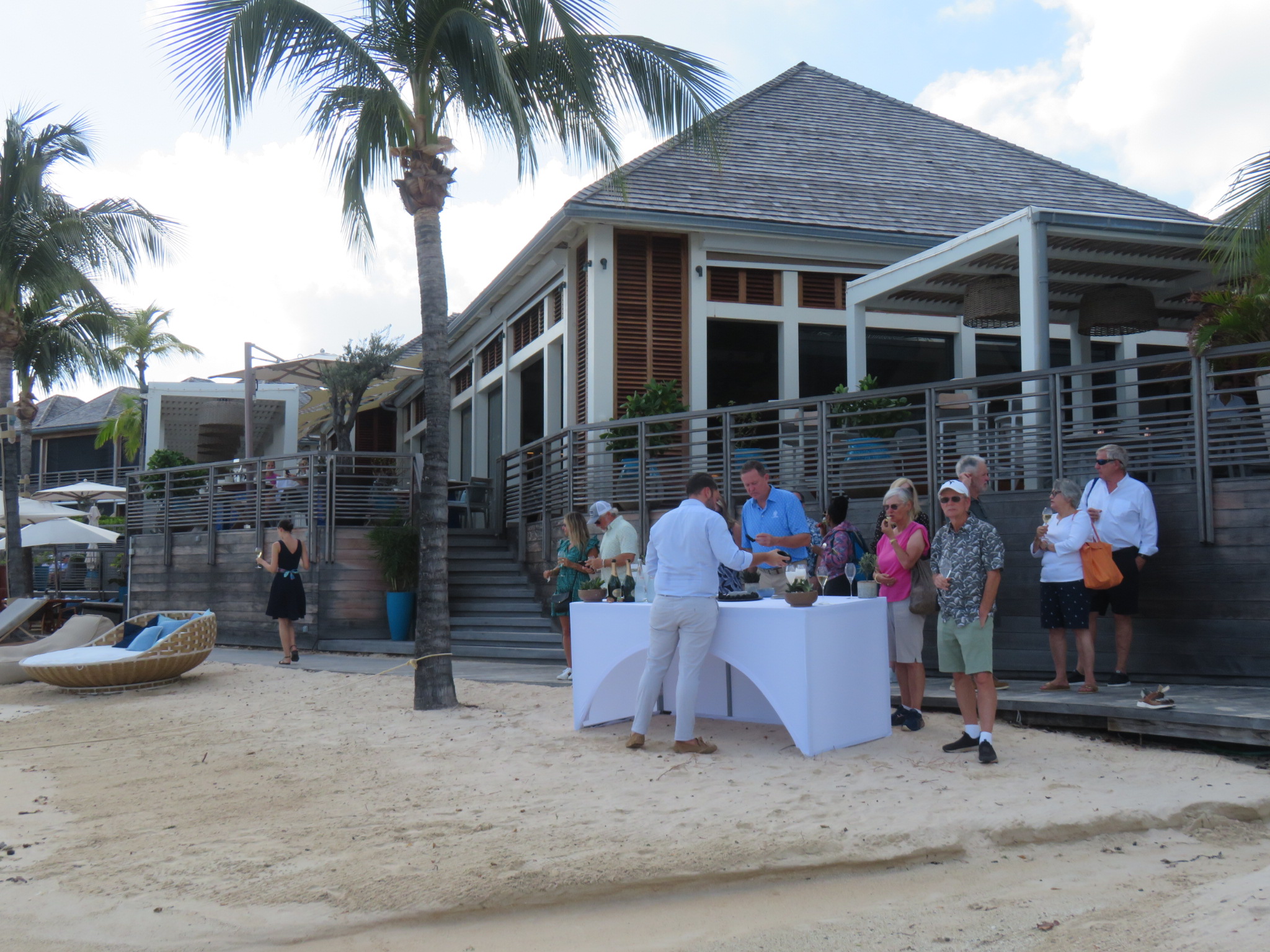
One of the highlights was champagne and canapes at Le Barthelemy Hotel, from its seaside restaurant, Amis St. Barth, led by Michelin-starred chef Jéremy Czaplicki. One of our canapes was a charcoal encrusted shrimp that was incredible – not your everyday blackened shrimp!
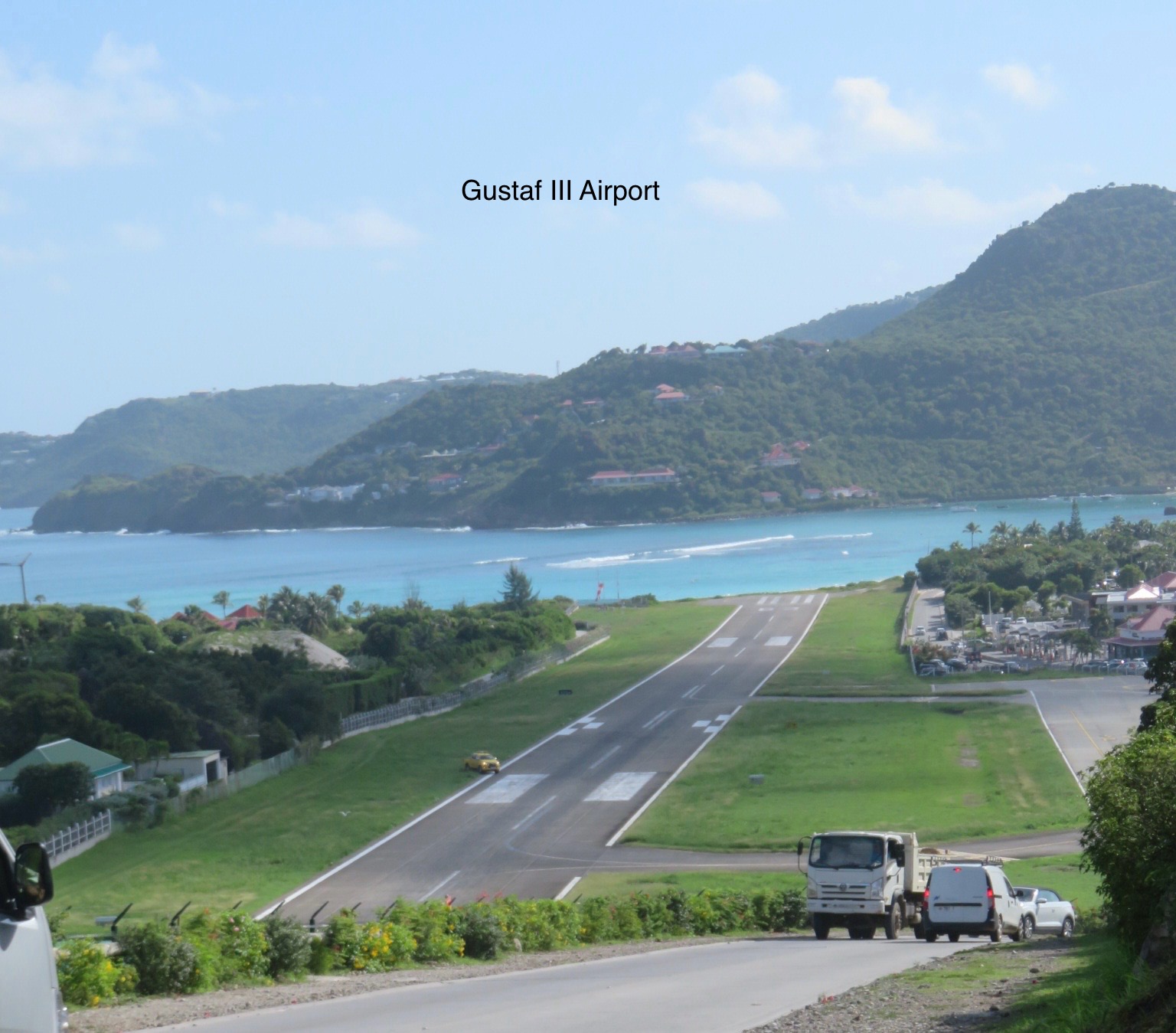
St. Barths has a tiny airport, Gustaff II Airport, with a steep runway, about 2,100 feet long, ending on the beach. Clearly, it cannot accommodate large aircraft, most carry 20 or fewer passengers. The largest plane to land there was a Douglas DC-3, but only once. In the past, cars drove on a road that passed directly under the approach path, but the road was moved about 20 years ago. At one time, the History Channel ranked it the third most dangerous airport in the world, but most experts consider it to be extremely safe. In any case, special certification is required for permission to land there. Last year, over 200,000 passengers landed here safely.
We followed that up with a little shopping in town before returning to the ship.
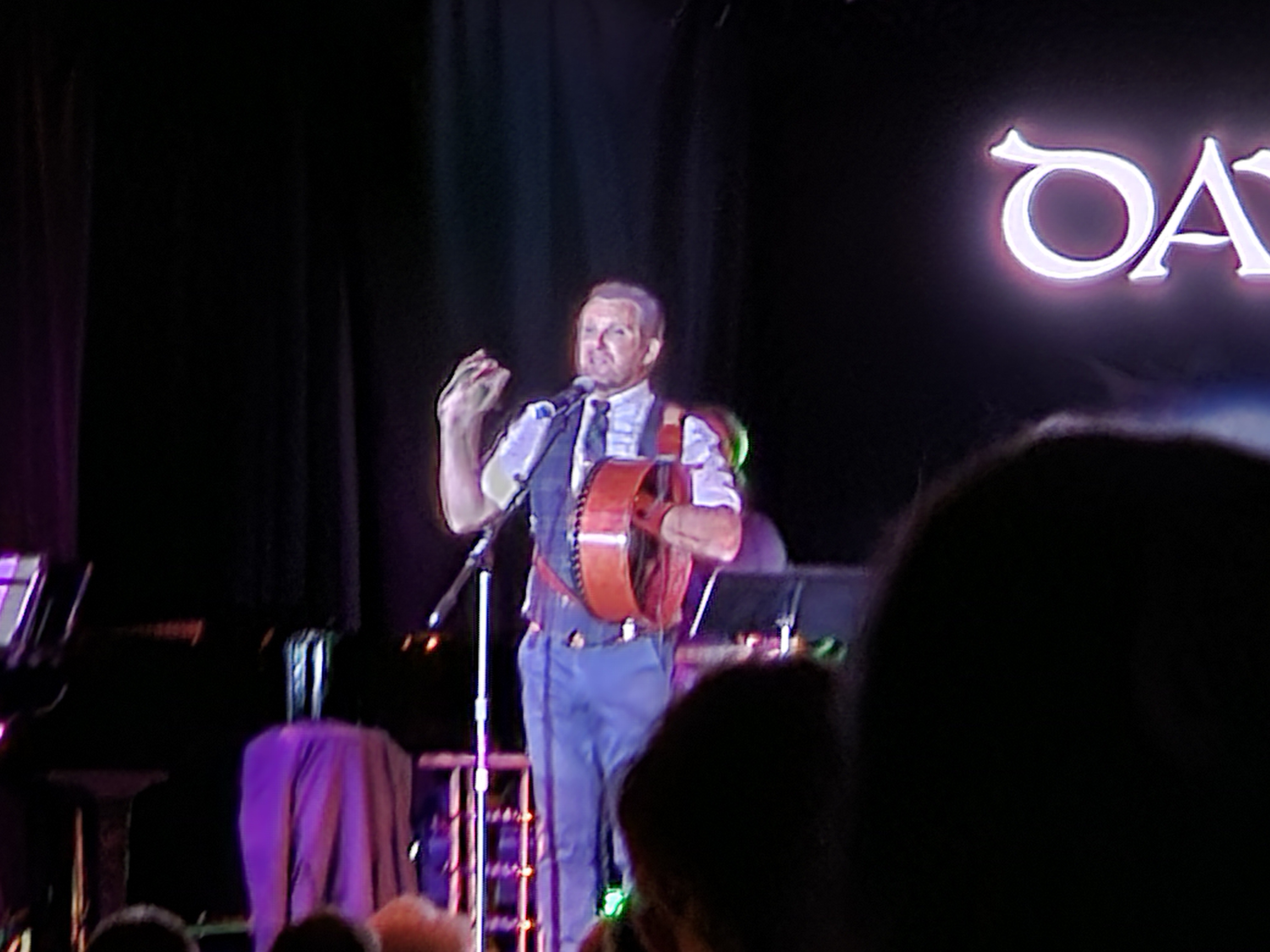
After our lovely day in Saint Barthélemy, we left port around 6 pm, on our way to Antigua and Barbuda. Entertainment tonight was David Shannon, the Irish singer, and like any Irishman worth his Guinness, he interspersed the songs with stories of his life and history of the songs he was singing.
Sea Day, day of rest, sailing past Haiti and the Dominican Republic. We crossed time zones today, from Eastern to Atlantic.
Tuesday, November 12, 2024
We arrived at San Juan about 8 this morning.
San Juan, the capital of Puerto Rico, was founded by Spanish colonists. Europeans first arrived here in 1493, and the first settlement was founded in 1508 by Juan Ponce de León. The oldest Catholic diocese in the United States was founded just three years later In 1521, it was named Ciudad de Puerto Rico de San Juan Bautista, or “rich port city of Saint John the Baptist.” The Castillo San Filipe del Morro was constructed in 1534. During the Spanish-American War, the fort was designated as part of Fort Brooke and used as a military installation during WWI and WWII. The fort was retired in 1961, after 400 years of service, and has been declared a UNESCO World Heritage Site.
Following the Spanish-American War of 1898, the island was ceded to the United States in the Treaty of Paris (at the same time that Florida became part of the US.)
Citizens of Puerto Rico were granted citizenship in 1917 during President Woodrow Wilson’s presidency. Thirty-three years later, Congress authorized Puerto Rico to adopt a constitution, and two years later, approved the Constitution of the Commonwealth of Puerto Rico.
Although they are citizens, Puerto Ricans do not vote in US Presidential elections. There have been a number of referenda regarding the island’s status. The Puerto Rico Status Act passed in the US House of Representatives earlier in the year, but the billed died in the Senate. A non-binding vote was on Puerto Rico’s ballot last week. Final results show that 57% voted for statehood, 31% for independence, and 12% for independence with free association. We’ll have to wait to see if anything happens after that vote.
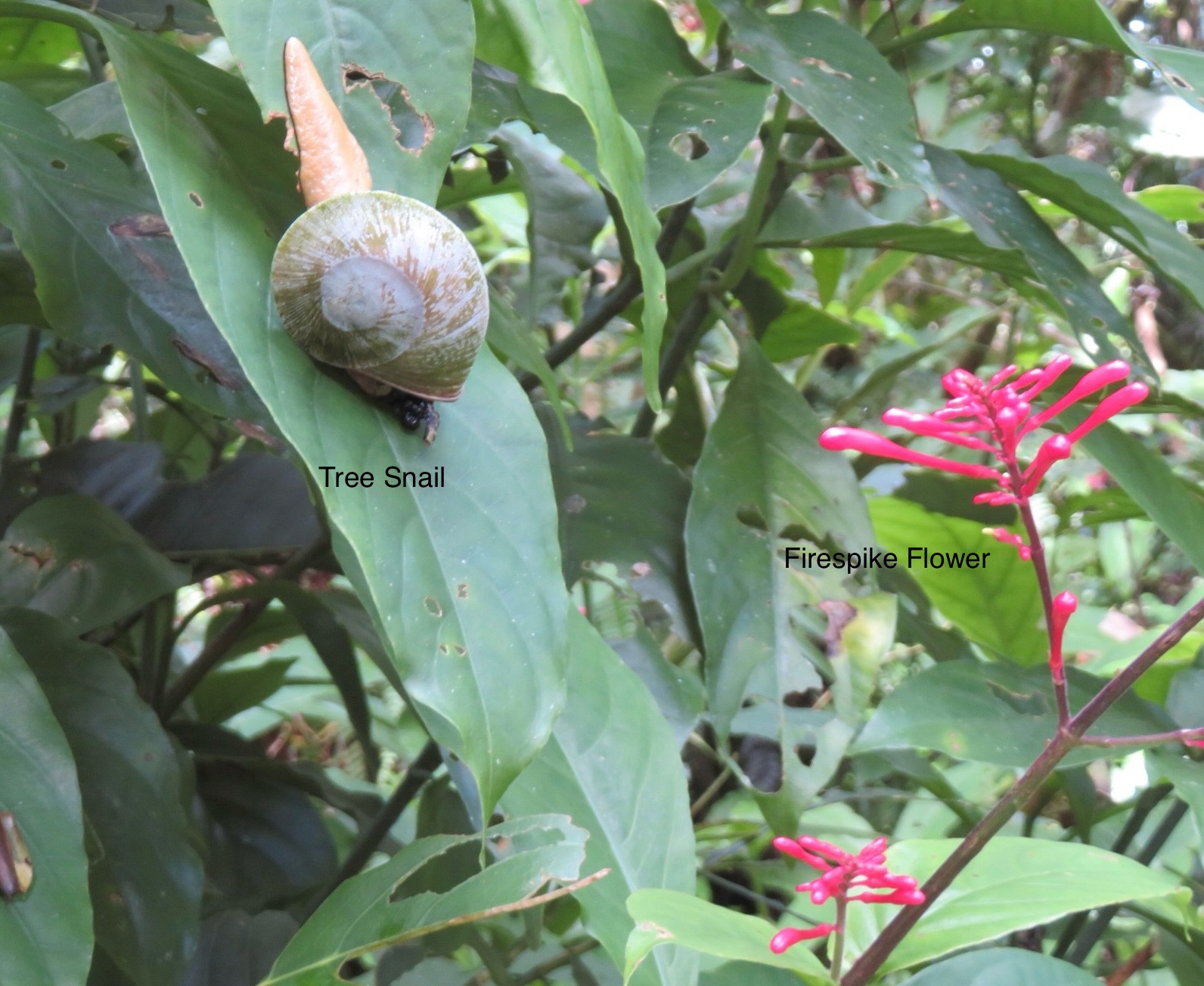
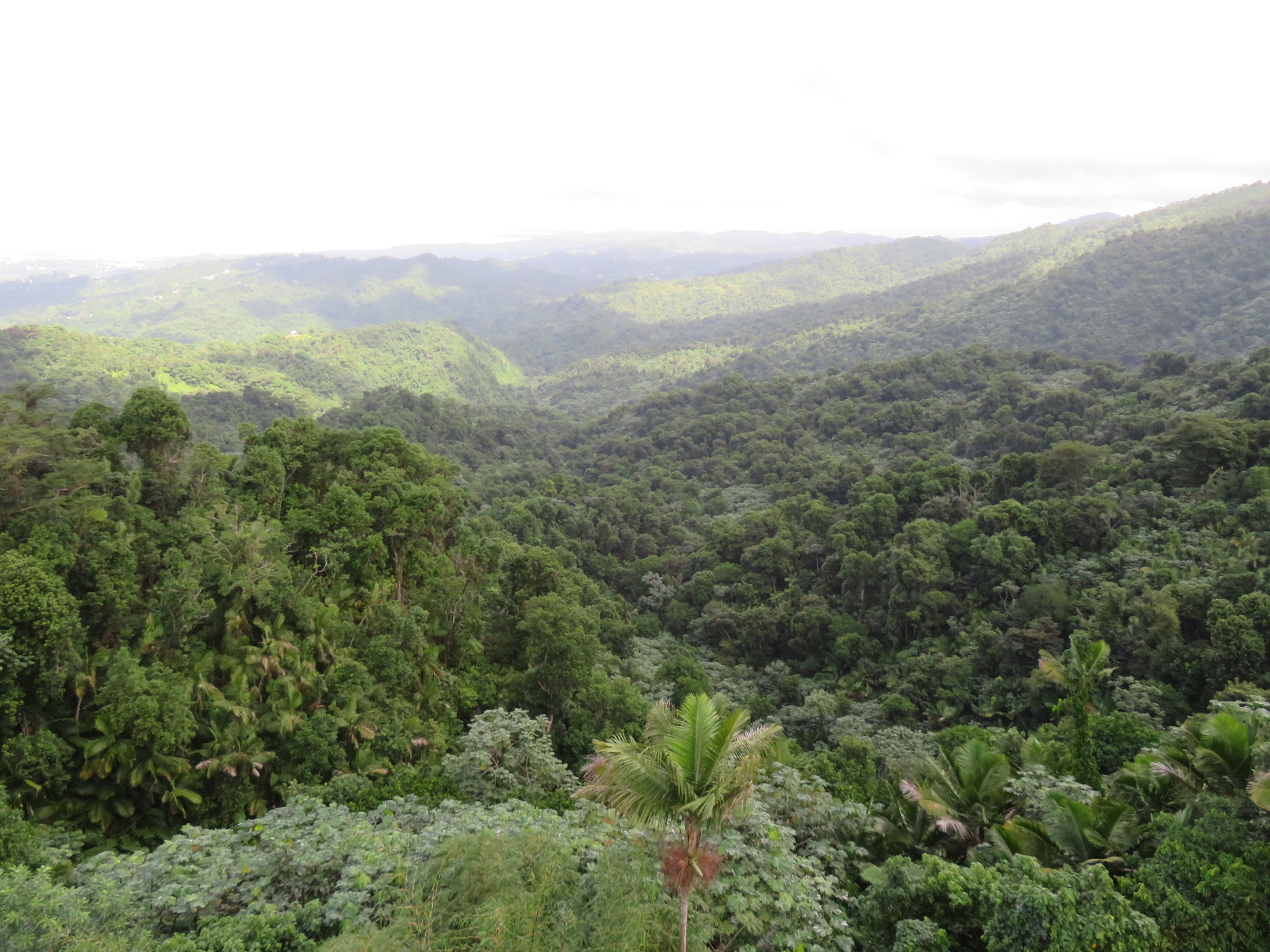
We took a tour to El Yunque National Forest, (our guide pronounced it El Joon-kay) 29,000 acre rainforest in the Luquillo Mountains. The name El Yunque means anvil in Spanish. Archeologists have found evidence of the presence of pre-Columbian cultures around 3000 BCE. Spanish colonists found gold in the early 1500s, and mined here for several decades, but didn’t fine much. The forests were a source of timber in the mid to late 1800s.
The Spanish became concerned about protecting the forest, fish and wildlife in the mountains, so Spain’s King Alphonso XII set aside the forest in the Luquillo Mountains as a reserve. After Puerto Rico was ceded to the US, President Theodore Roosevelt set aside land as the Luquillo Forest Reserve. The name was changed to El Yunque National Forest in 2007. The Luquillo Mountains, or Sierra de Luquillo, collect 200 inches of rain each year (it rains several times each day), which fuel six rivers and provide water to 20% of Puerto Rico’s citizens.
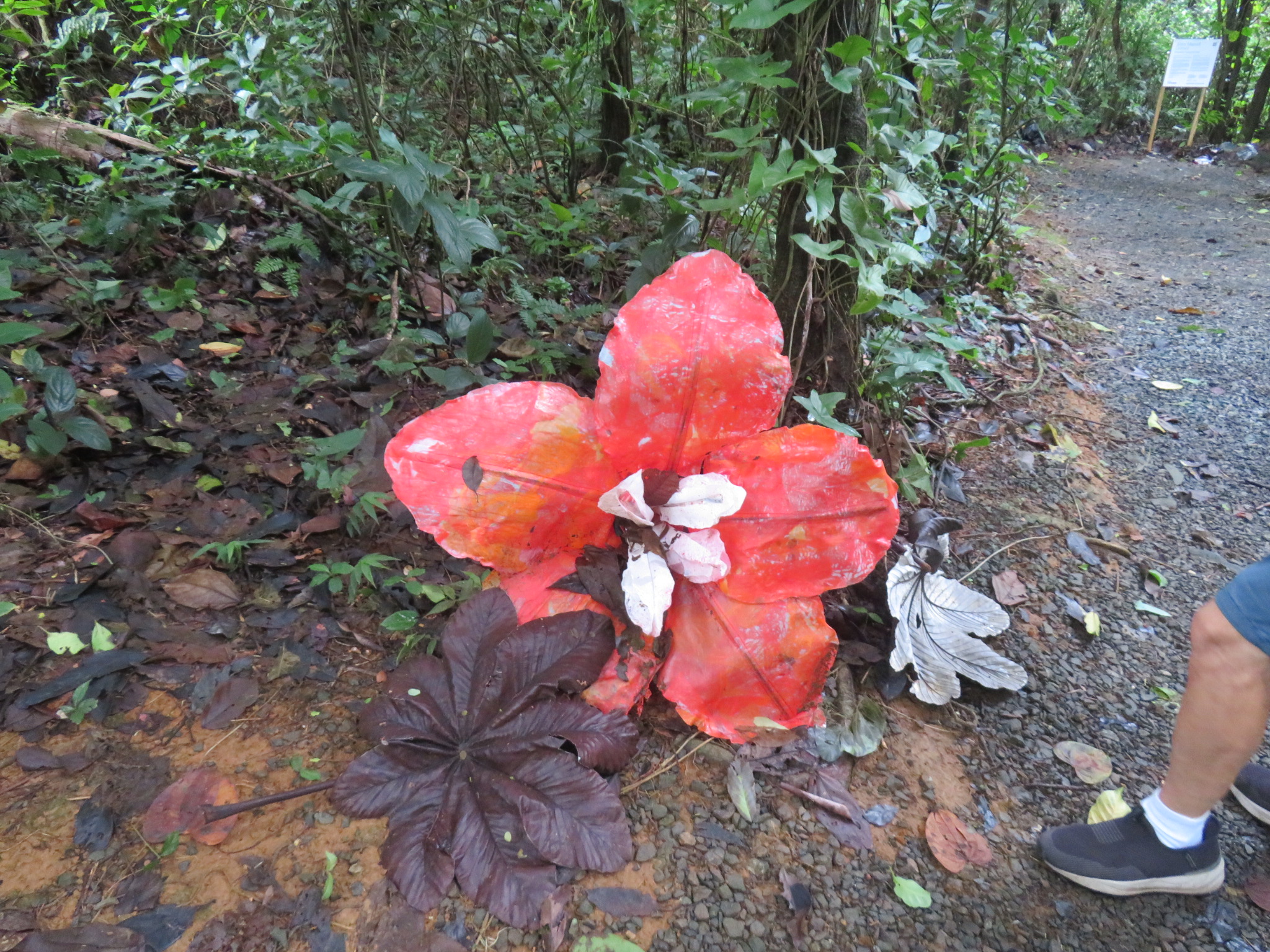
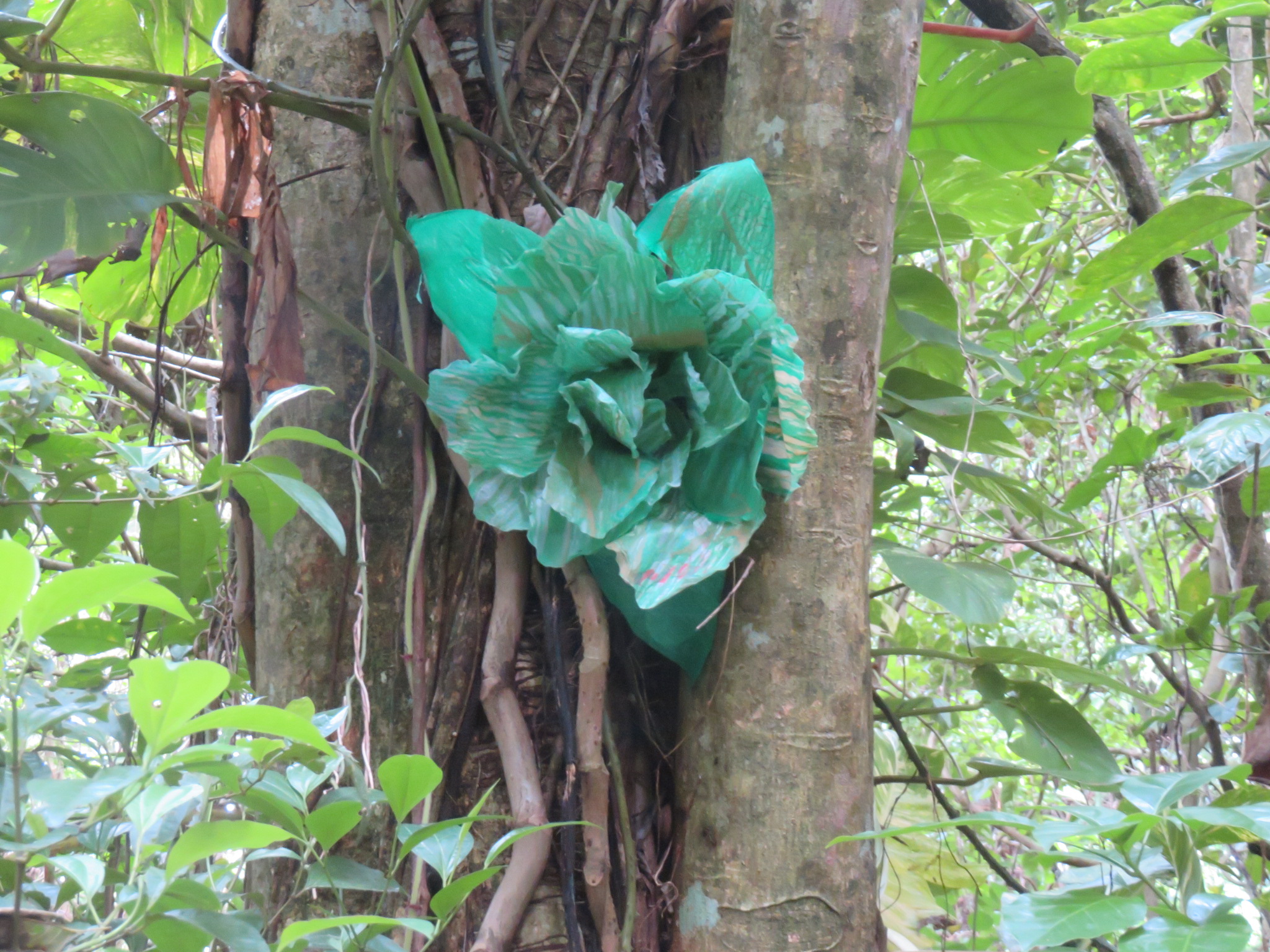
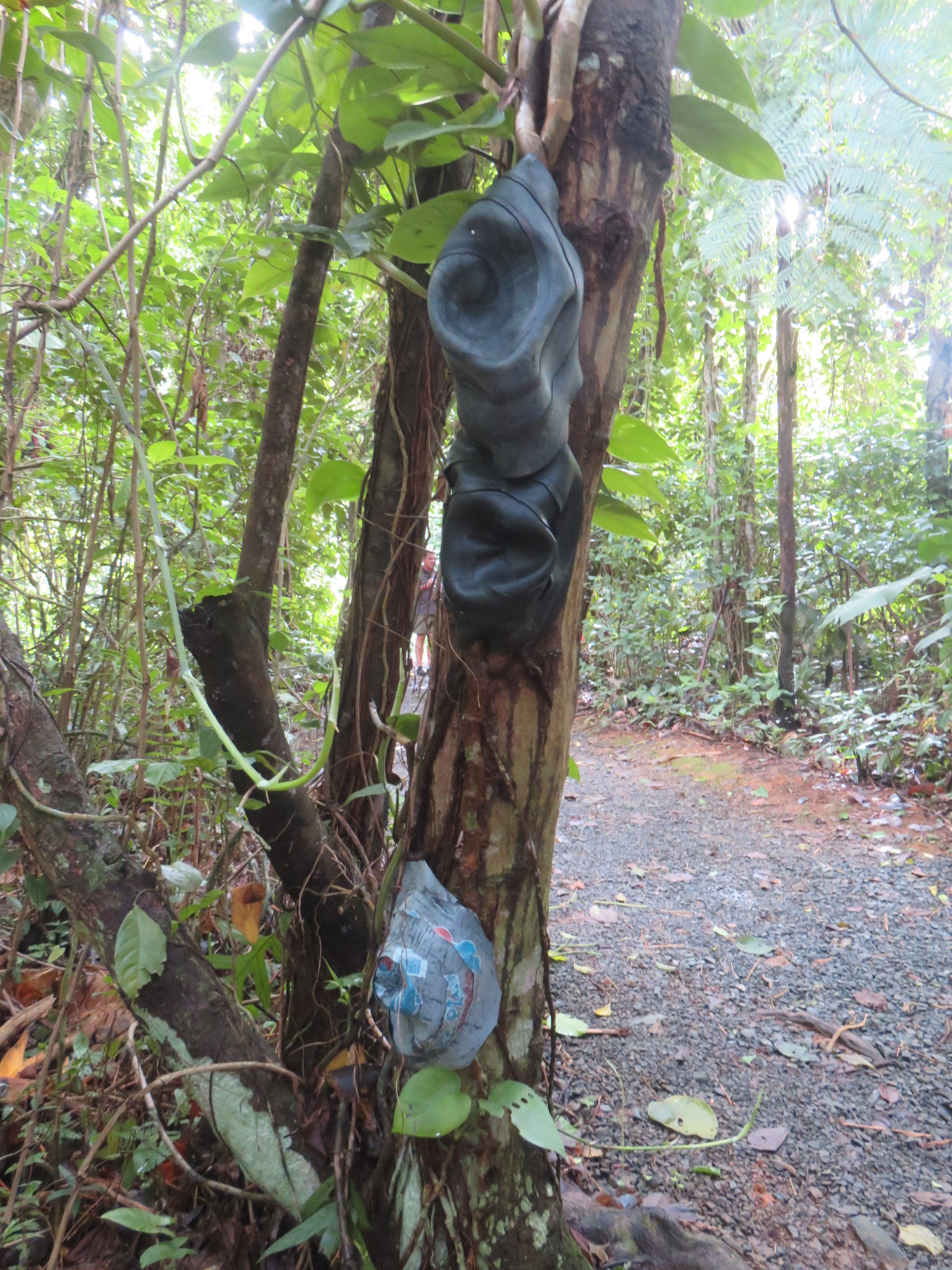
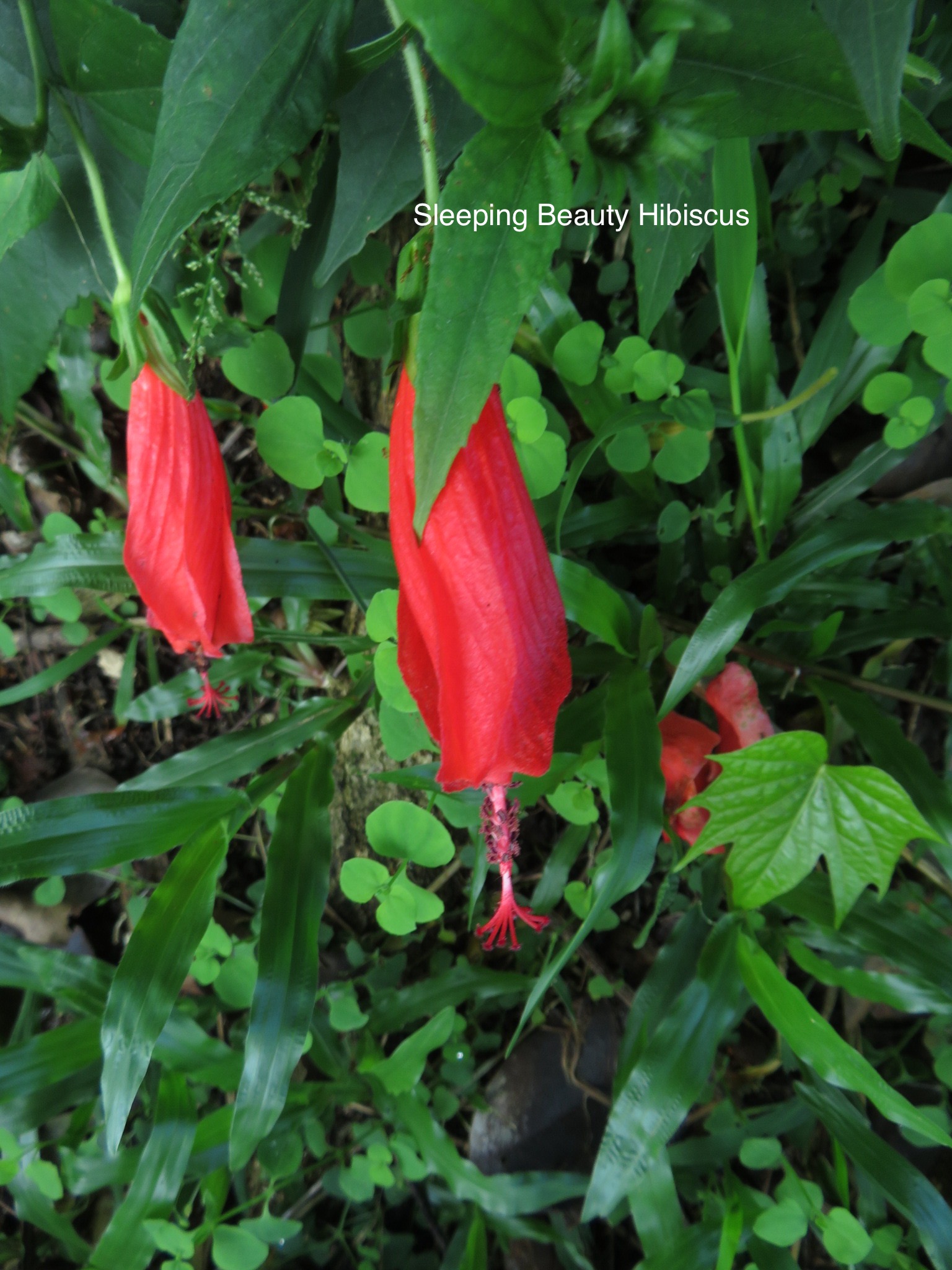
Today we hiked in the Tabonuco forest area. The area has over 170 species of trees. The 1.8 mile La Coca trail (sadly, not open at this time) passes through dense forest foliage, crossing numerous streams, passing waterfalls, leading to the Mameyes Wild & Scenic River area, one of the rainiest parts of El Yunque. Discovery Trail features several pieces of art by local artists.
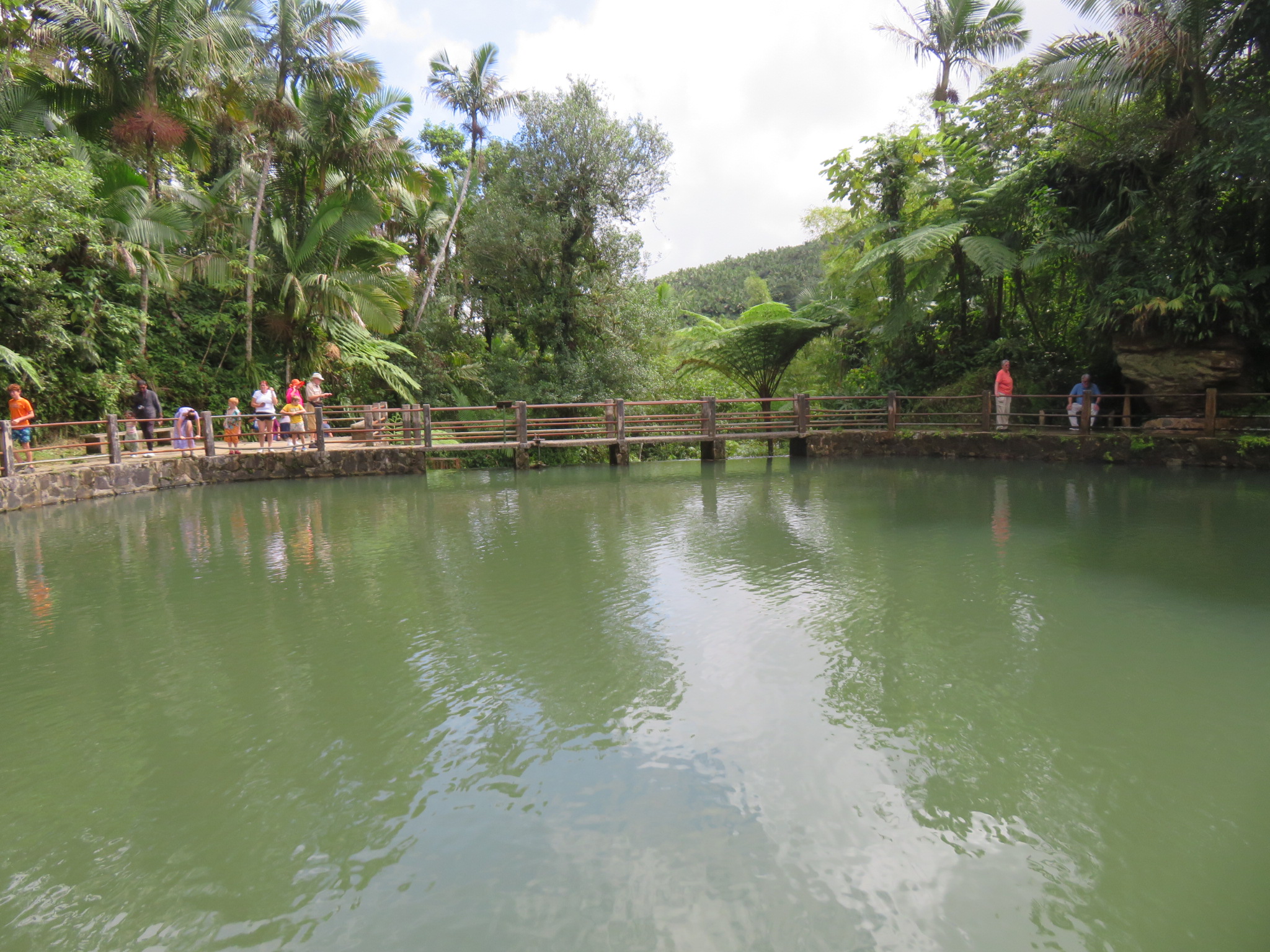
Baño Grande is a former swimming pool in the National Forest that was built during the New Deal, by the Civilian Conservation Corps in the 1930s. It is 18 feet deep, built with stone masonry and reinforced concrete. It was closed in 1968 for safety reasons. The pool is listed on the National Register of Historic Places.
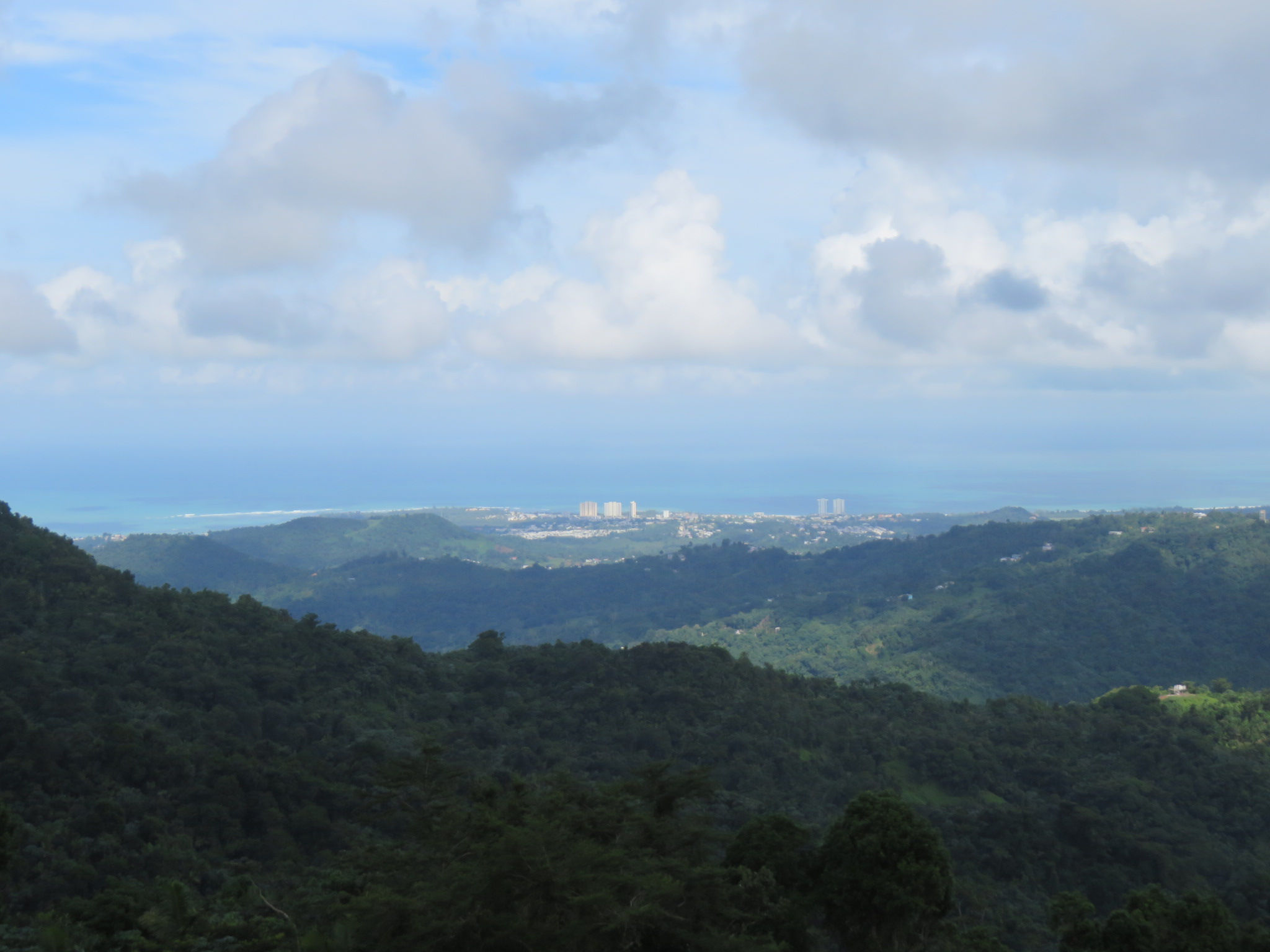
Following our hike, we headed to the Yokahú Tower, a 69 foot tower with views of much of the forest. On clear days, it’s possible to see as far as 10 miles.
We started the second leg of our cruise yesterday, with more passengers boarding in Fort Lauderdale. It was a small group from Quebec City to Fort Lauderdale, but now we are up to about 500 passengers – capacity of Serenity is 740 passengers. We also have a new complement of speakers.
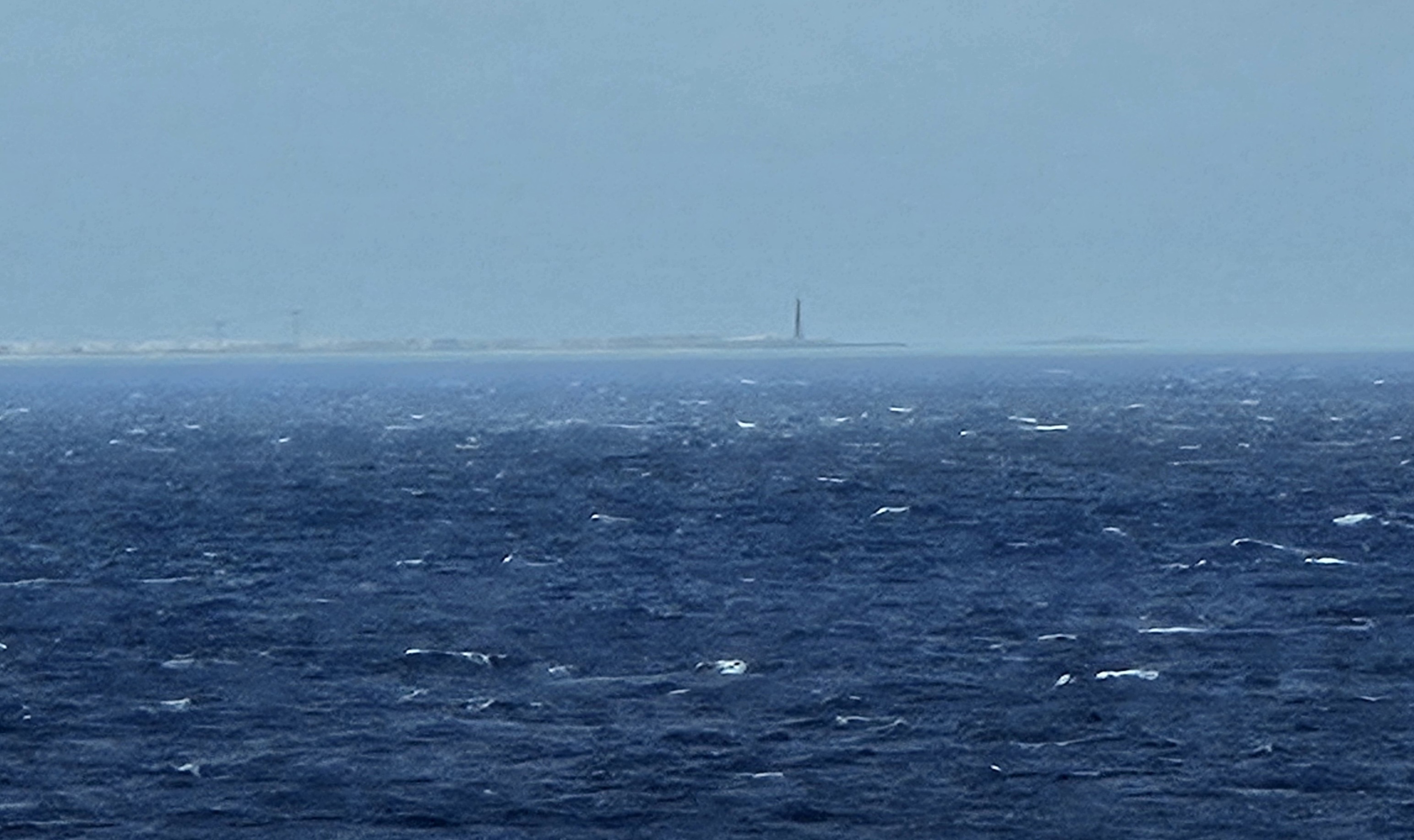
Today is a sea day. We cruised by Cuba this morning, and got a few glimpses of the island through the haze. The last time I was this close to Cuba was flying over on my way to Jamaica 25 years ago. We were cautioned to keep our windows covered and “don’t take any pictures” while flying over. No one said we couldn’t take any today, though.
This morning’s presentation was by Dr. John Freedman, “Christopher Columbus: Man, Myth or Monster?” Dr. Freedman is a Global Studies Scholar, who retired from medical practice to travel the world. His career included extensive worldwide medical volunteer work.
Today’s presentation was Part 1: The Path to a Dream, about Columbus’ background and earlier life. All of the Caribbean nations were visited and named by Columbus, except for the ABC Islands – Aruba, Bonaire and Curaçao. He was named by Queen Isabella of Spain the “Admiral of the Open Sea.”
While he also spent time in Central and South America, Christopher Columbus never set foot on North American soil. So why do we celebrate Columbus Day? Italian Americans began pushing for recognition of Columbus as early as the 1700s, finally resulting in Franklin Delano Roosevelt declaring the national holiday in 1937. You are probably aware that several states, including Minnesota, have rejected Columbus Day in favor of Indigenous Peoples’ Day.
Next, we heard from James J. Wirtz about “The Cuban Missile Crisis Revisited.” Mr Wirtz is a professor at the Naval Post Graduate School.
I remember that day. I was still in grade school, and we were sent home early. I didn’t quite understand what was happening, but I knew it was serious.
Wirtz told us that, at the time, neither the Kremlin nor the CIA thought Nikita Kruschev would put missiles in Cuba, because it would be too risky for the USSR, that Americans would go crazy. Turns out that was a correct assumption. The presence of missiles in Cuba put Washington DC within striking range for the Soviets. The US established a naval blockade to prevent more military equipment to Cuba. Overflights by Airforce U-2 pilots detected the missile, fortunately while they were still being deployed, and before they were actually completed.
The US established a naval blockade to prevent more military equipment reaching Cuba, and we demanded that the missiles be removed. What wasn’t known until recently was that Kennedy and Khrushchev made a secret deal where the US would remove its nuclear missiles from Turkey in exchange for the Soviets removing their missiles from Cuba.
As a consequence of the Cuban missile crisis, it became clear to our allies that the US was a superpower, a hotline was established between Russia and the US (originally a teletype machine), limited test ban treaties were negotiated, and arms races intensified along with demands for arms control,
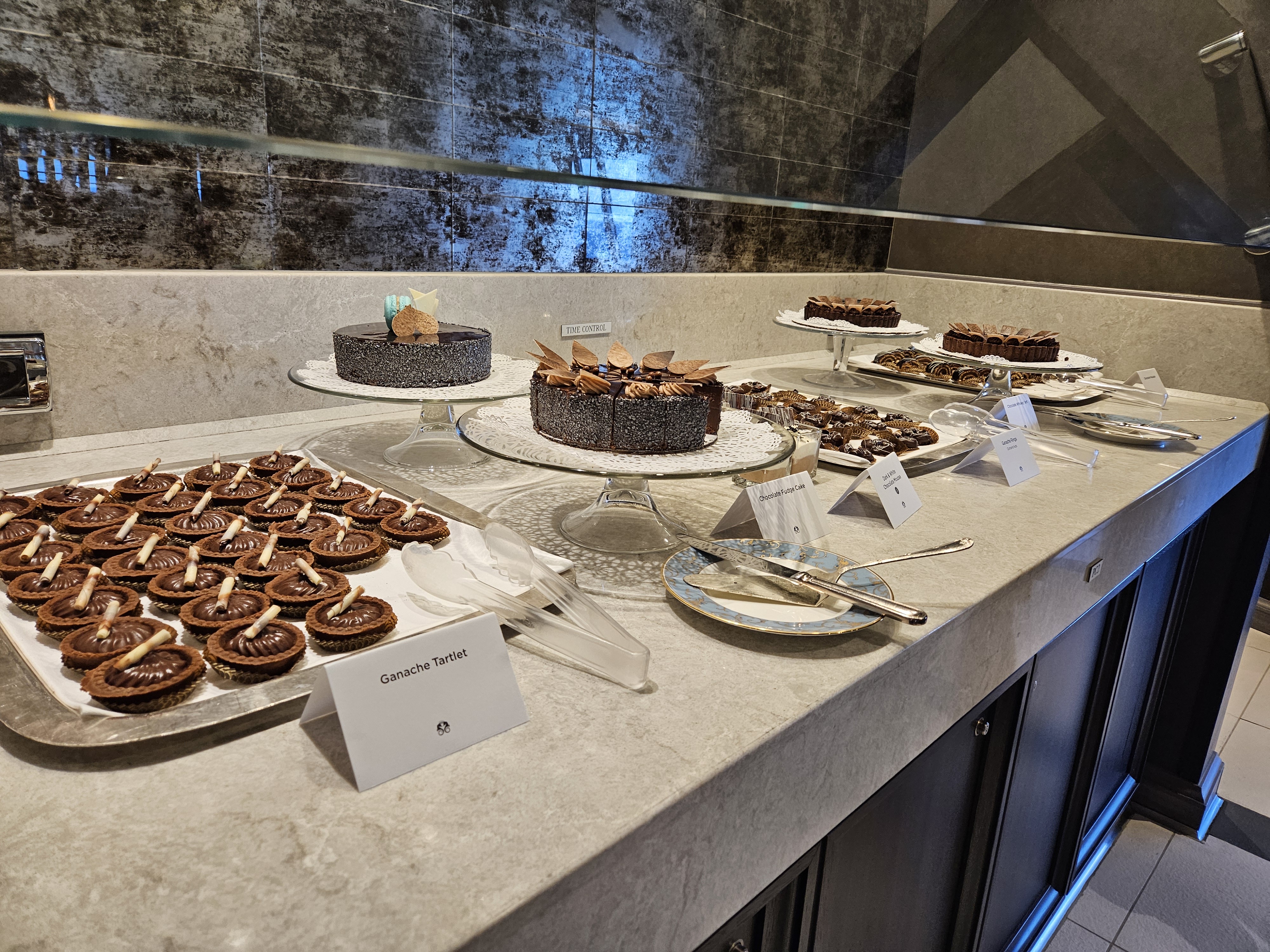
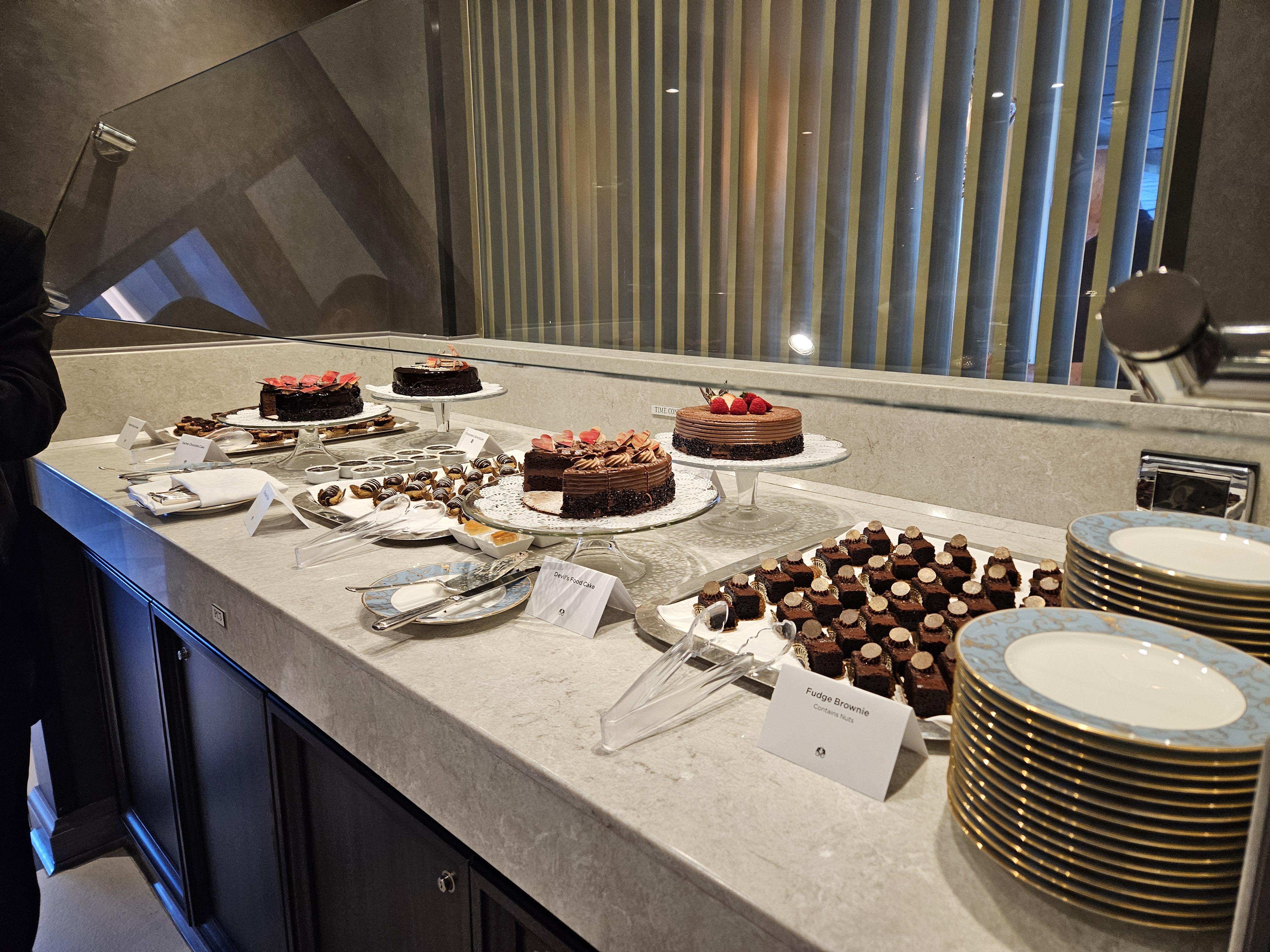
Well, that was depressing, so I decided to improve my mood by attending my first Crystal Tea this afternoon. Of course, that may have had something to do with the fact that today’s theme was “Chocolate Tea Time.”
The evening ending with a performance by David Shannon, Irish singer and actor. He has performed in a number of musicals such as The Phantom, Les Miz, Sweeney Todd and more. He has a beautiful, strong voice and an engaging presence on stage. We’ll be watching for him to perform again later in the cruise.
We arrived in Fort Lauderdale during the night, at Port Everglades. This is the end of one leg of the cruise, and the beginning of the next. We have visited Fort Lauderdale several times, though not for about 20 years now. Mark’s parents owned a condo within walking distance of the port. We always enjoyed our time here, exploring the local restaurants, bars, beaches, and shops, of course. We’re looking forward to doing a little exploring while the ship is in port, dropping off some passengers, and picking up others for the next leg of the cruise.
Fort Lauderdale is another busy port, with eight cruise ships docked here, mostly ending one cruise and starting another. Nearly 4 million passengers pass through this port every year, making it the third busiest cruise port in the US. The first is Miami, and the second is Canaveral (near Disney.)
We spent some time on East Las Olas, for some shopping and lunch, then took one of Fort Lauderdale’s free shuttles to the beach. As part of LauderGO!, Circuit uses small electric vehicles to move people around town, providing rides to over 20,000 riders per month. LauderGO! is a community shuttle service with five routes that provide coverage where the regular buses may not operate.
When we reached the beach, we came upon The MKT at Las Olas Oceanside Park. There were several booths with clothing, jewelry, artwork, and food. We did manage to spend a little money there before heading back to the ship.
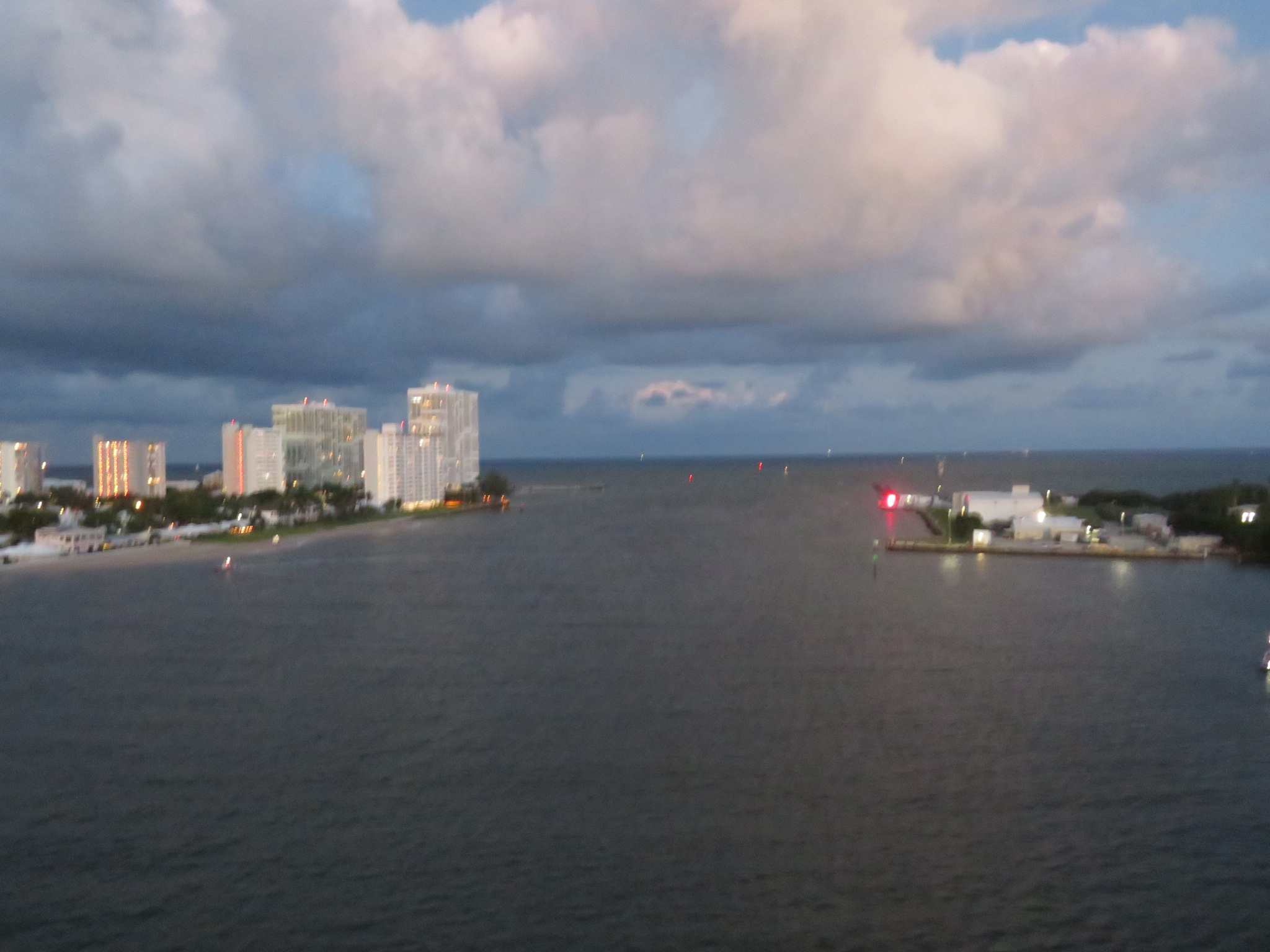
We left port at 6pm, next stop San Juan, Puerto Rico after two days at sea.























































 So Many Exciting and Beautiful Places!