St. Lawrence Seaway with Gloria Gaynor

Monday, October 28, 2024

Sea Day

The St. Lawrence River, also known as Highway H20 in Canada, originates from Lake Ontario and flows about 750 miles to the Atlantic Ocean. Attempts to deepen and extend the river began as early as 1680 AD, when François Dollier de Casson, superior of the Sulpician Order in Montreal, tried to build a 5 foot deep canal to bypass rapids between Lake St. Louis and Montreal. Over the next 100 years, a few more canals and five locks were added on the north shore of the St. Lawrence, with more added into the late 1800s.

In 1895, a joint commission was formed between the US and Canada to study the feasibility of a Seaway. Nothing came of that effort, but the two countries did sign the Great Lakes-St. Lawrence Deep Water Treaty three decades later. Finally, in 1954, The two countries agreed on the development and construction of the St. Lawrence Seaway, at a cost of $470 million. The project was completed 65 years ago, on April 25, 1959.

The entire Seaway extends 2,500 miles, from Duluth, Minnesota through the Great Lakes, and through the St. Lawrence River to the Atlantic Ocean. We’ll be traveling about 550 miles on the river, which empties into the Gulf of St. Lawrence. We entered that Gulf around 2am last night.

The St. Lawrence becomes an estuary where freshwater mixes with salt water from the ocean. The St. Lawrence Estuary is the largest estuary in the world, and is one of the best places in the world to observe marine mammals. Thirteen species of whale can be seen here, including Baleen, Beluga, Minke, Humpback and more.

We are continuing to the Ocean, then will turn south. We passed by New Brunswick this afternoon, then Prince Edward Island, Newfoundland, St. Pierre and Miquelon and Nova Scotia on our way.

At one time, Newfoundland was known for an abundance of cod. Settlers from Spain, Portugal and France came from Europe just to fish these waters. It was a lucrative occupation until technology made it possible to take exponentially larger hauls, and the cod were over-fished in a matter of years. Cod fishing was banned in Canada in 1992. It is hoped that the fish population can eventually rebuild.

St. Pierre and Miquelon are not part of Canada, rather this eight island archipelago is a territory of France. The residents are citizens of France, and their currency is the Euro. Although France ceded all of Canada to the British under the 1763 Treaty of Paris, the British gave fishing rights to the residents, and control of St. Pierre and Miquelon back to France.

One of the things we have liked about Crystal is the quality of the speakers they bring on board. Today, we listened to Bill Cashell talk about the history of Canada and its people, Brigadier General Nick Halley (US Army retired) discuss the geopolitics of Russia and why they attacked Ukraine, and Ed Sobey explain how the Atlantic Ocean was formed by plate tectonics. Sobey is an oceanographer, who teaches oceanography and meteorology for Semester at Sea. I look forward to hearing these men speak again.

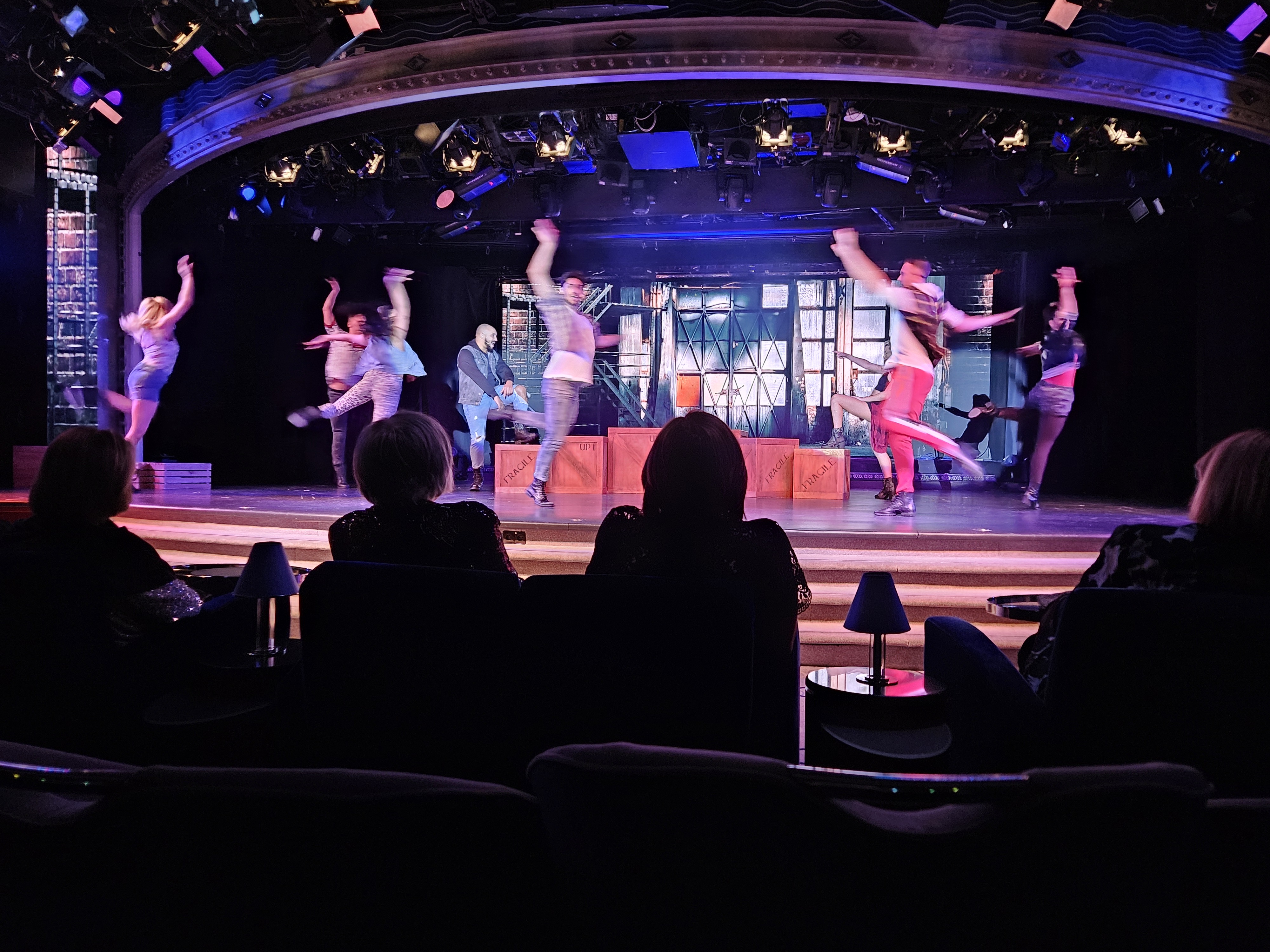
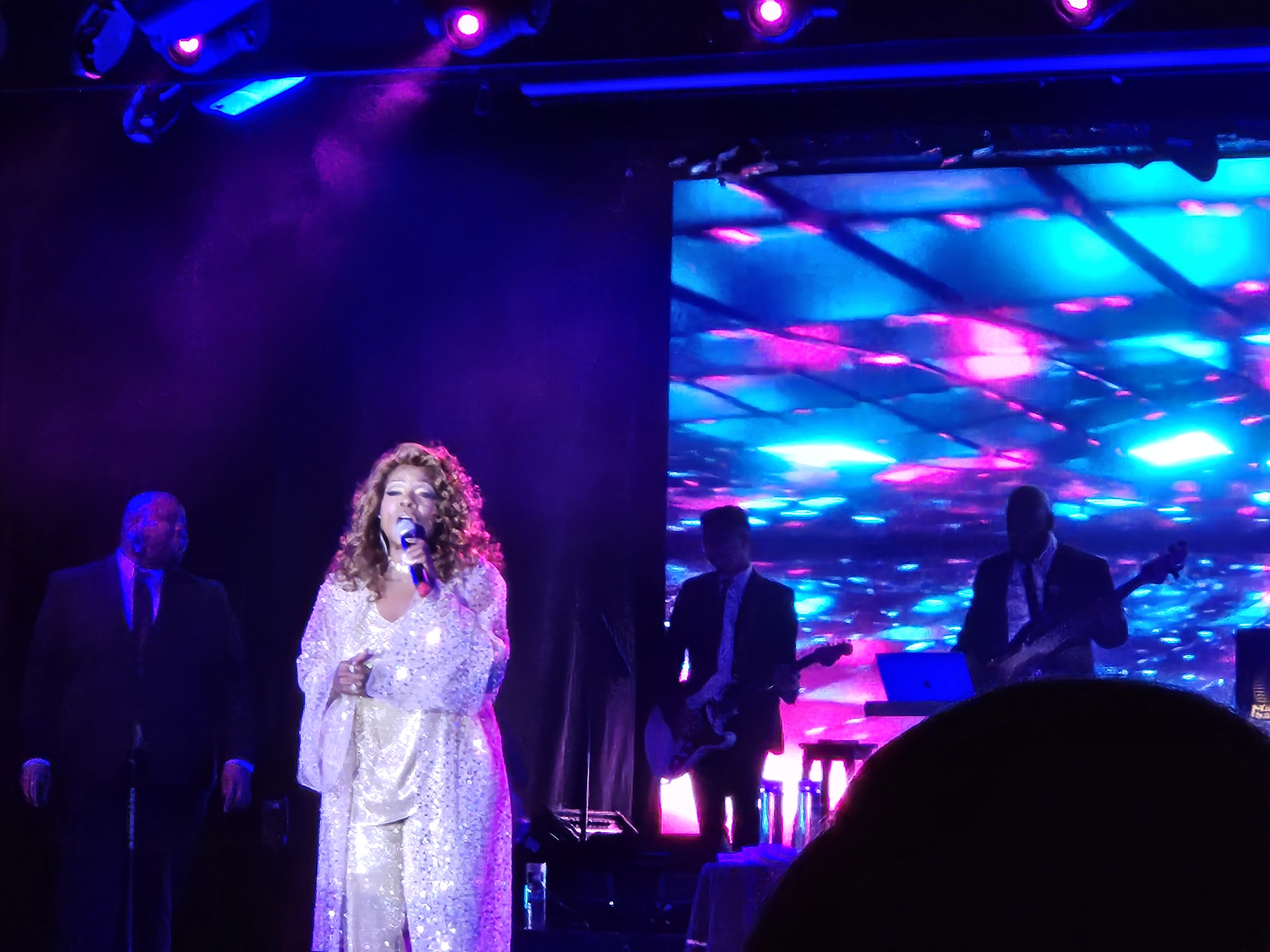
Tonight’s entertainment was outstanding. Gloria Gaynor, best known for her hit “I Will Survive.” She, along with her band and backup singers, entertained us for over an hour, inviting us to sing and dance along – which we certainly did. During the show, Ms Gaynor generously allowed each one of her crew the opportunity to shine. This group is loaded with talent,

Sea Day

Posted in Crystal Cruises, Uncategorized | Tagged , , , , , , , | Leave a comment

Montmorency Falls and Ile d’Orléans

Sunday, October 27, 2024

We had signed up for a tour to Montmorency Falls and Ile d’Orléans (Island of Orleans), but learned yesterday that it had been cancelled since too few people had signed up for it. We were disappointed, but decided we could at least take a cab to the falls. Luckily for us, our driver said he could take us on a personal tour to both of those places, and drive through the Old City of Québec as well.

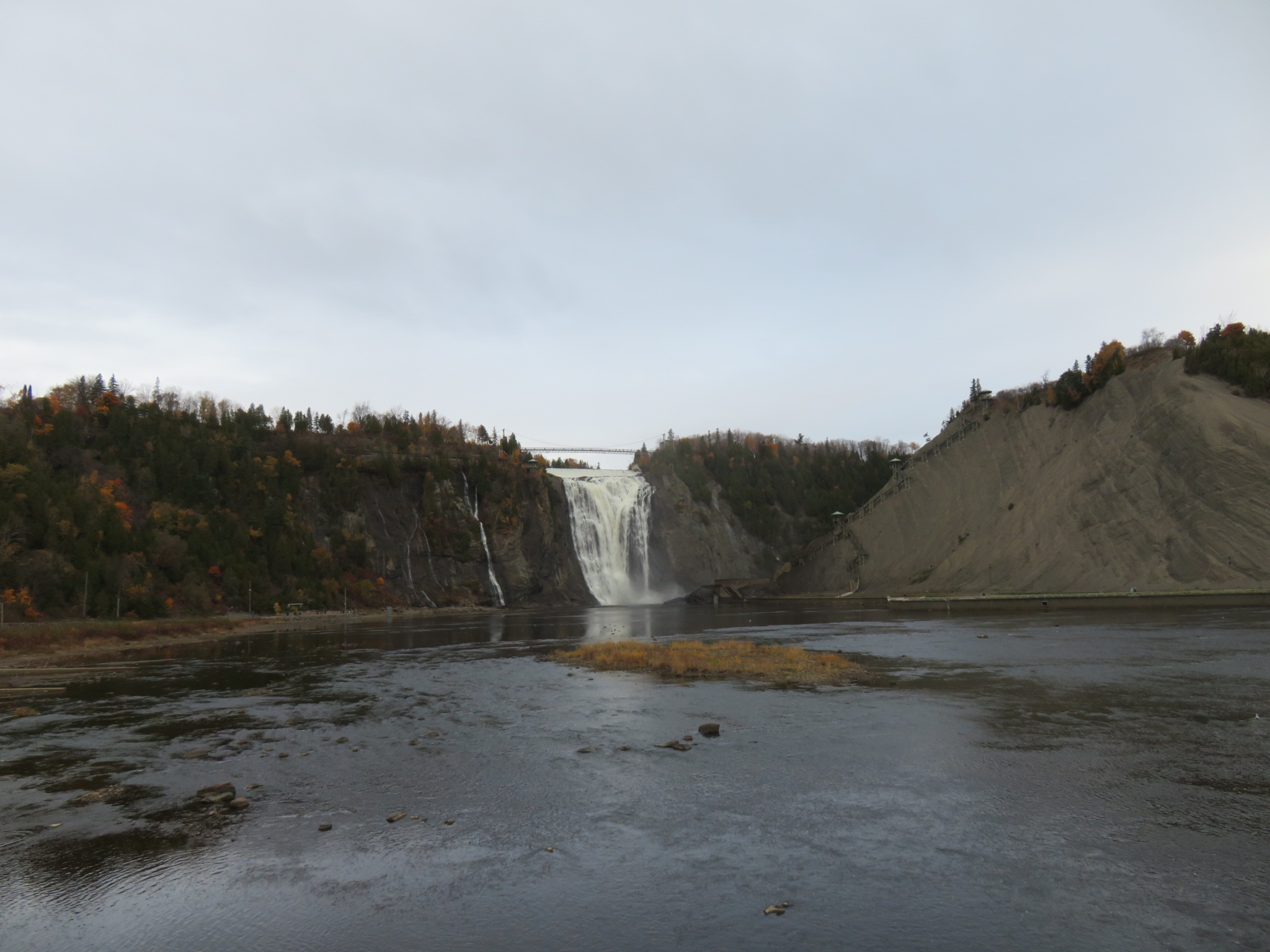
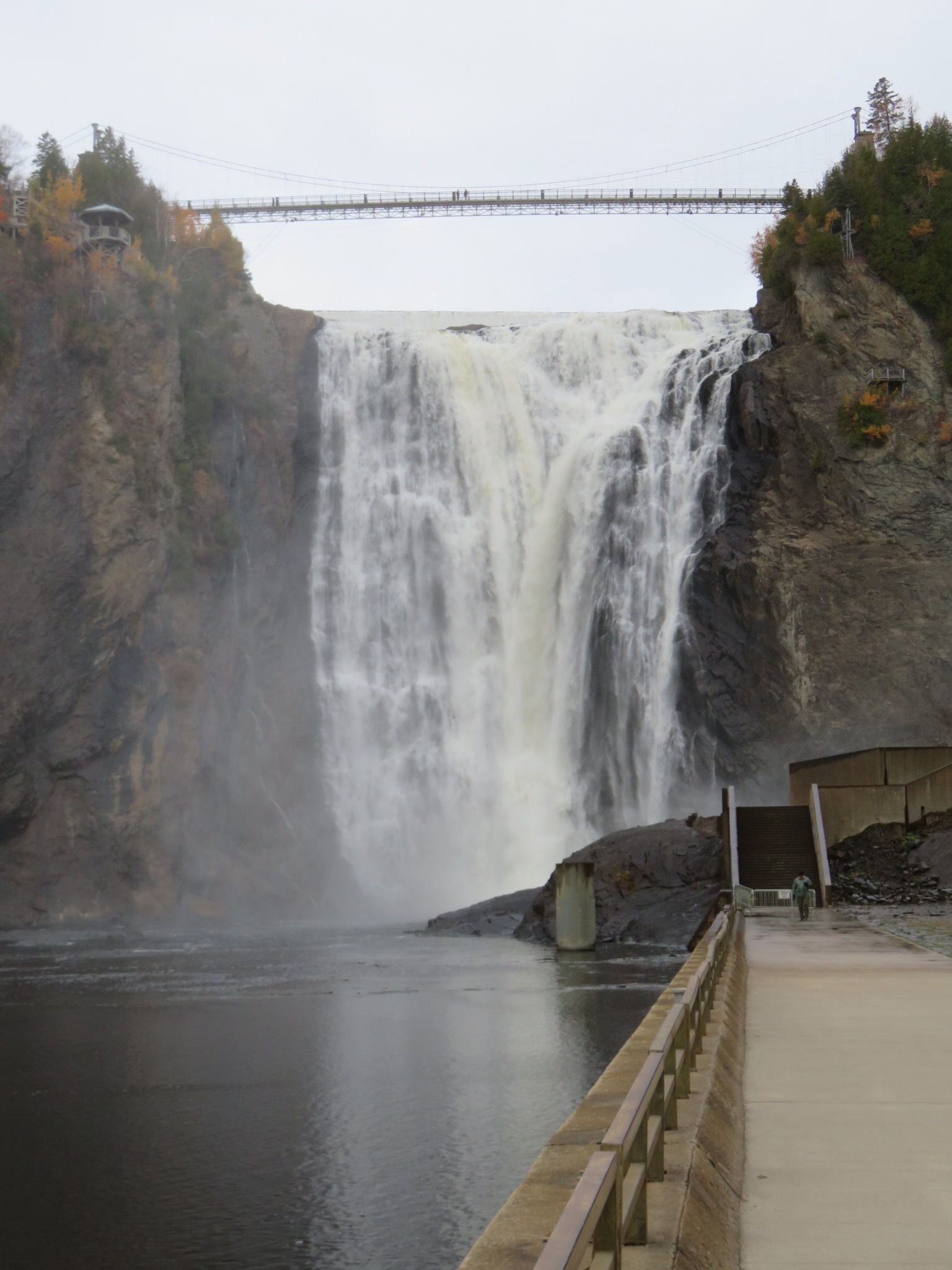
Our first stop, Montmorency Falls, is located in the City of Québec, near where the Montmorency River meets the St. Lawrence. The falls plunge over 270 feet into the St. Lawrence River, a longer drop than that of Niagara. A footpath and suspended bridge offer views of the falls and surrounding area. We had considered taking a cable car to the top of the falls, but it was quite cold out today, so we simply walked the boardwalk along the bottom.

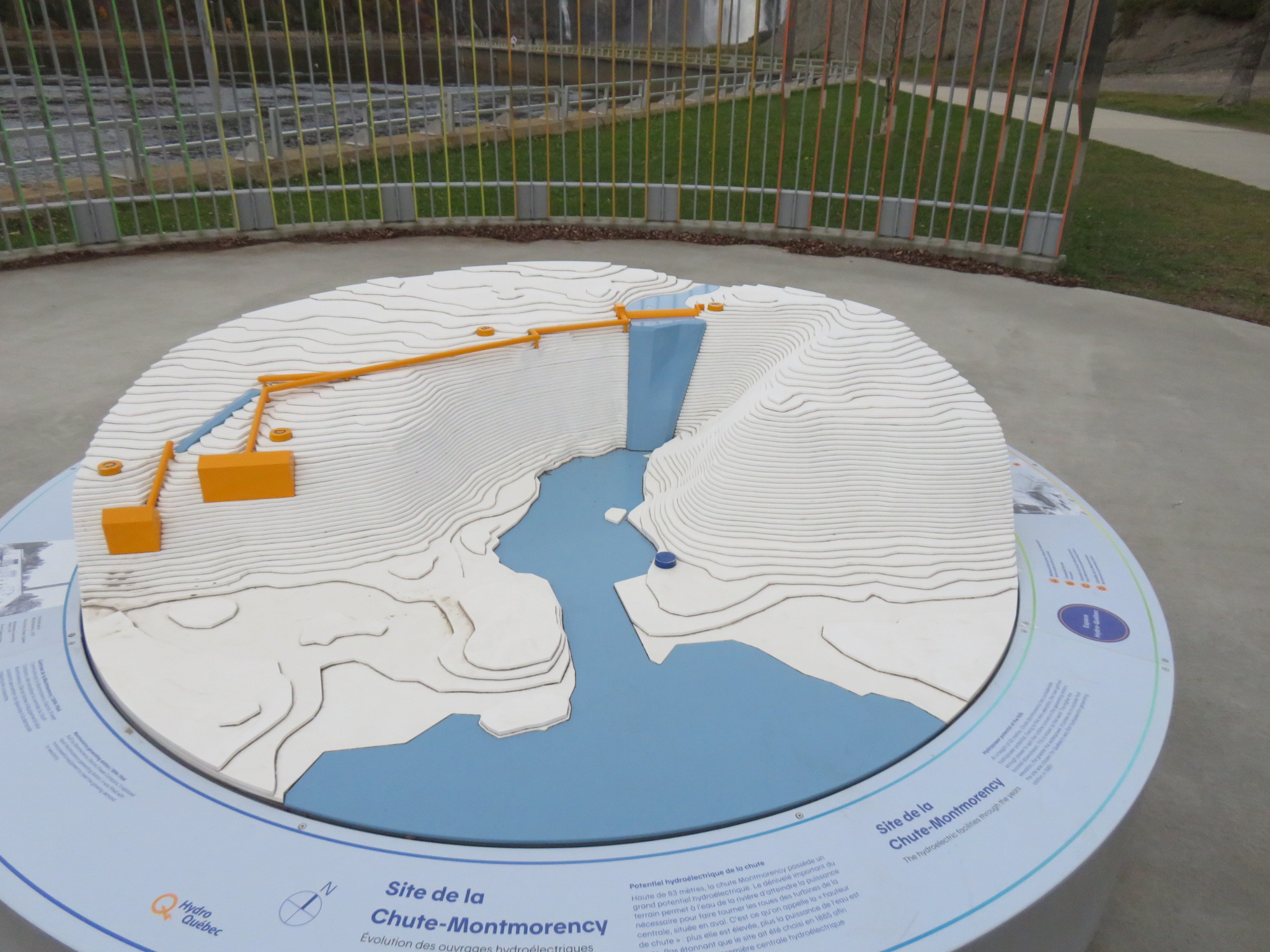
A hydroelectric station was built near the falls in 1885 to power Québec City. It was one of the first hydropower stations in Canada, and Québec City was the first North American city to use hydroelectric. This station is no longer operational.

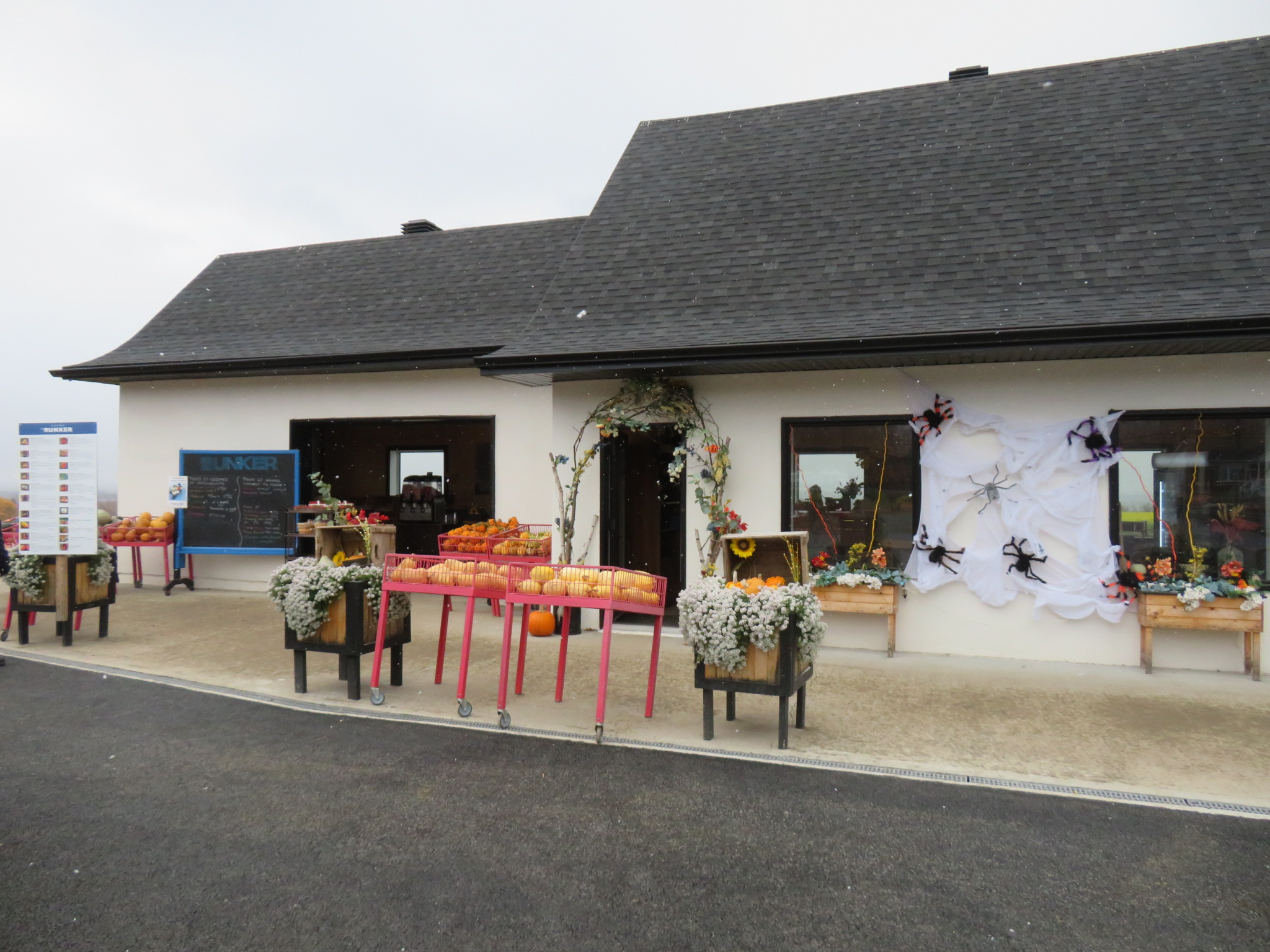
From the falls, we headed to Ile d’Orléans, just east of downtown Québec, and across from Montmorency Falls. The island measures about 5 miles in width and 21 miles in length, and contains six villages. It was home to one of the first settlements in the St. Lawrence Valley, and was enrolled in Québec‘s Cultural Heritage Register in 1970. Approximately 300 French families settled here in the mid-1600s. Due to the fertile soil of the island, agriculture has always played a big role in their economy. Today, we sampled some of the fruits of their labor, apples and strawberries, as well as some wines and chocolates.

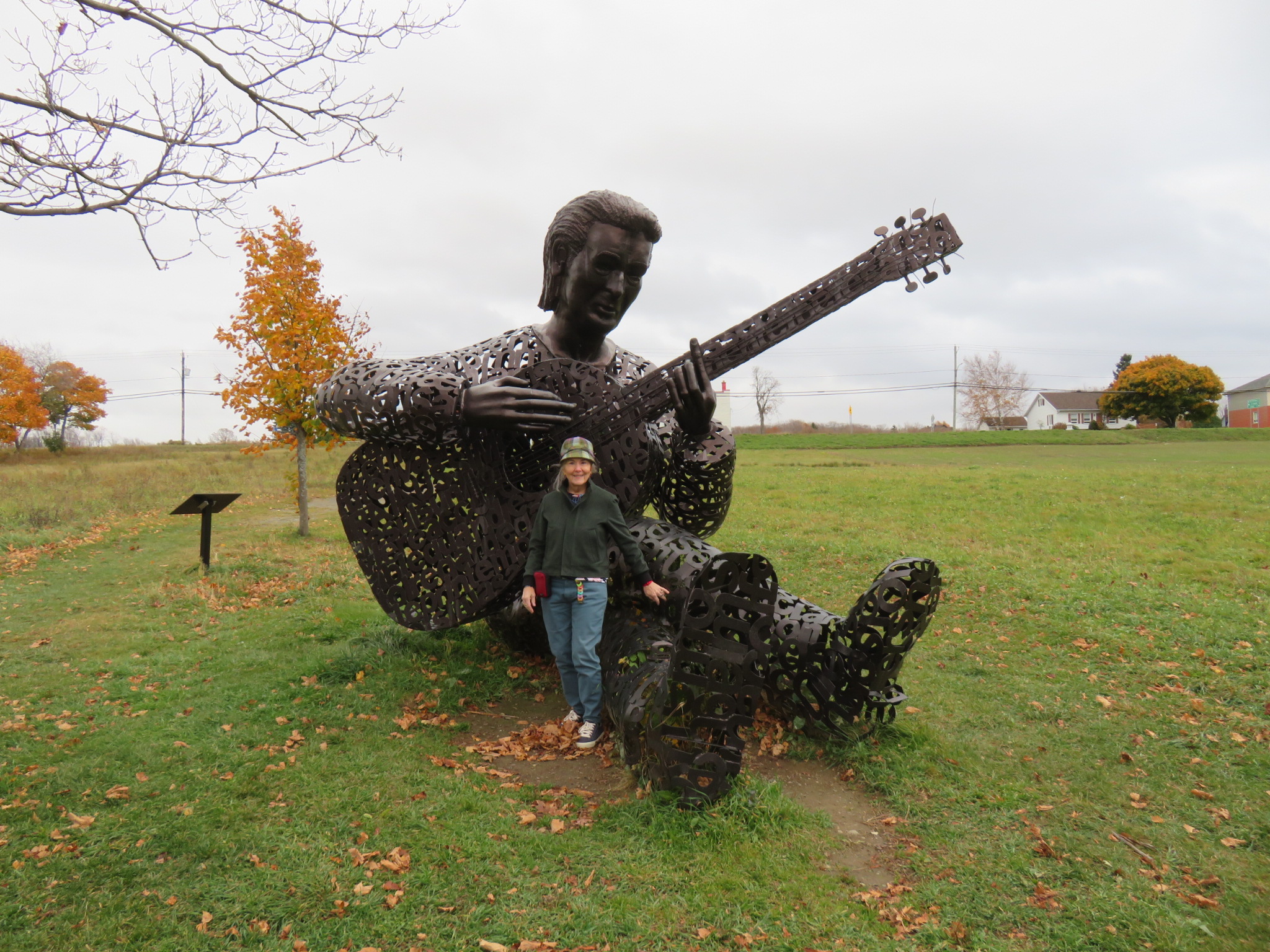
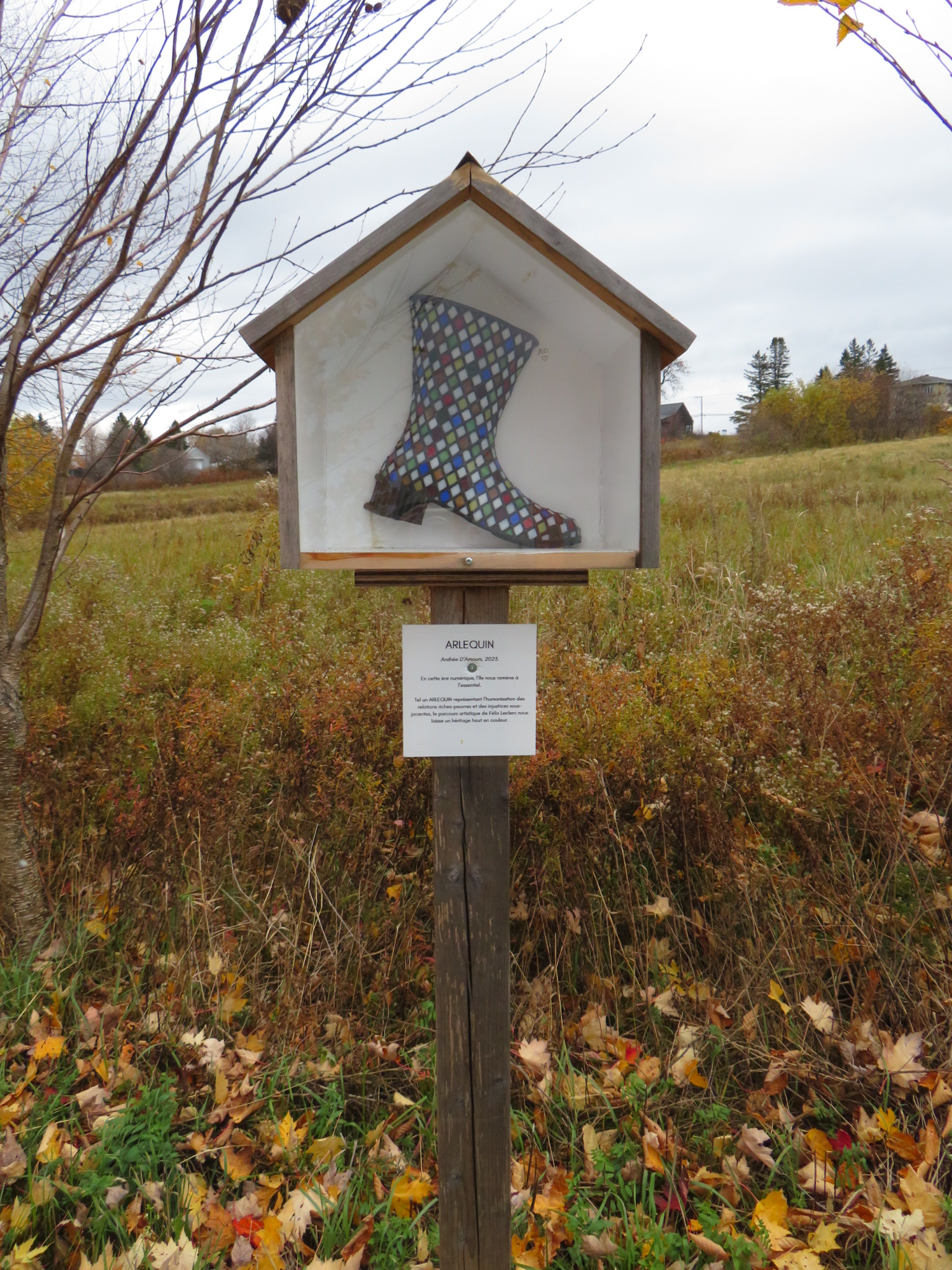
While driving from one site to another, we noticed a sculpture of a guitarist alongside the road, so asked our driver to stop. It turned out to be a sculpture of Félix Leclerc, a French-Canadian songwriter, actor, writer and poet, who was posthumously inducted into the Canadian Songwriters Hall of Fame. The Félix Awards for Canadian songwriters honor his memory. As we walked along the path beyond the sculpture, we found several small art installations, mostly based on shoes – what a delightful and serendipitous discovery!

Shortly after returning to our ship, we cast off to begin our journey to the sea. Québec’s location on the St. Lawrence River gave it access to the Atlantic Ocean and to the Great Lakes, which provided a strategic advantage for transporting goods and people from Europe to the “New World.” We will now explore the access to the Atlantic.

The day continued to be cold, plus it became fairly windy, and we even saw some snow this afternoon. Feels just like home!!! Actually, that is a catch phrase for Crystal – when we boarded, and when we return to the ship, we are greeted with a “Welcome Home.”

Tonight’s entertainment was provided by James Fox, a Welsh singer who played the music of Billy Joel. Mr. Fox began playing piano when he was six years old, and played the role of Billy Joel in “Moving Out” on Broadway. Fox gave an energetic, rousing performance which we enjoyed immensely.
Posted in Canada, Quebec City | Tagged , , , , , , , , | Leave a comment

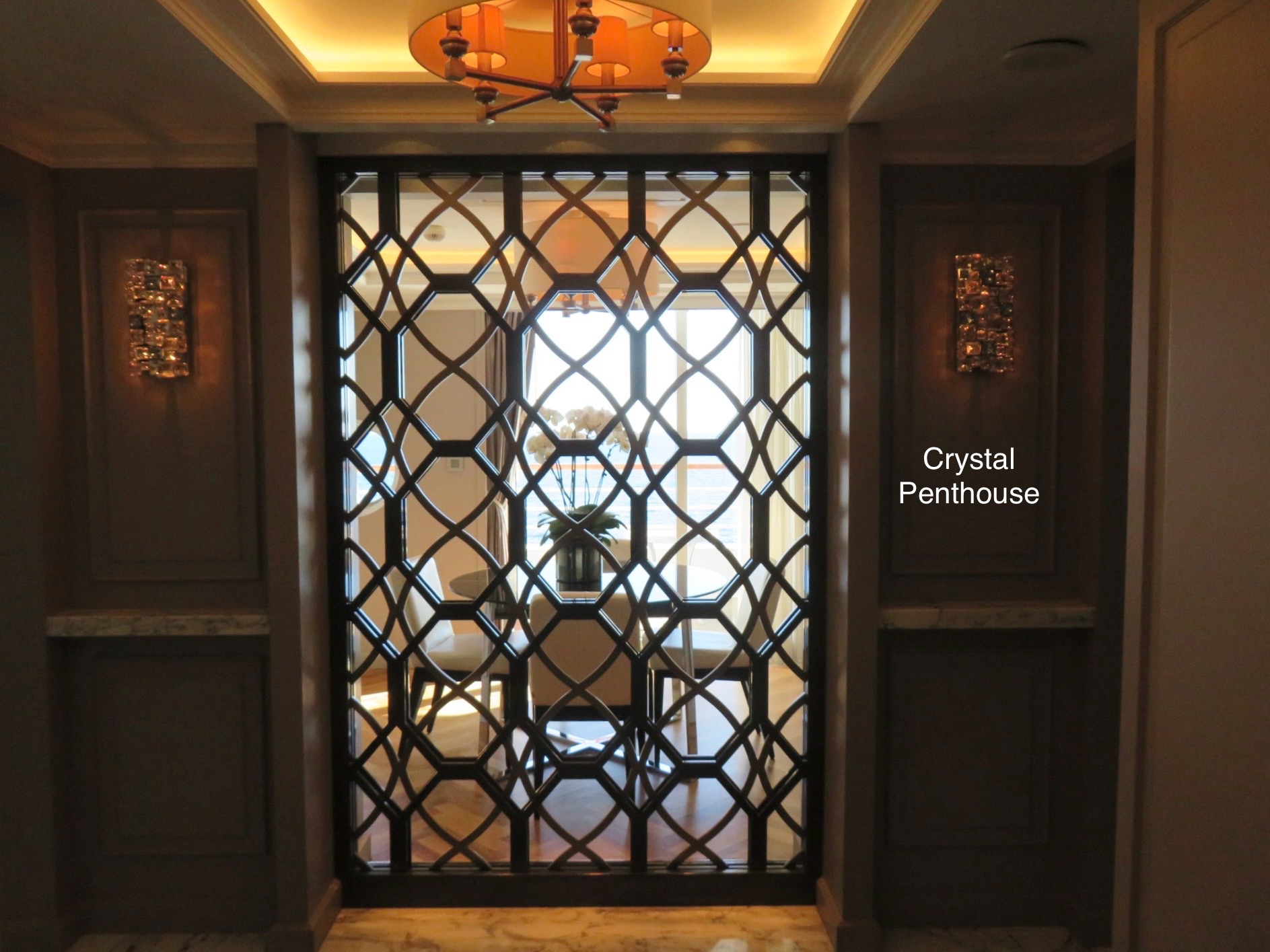
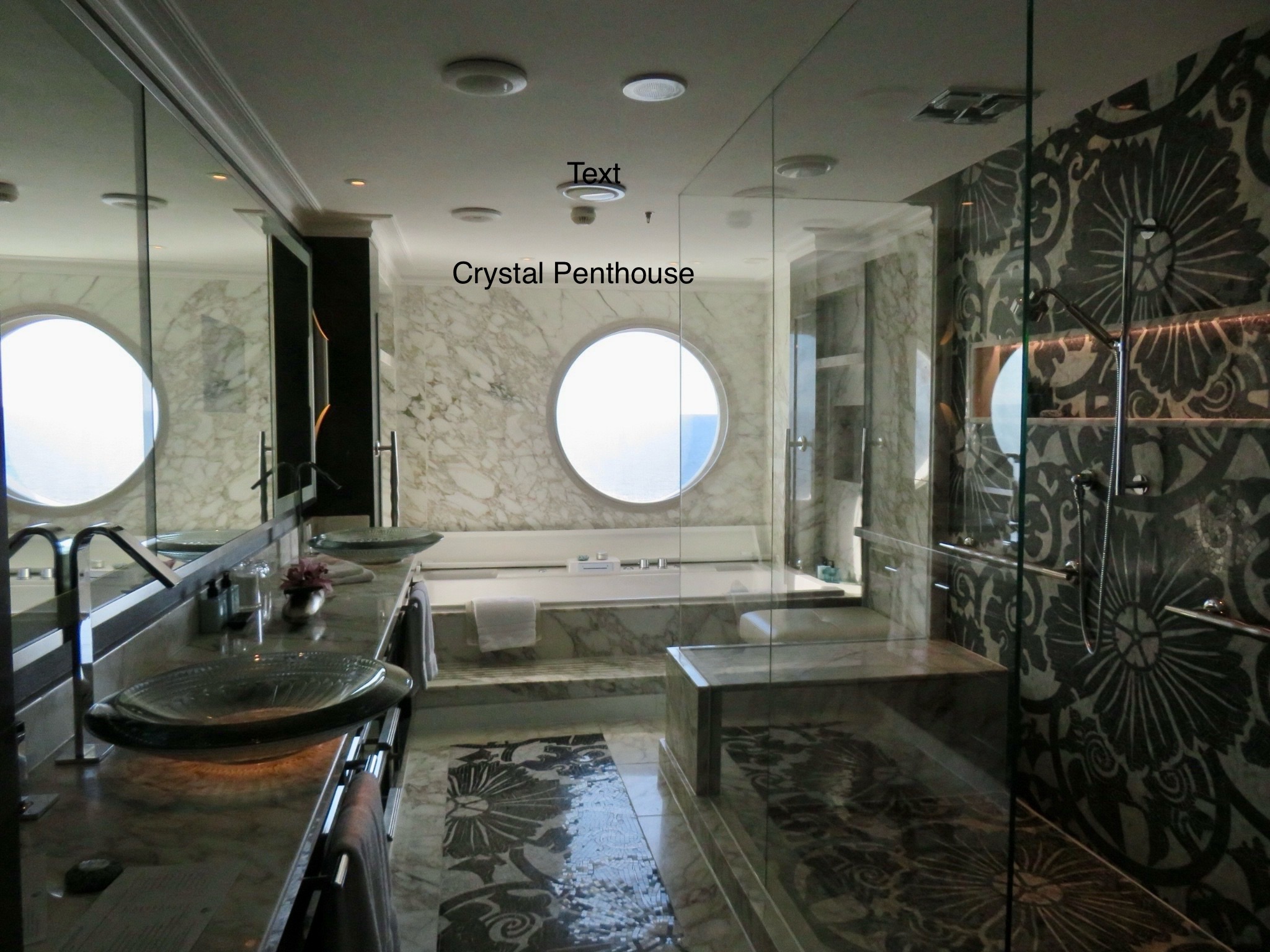
Crystal Serenity

Saturday, October 26

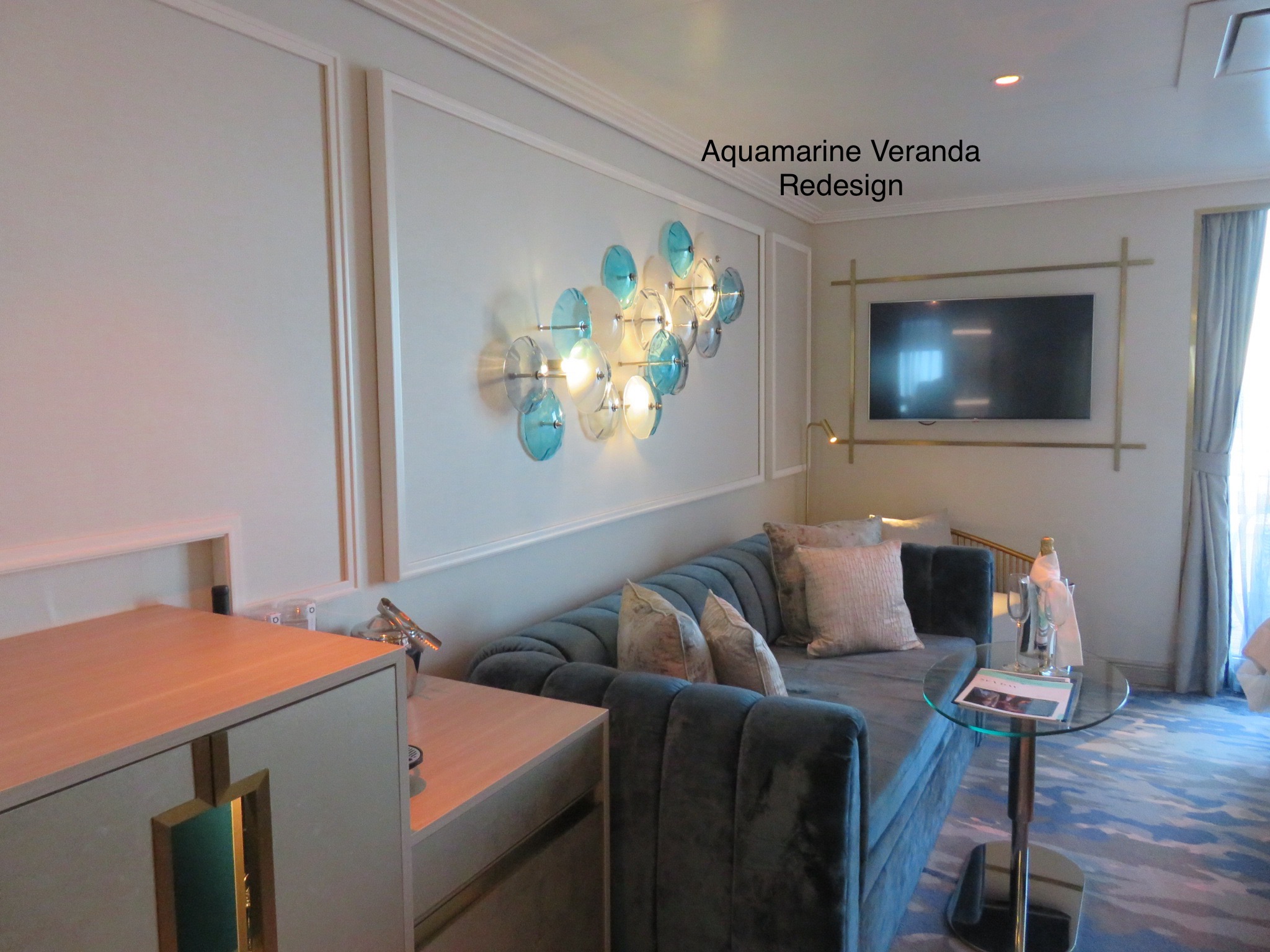
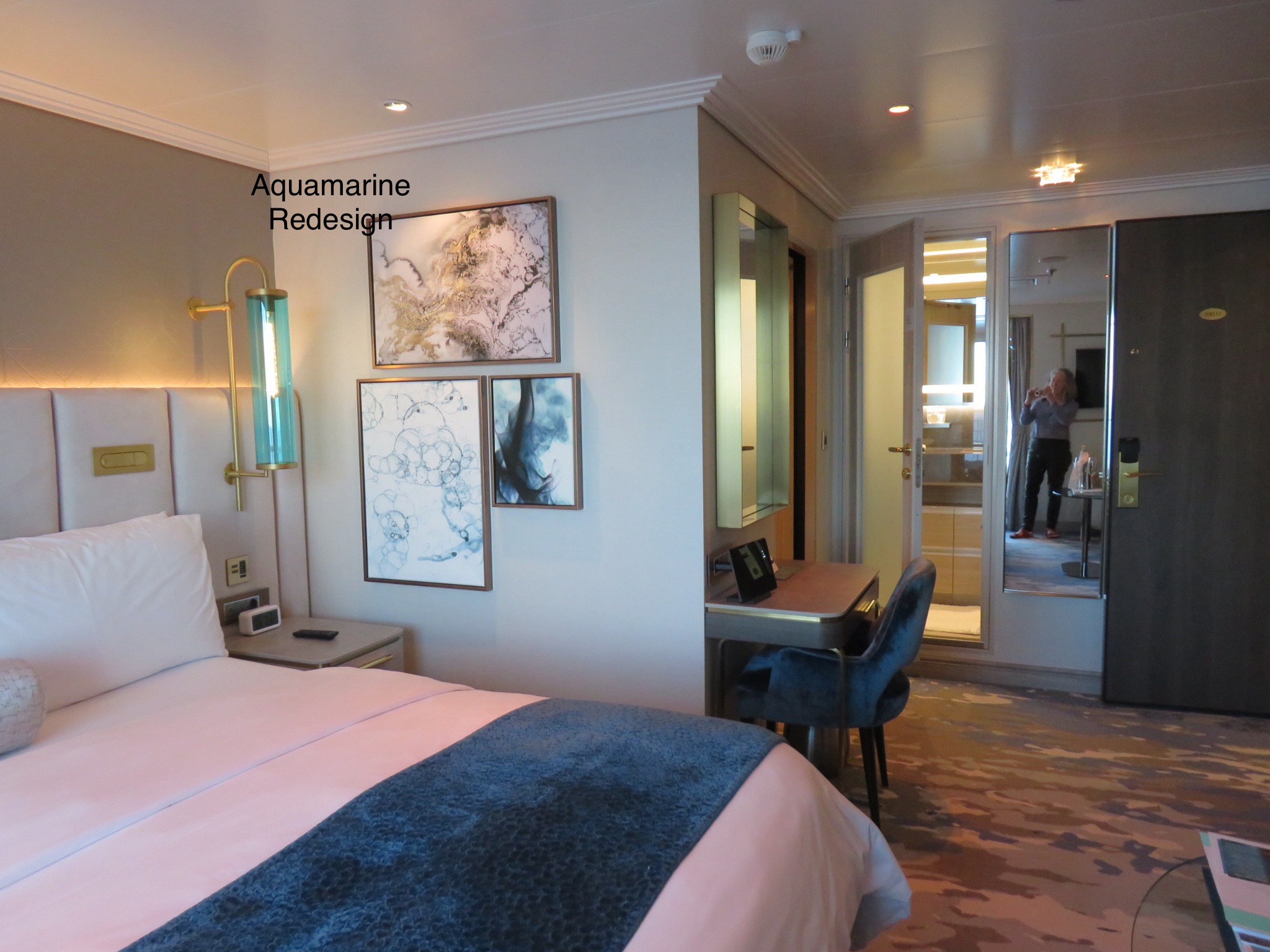
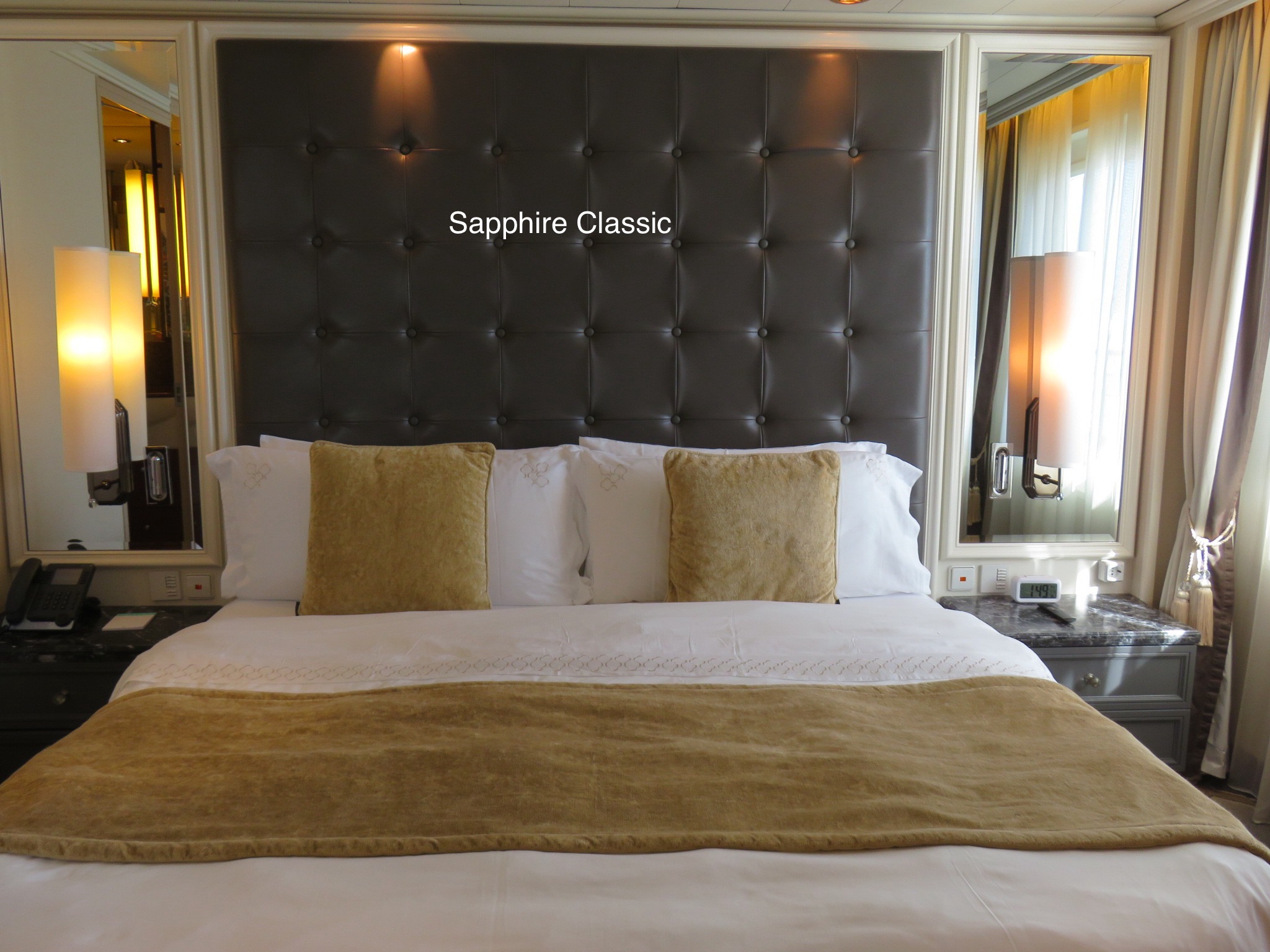
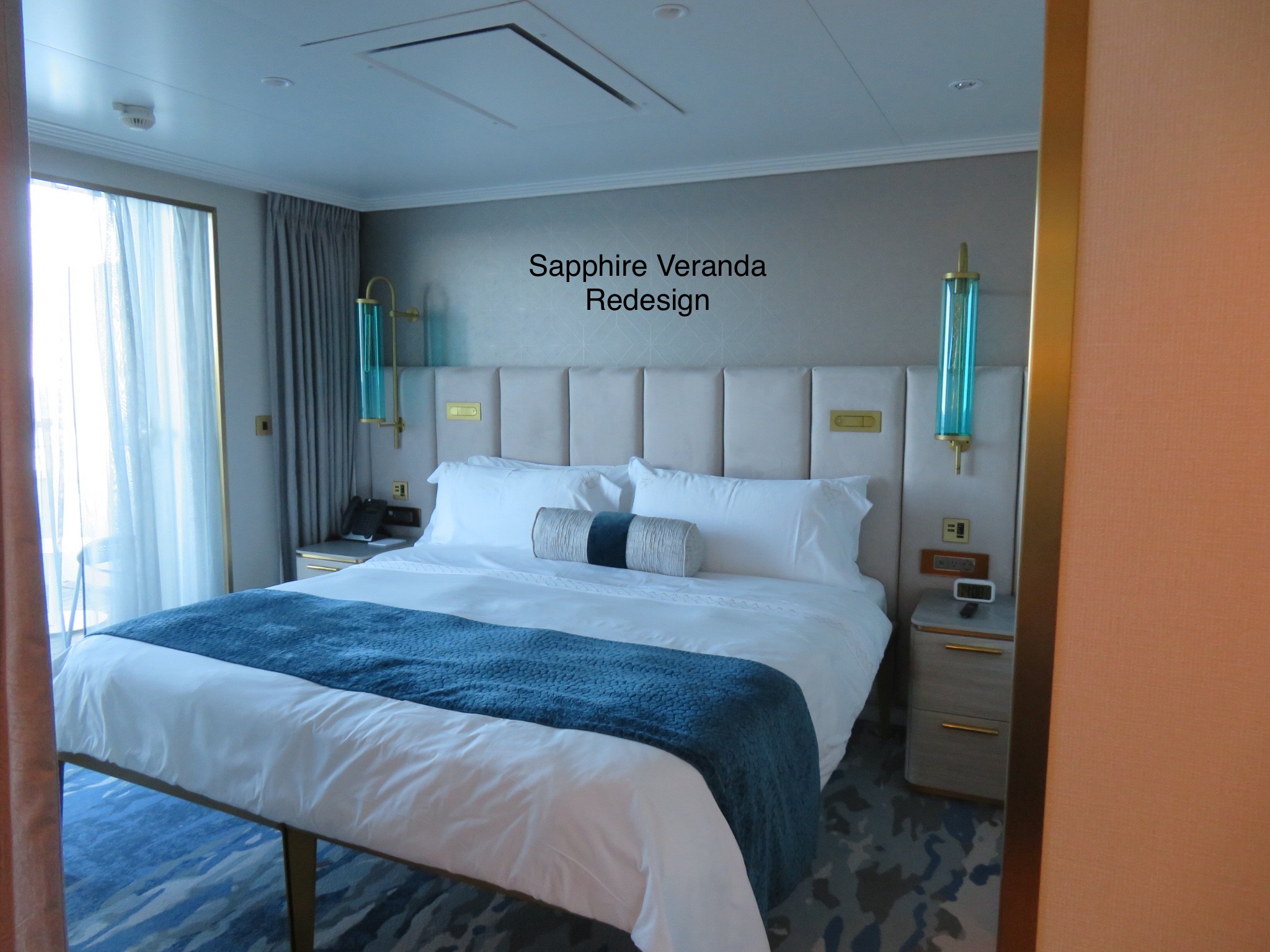
It’s been several years since we cruised on a Crystal ship. We had come to appreciate the cruise line for its comfort and outstanding service, so were very disappointed when they declared bankruptcy during the height of COVID. A year or two later, the ships were acquired by Abercrombie and Kent, and they began cruising again in 2023. We are thrilled to find out how the ship has been updated, and what the service will be like.

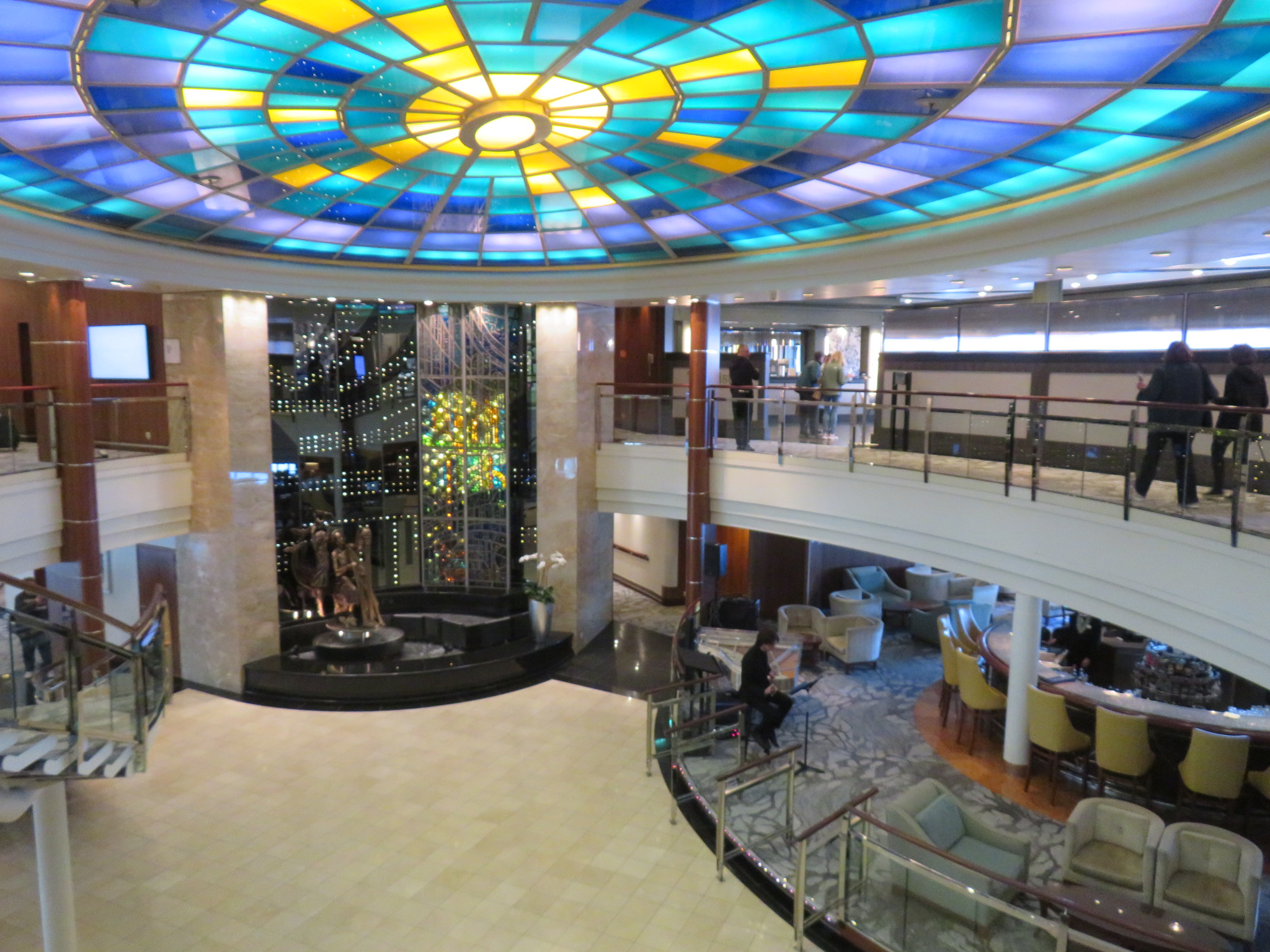
We boarded today, and were greeted with their signature greeting: “Welcome Home.” As we explored the ship, it indeed felt like home. We even encountered one staff person from an earlier cruise. When the former Crystal Cruise Lines declared bankruptcy, he went home to the Philippines to spend time with his ill father. Several other staff were offered jobs with other cruise lines, but came back when Abercrombie & Kent purchased the ships.

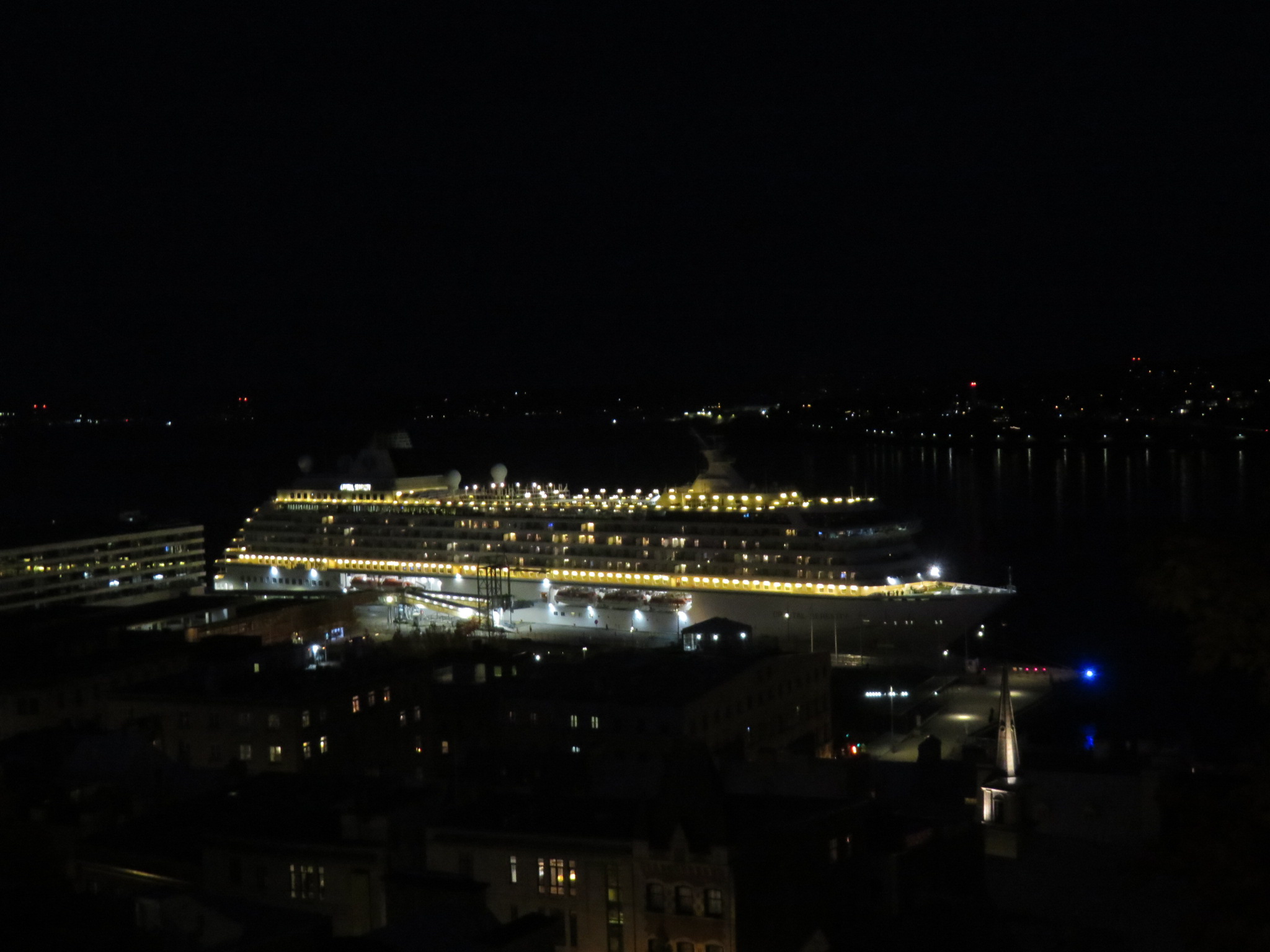
We enjoyed a delicious dinner tonight, followed by a little dancing and after dinner drinks. What a lovely evening. We have marvelous views of the City of Quebec from the ship.

Posted in Canada, Crystal Cruises, Quebec City, Quebec City, UNESCO World Heritage Site | Tagged , , , , | Leave a comment

Quebec City, Quebec

Friday, October 25, 2024

We flew into Quebec City today, leaving home at 4am, with a layover in Toronto (where it was raining) and arriving here just before 5pm.

Québec City was founded on July 3, 1608 by the French explorer, Samuel de Champlain, in what was then the Territory of New France. The name Québec comes from an Algonquin word meaning “where the river narrows.” From 1534 to 1763, Québec province was a territory of France, until being taken over by Britain following the Seven Years War.

Although Québec’s official language is French, most residents also speak English. The province has pressed for independence from Canada for decades, although the drive seems to be waning, especially among younger Québecois. Members of the Québec sovereignty movement want their own independent constitution, and they believe sovereignty would allow them to better promote its development, economic, social, ecological and cultural. Besides language, religion differentiates Québec Province from the rest of Canada, with Roman Catholicism being predominant in Québec, and Protestantism in the rest of the country. Of course, this has been changing as well, with more people eschewing religious identity, and with growth in non-Christian religions.

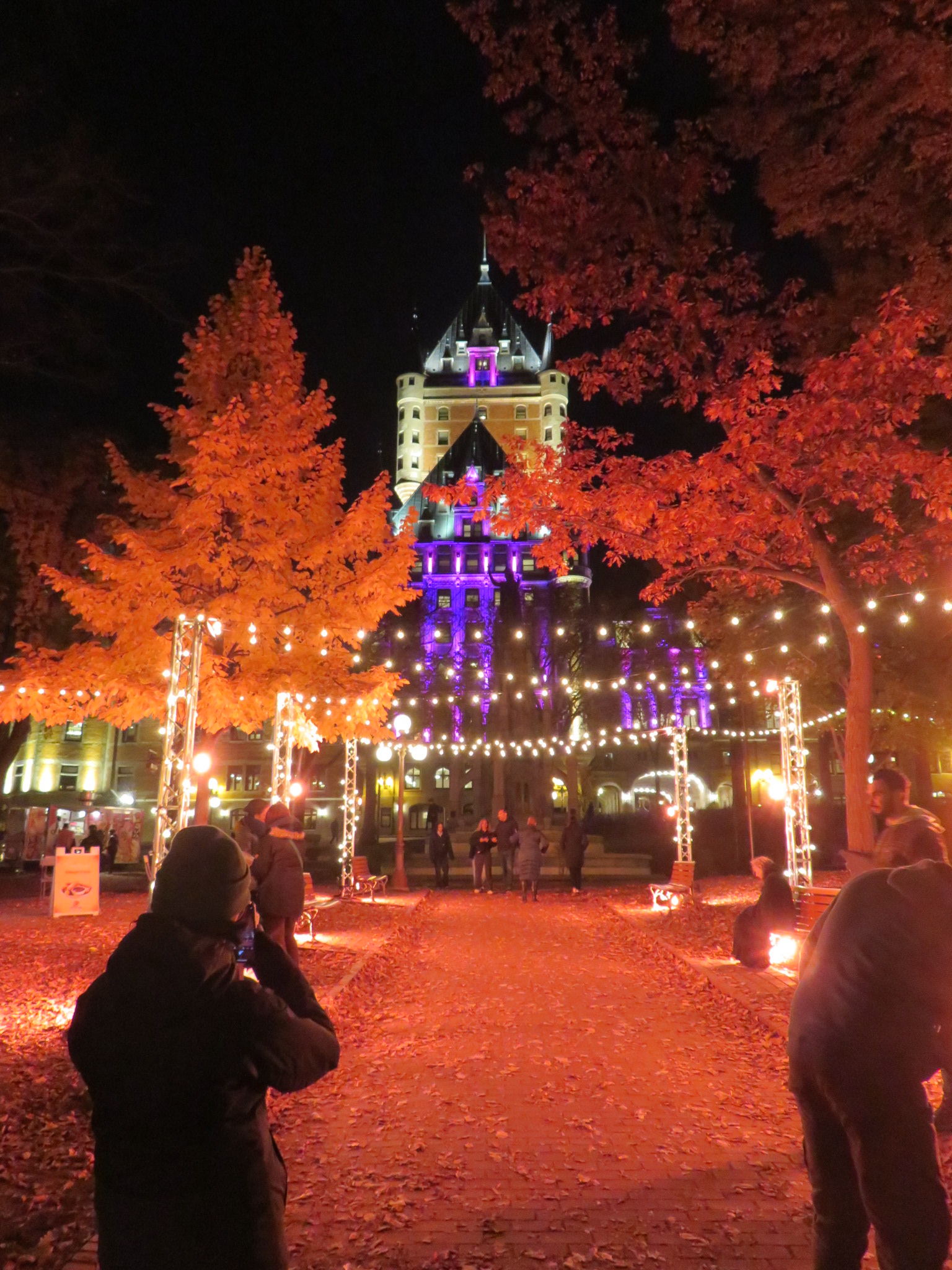
We are staying at the Fairmont Le Chateau Frontenac inside the City Walls of Old Québec. Although we aren’t staying here long, we did venture out on to the streets of Old Québec, a city that dates back over 400 years. This area truly reminds us of many of the towns we’ve visited in Europe. It was designated a UNESCO World Heritage Site in 1985.

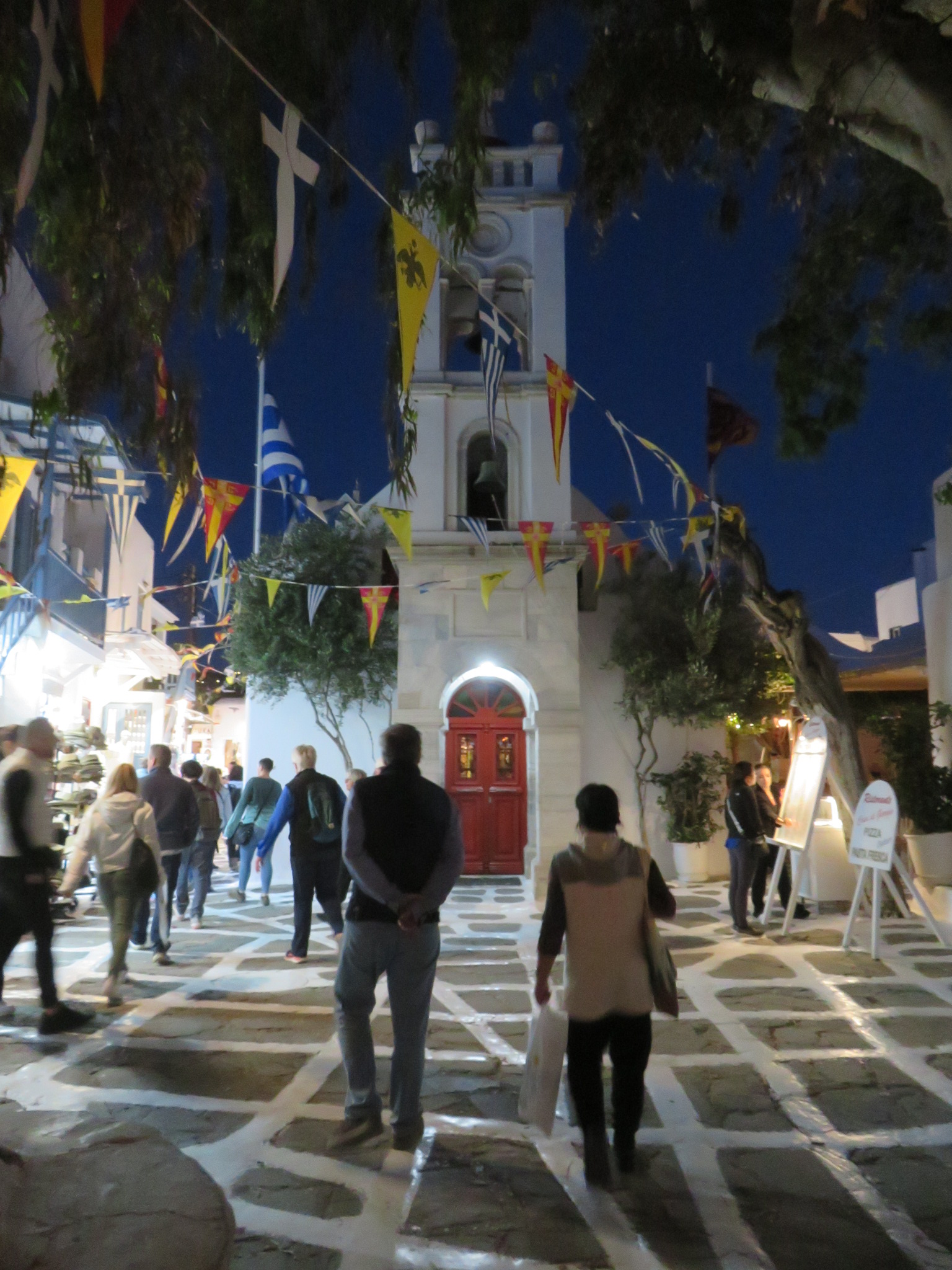
We walked down to the river, where we were able to see our cruise ship, which had arrived earlier today. As we were walking, we came across a carnival just a couple of blocks from the hotel: Étrange Carnaval, a Halloween event with an old fair atmosphere directed toward families. There were games and activities kiosks lined up and down a couple of streets by Holy Trinity Cathedral. Lights and music dominated the scene. Tonight’s theme was dance with Port-O-Swing, where attendees were being coached in different dance movements.

We returned to the hotel for an amazing dinner. Mark enjoyed his Wagyu beef, while I tried the small tasting menu – pan seared tuna, halibut, venison and squash dessert. Everything was delicious and tender, with truly impressive service by the staff.

Posted in Canada, Crystal Cruises, Quebec City, Quebec City, UNESCO World Heritage Site | Tagged , , , , , , | Leave a comment

Athens, Greece

Friday, May 3, 2024

Our Celestyal Cruise ended today, and our flight home is tomorrow, so we took a private tour to the Acropolis. Today is Good Friday in Athens, a holy day for many residents, so the downtown and business areas were very quiet. There is a Good Friday tradition in Greece, the Epitaphios (funerary) procession. In the morning, an icon of Jesus is placed on a platform, like a bier, then decorated with flowers, ribbons, candles, and it lays in state in the church where people come to venerate it. At 9pm, the Epitaphios is taken up by priests and/or members of the church, then carried in an elaborate procession, and bells ring throughout the city to commemorate the death of Jesus. Sadly, our schedule did not allow us to witness this event tonight.

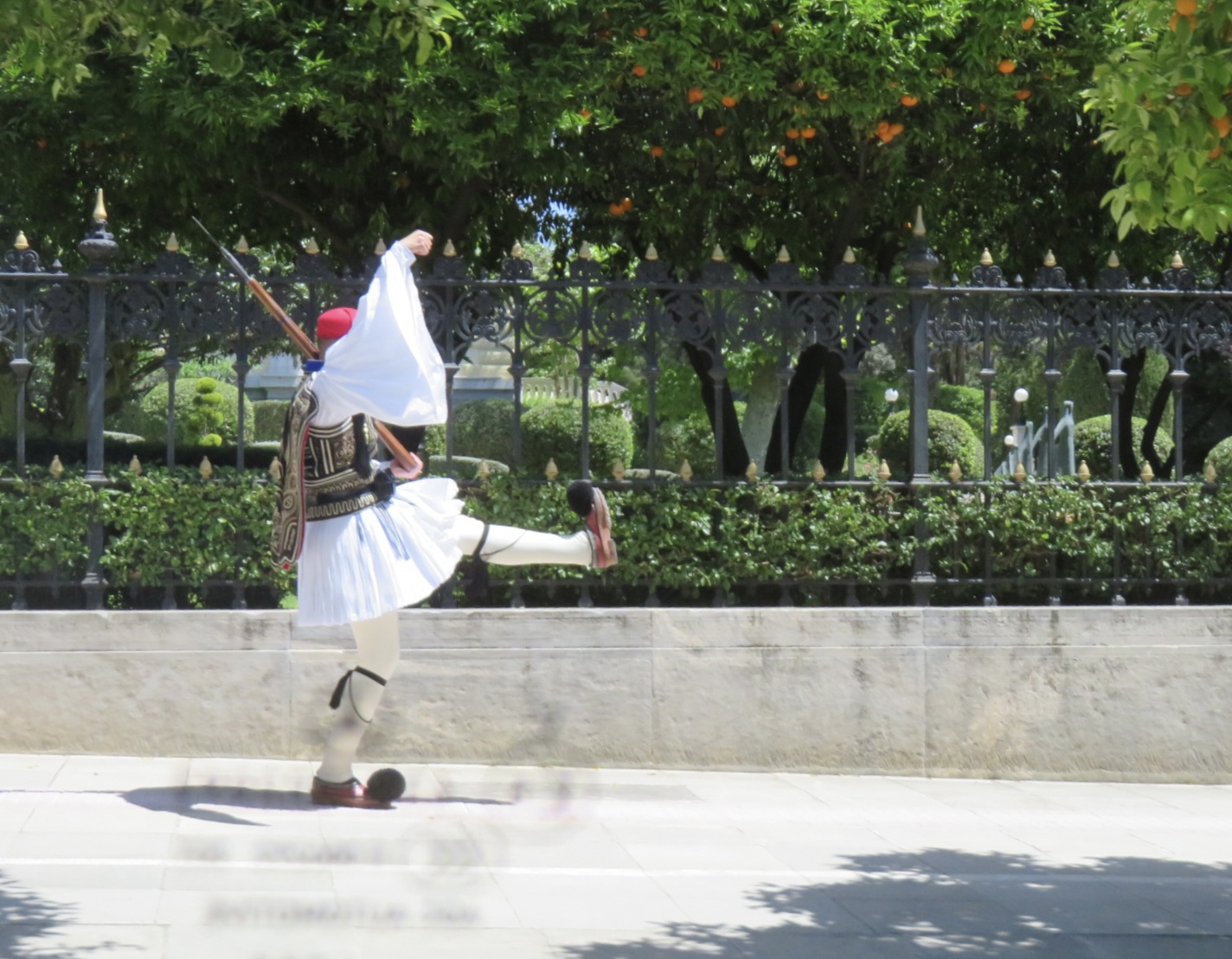
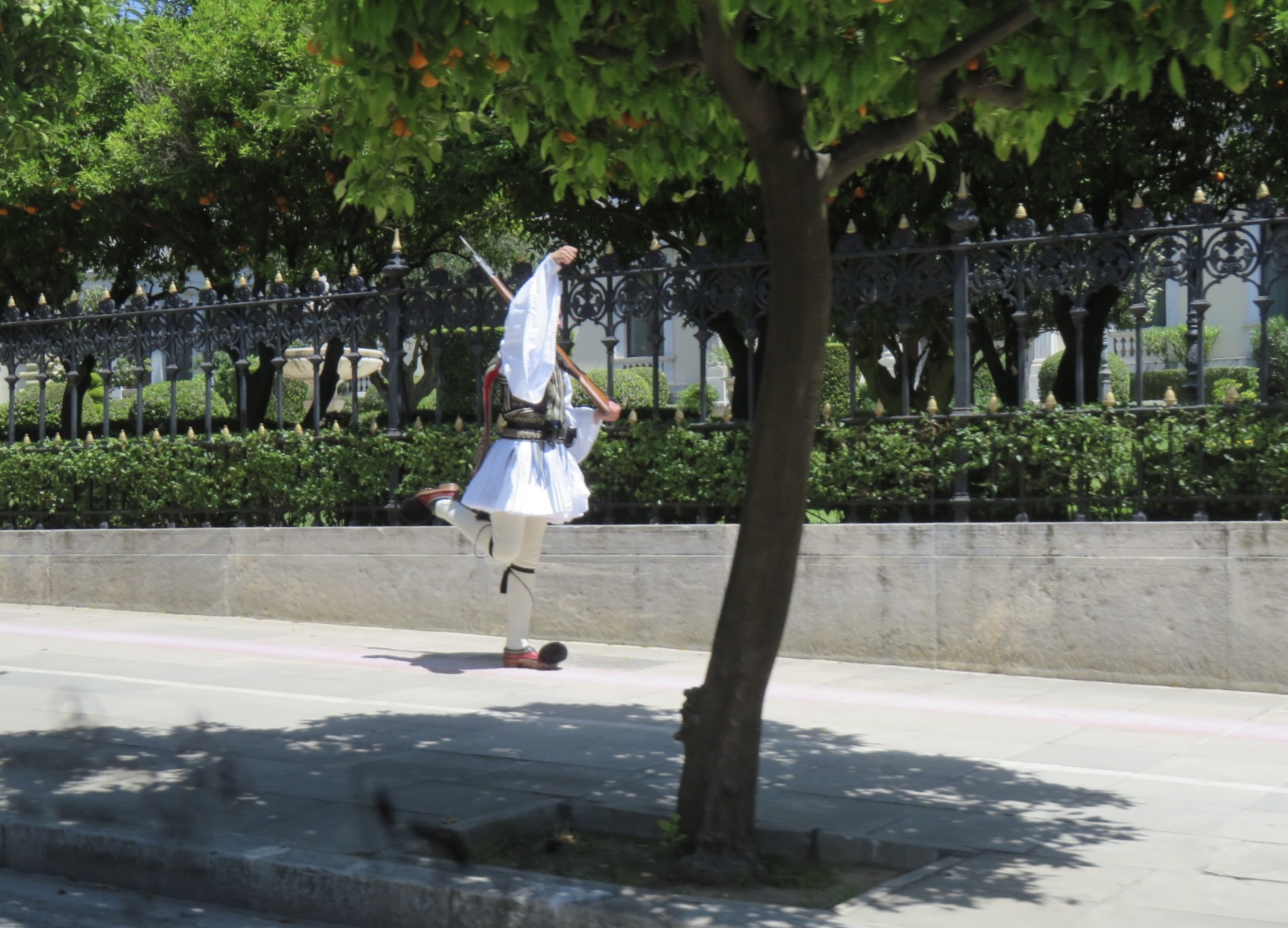
On our way to the Acropolis, we drove by the Presidential Palace and saw a couple of Presidential Guards, or Evzones, on their march to take over standing guard over the Tomb of the Unknown Soldier. The march looks quite bizarre. It’s done in very slow motion after the guards have completed their one hour duty at the tomb, during which they must remain perfectly still. The march involves raising their knees very high, and bringing their feet down hard to make a loud noise (their shoes have 60 nails beat into the soles to create this loud noise,) which tells their ancestors that Greeks are alive and free. The costume is very colorful and symbolic. The tradition of the guard dates back to 1867.

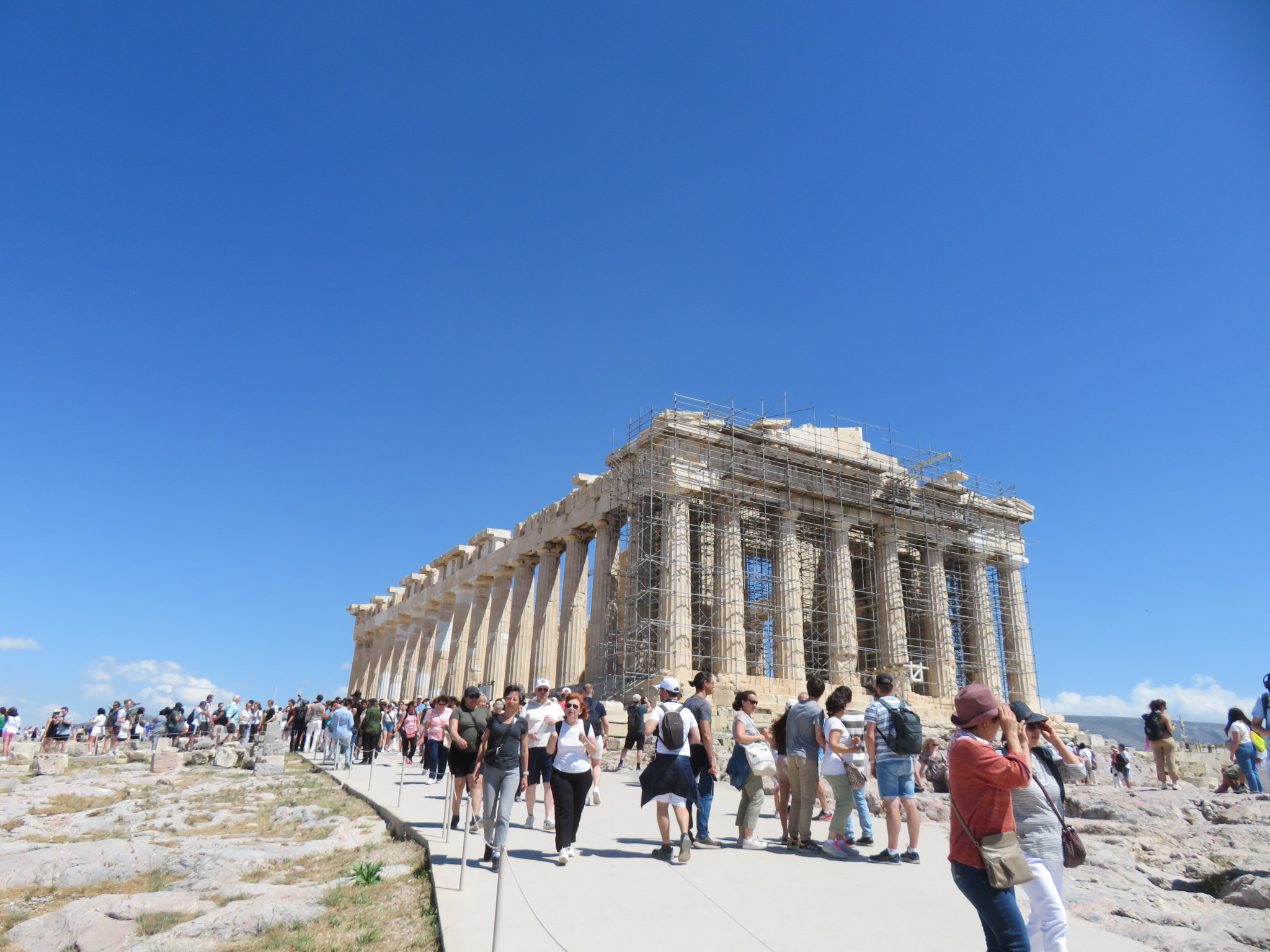
The Acropolis was very busy today, so it was a challenge to see very much. The wind was very strong as well, but we did manage to cover a fair amount of ground. The site looked different from the last time we were here, about 10 years ago. There has clearly been some additional restoration work since then. It’s easy to see where the restoration has taken place because of the color of the marble. Although the marble used today is from the same source, it is much whiter, not having been exposed to the air and pollution of centuries. The Pentelic marble comes from a nearby quarry.

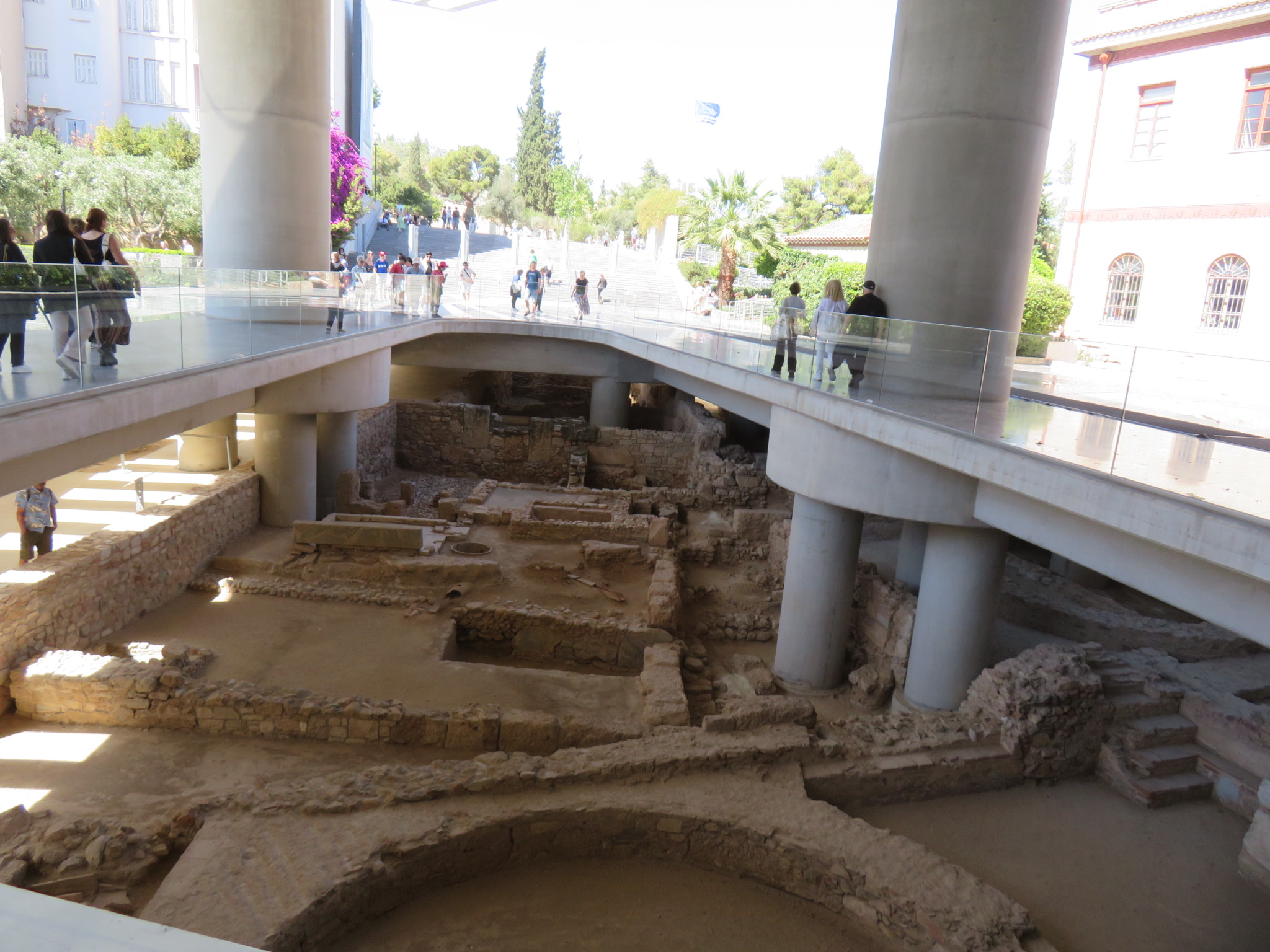
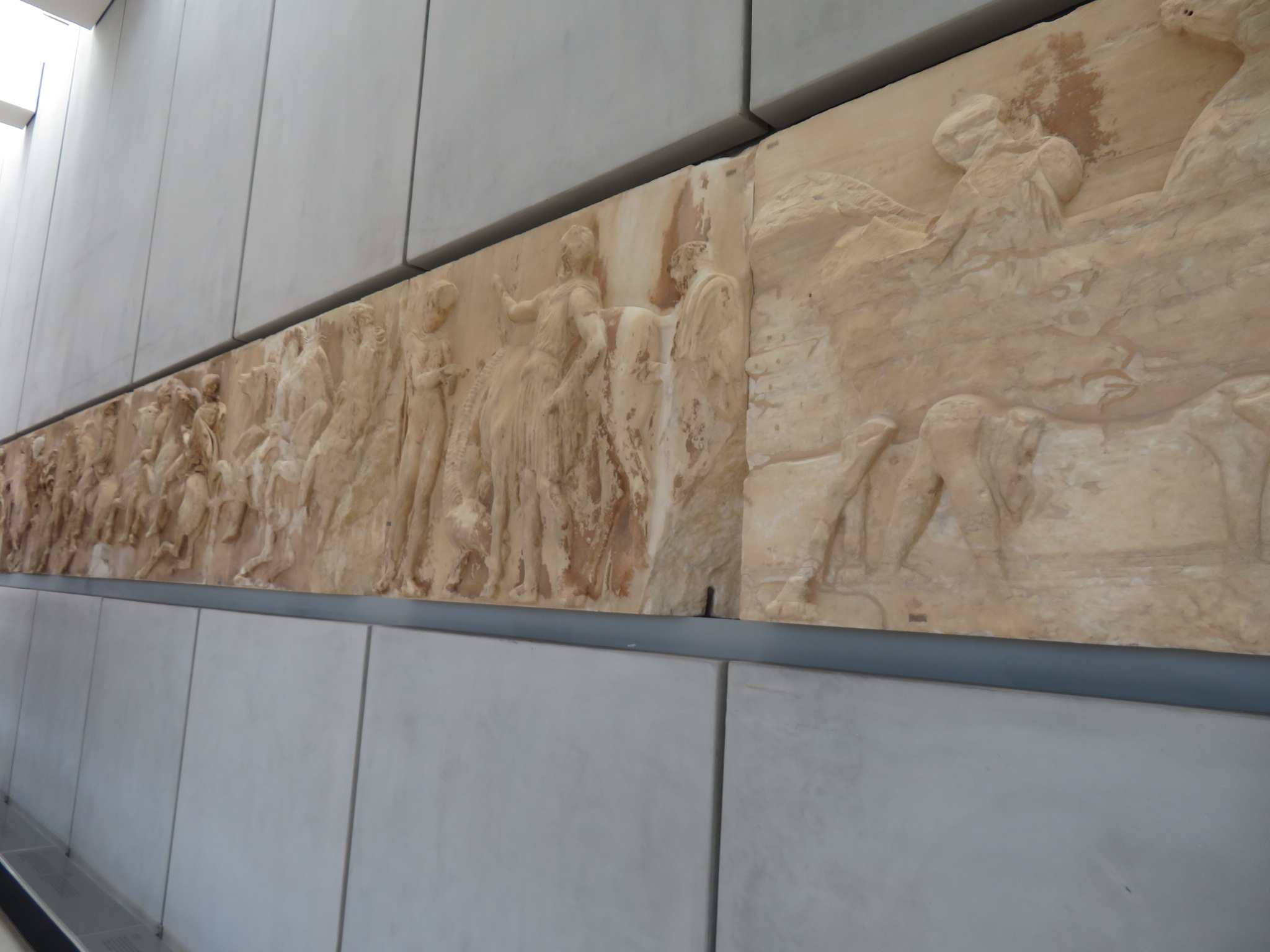
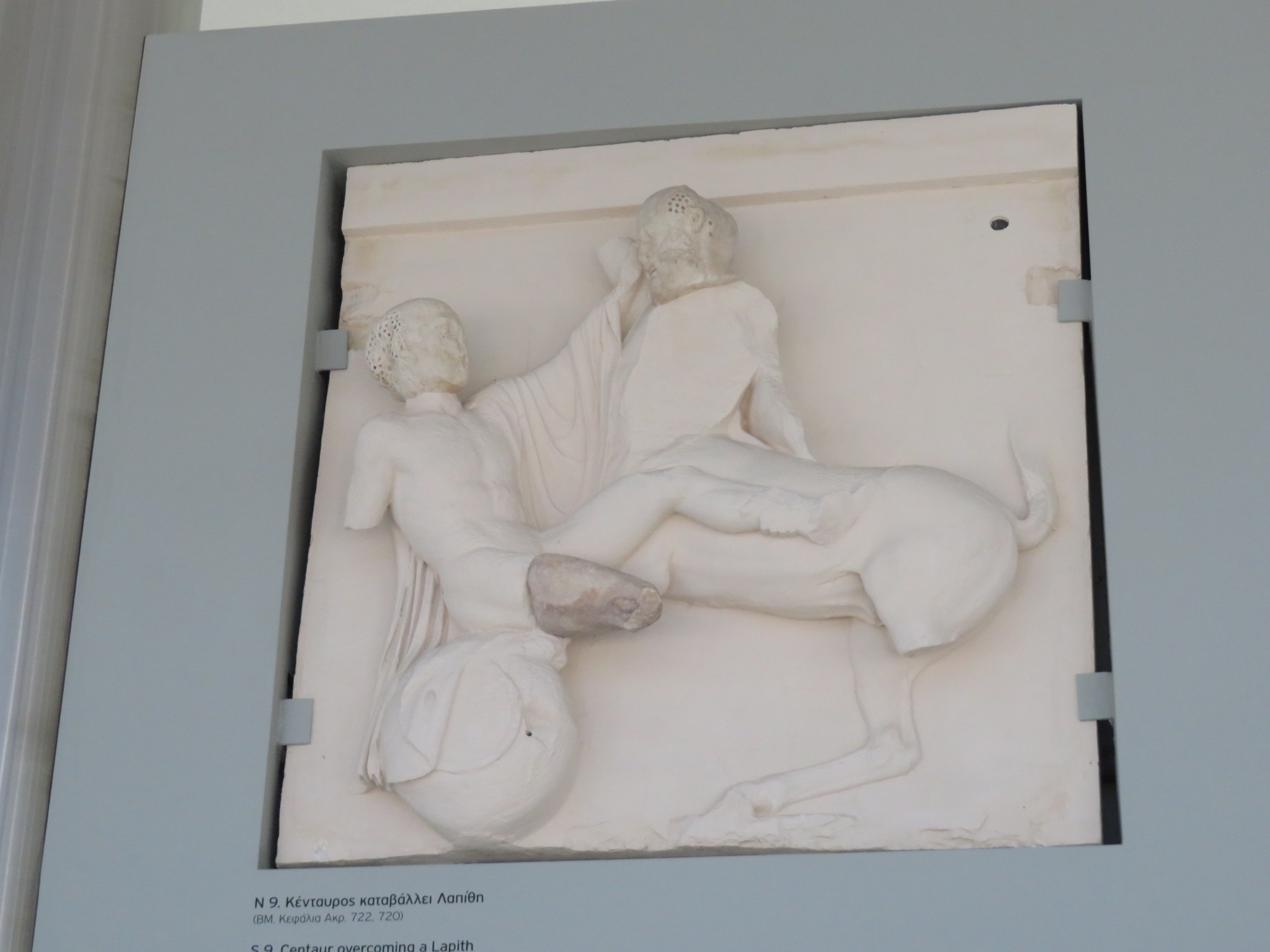
The Acropolis Museum was built to house every artifact found at the archaeological site of the Acropolis of Athens. An earlier museum was located at the site of the Acropolis, but ultimately did not have the capacity to house the ever growing number of artifacts there. The current museum was established in 2009, and now holds over 4,500 artifacts, displayed over 14,000 square meters (about 3.5 acres.) Most of the statues and friezes at the ancient site have been replaced with reproductions, and the originals stored in the museum to protect them.

What a lovely trip this has been, something we will remember long after we return home tomorrow.

Posted in Uncategorized | Tagged , , , , , | Leave a comment

Heraklion, Crete and back to Santorini!

Thursday, May 2, 2024

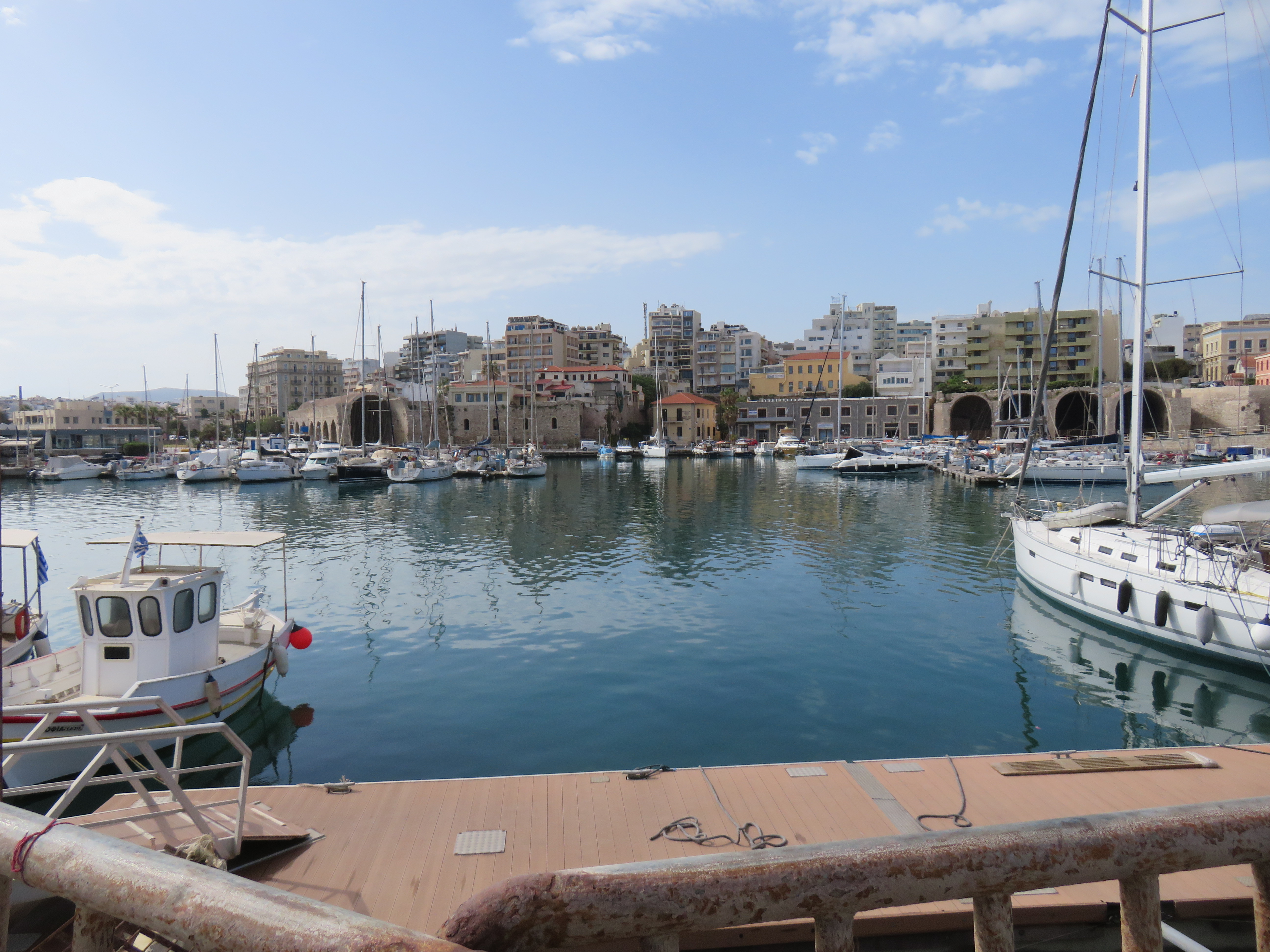
Heraklion (Iraklio in Greek) is the largest city and principal port of Crete, and sits just northwest of the ancient Minoan capital of Knossos. The town’s name has changed a few times over the years: Heracleum for the ancient Roman port; Khandaq, a Saracen word meaning moat around the 9th century; Candia by the Venetians; Megalokastro under the Turks in 1669; then Heraklion in the late 1800s.

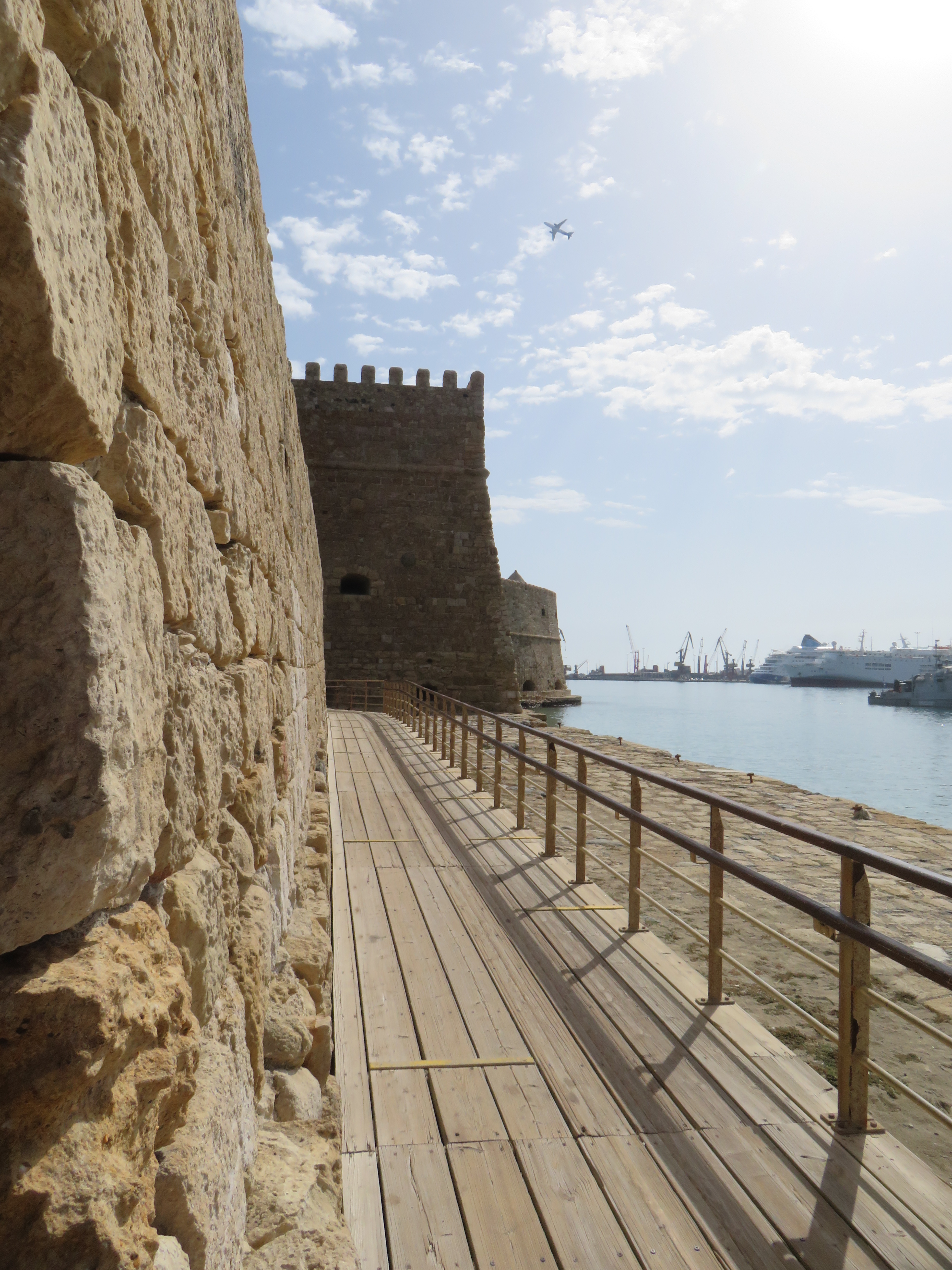
Like many of the ports we have visited on this trip, Heraklion has an Old Town. Some of the sites there include the Koules Fortress from the 16th century, the Jesus Gate and the Venetian City Wall. The Fortress may have been established by Arabs in the 9th century. Later, the Byzantines built a tower on the site, which was destroyed by a 1303 earthquake. In 1462, the Venetians destroyed the Byzantine tower, and built the Castella a Mare, later renamed Koules.

The Jesus Gate is a public gate into the city of Heraklion. It takes its name from a church that once stood nearby. The water that supplied the city came through this gate via a large Venetian aqueduct that started from the springs of Mount Juktas and ended at the Morosini fountain. Dating back to 1628, this fountain is a popular meeting point in Old Town. Four lions support the beautiful fountain, and the base is decorated with icons from Greek mythology.

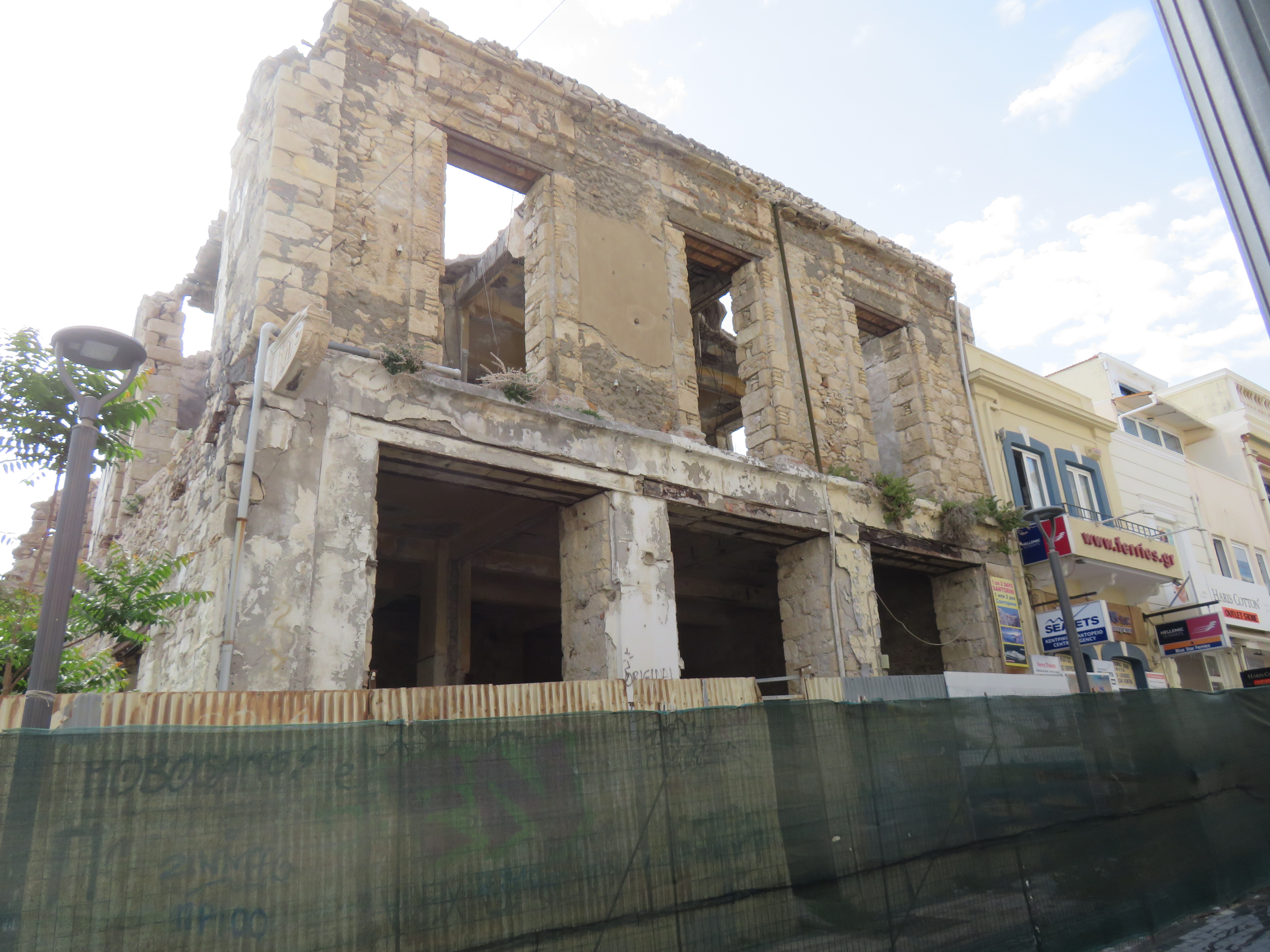
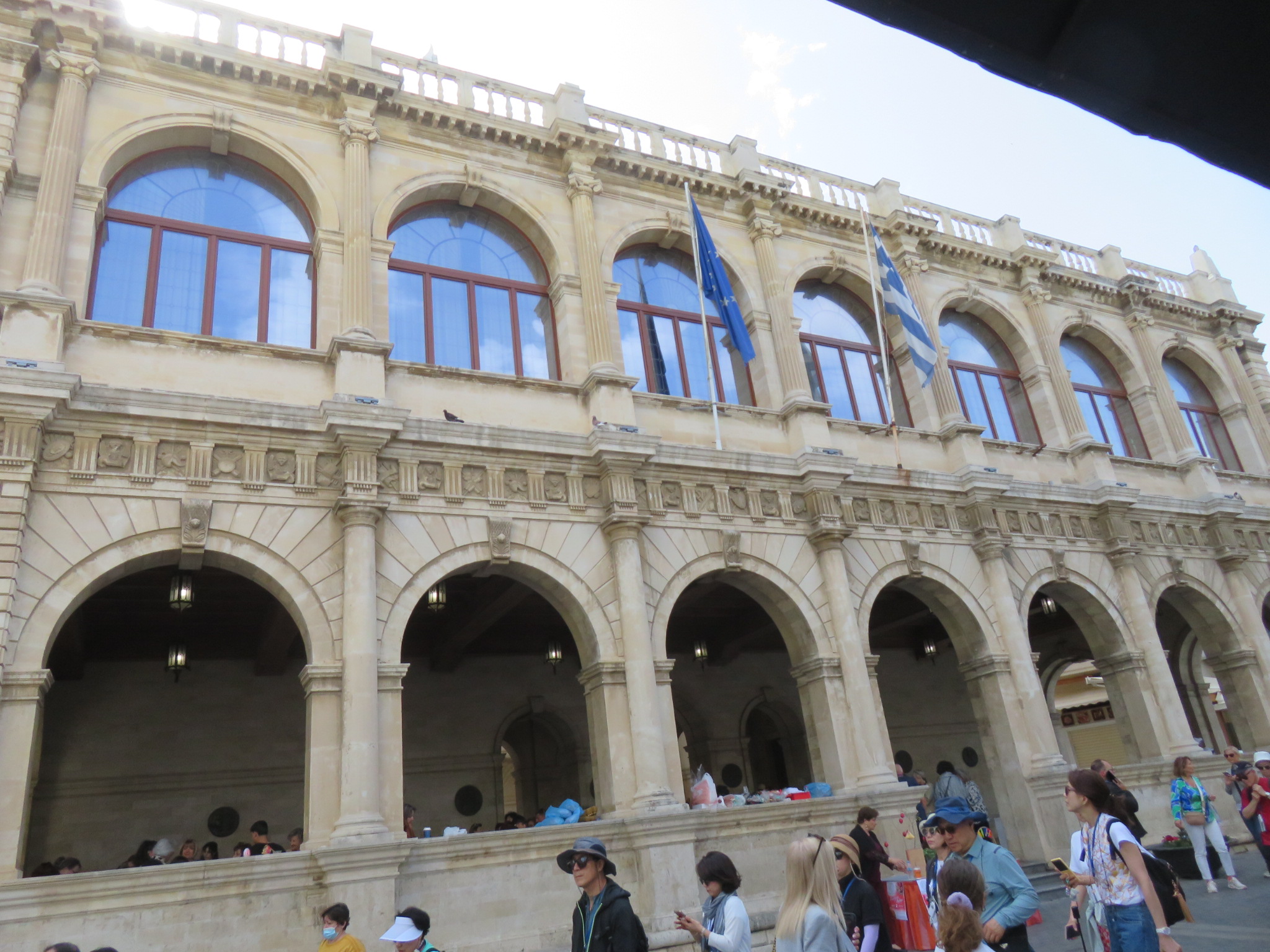
We had very little time here today, just a couple of hours, but that’s cruising for you. We simply get a taste of each port, so we can decide whether or not we want to return for time in the future. We did walk into the city for a look around, plus a gelato. While there, we came across a “pop-up” market at the Heraklion City Hall. This is Holy Week in Greece, and the market was selling breads, decorated eggs, candles, anything you might need for Easter.

Back to Santorini

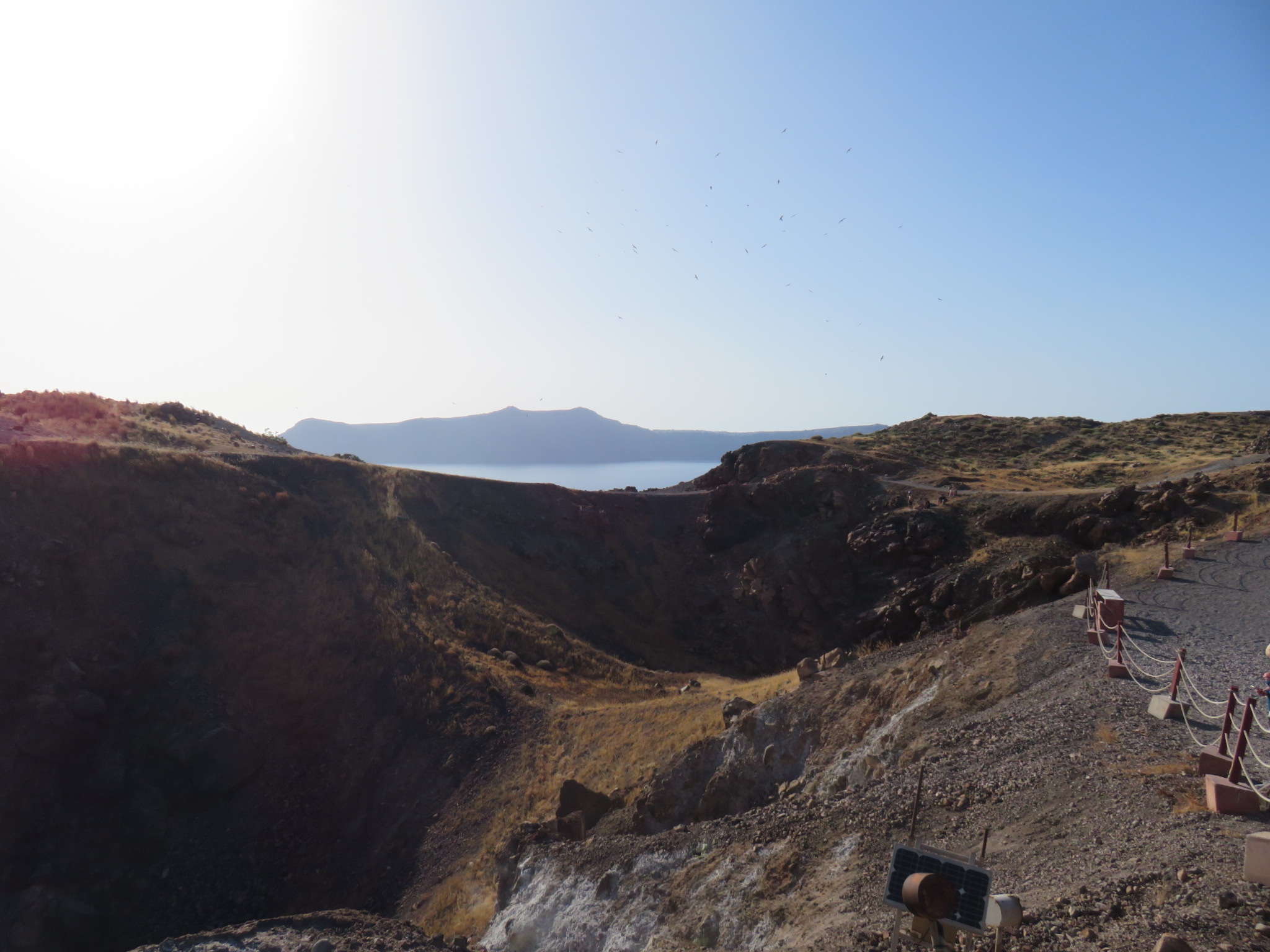
This afternoon, we returned to Santorini, a semicircular archipelago of volcanic islands in the Aegean Sea. They surround a large caldera, with an active volcano in the middle. This volcano, Nea Kameni, last erupted in 1950. We actually sail over the volcano as we approach the port. The name Nea Kameni means “new burnt” in Greek.

The most famous eruption, the Minoan eruption, was one of the largest eruptions in history, five times more powerful than the Krakatoa eruption of 1883. The Minoan eruption occurred sometime between 1645 BC – 1500 BC. That powerful eruption may have inspired later tales of the lost continent of Atlantis. It may also have played a part in the Bible story of Moses and the Jewish exodus from Egypt.

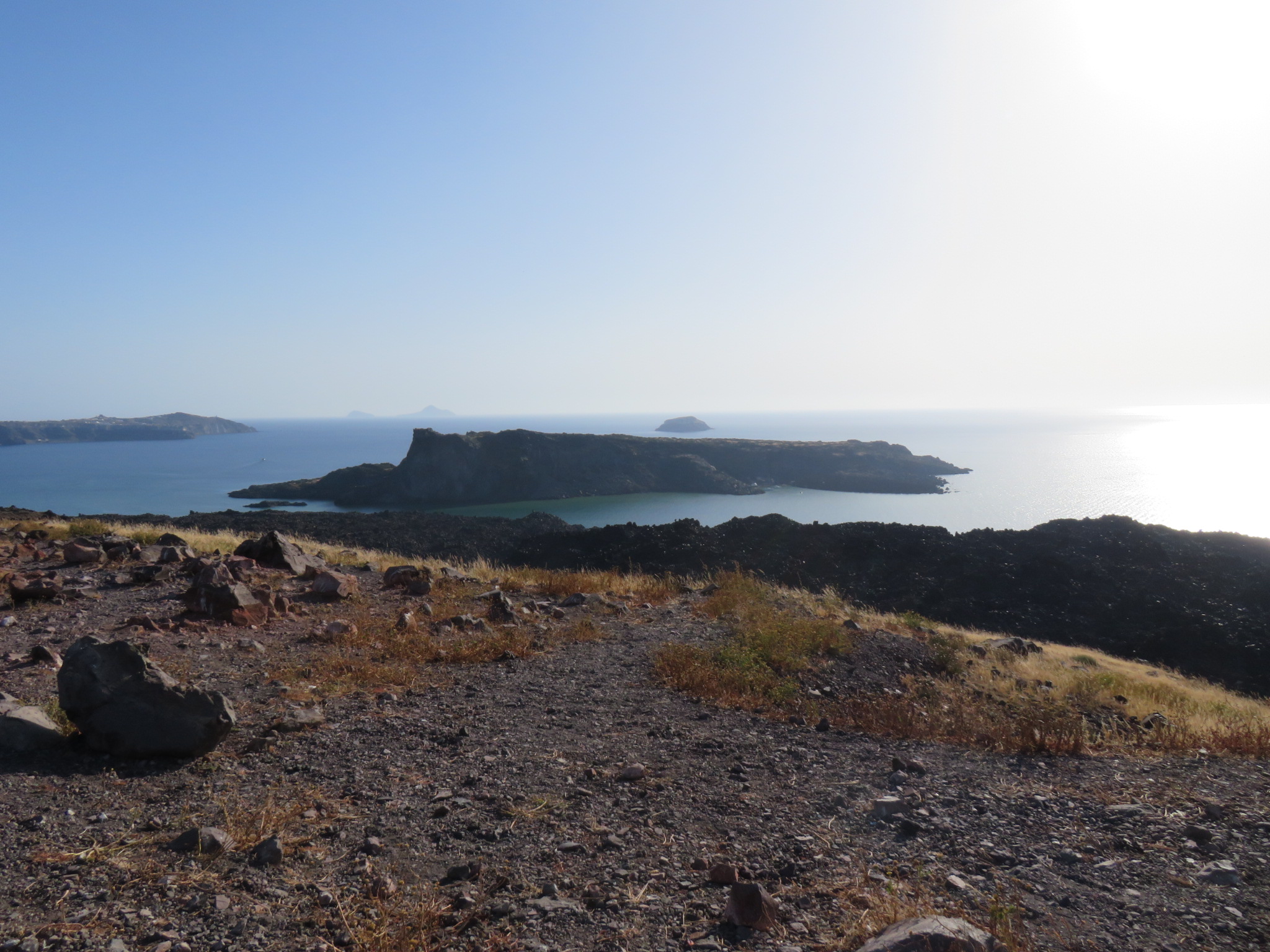
At one time, Santorini was all one island. Numerous volcanic eruptions over millenia caused the island to be separated into its current configuration: Santorini, Palea Kameni, Nea Kameni, and Therasia, plus numerous tiny islands.

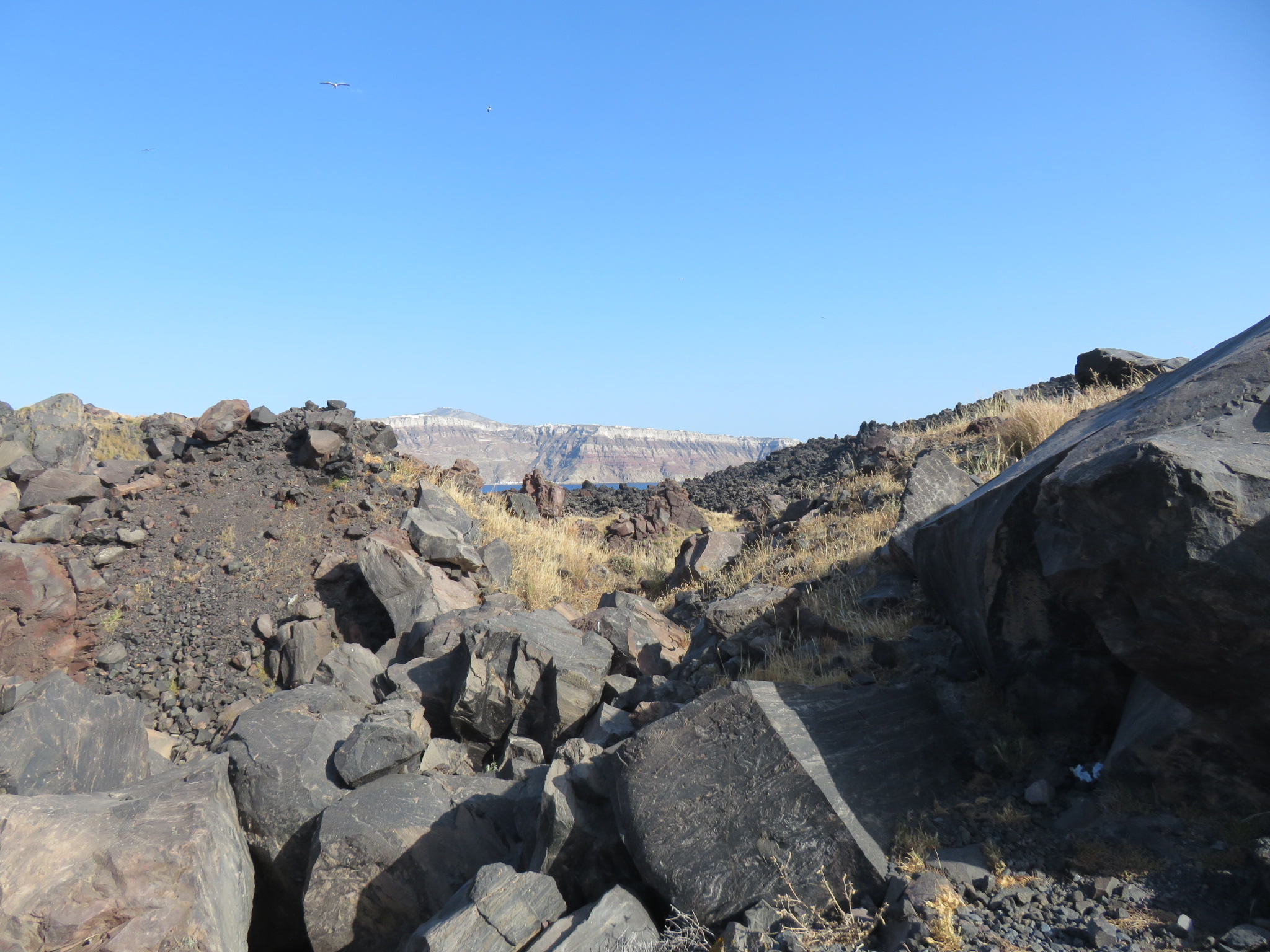
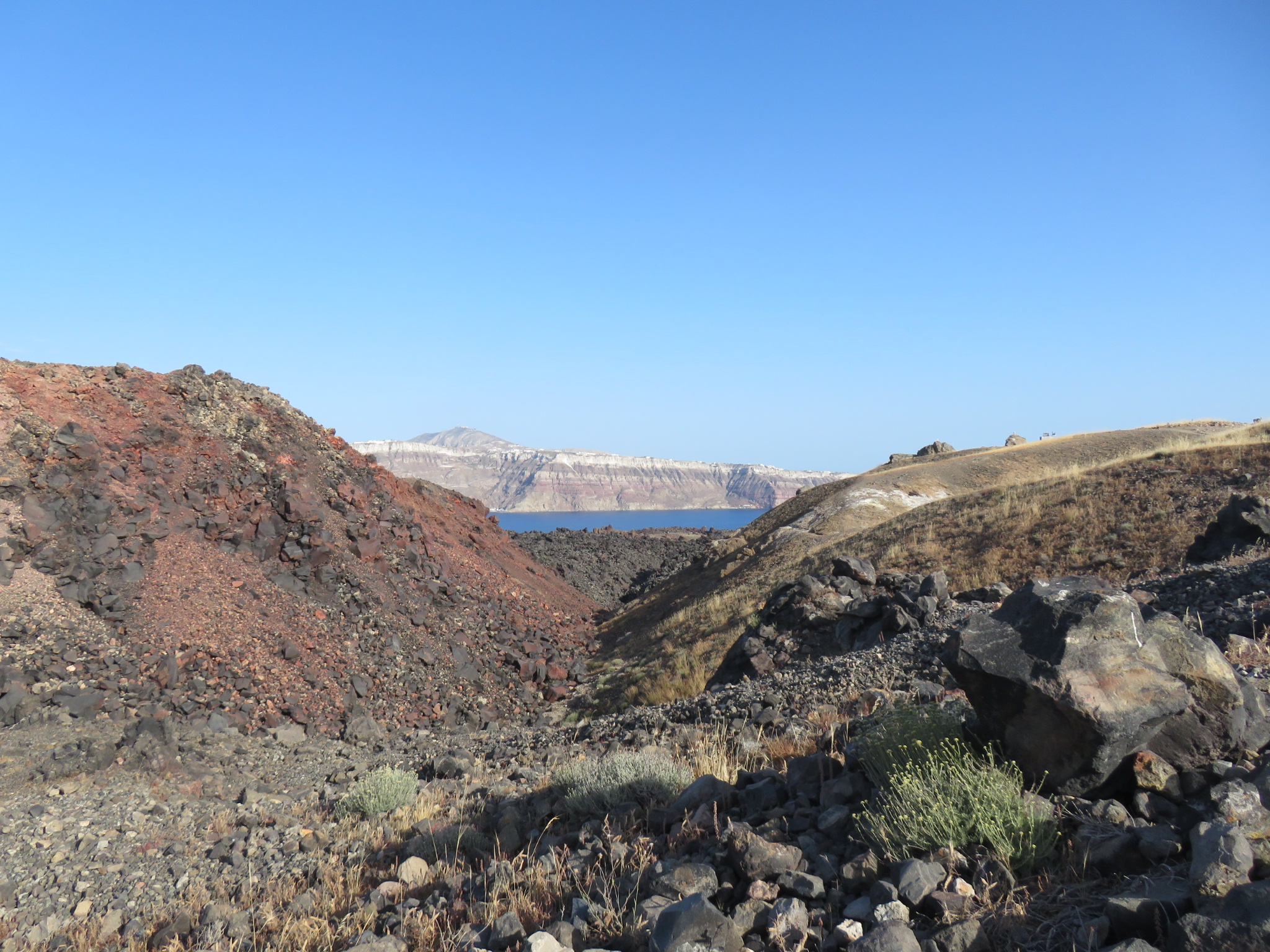
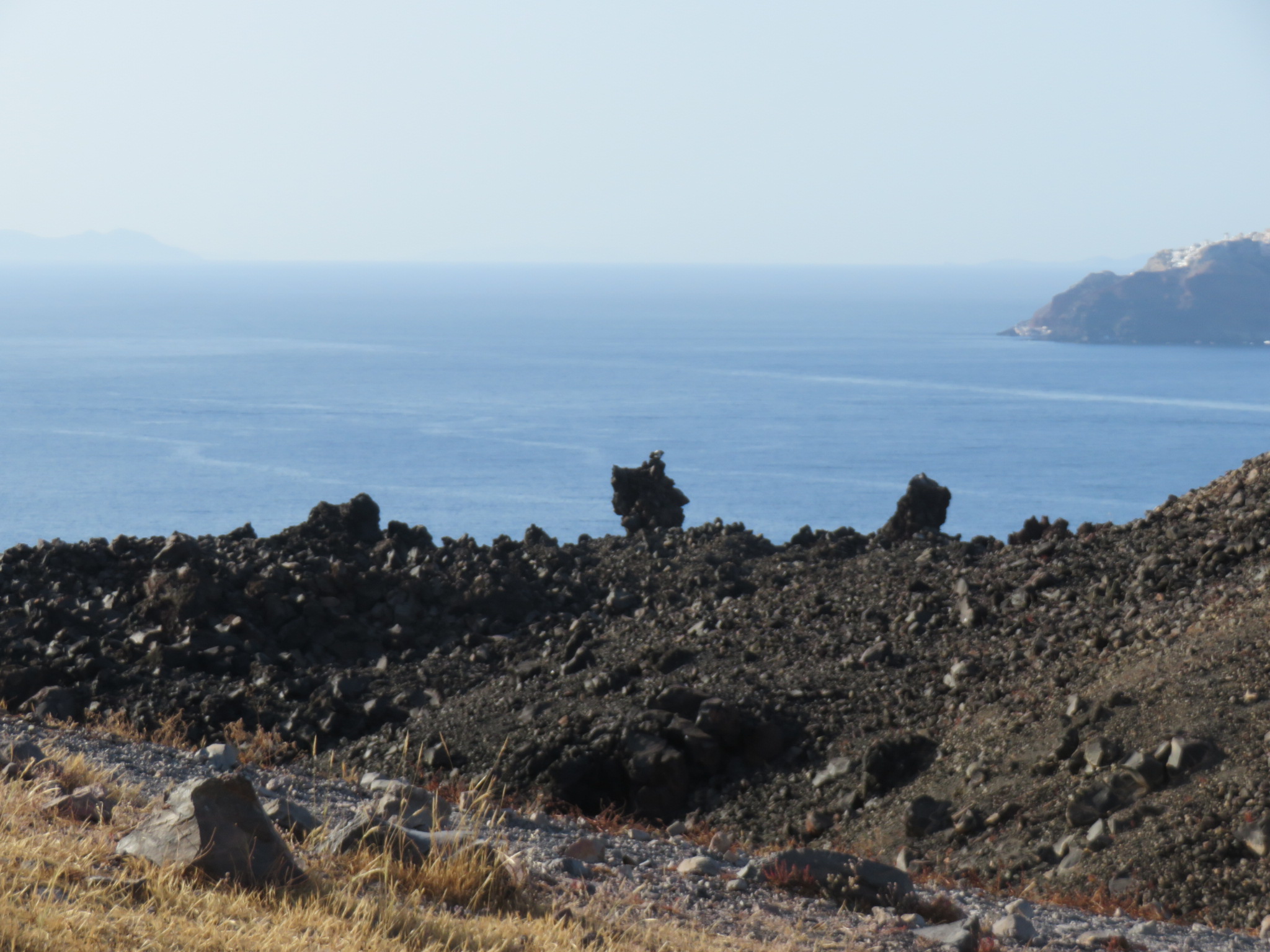
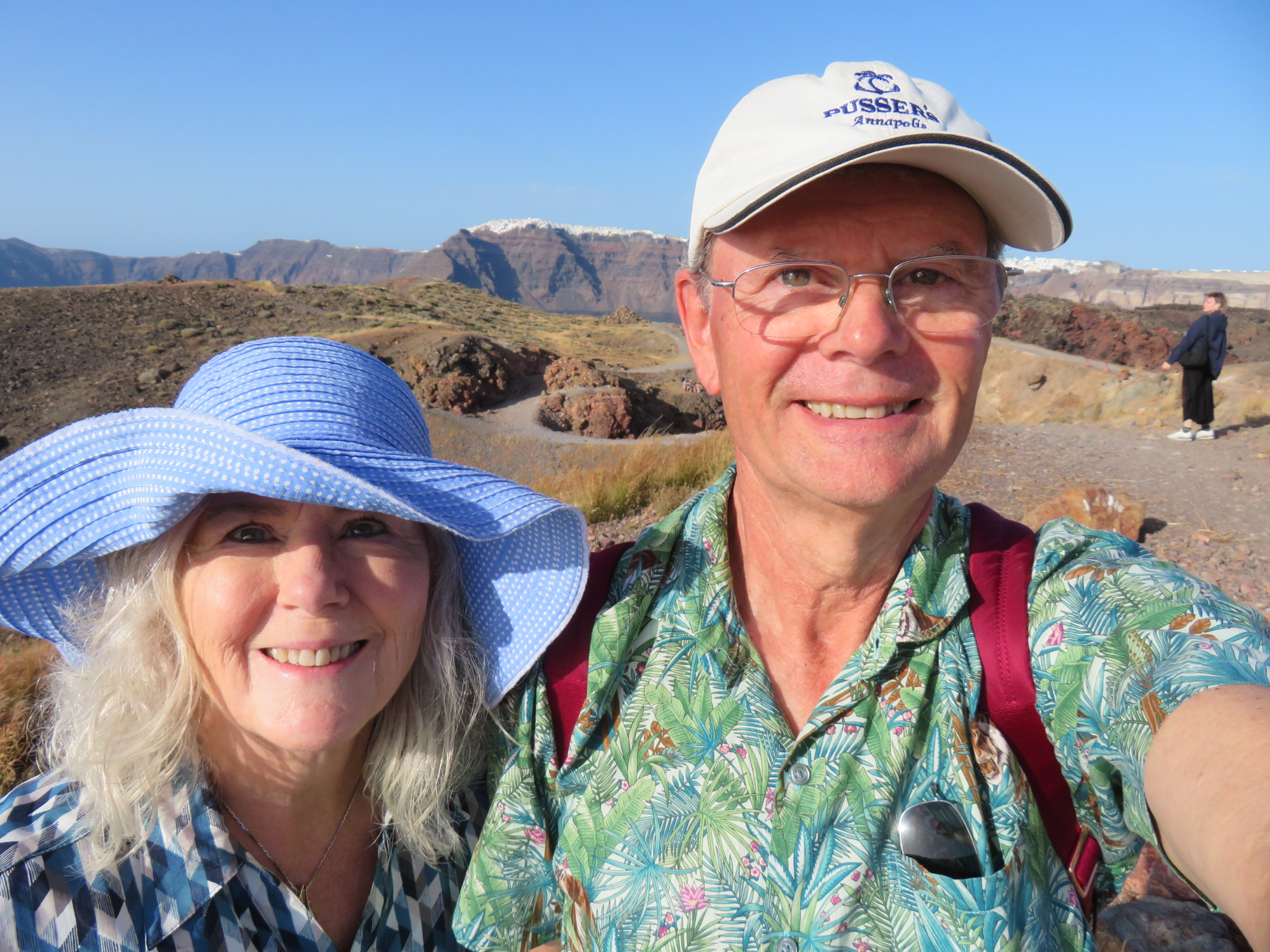
Today, we visited Nea Kameni, still considered an active volcano, with several craters, but dormant since 1950. We hiked uphill about 3/4 mile to the summit, and then around it. There are a number of sulfur vents at the newest crater, which give off steam and carbon dioxide. The volcano is monitored closely by scientists from the Institute for the Study and Monitoring of the Santorini Volcano (ISMOSAV), and is a protected scientific site.

The views from here are pretty amazing!

After Nea Kameni, we stopped at Palea Kameni (old burnt), another small island, where the sea temperature close to the island is five degrees higher than elsewhere, and sulphur gives the water a yellow-green color. A few of the others on our boat decided to jump in and swim to the warm spot. They said it was warm, but not as warm as a hot spring would be. The island is uninhabited except for a few goats. If there were people living there, they would have a small church to attend near the water.

Posted in Uncategorized | Tagged , , , , , , | Leave a comment

Rhodes, Greece

Wednesday, May 1, 2024

Rhodes was home to one of the Seven Wonders of the Ancient World – the Colossus of Rhodes. Constructed in 280 BC, after Rhodes successfully fought off an attack by Macedonia, it was said to be over 100 feet tall, about the size of the US Statue of Liberty. It was a statue of the Greek sun god, Helios. Unfortunately, it collapsed during an earthquake about 50 years later, and was not rebuilt. During an Arab attack in 653 AD, it was completely destroyed and the remains were sold.

The island of Rhodes is in an active earthquake area where the African Plate is sliding under the Aegean Sea Plate, so it is rising on the south side, and sinking on the north. The movement is occurring at about 1.5 inches per year.

The Medieval City of Rhodes was named a UNESCO World Heritage Site in 1988, for its outstanding universal value.

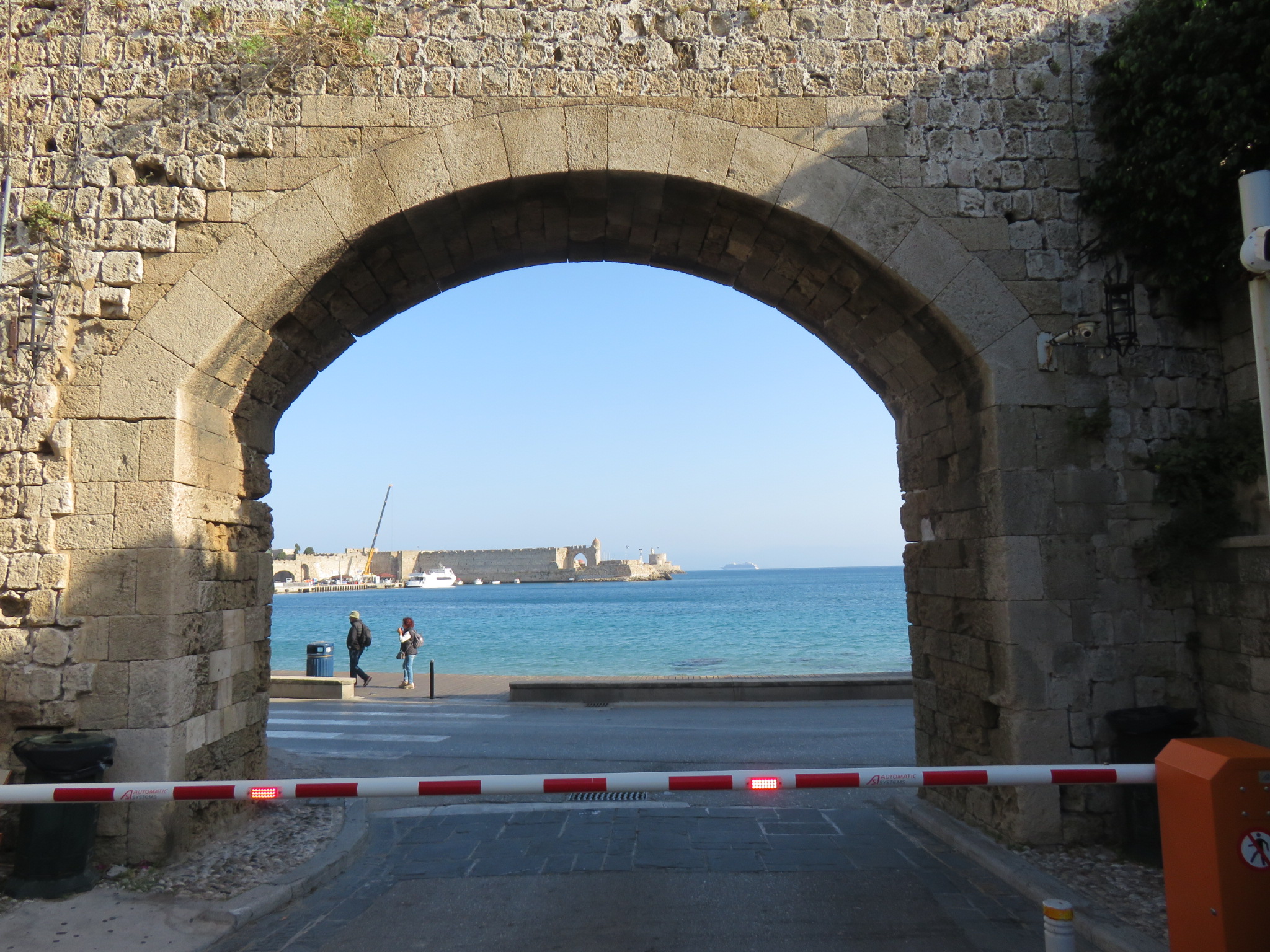
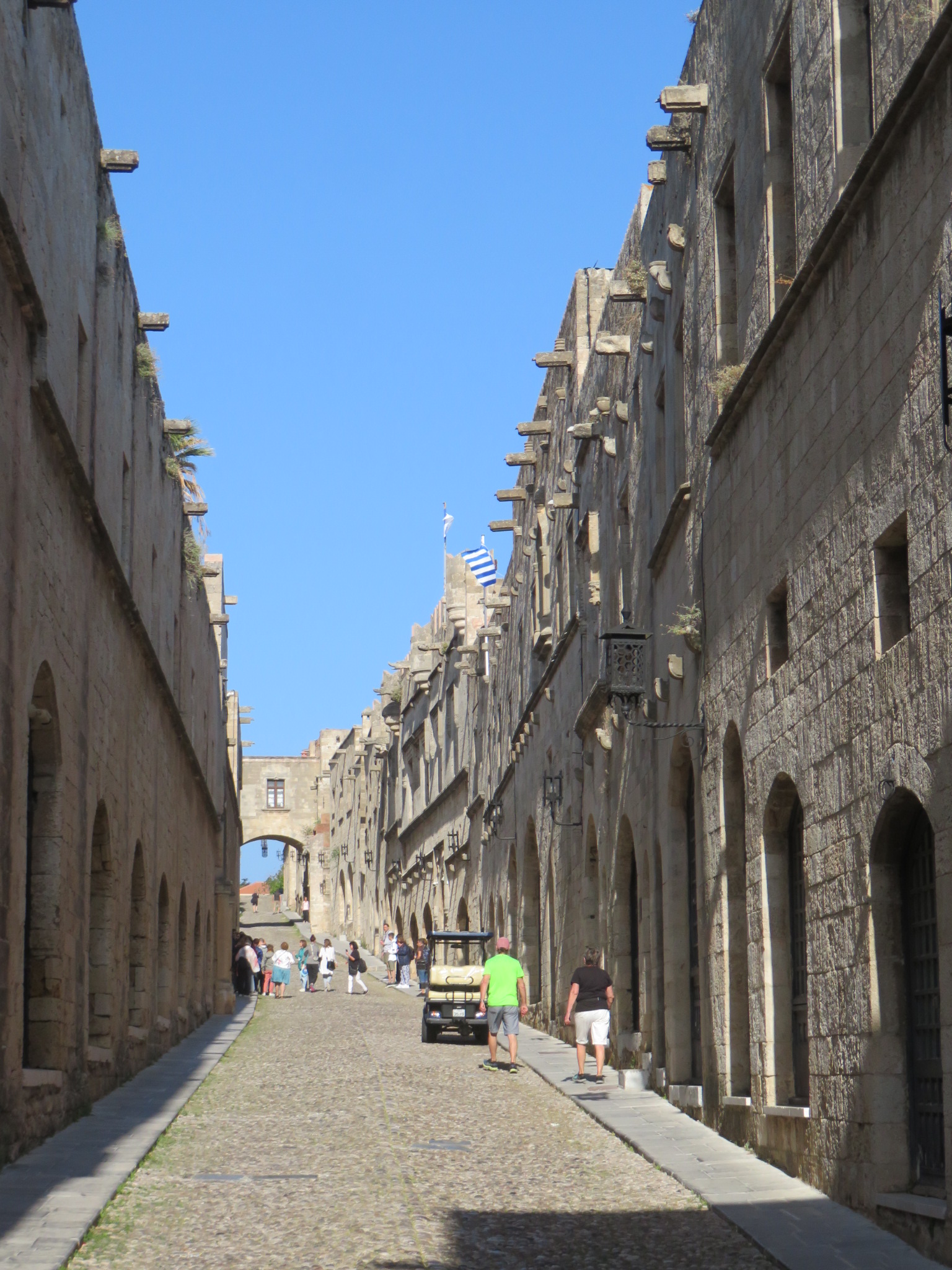
We walked through one of the three gates to the Old City, then made our way to the Street of the Knights. The Knights Hospitaller, or Order of Knights of the Hospital of Saint John of Jerusalem, was a Catholic military order formed in the 11th century in Jerusalem, to defend the Holy Land during the Crusades. After Islamic forces reconquered Jerusalem, the Knights relocated to the island of Rhodes, where they were able to withstand several sieges until finally falling to Suleyman II after a 6-month siege in 1522.

The Palace of the Grand Master was originally built in the 7th century as a Byzantine citadel, possibly on the site of the original Collosus. In 1309, the Knights converted it to their administrative headquarters and palace of their Grand Master. It was later used as a command center and fortress by the Ottomans following their capture of the island. The palace was severely damaged in 1856 when a gunpowder magazine stored there was struck by lightning. The current building was reconstructed between 1937 and 1940 with little regard for historical accuracy.

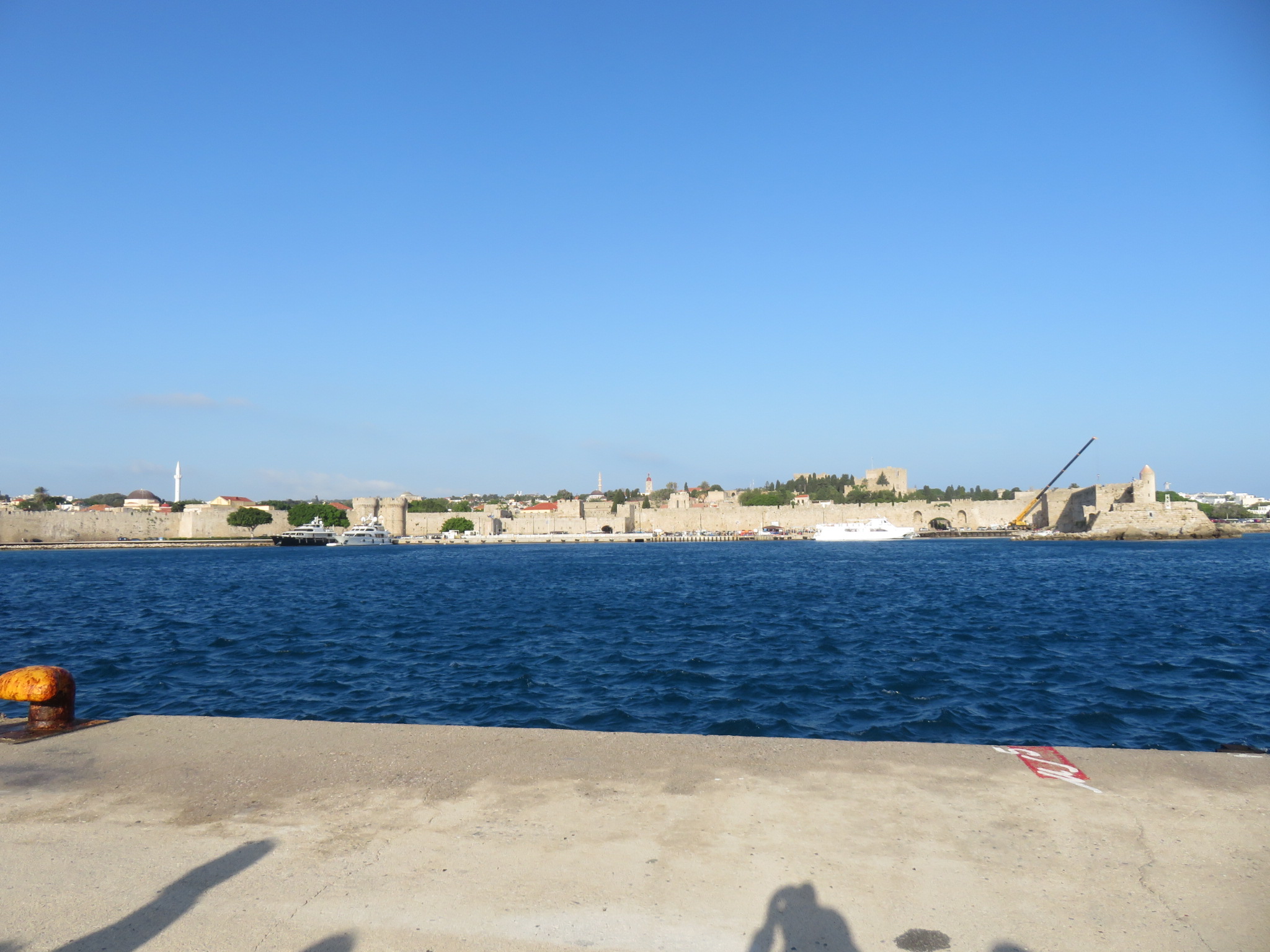
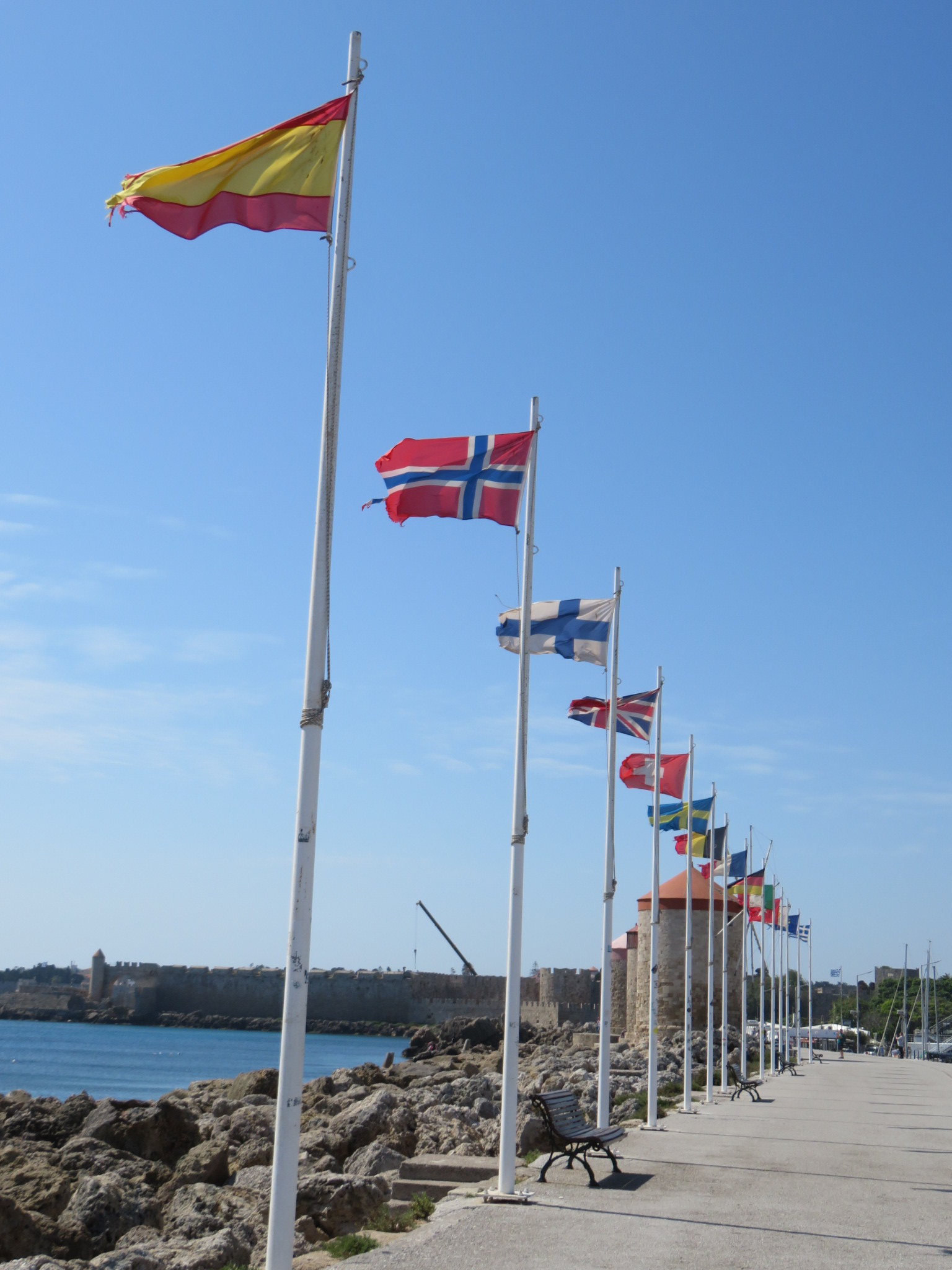
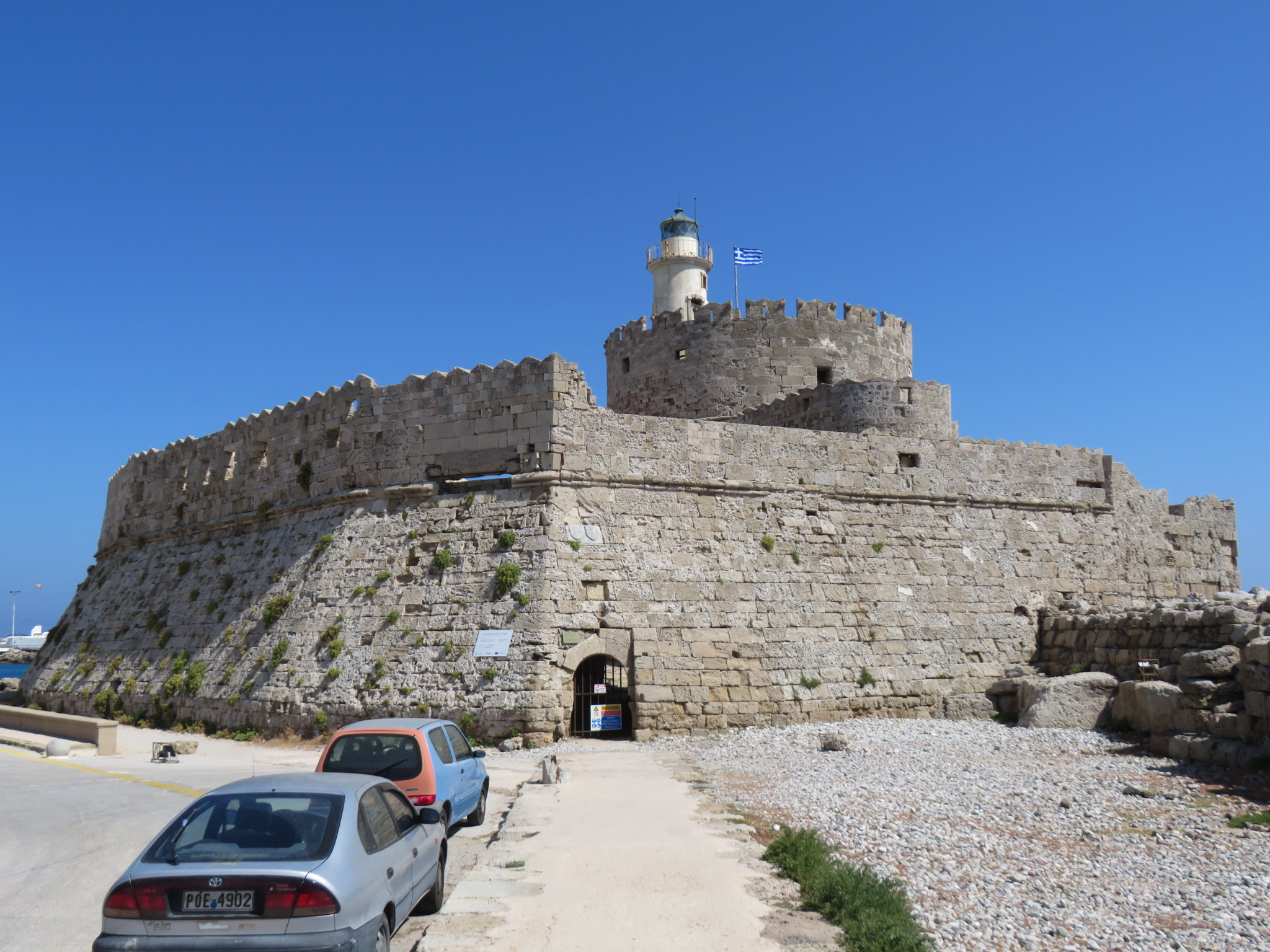
We strolled down to the Fort of St. Nicholas, a Byzantine structure in the Mandraki Harbor at the north end of the city and the island. A tower had been built by the Grand Master around 1465 AD.

The Mandraki (in Greek Μανδράκι) was the military harbor and was guarded by a tower built between 1464 and 1467 by the Grand Master Zacosta at the end of the natural mole (breakwater). After the first Ottoman siege of Rhodes in 1480, the Grand Master d’Aubusson added a bastion around the tower.

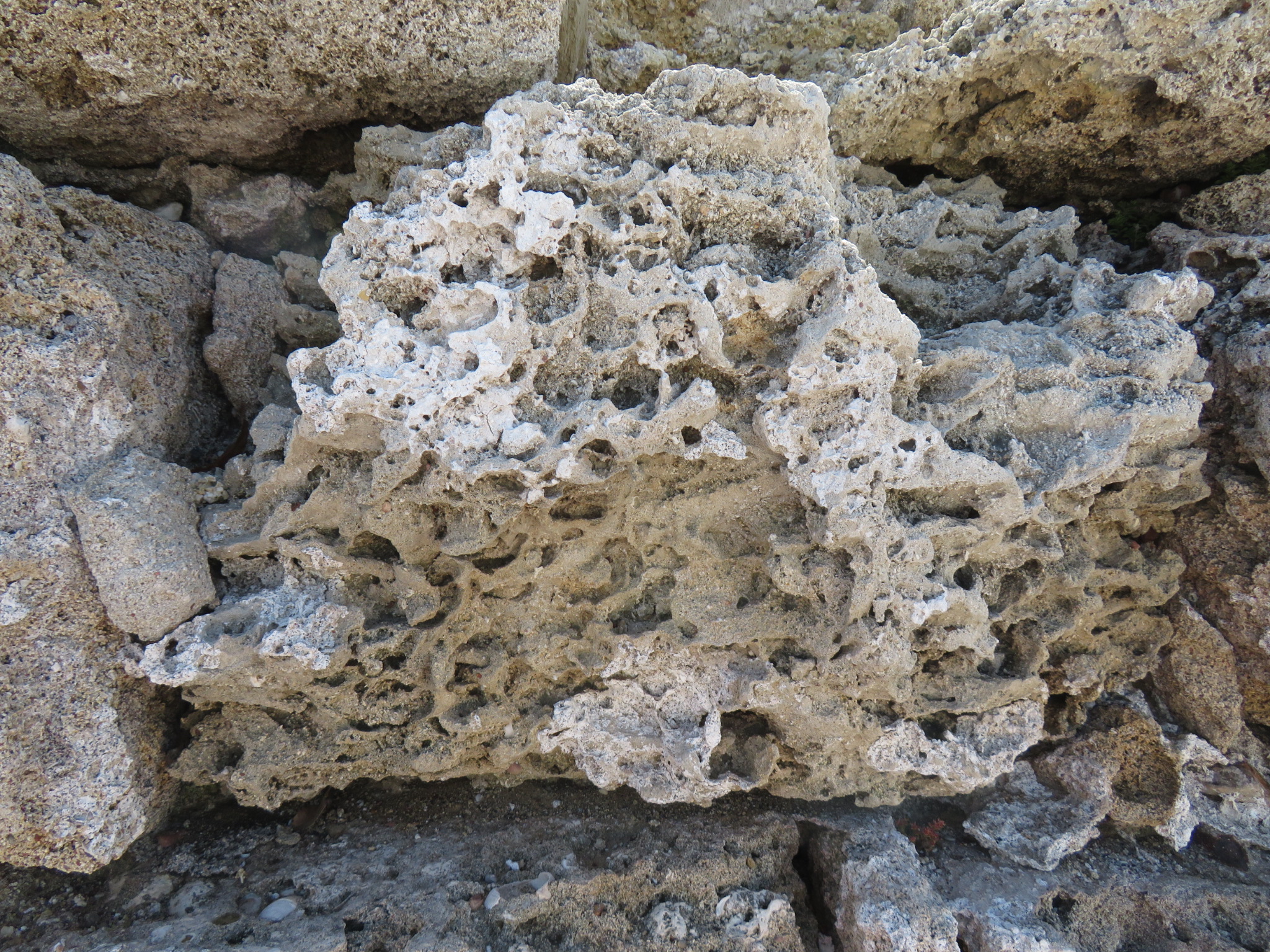
The lighthouse was added in 1863 by the French. Most of the buildings here are made of sandstone, which deteriorates over time. The lighthouse tower had to be rebuilt in 2007. The lantern was updated then as well, and is visible for 14 miles. The lighthouse is closed to the public.

Posted in Uncategorized | Tagged , , , , , , , | Leave a comment

Kuşadası, Turkey and Patmos, Greece

Tuesday, April 30, 2024

When we last visited Kusadasi, we spent the day exploring the ruins in Ephesus, so this time, we decided to stay close to the ship.

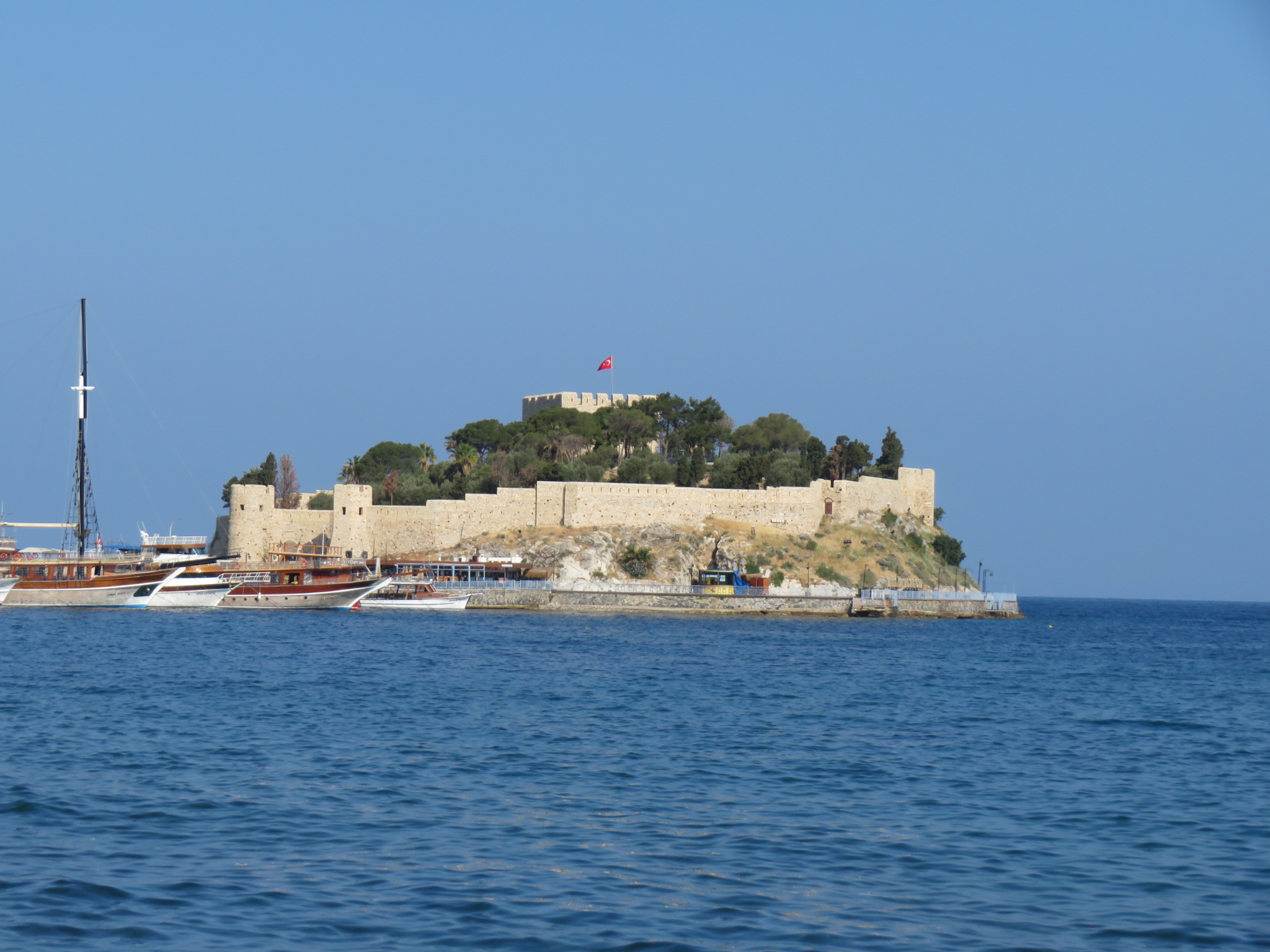
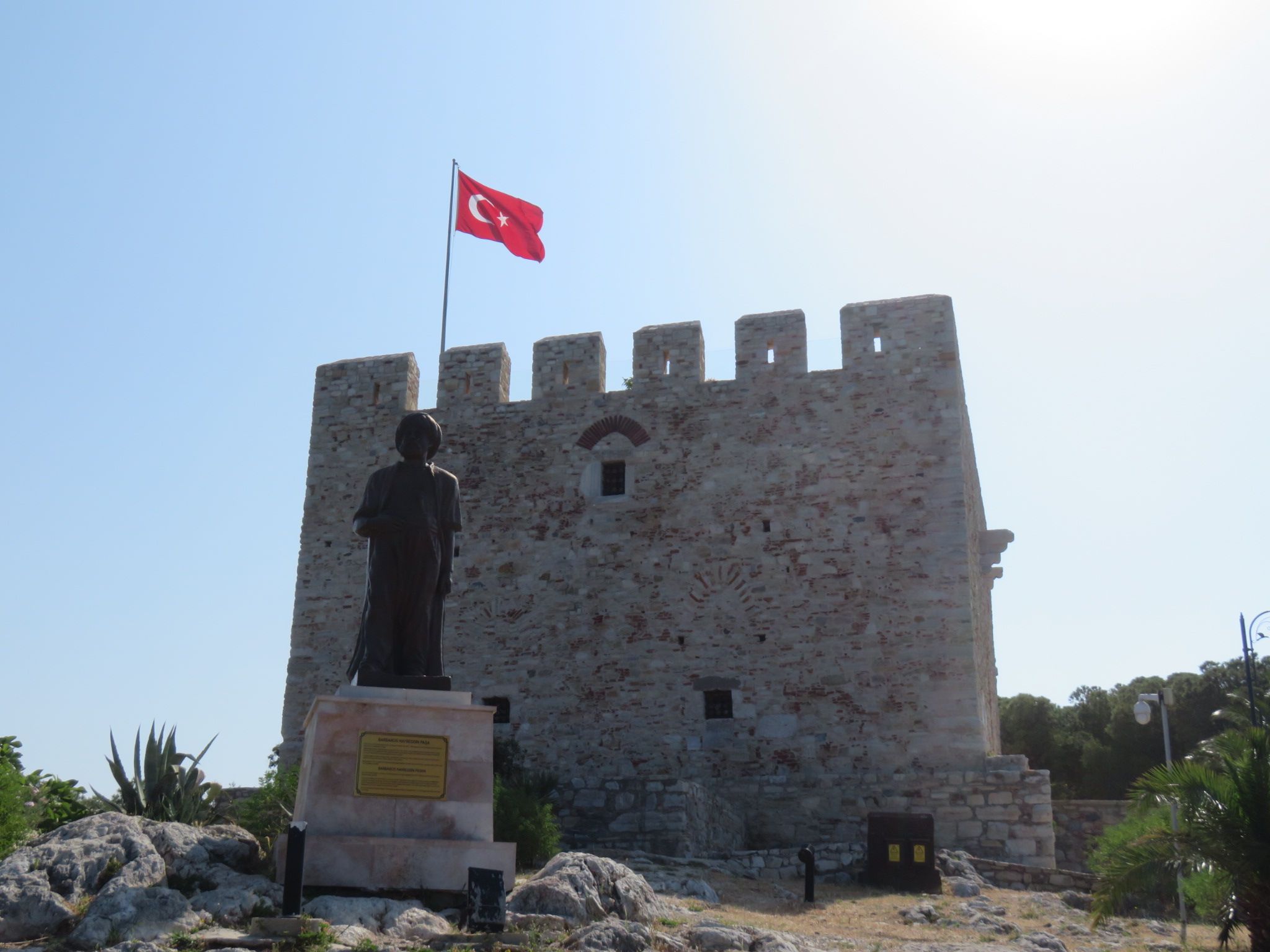
A popular resort community, people have lived in this area for at least 5,000 years. The name Kuşadası (pronounced koosh-a-das-uh) comes from two Turkish words, kuş (bird) and ada (island.) The island, where a 13th century Byzantine fortress is located, was thought to resemble a bird when viewed from the sea. We took a short walk from the ship, and then crossed to the island via a causeway. This is a beautiful, peaceful place, and for us, a way to escape the clamoring taxi drivers and merchants constantly accosting us. They do have to make a living, I guess.

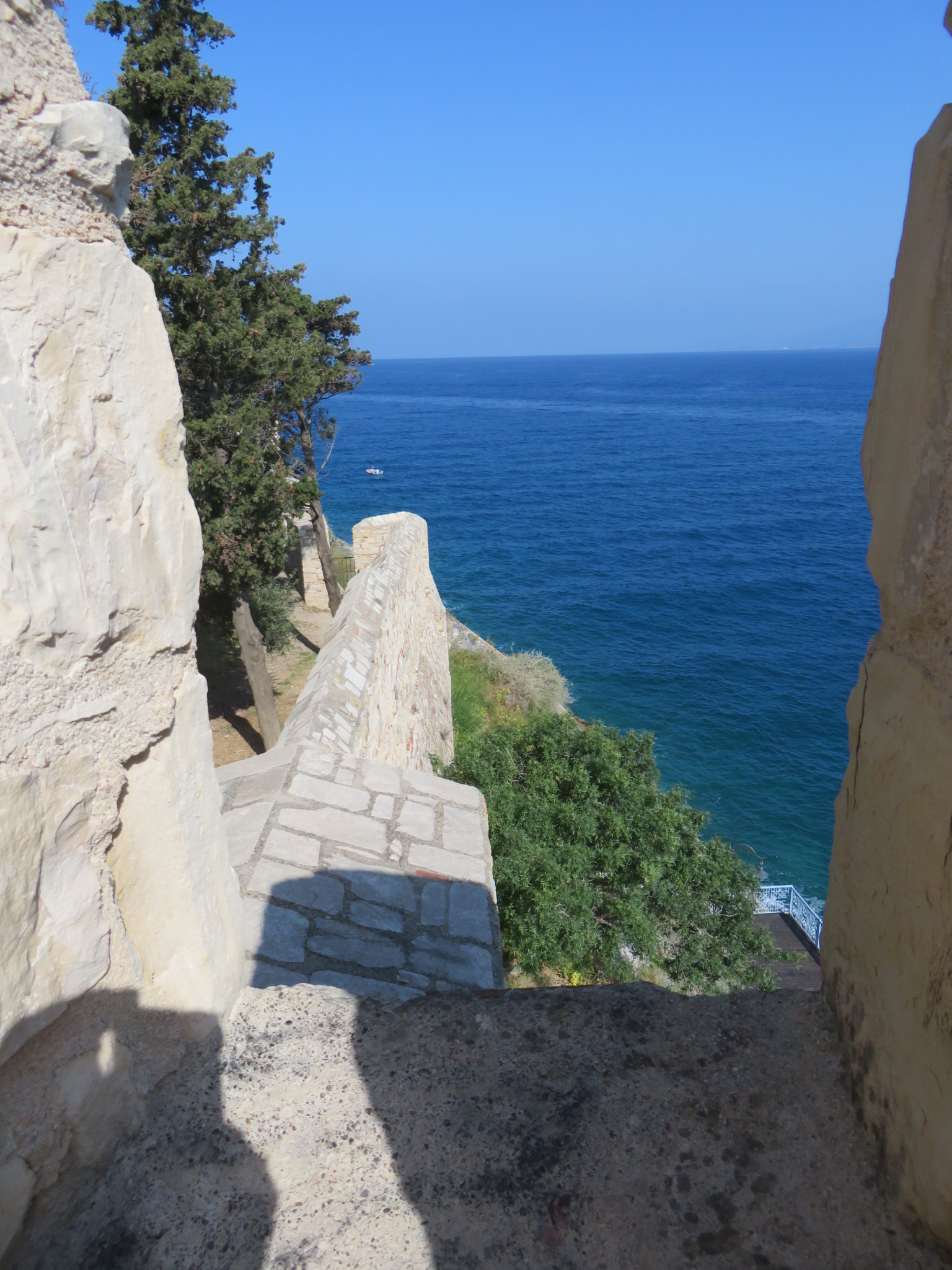
The castle itself is not open at this time of year, but we could walk the grounds around it, and enjoy the views from the fortress walls. It had been renovated in 1834, and is still in very good condition.

Overlooking the city is a statue of Mustafa Kemal Atatürk, the founding father of the Greek Republic. Ataturk was born in 1881, and served as president from 1923 until his death in 1938. He initiated sweeping reforms, modernizing Turkey into a secular, industrial nation. In 1981, 100 years after his birth, UNESCO honored Atatürk’s memory, and called him “the leader of the first struggle given against colonialism and imperialism.”

Although Turkey is a secular state, more than 99% of the population are Muslim, mostly Sunni. While writing this, I heard the call to prayer at mid-day. Though tolerated here, the Christian and Jewish populations have been declining.

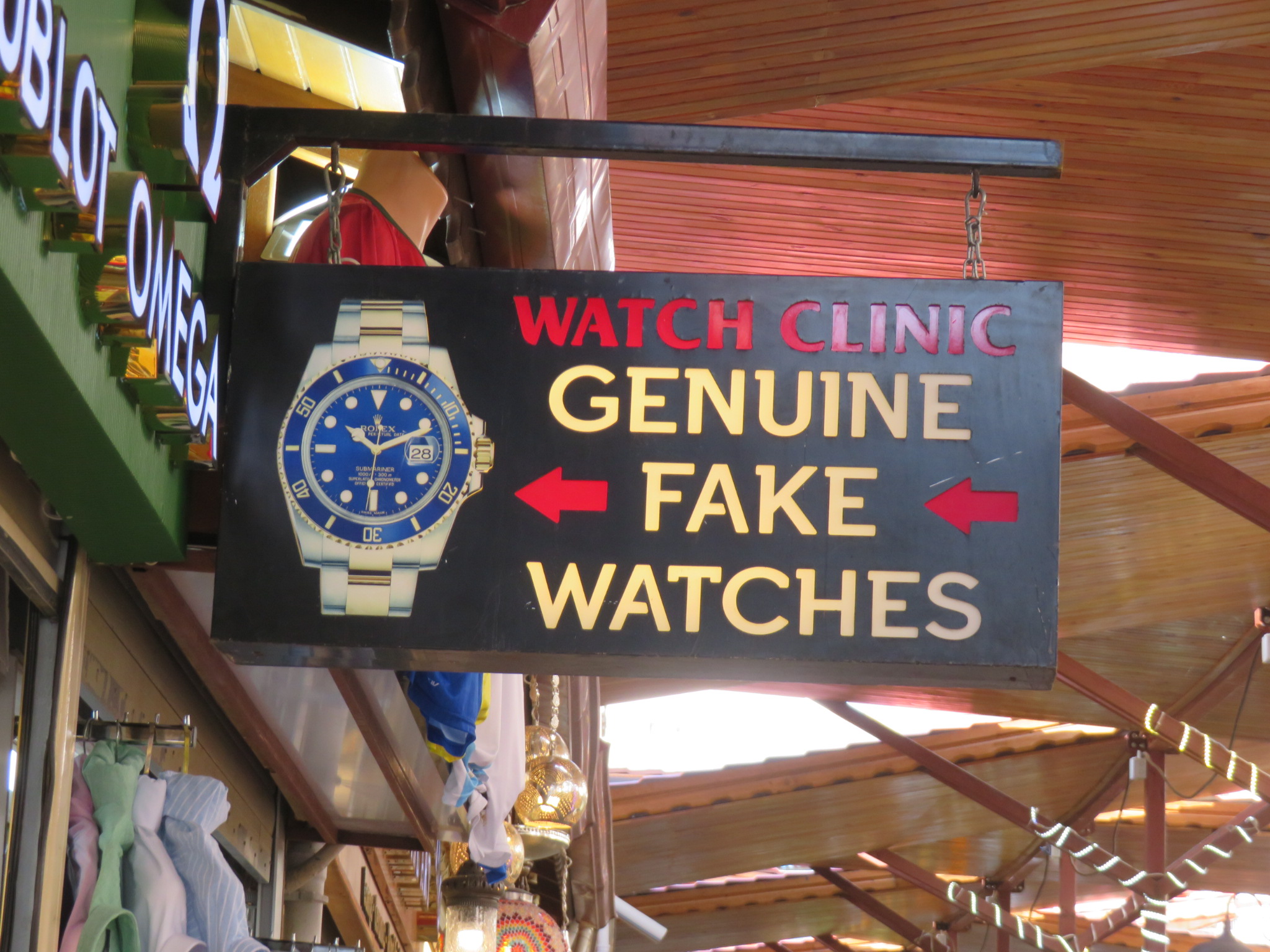
Kusadasi’s Old Town is in the center of town, and is a mix of old houses, shops, bars and restaurants. Here is where we tourists gravitated to for a bit of shopping in the bazaar. There are gorgeous leathers, beautiful jewelry, luxurious rugs, and much, much more. How we managed to escape without going broke is beyond me.

Patmos, Turkey

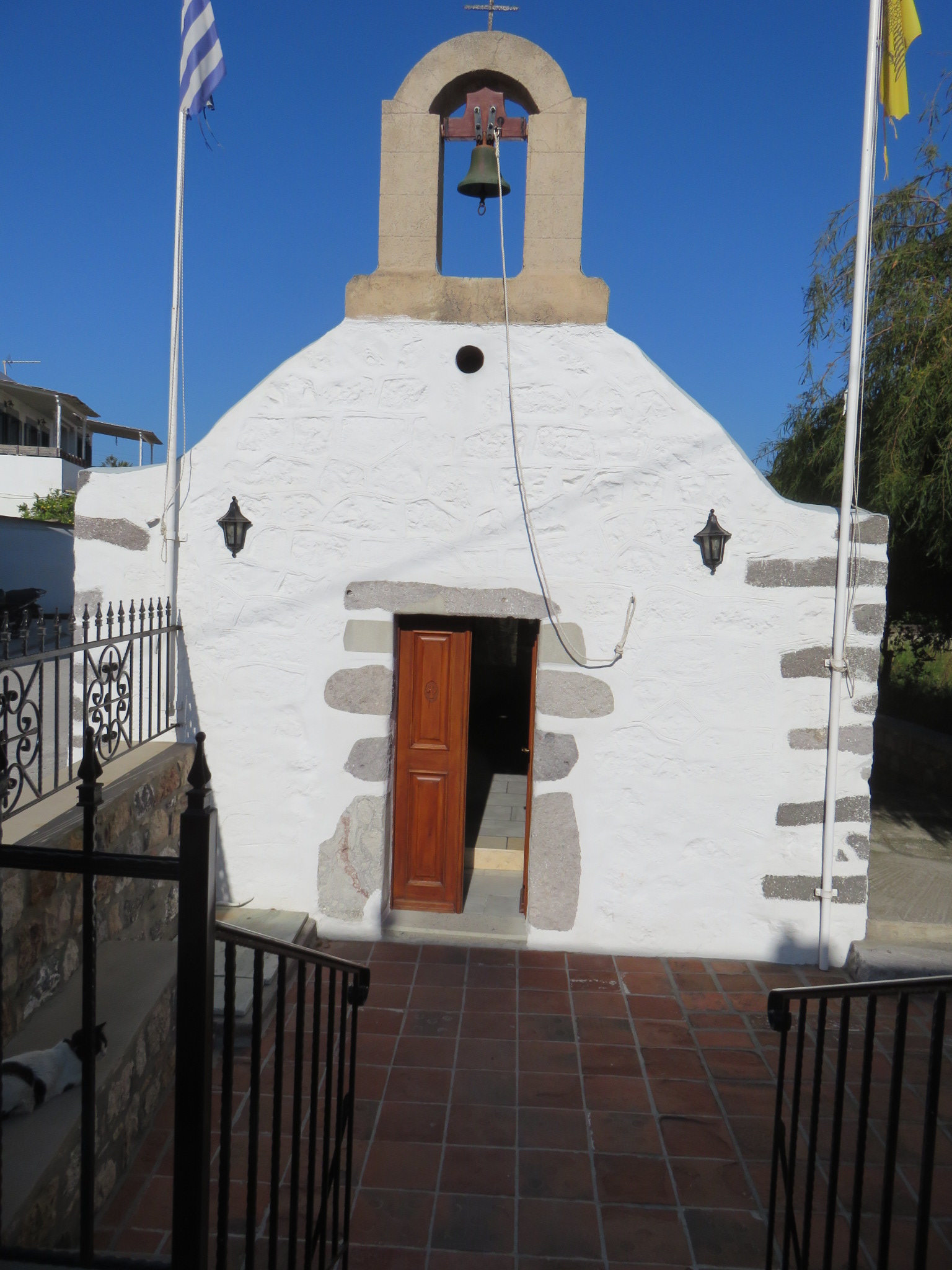
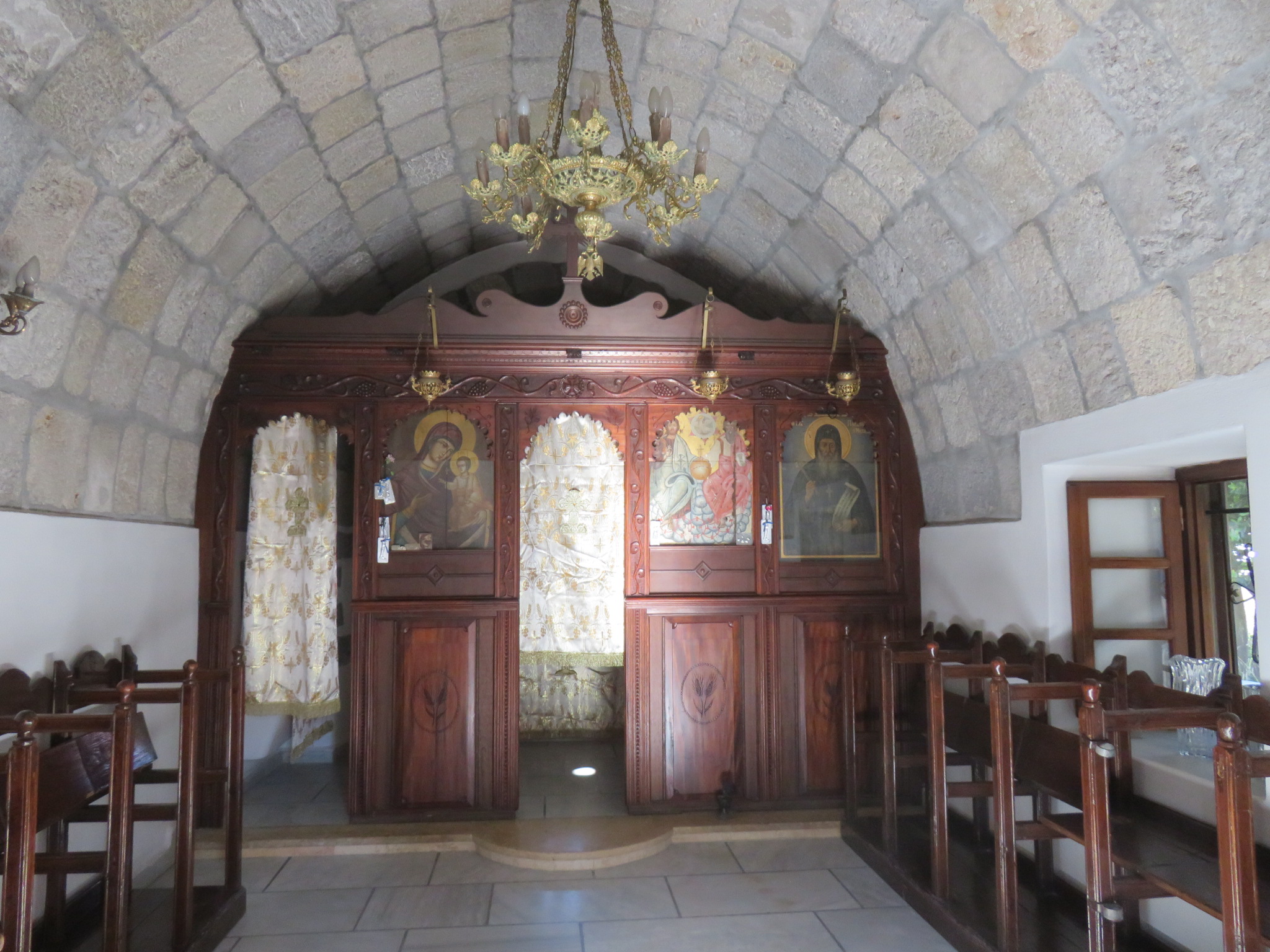
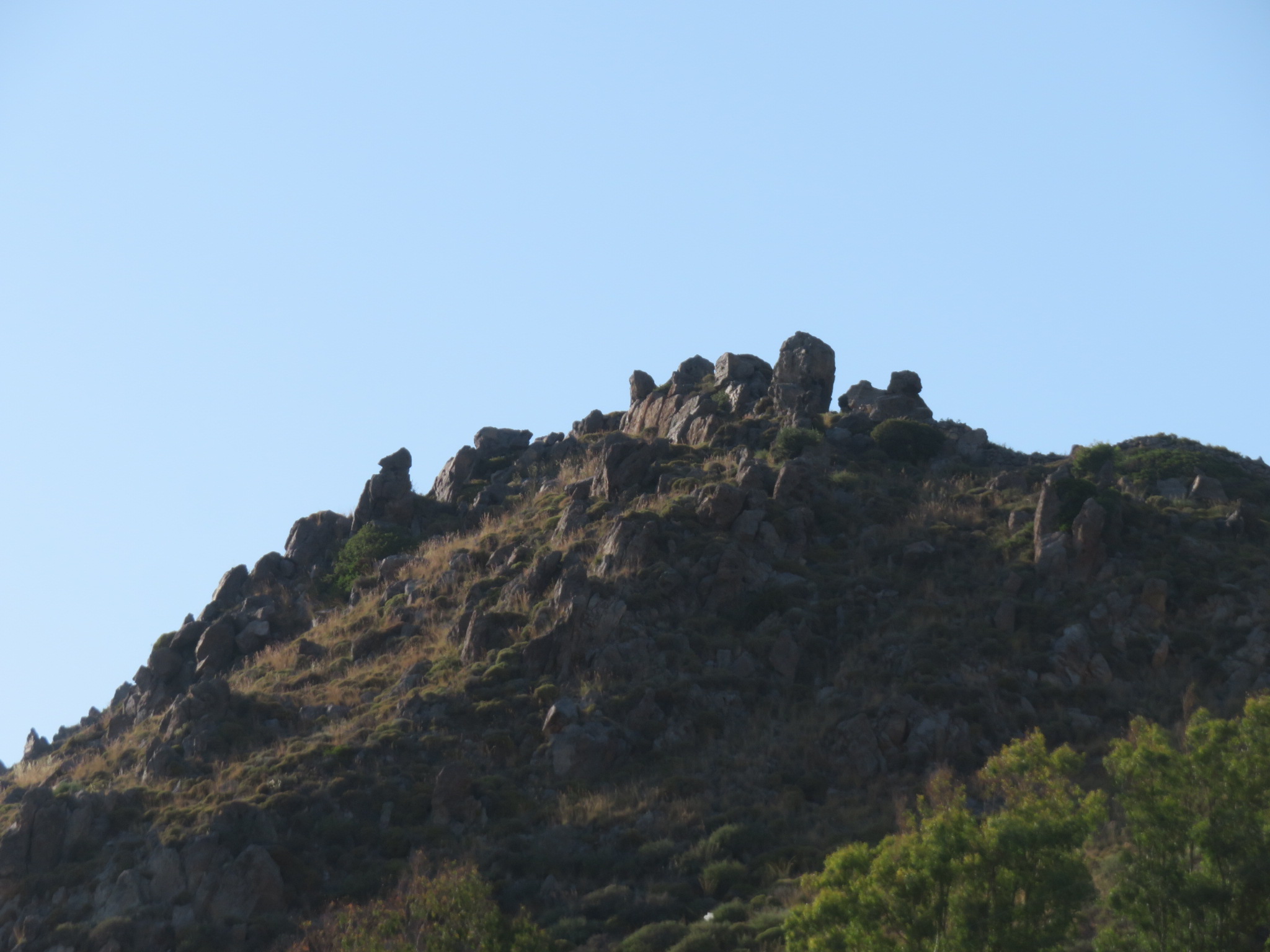
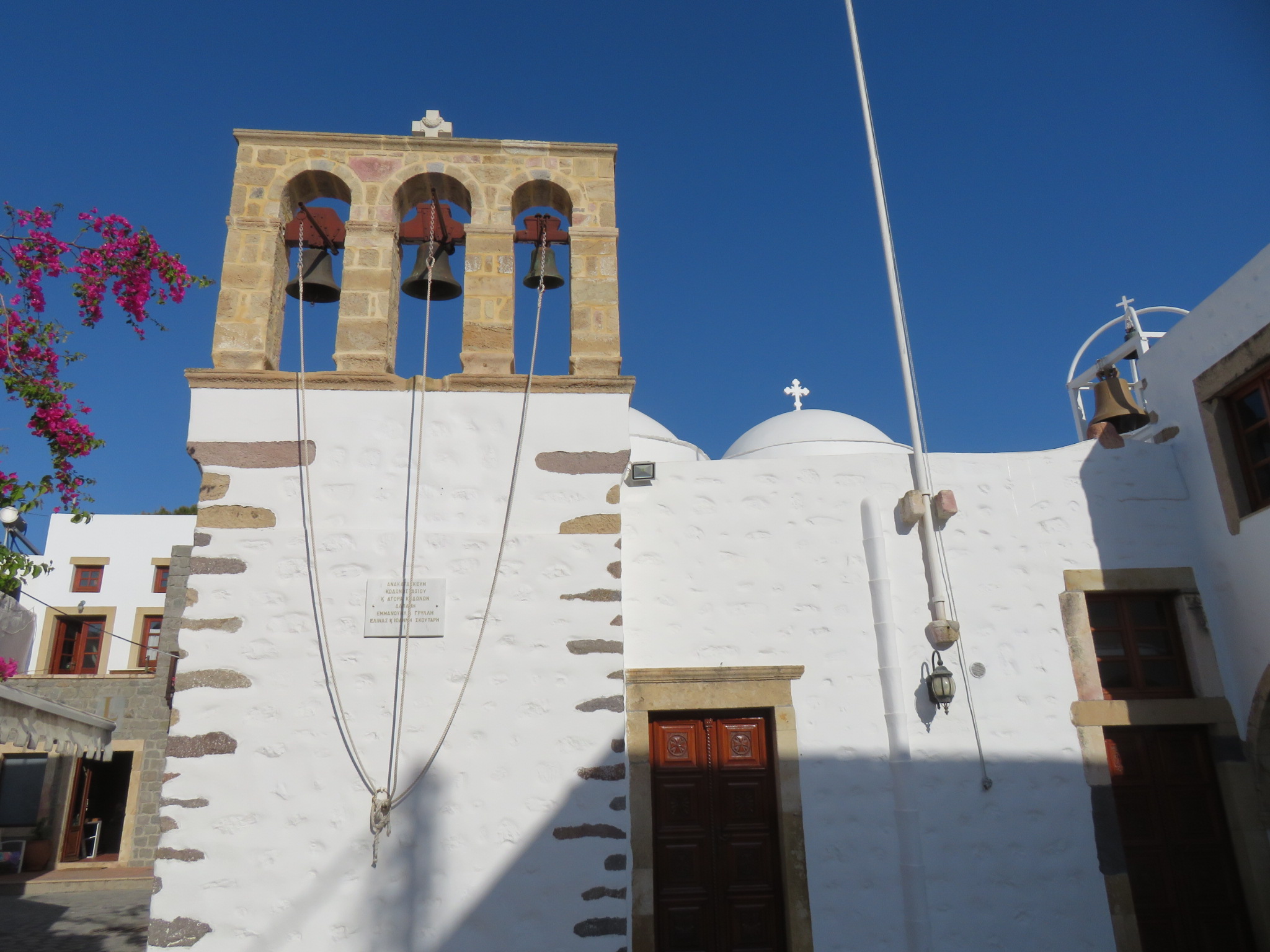
Our second stop today was at Patmos, known as being where John of Patmos received the revelation that he shared in the New Testament Book of Revelation. Some historians speculate that this was the same John of the Gospels, but no one knows for sure. John was said to have brought Mary to Ephesus after Jesus died, so maybe?? Visitors can go to the Cave of the Apocalypse where John is said to have received his revelation, as well as to the Monastery of St. John the Theologian, built in 1088 on a hill overlooking the town. The Monastery, Cave and surrounding town were named a UNESCO World Heritage Site in 1999.

Posted in Uncategorized | Tagged , , , , , , , | Leave a comment

Mykonos

Monday, April 29, 2024

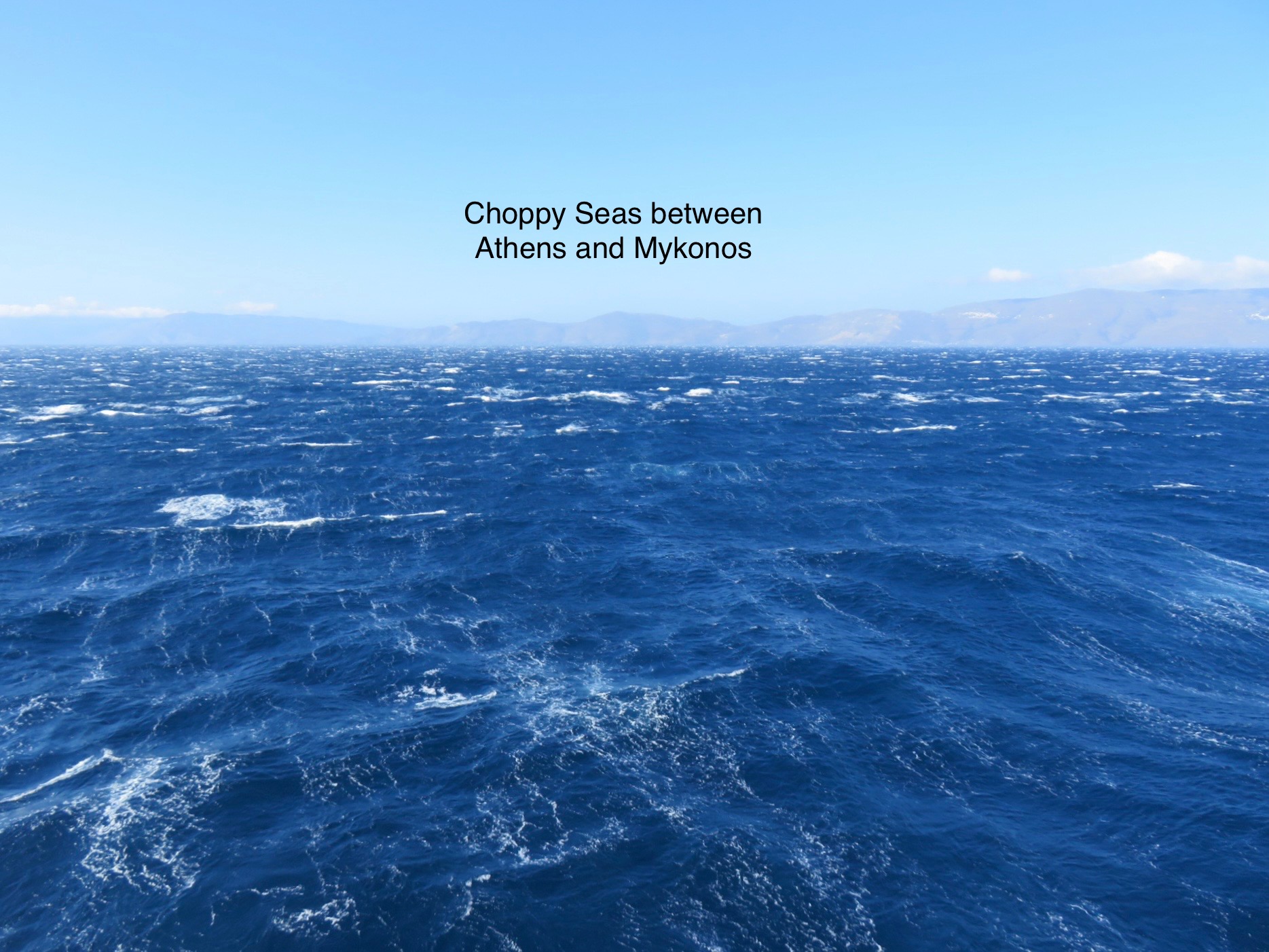
Today, we came to the end of our Viking Voyage, and transferred to Celestyal Cruises to continue our adventure. As long as we had traveled so far, it seemed imperative to explore as much as we can. The winds were very strong today, up to 60 mph, making for a very choppy sea.

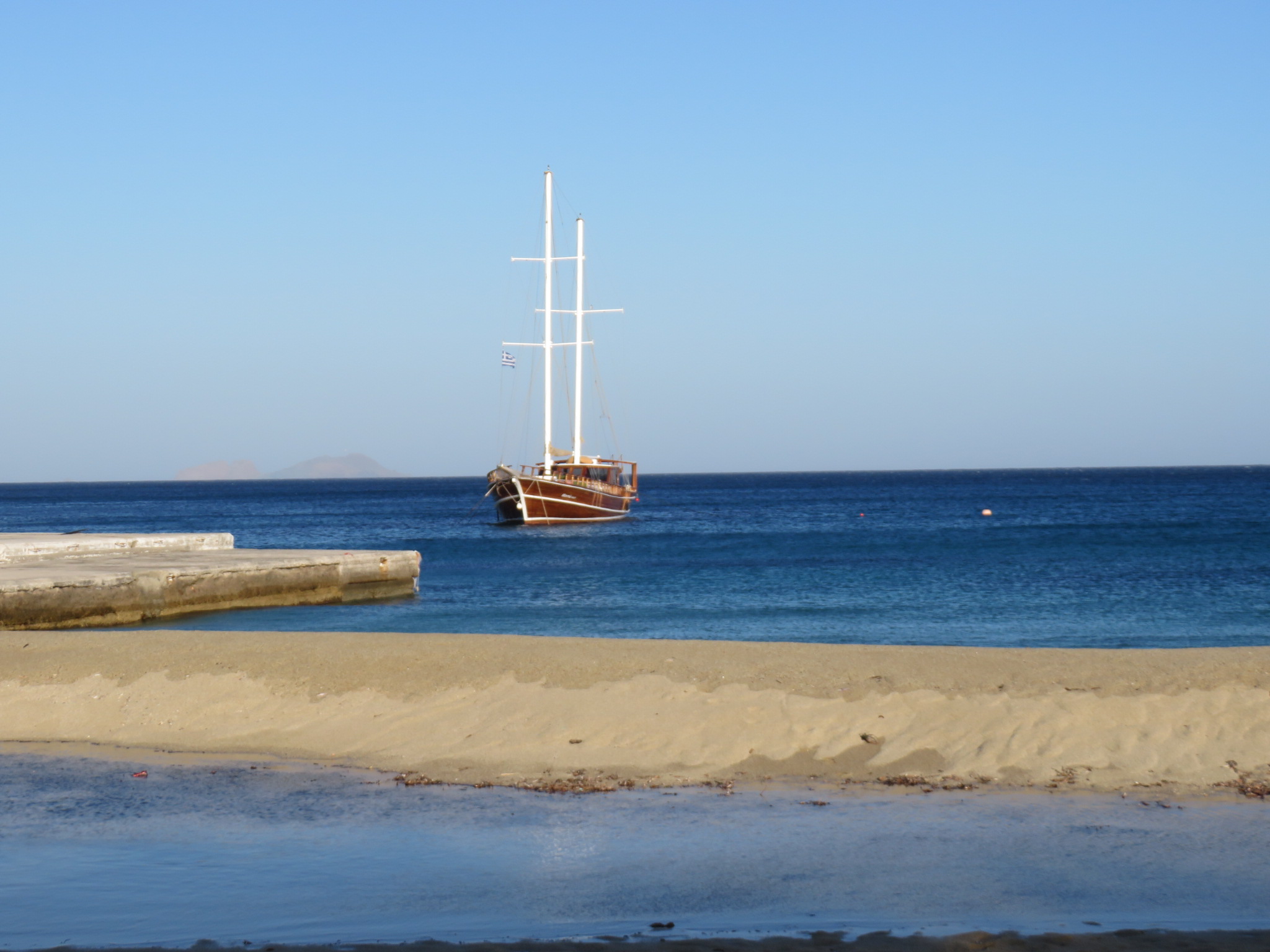
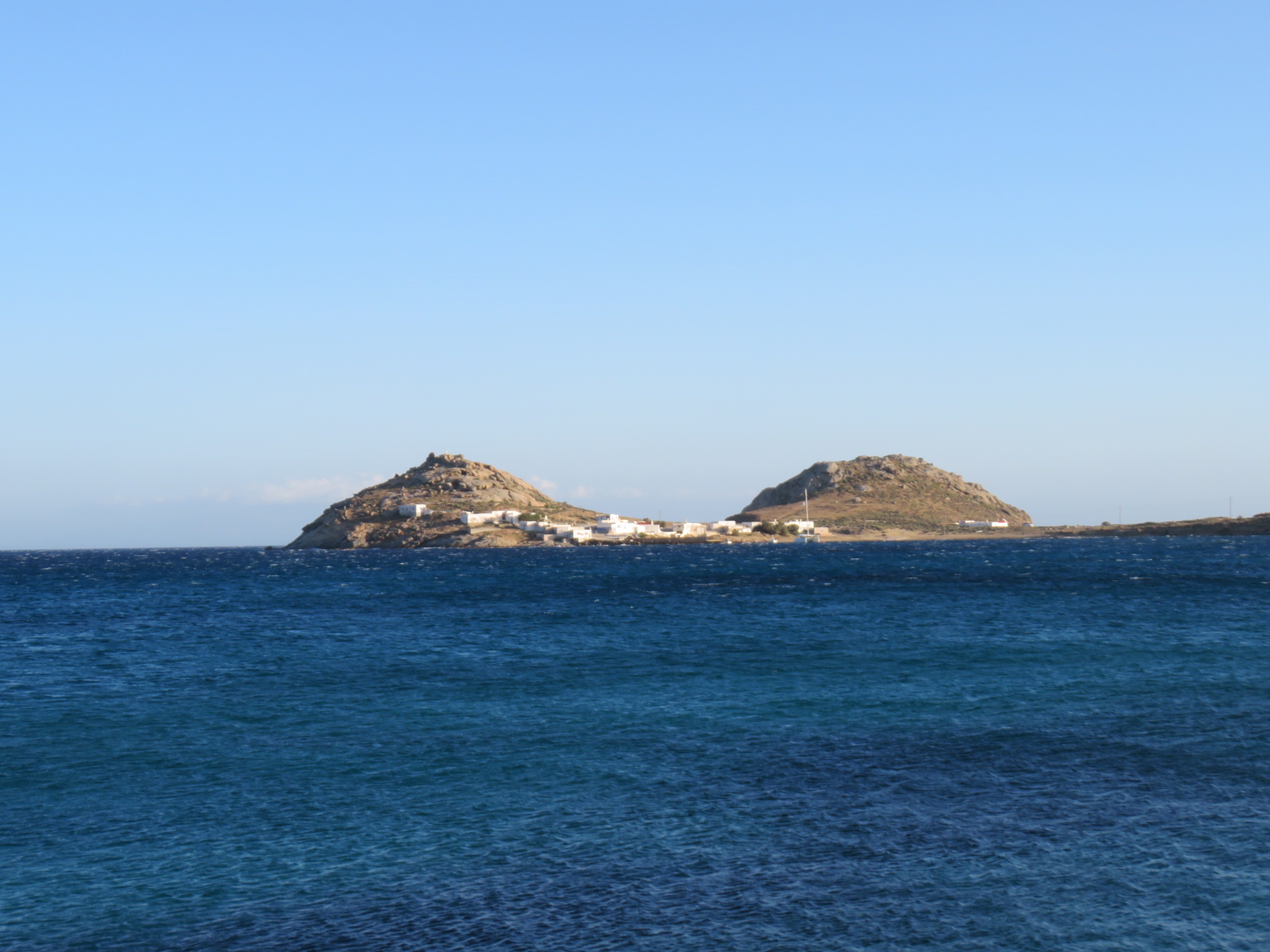
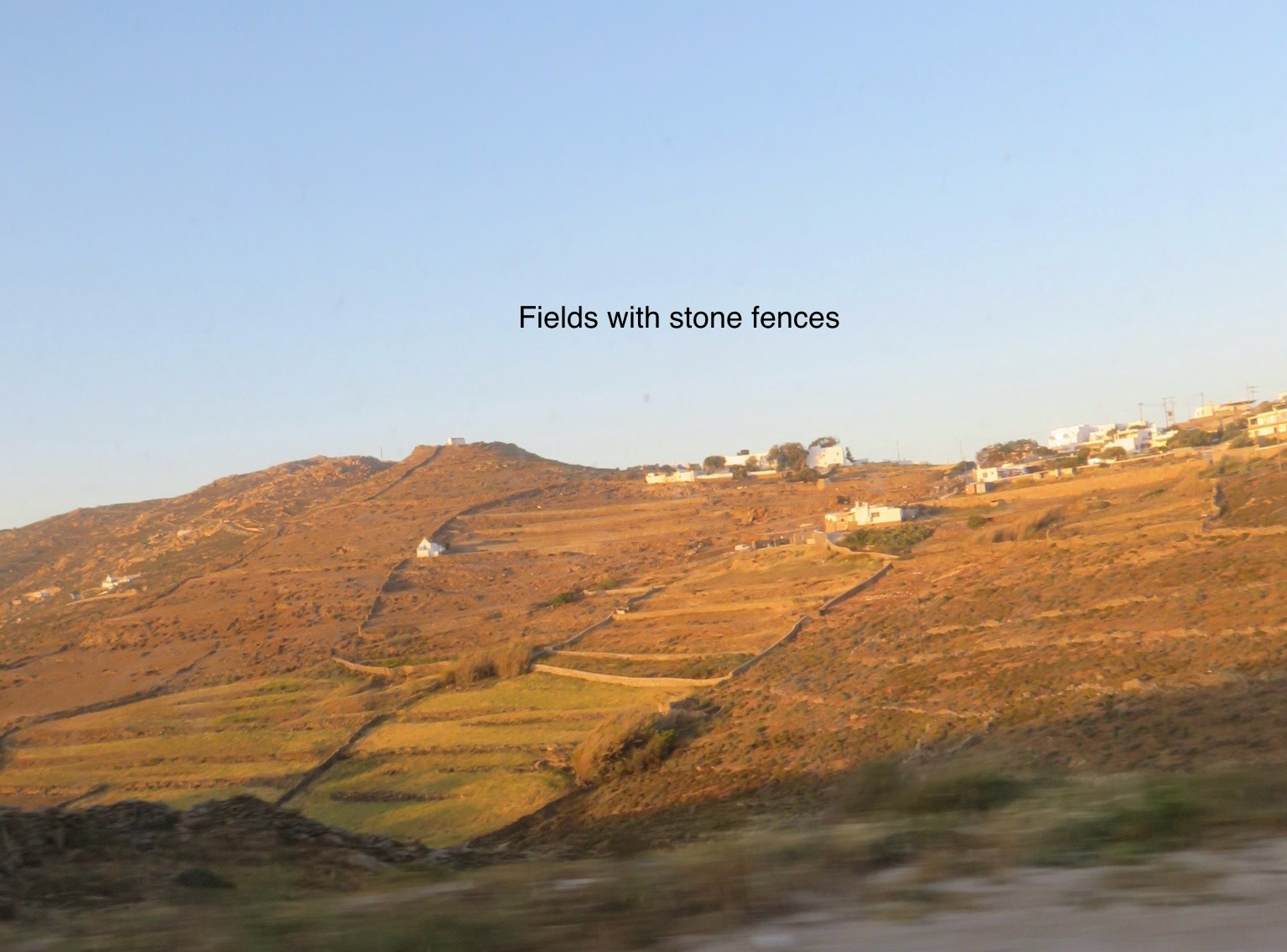
We left port around noon, and our first stop was in Mykonos at 6pm. The island was named for the son of the god of Delos. According to myth, the giants slain by Hercules were buried there, which accounts for the numerous huge rocks here. Many of the fields are. bordered by stone fences on the island.

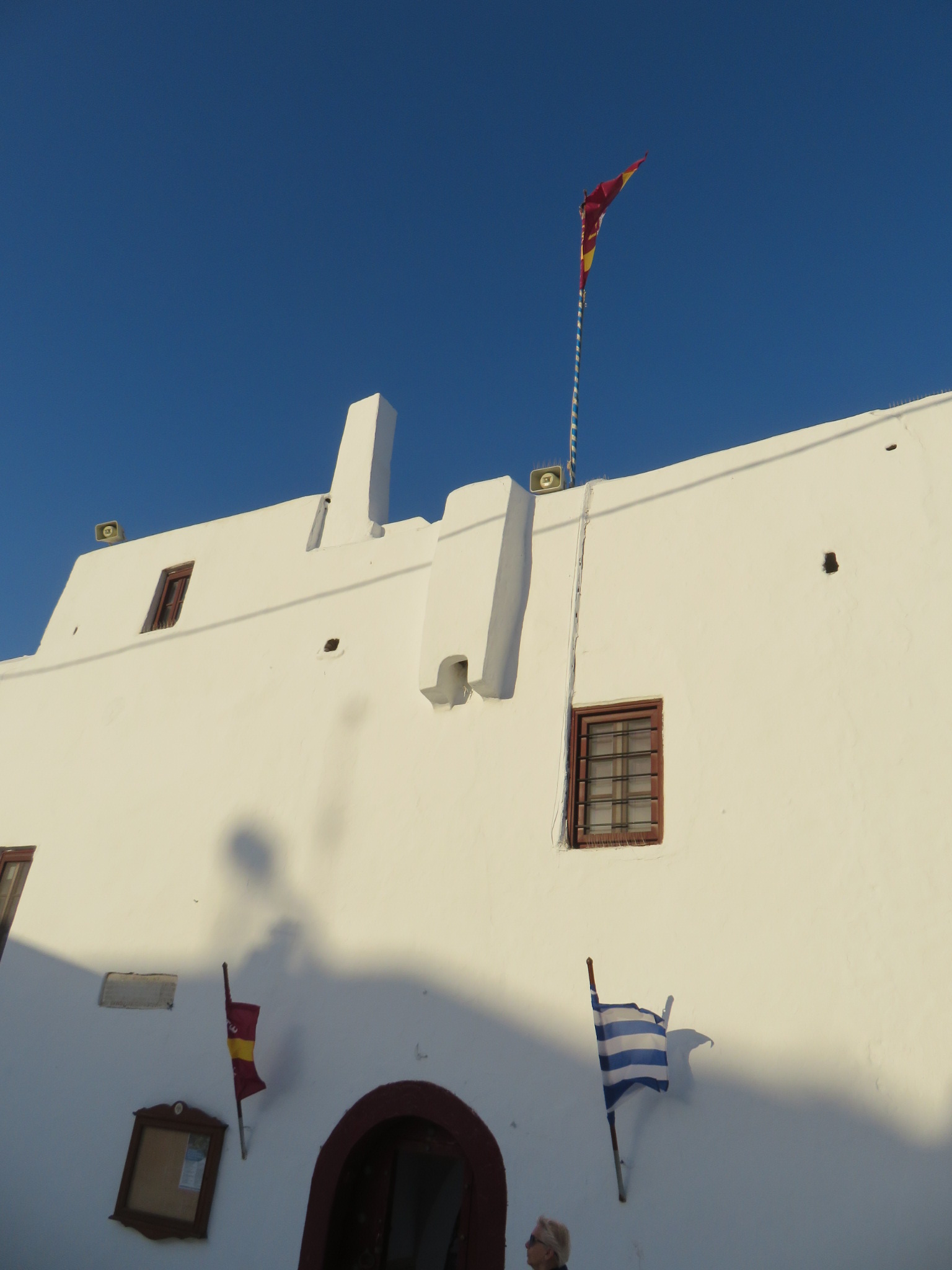
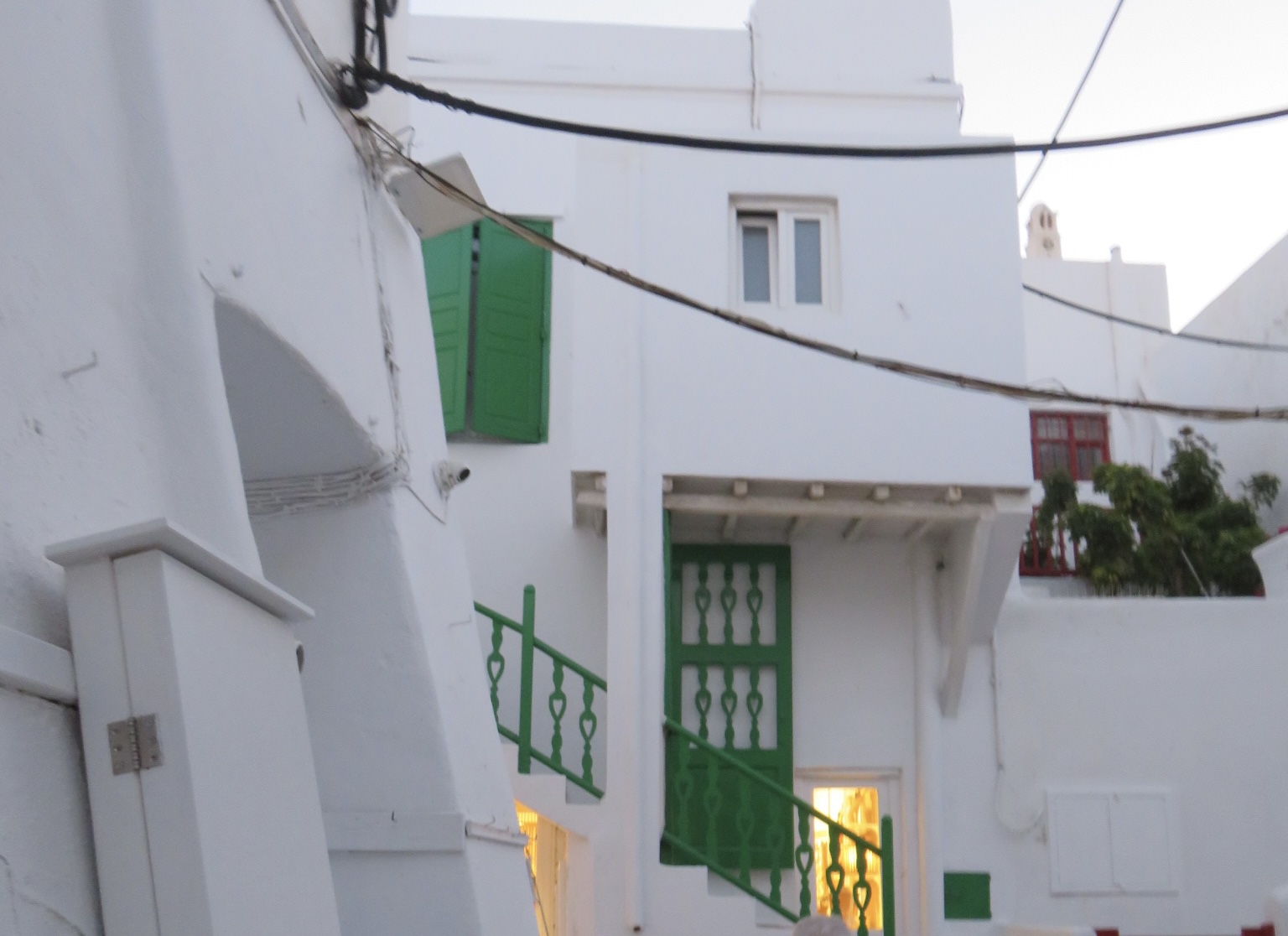
Most of the homes in Mykonos are painted white. In fact, a law passed in 1974 required all residents to use white paint, with blue trim. That law is loosely enforced now, but still the whitewash prevails. Using whitewash originated in the late 1930s during an outbreak of cholera because the white paint that is used contains limestone which is a powerful disinfectant. Also, the white paint keeps the houses cooler. For accents, the blue paint was less expensive than other colors. The blue and white are also the colors of the Greek flag, so very patriotic!

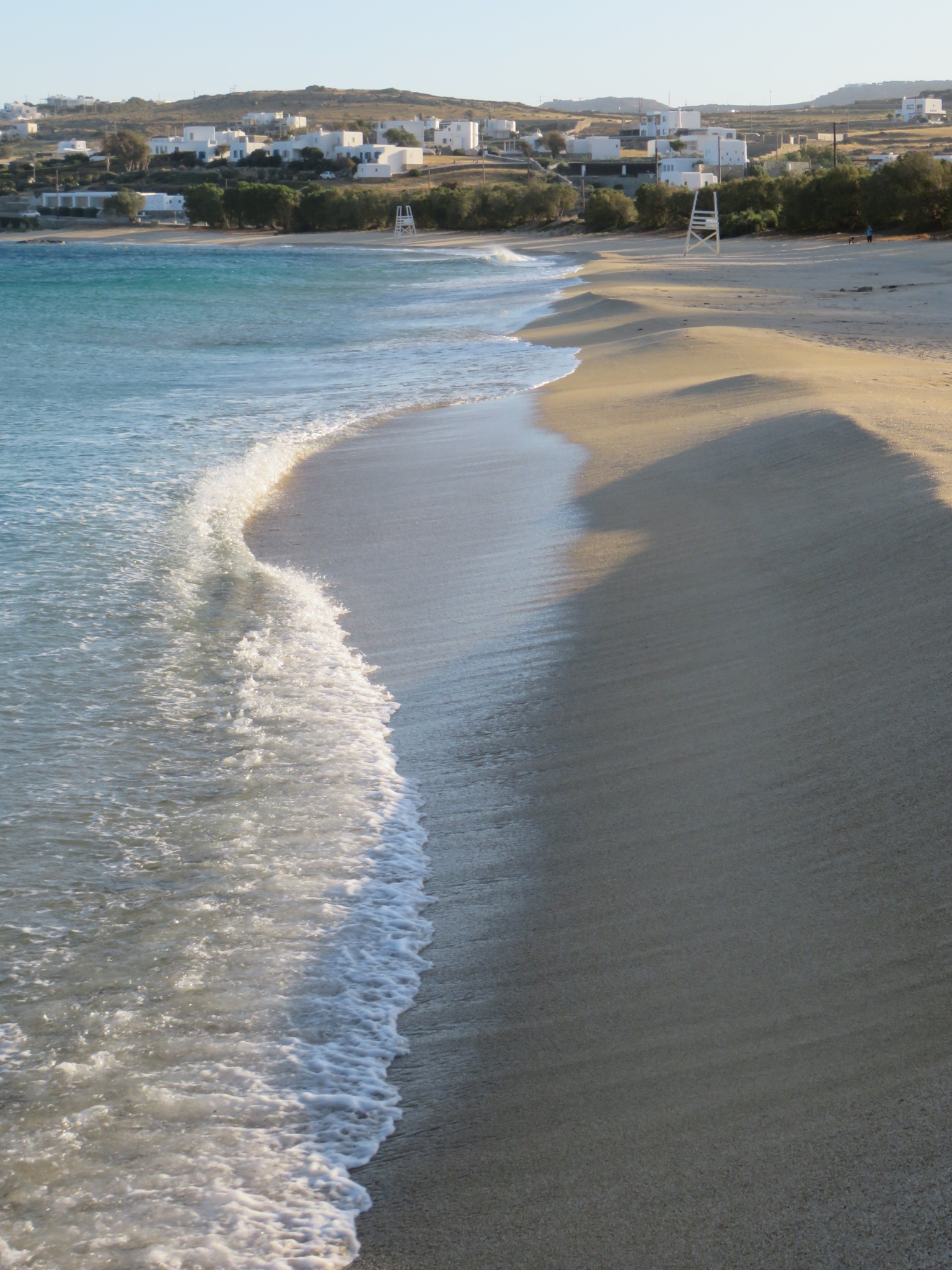
We first visited the beautiful Kalafati Beach, a favorite location for wind surfing as well as swimming and other water sports. Due to the strong winds, we only saw one person swimming today.

From there, we visited the village of Ano Mera and passed by the monastery of Panagia Tourliani, known for its collection of icons. The monastery was built in 1542, and restored in 1767. The exterior is white-washed, like many of the buildings on Mykonos. Because it is Holy Week for the Christian Orthodox church, we were not able to go inside to view them. Also in Ano Mera, we sampled some Greek coffee and loukoumades – similar to a fried donut with warm honey and cinnamon – very good.

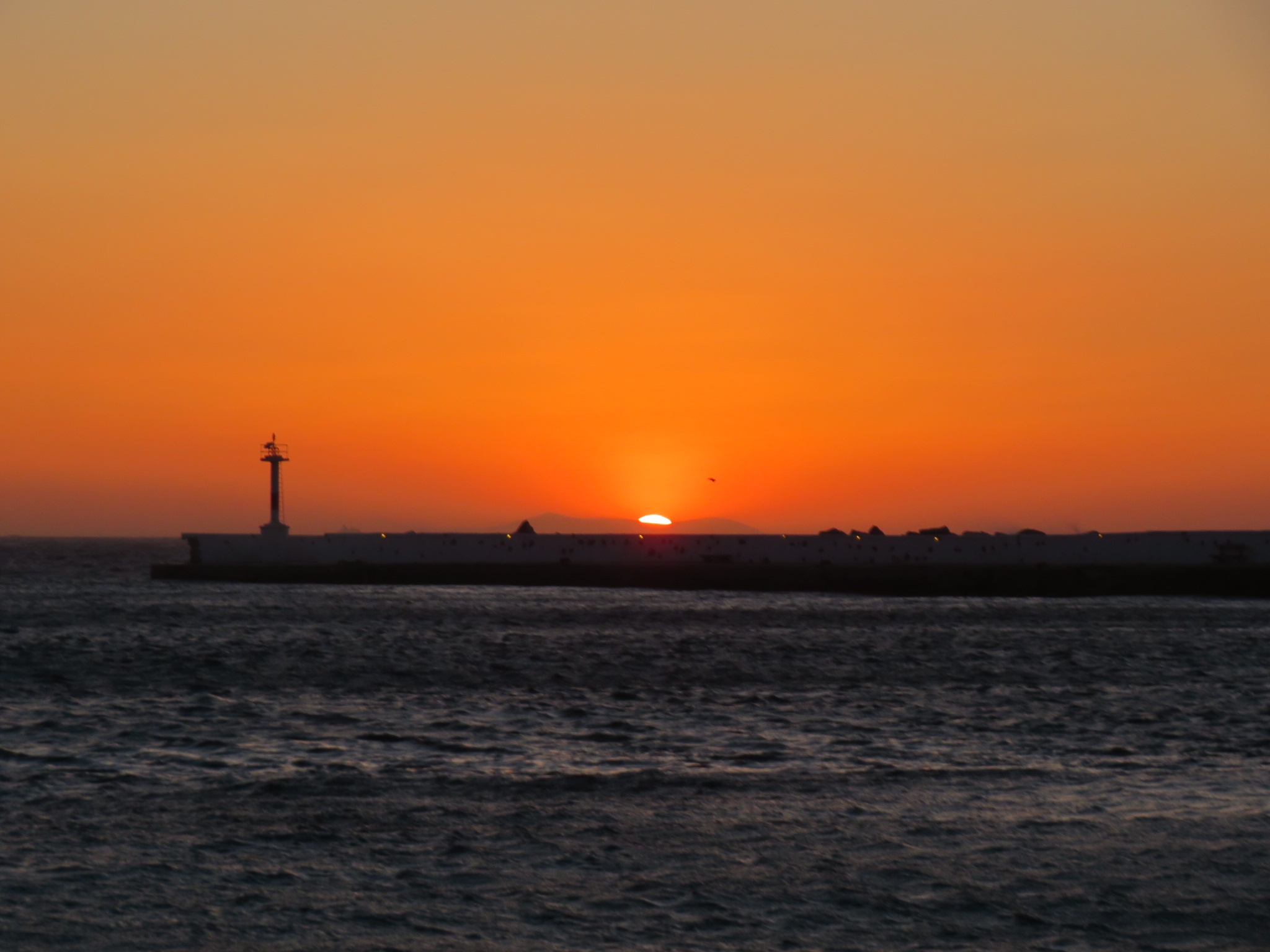
Then, to Chora, also known as Mykonos Town, the capital of Mykonos. In the old part of the city is a Folklore Museum, Lena’s House, that contains many exhibits of traditional costumes, furniture and personal items typical of Mykonos life in the late 19th and early 20th centuries. We enjoyed walking through the narrow streets with it’s whitewashed buildings and colorful doors, stairwells, and roofs, and even caught a beautiful sunset.

Little Venice is home to numerous houses that sit right on the edge of the land by the sea. These homes were probably constructed between the 13th and 18th centuries, when the island was under Venetian rule. The famous windmills of Mykonos are located just on the other side of the bay.

Posted in Uncategorized | Tagged , , , , , , | Leave a comment

Corinth, Greece

Sunday, April 28, 2024

We first drove to the Corinth Canal. The Isthmus of Corinth separated the Saronic Gulf (in the Aegean Sea) from the Gulf of Corinth. In ancient times, ships were dragged over the isthmus from one side to the other. The first attempts to cut a canal occurred in the 8th century BC, but proved to be too difficult. The Roman emperor, Nero, began building a canal in 67AD, using thousands of slaves, but he died before it could be completed. The current canal (almost 4 miles in length) was built between 1892 and 1893, and was financed by the Greek government. Only about 75 feet wide, it is too small for many modern ships to traverse. You will never see a Panamax ship here. Even with this limitation, there are over 12,500 transits each year.

We crossed the canal from Northern Greece to Southern Greece, known as Peloponesse, and headed to Ancient Corinth. Historical references to Corinth date back to the 8th century BC, although the site had been occupied for two millenia before that time. In 146 BC, Corinth was conquered and destroyed by Romans, then rebuilt by Romans a century later.

Ancient Corinth, the Roman city, was destroyed by an earthquake in 1858. A new city, New Corinth, was built southwest of the city, and it was destroyed by a 1928 earthquake. Rebuilt again, it was destroyed by fire in 1933. Perhaps it should have been renamed as well, to Phoenix, as it rose from its ashes.

Corinth was famed for its artistic innovations, including the invention of black-figure pottery. It was also known for its sailors and shipbuilding, specifically for triremes, wooden vessels with three banks of oars. It is believed that the trireme was invented by the Corinthians in the late 8th century BC. By the 5th century BC, Triremes were the dominant warship type of the eastern Mediterranean Sea.

We visited several archaeological sites in the old city. The Temple of Apollo originally had 38 columns, though only seven remain standing today. It is not known excactly when the temple was built, but it is thought to have been in the mid-6th century. It has probably been remodeled several times since then. The Glauke Fountain was formed by quarrying away surrounding bedrock, and was originally contained within a long limestone ridge, and may date as far back as the Temple of Apollo. The fountain was named for the daughter of Creon, the king of Corinth.

The Acrocorinth, or acropolis of Ancient Corinth, overlooks the site. The word acropolis comes from two Greek words meaning hill and city. The Acrocorinth is a monolithic rock used as a fortress, due to its easily defensible position on the hill. An acropolis was always built on a hill where there is access to water. Three circuit walls were added, as was a temple to Aphrodite. The temple enjoyed later lives as a church and as a mosque.

Posted in Europe | Tagged , , , , , , , , | Leave a comment