
October 10, 2023
St. Paul, Minnesota is 175 miles almost due south of Grand Rapids. Following the Great River Road adds about 80 more miles, all of them worthwhile. The drive takes you through several small towns in the heart of Minnesota’s lake country.
Aitken has been celebrating Riverboat Heritage Days every year in August since 1980. They also host the World Famous Fish House Parade in November. I must confess I haven’t been to either of these events yet.
Nearby Crosby is located near the Cuyuna Iron Range which was mined between 1907 and 1967. Much of the former mine land was converted to a park, The Cuyuna Country State Recreation Area. There are 25 miles of mountain bike trails, plus paved bike paths, as well as cross country ski trails and snowshoe trails in its 5,000 acres. Other activities include swimming, fishing, picnicking, and canoeing. It truly is a beautiful refuge in the middle of lakes country.
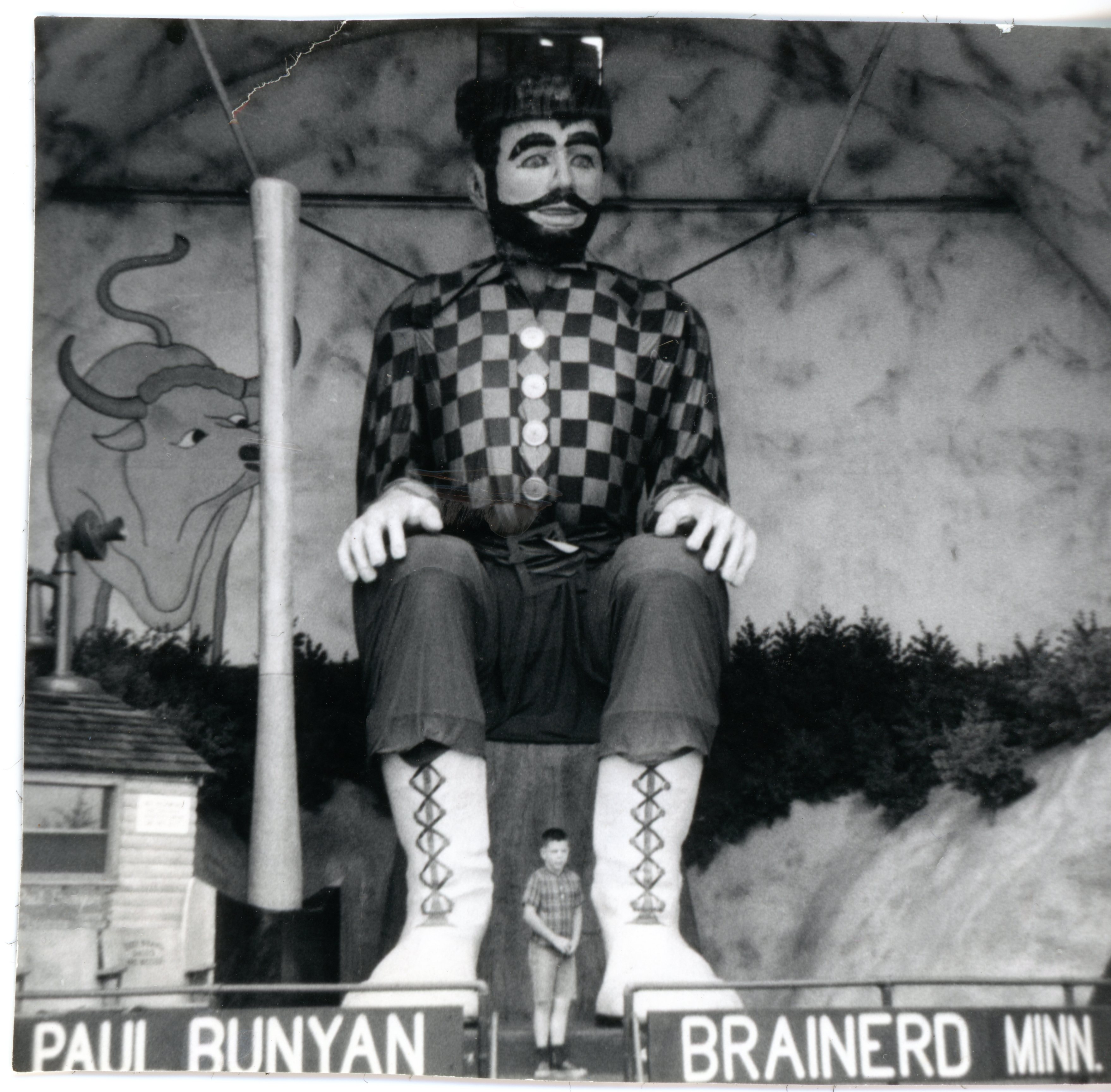
The cities of Brainerd and Baxter sit smack dab in the middle of Minnesota. When I was a child, Baxter was home to Paul Bunyan Land, with a talking Paul. Children would be startled to hear Paul call them by name (just tell the employee in the little hut what your child’s name was). This Paul Bunyan is seated, and measures 26 feet in height. The original park was built in 1950, and operated there until 2003, when it was closed. Paul, Babe and all of the rides were purchased by a family owned business and moved a few miles east of Brainerd.
The Crow Wing State Park is located at the confluence of the Crow Wing and Mississippi Rivers, home to the ghost town of Old Crow Wing, the first county seat of Crow Wing County. Following the French and Indian War of 1763, it became a strategic location for trading between the United States and Canada, and was mostly settled by Métis, children from the unions between Native Americans and Europeans, and by Ojibwe. The town died when the US resettled the Ojibwe to the White Earth Reservation in 1868. and the county seat was moved to Brainerd.
Historic Fort Ripley was established near Old Crow Wing in 1848. The first garrison arrived in 1849. Among their duties was supervising the government annuity payments to the Ho-Chunk and Ojibwe peoples. Life was generally peaceful, with any conflicts being resolved without going to war. A fire in 1877 destroyed much of the fort, which was then closed permanently. Fifty years later, the National Guard decided to build a new training site at the location.Camp Ripley trains personnel from the Minnesota National Guard, US Navy Divers, Minnesota State Patrol, Minnesota Department of Transportation, and the Department of Natural Resources. Sometimes, we hear the drone of UH-1 (Huey) helicopters as they make training flights along the Mississippi.
Continuing downriver, we drive through Little Falls, childhood home of Charles Lindbergh, “Lucky Lindy,” who made the first solo non-stop flight from New York City to Paris in 1927 in his airplane dubbed the “Spirit of St Louis.” The Charles A. Lindbergh State Park is home to the Charles Lindbergh House and Museum, located on the old family farm. You can tour the home which was built in 1906, furnished with many of original family objects; enjoy interactive exhibits, see historic flight footage and a replica of the “Spirit of St. Louis;” and see the water tower built in 1939 by the Works Progress Administration during the Great Depression.
You will drive by acres of farmland on your way south, interrupted by small and mid-size towns all along the river. The town of Monticello is home to about 2,000 trumpeter swans between mid-November and March, when the ice goes out. There is a natural open area on the Mississippi River that makes it the perfect home for the swans during the winter.


