
Wednesday, November 13, 2024
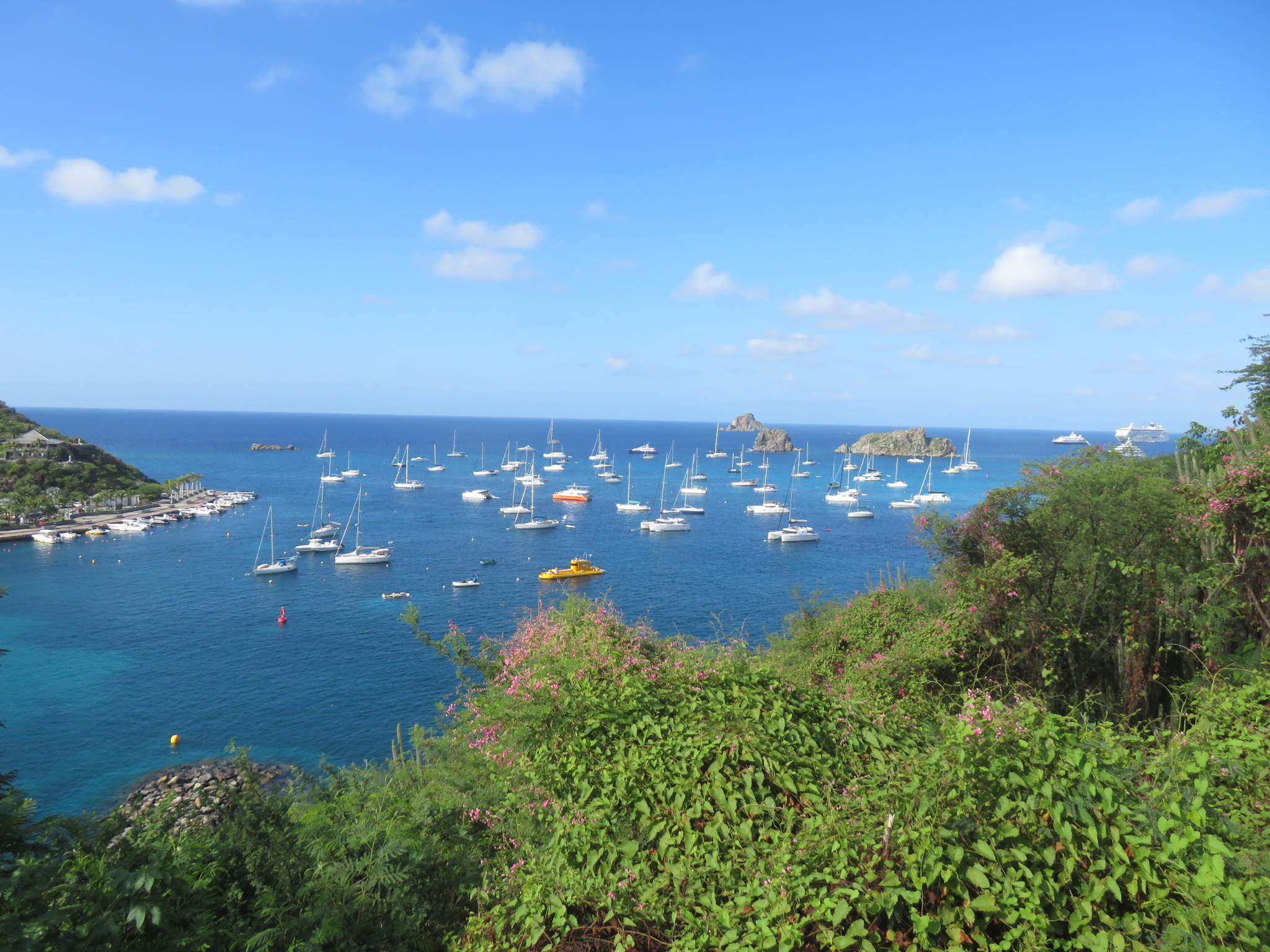
We arrived in port this morning around 8 am, and set anchor in the harbor. The harbor at Gustavia is too small for cruise ships to dock. Some cruise ships dock at nearby St. Martin, then passengers take a ferry to St. Barths. Crystal tenders us between the ship and land, which is much more convenient for us.
This volcanic island is circled by shallow reefs, with small islands dotting the surrounding waters.


Saint Barthélemy, aka St. Barts or St Barth, is a sovereign state of France. We’ll get to use up some of our Euros while we’re here. The island was given its current name by Christopher Columbus for his brother Bartolomeo. The Caribbean name for the island is Ouanalao, which means “pelican.”This was the name used by the Arawak and Taino tribes that visited here. It is thought that the island wasn’t permanently settled by them because of the poor soil and lack of fresh water.
First encountered by Europeans on Christopher Columbus’ second voyage to the Americas in 1493, this small island remained largely ignored by Europe until the mid-1600s, when a French settlement was started. Europeans quickly eliminated the few Arawak peoples who lived here. The island came under British control in 1744, reverted to the French in 1764, traded to Sweden in 1784, then sold back to France in 1878. Islanders were given full French citizenship in 1946.
The Nature Reserve of Saint Barthélemy (Réserve Naturelle de Saint-Barthélemy), which consists of almost 3000 acres of area on and around the island, was founded in 1996. The Preserve contains 45 species of coral, 165 species of fish, as well as sea sponges, anemones, sea turtles, and more.
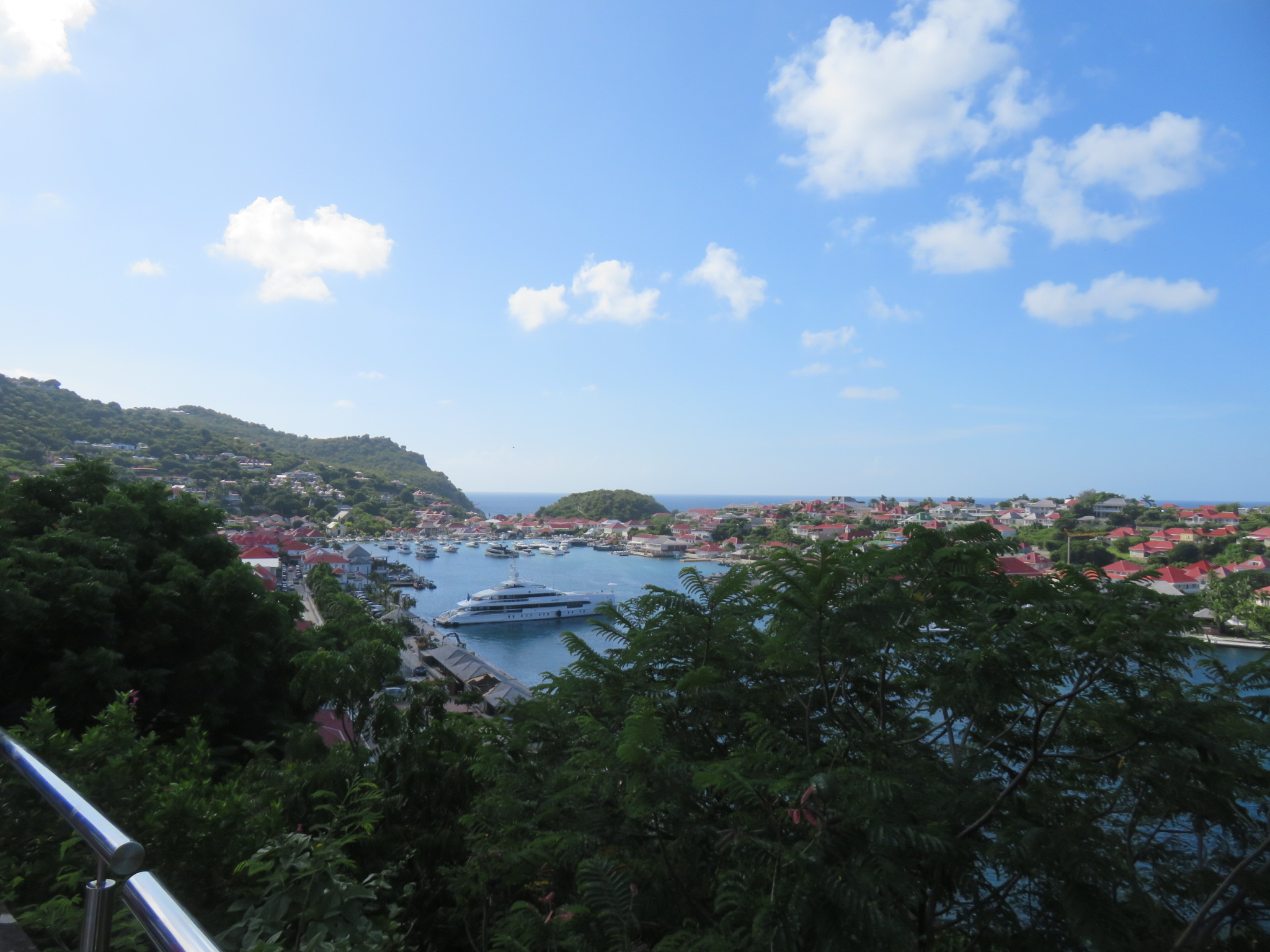
Today, we took a short tour of the island, visiting a few beaches and attractions. The island is less than 9 square miles in area, so we could see most of it in an hour or so. We enjoyed panoramic views of the harbor.

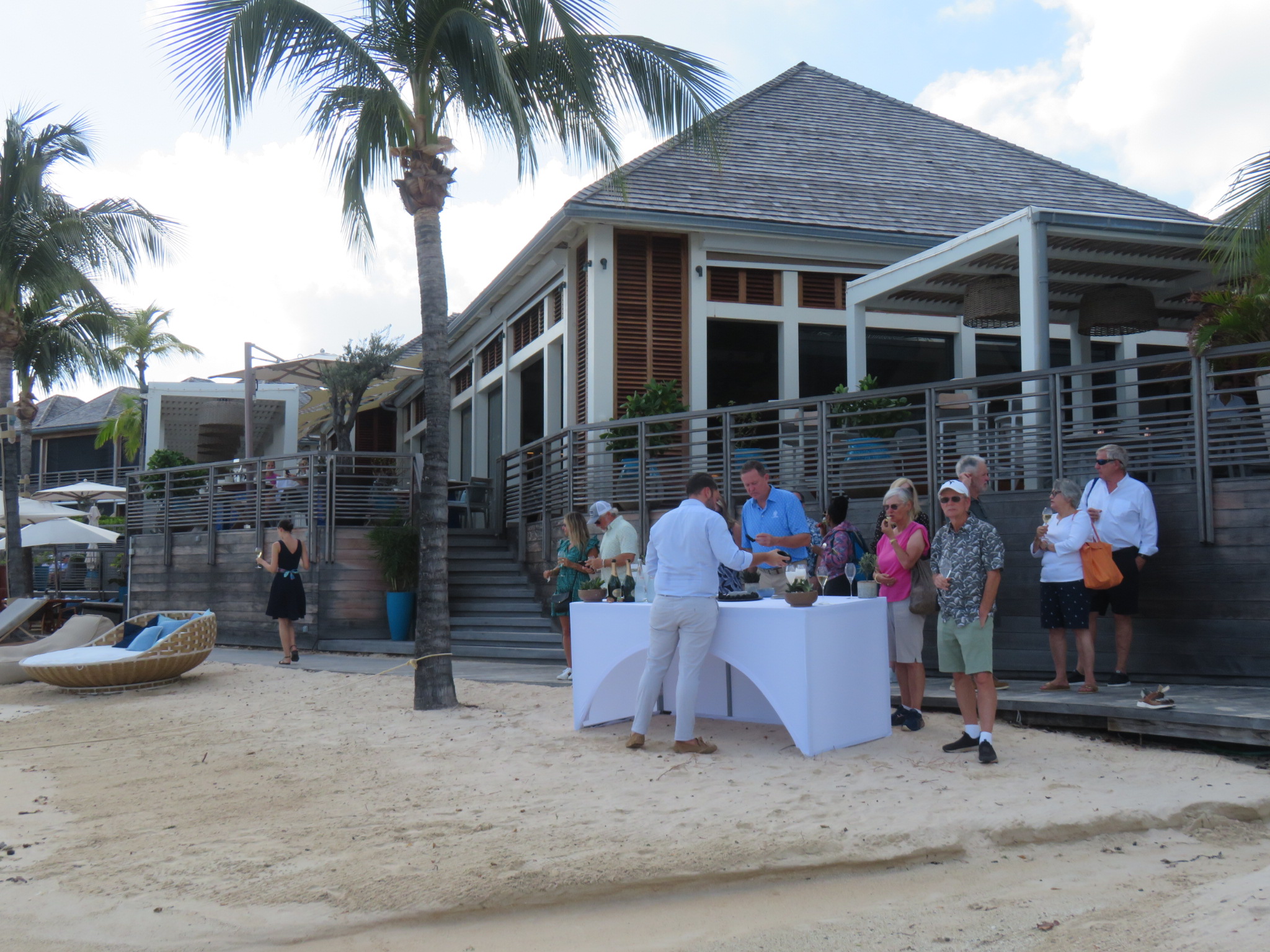
One of the highlights was champagne and canapes at Le Barthelemy Hotel, from its seaside restaurant, Amis St. Barth, led by Michelin-starred chef Jéremy Czaplicki. One of our canapes was a charcoal encrusted shrimp that was incredible – not your everyday blackened shrimp!


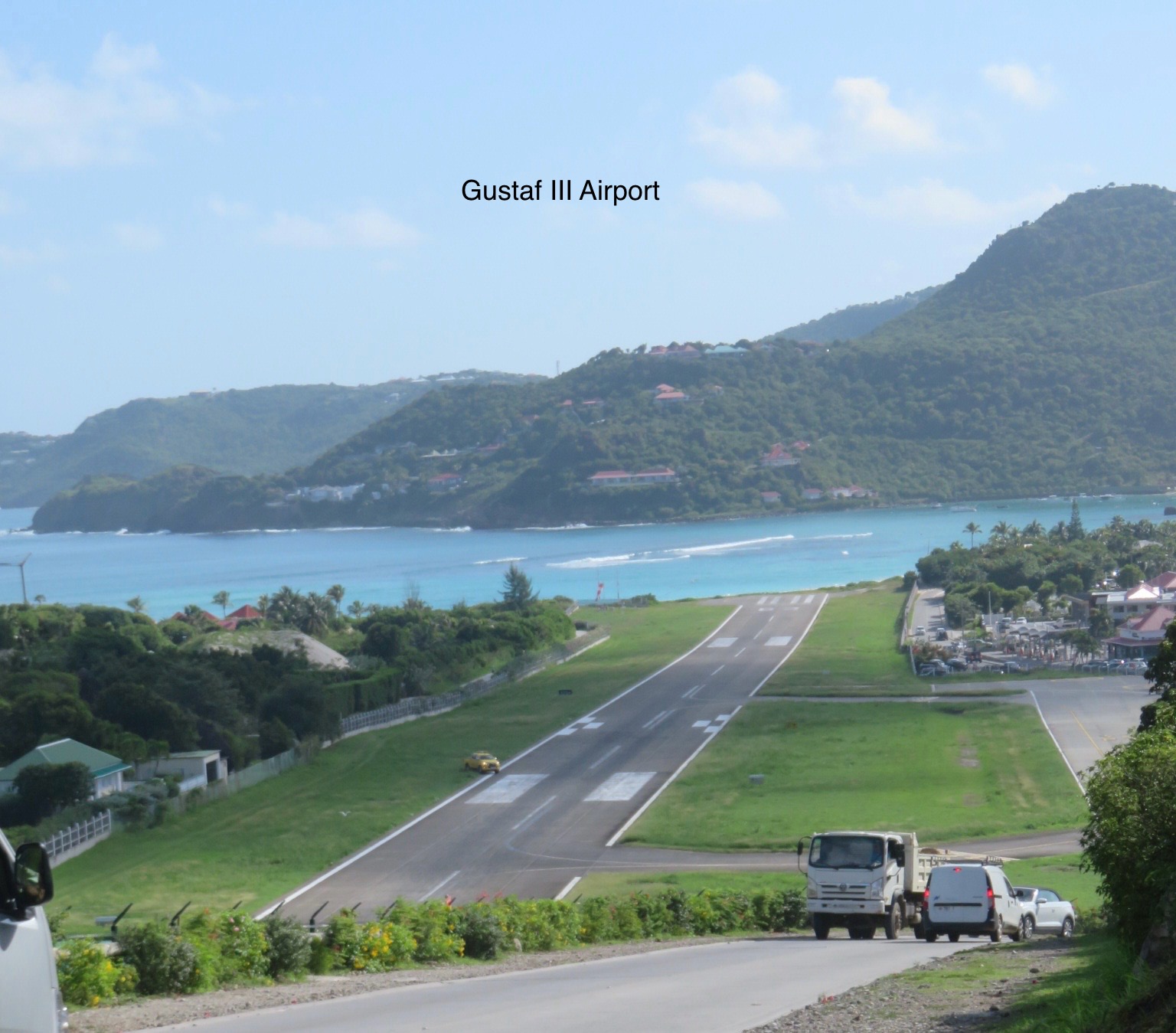
St. Barths has a tiny airport, Gustaff II Airport, with a steep runway, about 2,100 feet long, ending on the beach. Clearly, it cannot accommodate large aircraft, most carry 20 or fewer passengers. The largest plane to land there was a Douglas DC-3, but only once. In the past, cars drove on a road that passed directly under the approach path, but the road was moved about 20 years ago. At one time, the History Channel ranked it the third most dangerous airport in the world, but most experts consider it to be extremely safe. In any case, special certification is required for permission to land there. Last year, over 200,000 passengers landed here safely.
We followed that up with a little shopping in town before returning to the ship.
After our lovely day in Saint Barthélemy, we left port around 6 pm, on our way to Antigua and Barbuda. Entertainment tonight was David Shannon, the Irish singer, and like any Irishman worth his Guinness, he interspersed the songs with stories of his life and history of the songs he was singing.


 So Many Exciting and Beautiful Places!