Tuesday, October 7, 2025
Covering over 1200 square miles in area, Big Bend National Park is home to almost 1300 species of plants, numerous species of animals, birds, reptiles, fish and amphibians, and thousands of insects. On the southern side, the Rio Grande River forms 118 miles of the border between the US and Mexico. There are three canyons in the park, and an entire mountain range – the Chiso Mountains.
This area has been occupied by humans for about 12,000 years. Ranchers, miners and farmers began settling here in the 1870’s. In 1933, the state of Texas established the Texas Canyons State Park, later renamed Big Bend State Park. National Park status was conferred by President Franklin D. Roosevelt in 1944.
Although the park is currently closed due to a government shutdown, the roads and trails are still open to visitors. We made sure we had plenty of water and food before going to the park, since all facilities are closed. There were other people here as well, but not many. We have been wanting to visit for years, but it really is a long way from almost everywhere; our drive was over 600 miles. We weren’t willing to let a government shutdown interfere with seeing this gorgeous park.

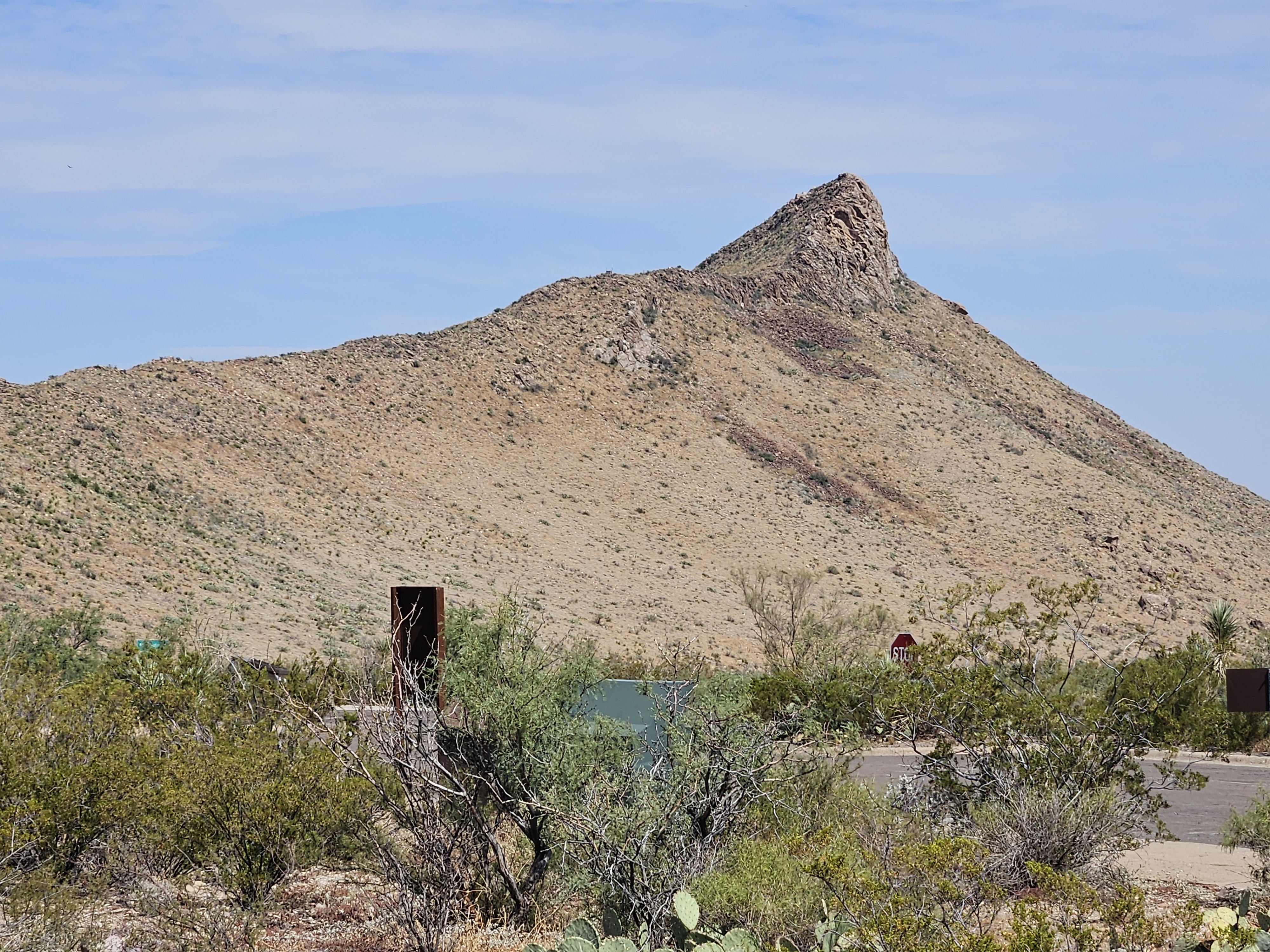

We visited the Fossil Discovery Exhibit at the spot where Dr. John Wilson, a paleontologist from UT Austin, discovered Eocene fossils from over 50 million years ago in the 1950s. This was in an area that had previously been declared barren of fossils by other paleontologists.
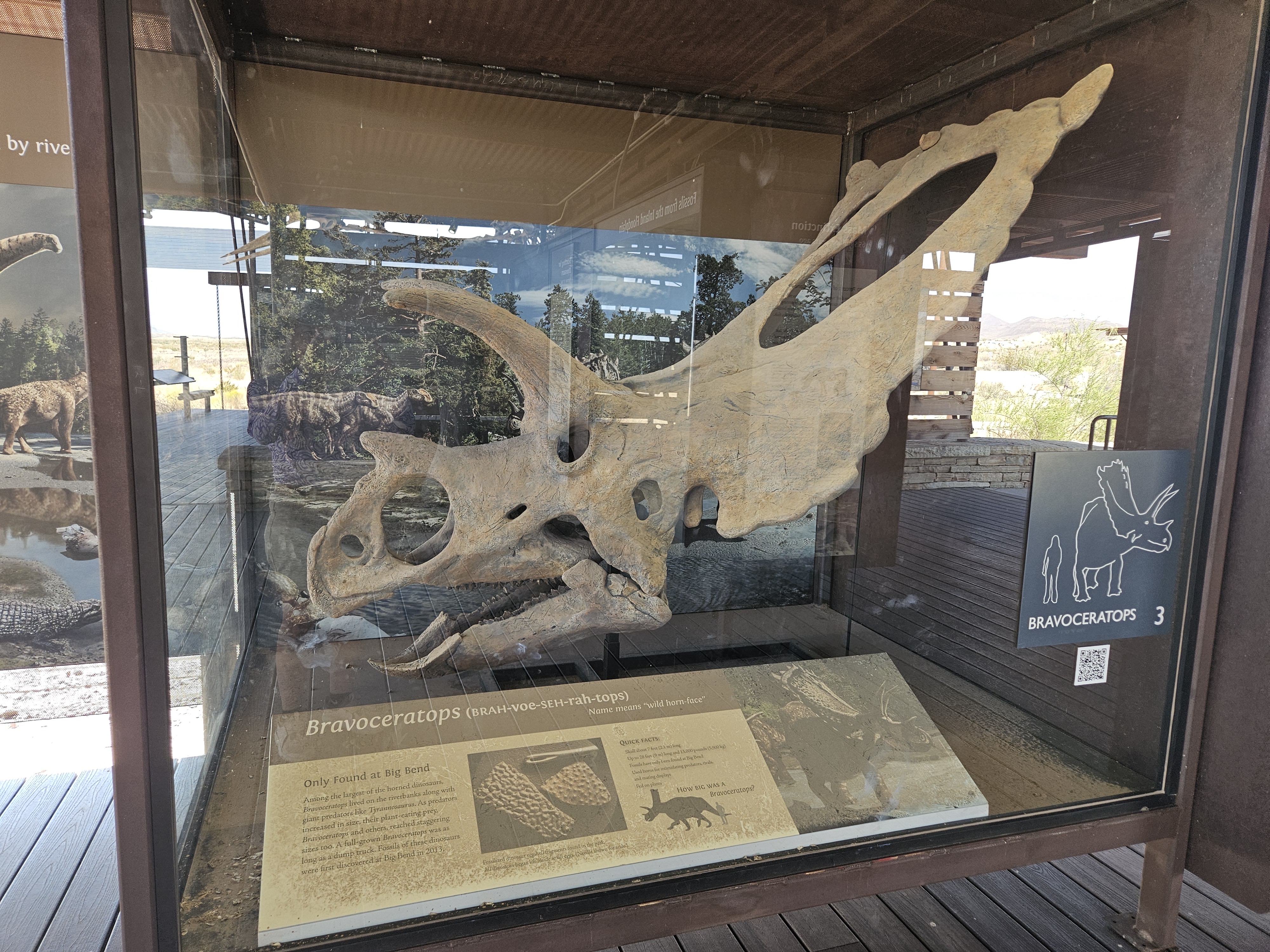
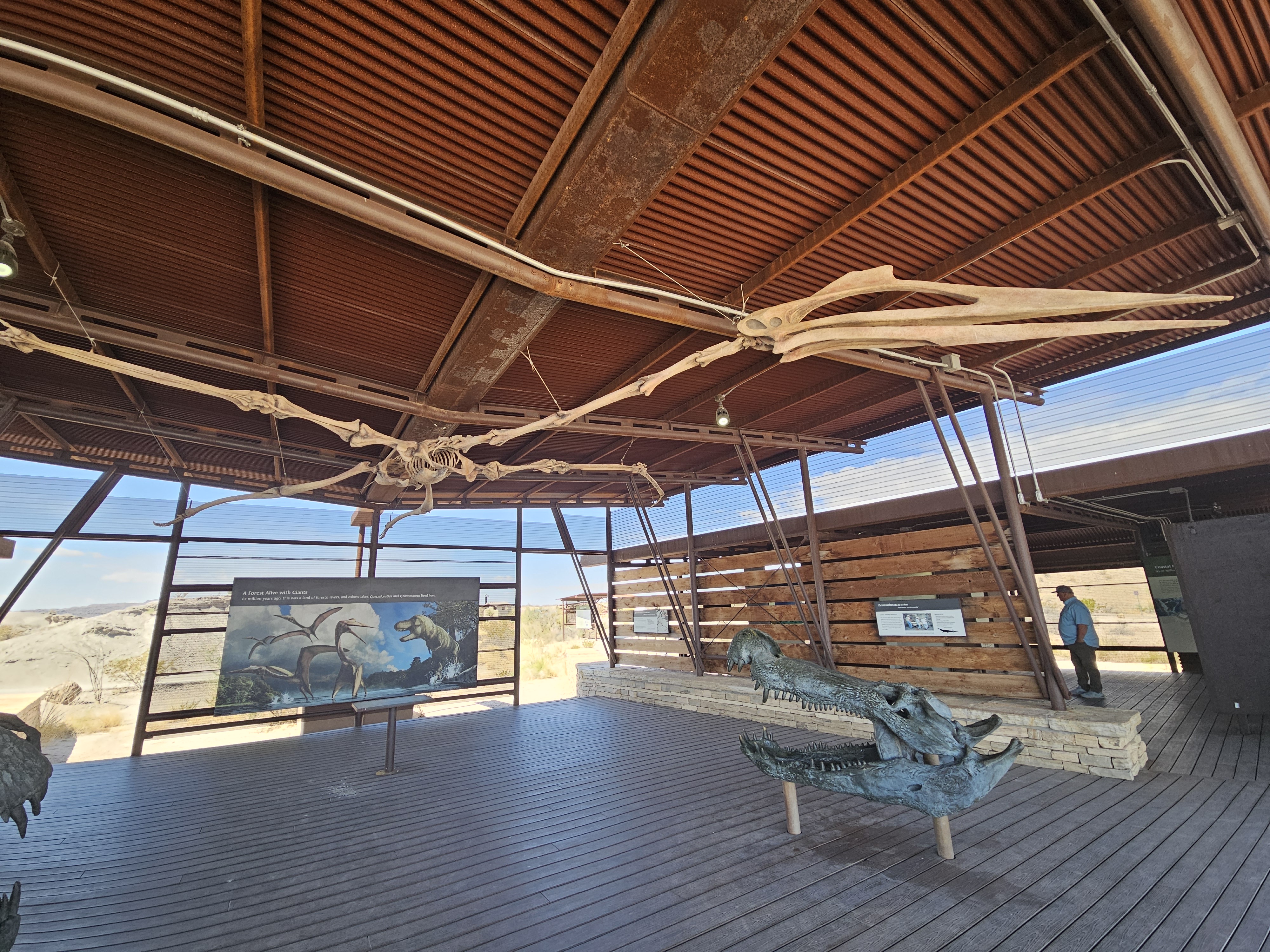
There are some fossils that have only been found at Big Bend, like the Bravoceratops, with a large frill and horns on its head. Many other dinosaur fossils were found, like T-Rex, and Quetzalcoatlus, possibly the largest flying creature ever, with a 36-foot wingspan.
This area was perfect for fossil hunting because of the environmental changes it had undergone over millions of years. At one point, it was covered by a shallow sea, then converted to coastal floodplains as the sea retreated. The Chiso Mountains, formed by volcanic activity helped to bury the remains of mammoths, saber-toothed cats, dinosaurs and more, preserving them until erosion exposed them.

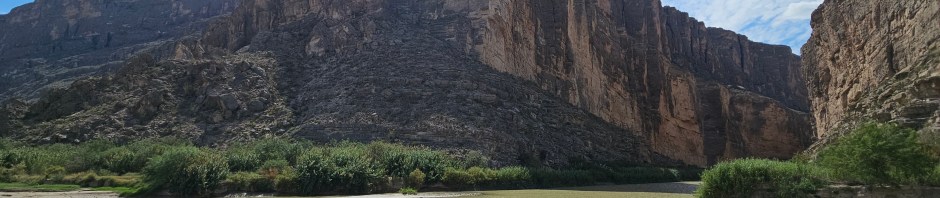
From here, we drove to Santa Elena Canyon for one of the most impressive scenes in the park. This canyon was formed by the Rio Grande River, with limestone cliffs of up to 1,500 feet in height. The canyon is 8 miles long, a popular spot for hiking, kayaking, rafting, canoeing and wildlife viewing. The river seems calm today, but that can change during heavy rains. The road we drove on is peppered with signs warning of potential flooding. No rain in sight today.

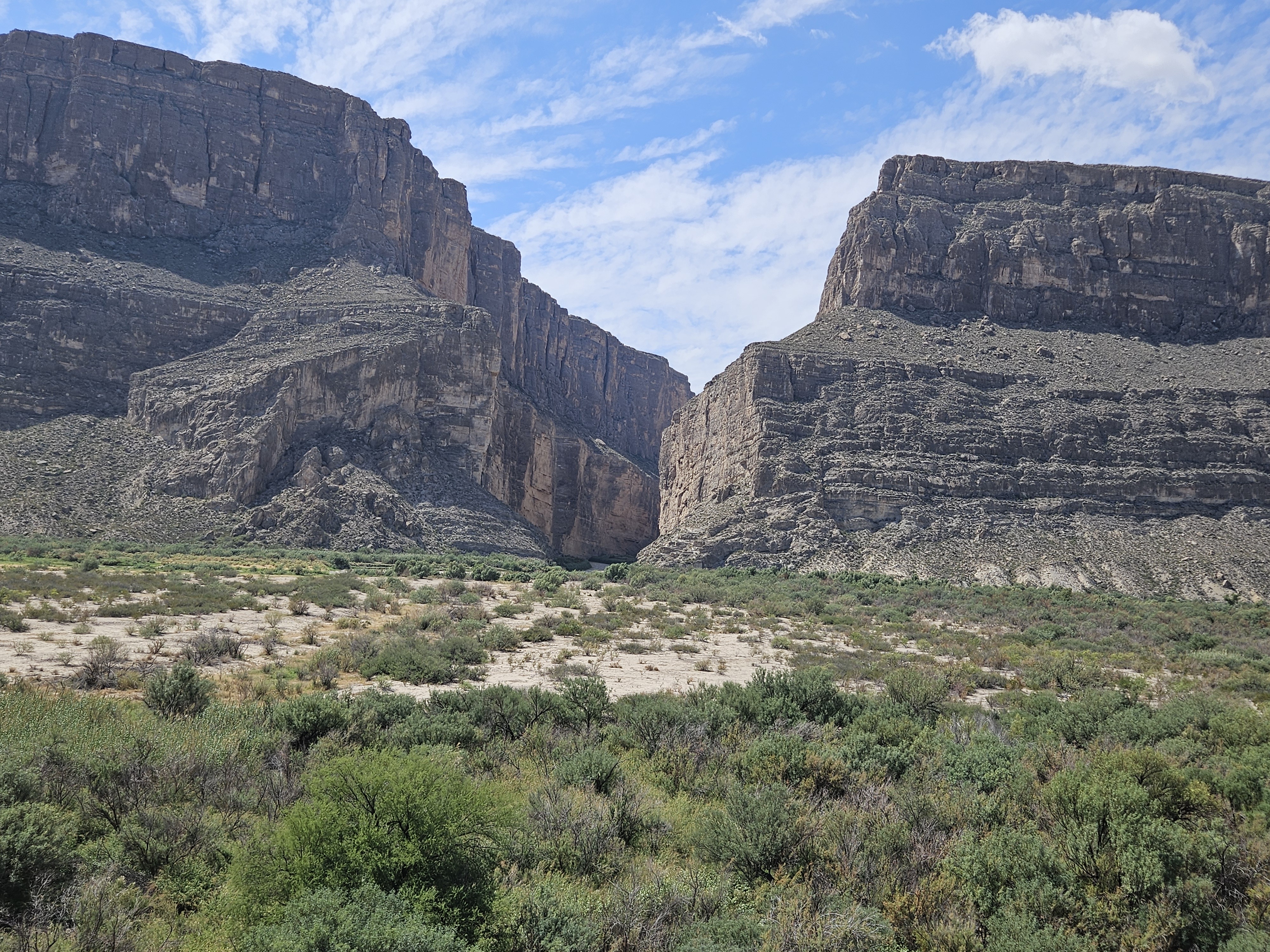

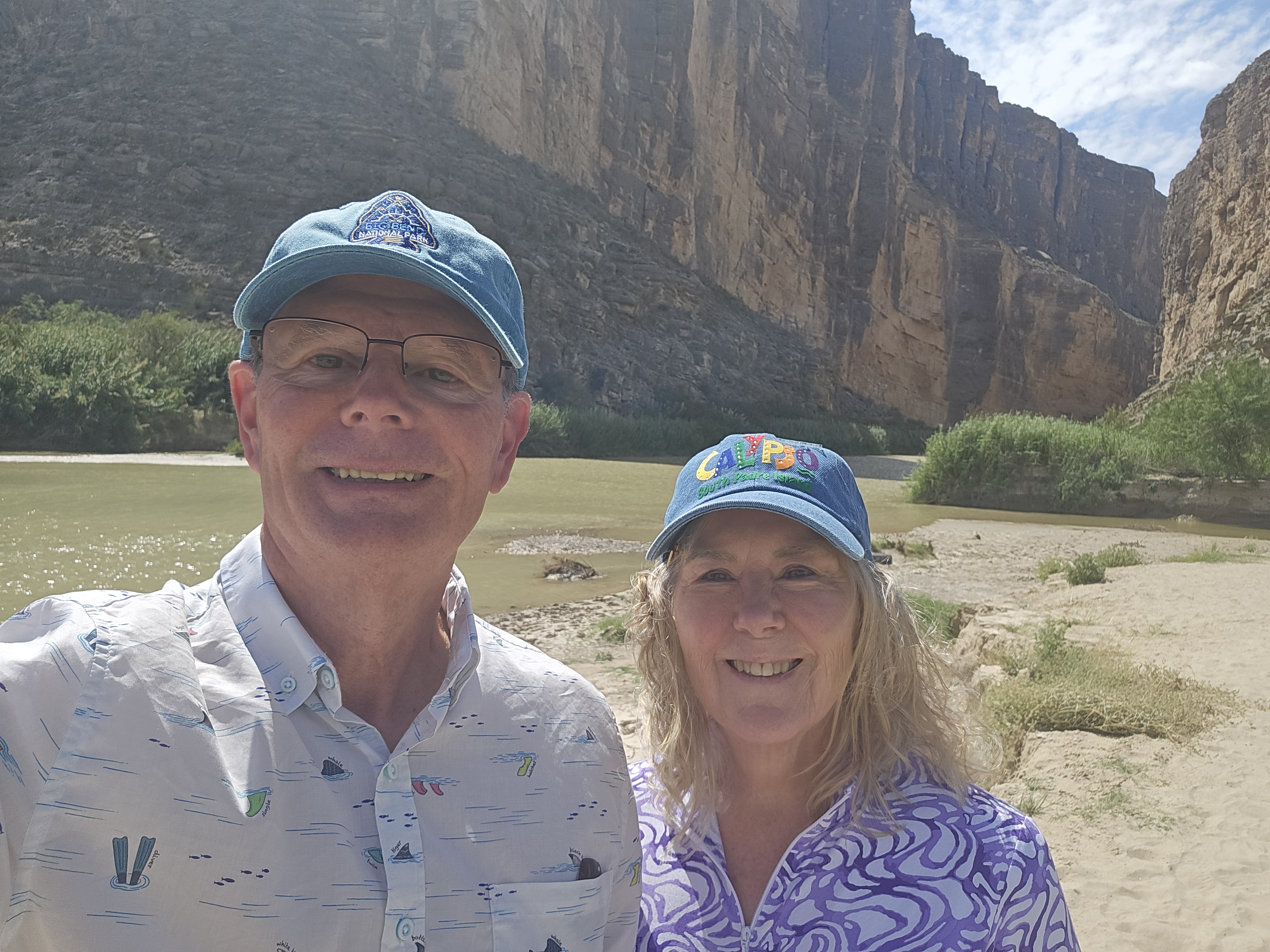

It really was worth the 10 hours of driving it took for us to get here.


