Monday, February 4, 2019
This is our last day in Peru, We paid a visit to the Gold Museum of Peru and Weapons of the World, originally a private collection belonging to Miguel Mujica Gallo, who was a prominent businessman and philanthropist in Lima with a desire to salvage Peru’s national patrimony. Gallo had been an ambassador in Austria and Spain, and for a short time the minister of foreign affairs in Peru. He opened the museum in the 1960s in the Santiago de Surco district. Later, he donated the museum to the country of Peru. Actually, it’s two museums housed in the same building.
However, a study by the Institute for the Defense of Competition and of Intellectual Property concluded that many of the artifacts are “false without a shadow of a doubt.” The Catholic University of Lima had earlier questioned the authenticity of 92 other objects. It doesn’t sound like they are blaming Gallo for these errors, but rather that he may have been defrauded himself, or that objects were stolen and replaced with fakes when collections were traveling abroad.
In 2002, an article appeared in Forbes Magazine, indicating that there were claims that up to 85% of the pieces are fake. Another article that appeared in the Star Tribune in 2009 indicates that efforts have been made to root out the fakes, and the museum claims that all pieces now on display are bona fide.
Regardless, these museums are fascinating, and would take hours to examine fully. The Gold Museum contains over 8,000 prehispanic gold and silver pieces, pottery and textiles, representing several civilizations throughout the centuries: Vicus, Moche, Sican and Chimu from the northern part of Peru. The collection is valued at over $10 million.


The Arms Museum contains 20,000 weapons from around the world, dating back to the 13th century. In addition to the weapons, there are uniforms, stirrups, helmets and so much more.


In the afternoon, I went out with a friend to do a bit of last minute shopping and exploring. We headed to the Plaza Mayor, or Plaza de Armas. Every old Peruvian city seems to have a Plaza de Armas, which is the center of the old city, usually anchored by the government centers and a Catholic Church or Cathedral.


We visited the Basilica Cathedral of Lima, built between 1534 and 1649. Francisco Pizarro laid the first stone for the church and carried on his shoulders the first log used in the construction. He officially inaugurated the church in 1540.


It seems fitting that Pizarro’s bones should lie here. Pizarro was assassinated in 1541, and His remains were interred in the cathedral courtyard. Later, his head and body were separated and buried in separate boxes underneath the floor of the cathedral. Three hundred fifty years later, a body believed to be that of Pizarro was exhumed and put on display. Almost a century later, in 1977, men working on the cathedral’s foundation discovered a lead box with the inscription “Here is the head of Don Francisco Pizarro Demarkes, Don Francisco Pizarro who discovered Peru and presented it to the crown of Castile.” A team of forensic scientists confirmed that the bones in the box were the indeed Pizarro’s, and that those on display were someone else’s.


Besides 14 side chapels, there are a number of burial vaults that have been excavated, including one of a young family.


We headed to Larcomar for dinner and even a little more last minute shopping before catching our insanely early flight tomorrow, at 2am.


Tuesday, February 5
We arrived in Minneapolis around 3pm, greeted by snow, ice and freezing temperatures. Oh joy!




 The house was restored in 1980s, and is used as an event center. The grounds are beautiful. You can hold a wedding there for about $5,000 (not including food, drinks and decorations). The house is full of artwork and furniture from the many families who owned it over the years. Sitting high above the city, it provides panoramic views of the fields and buildings here.


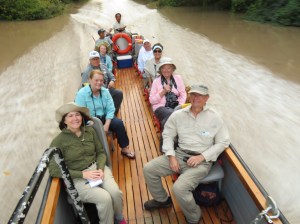 The normal daily schedule includes a short excursion (less than one hour) before breakfast, then a longer (two hour) excursion after breakfast. We return for lunch and perhaps a nap. There may be a lecture by one of the professional photographers, a naturalist or one of the other crew (we learned how to make Pisco Sours, a skill that will be used when we return home). Then, we take another two hour excursion around 4:00, returning shortly before dinner. We pick up our Pisco Sours, get a briefing about the following day, and then have dinner. Sometimes, we go straight to bed, because we know we’re getting up really early the next day. Sometimes, we manage to stay up for another hour. The days are very full.


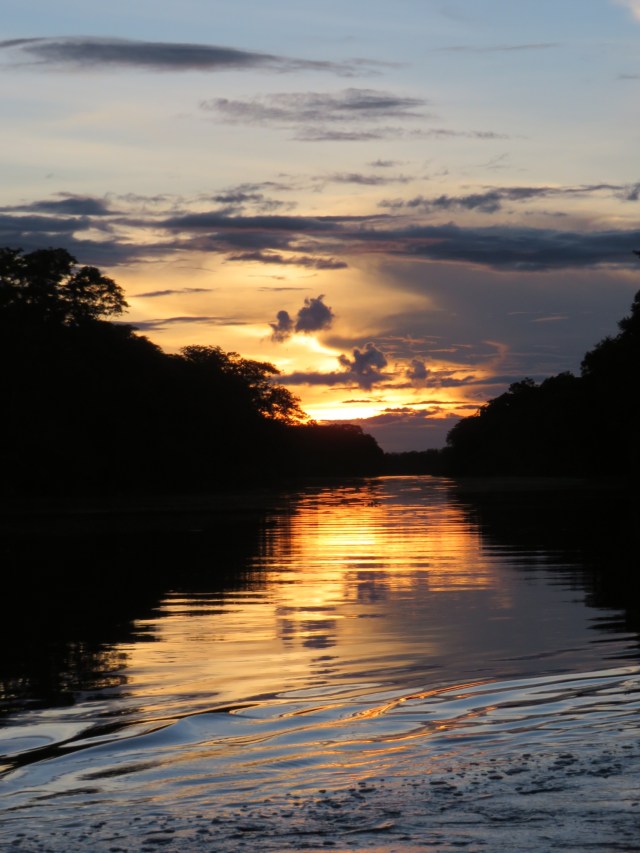


 So Many Exciting and Beautiful Places!