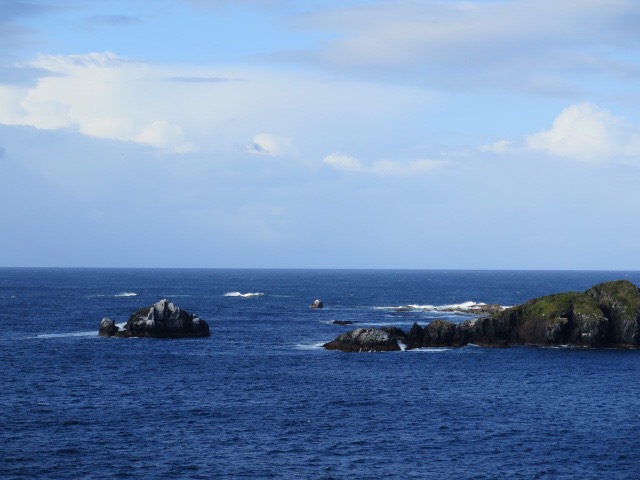
Fair Winds

Sunday, March 5, 2017

The original name for Buenos Aires was Real de Nuestra Señora Santa María del Buen Ayre (Our Royal Lady Saint Mary of the Fair Winds is my best guess. The city of Buenos Aires was founded in 1536 by Pedro de Mendoza, a Spanish explorer. It is the fourth largest city in the Americas, with a population of 3 million people.

Our hotel, the Hilton, is located near the old harbor. There is a canal that was used for shipping in the past, but now is used mainly for recreation. Many of the former warehouse buildings have been converted to shops and restaurants, and the area is now a promenade, with many citizens enjoying the beautiful day. There is a beautiful walking bridge cross the canal, Puenta de la Mujer (Women’s Bridge.) The design is supposed to represent a man leaning over a woman, doing the tango.

We spent the early part of the day at a Sunday market near our hotel. There are numerous such markets throughout the city, and they can stretch for blocks. You can purchase leather goods, trinkets, antiques, clothing, and on and on. Mark and I snagged some leather fedoras, and we look quite snazzy as we enjoy our last lunch in Argentina.

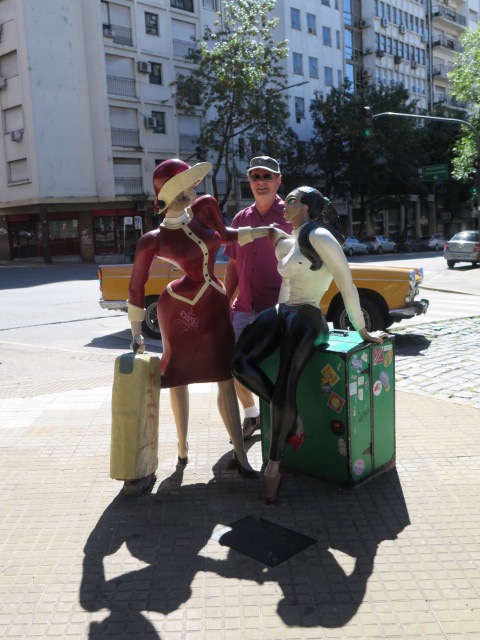
We also took a city tour, to see some of the highlights. Our first stop was at the square outside of Casa Rosada (Government House.) It was at this building that Madonna was filmed singing “Don’t Cry for Me, Argentina” in the movie, “Evita.” 

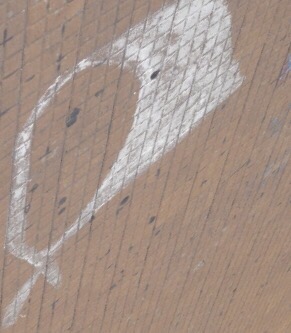
Between 1976 and 1983, many young people were “disappeared” during a corrupt military regime. Some of these young people were pregnant at the time. Once the baby was born, the mother was murdered and the child “adopted” by a military family. The group, Mothers of the Plaza de Mayo, was founded to try to find out what happened to their children and grandchildren. They protested at the Plaza de Mayo, across from Government House, trying to get some resolution. It’s estimated that 500 babies were stolen, and only about 1/4 have been reunited with their families to date. The street around the plaza is painted with “white scarves” as symbols of the grandmothers who marched here.
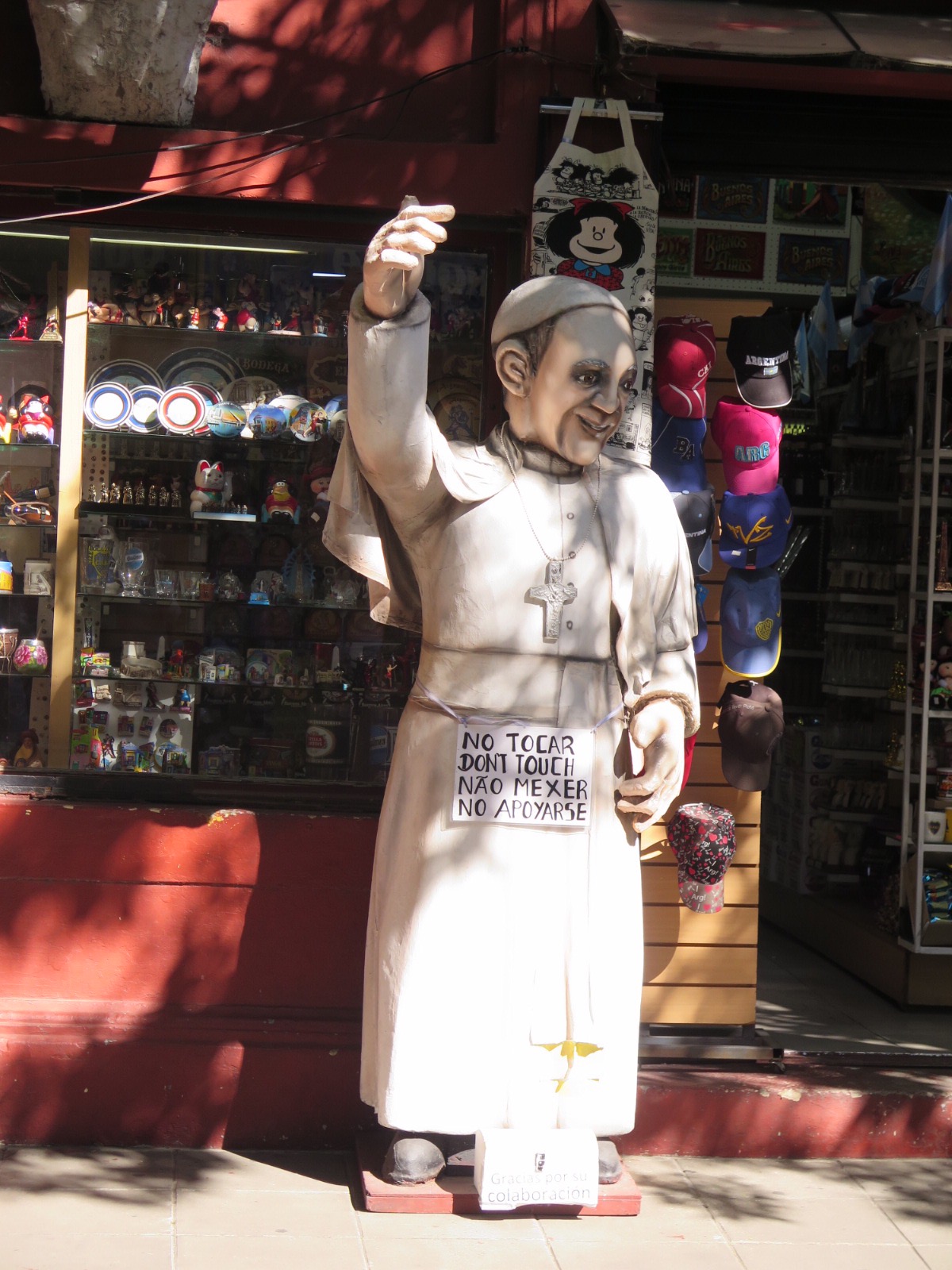
The Buenos Aires Metropolitan Cathedral, where Pope Francis served as Archbishop Jorge Mario Bergoglio, is located across from the square. The citizens are proud of their connection to the Vatican, and the pope’s image is displayed everywhere.

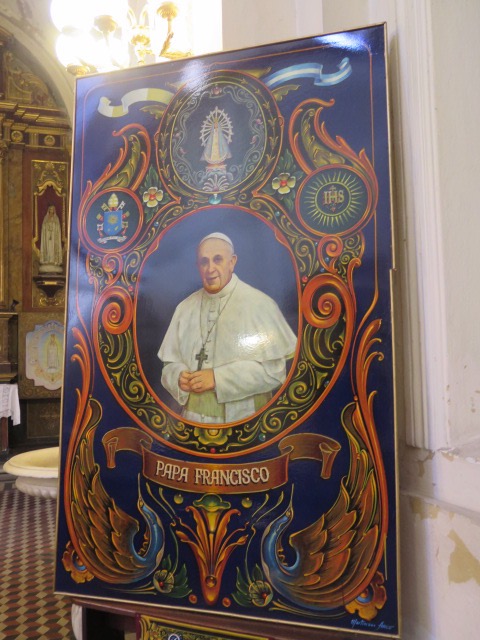
We spent a little time in the La Boca (the mouth) neighborhood, which sits at the mouth of the Matanza-Riachuelo River. Unfortunately, the river is contaminated by arsenic and lead from centuries of pollution. It’s a very poor neighborhood, overall. The area was settled by people from Genoa, many of whom worked at the old port here. Tango originated in this neighborhood, originally danced by men together while they waited to visit a prostitute. After the tango became popular overseas, men and women began dancing it together. 

This is a colorful neighborhood. The immigrants who settled here couldn’t afford traditional building materials, so they used metal and wood from shipping containers at the dock. They also used the remaining paint after a ship was repainted, and that was rarely enough to paint the entire house, so many are multi-hued.
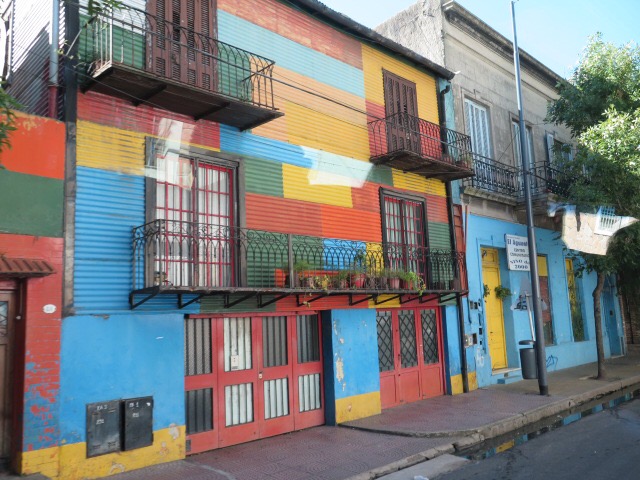
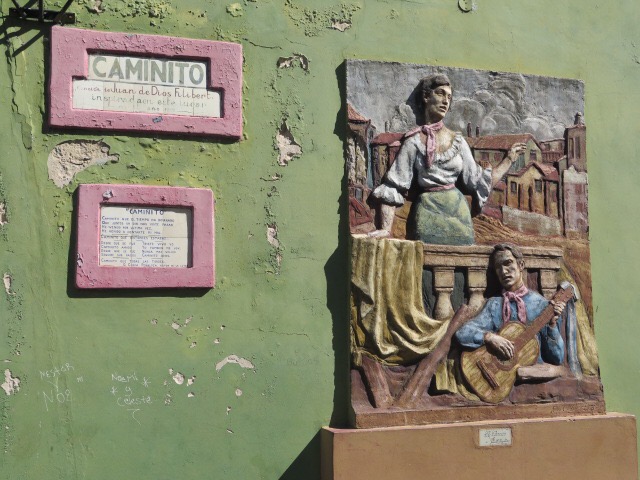
We walked Caminito Street, home to many artists.

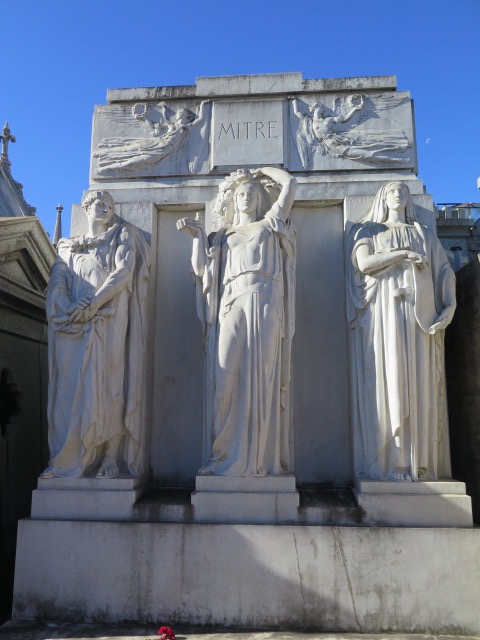
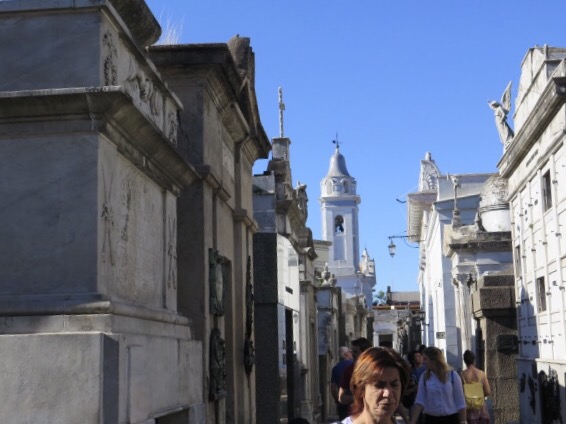
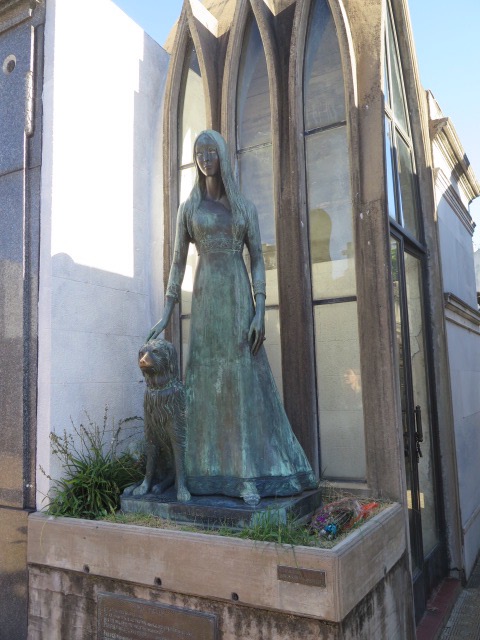
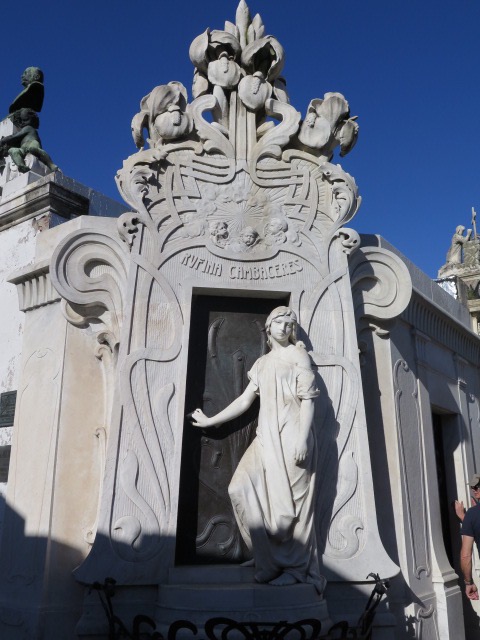
Our final stop was at La Recoleta Cemetery, the final resting place of many famous and/or wealthy people, including Eva Peron. Eva was hated by the military, and after she died, they stole her embalmed body and attempted to hide it from the public. However, the people always found the location, and came to visit and leave flowers. For almost 20 years, it was moved from place to place, then, with the assistance of the Vatican, to Milan, Italy. She was finally returned to Argentina, and is buried in her sister’s family mausoleum, the Duarte family.
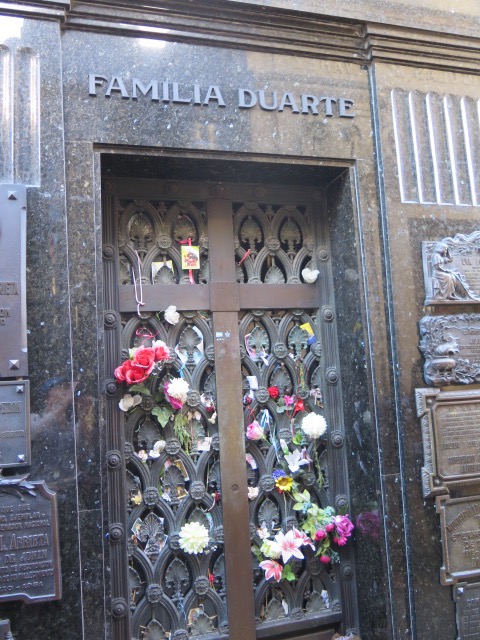
Mausoleums here can sell for as much as $150,000, although many are only $50,000. They can be very elaborate or quite simple, and can be as deep as almost 50 feet. It belongs to the family in perpetuity. They can be bought and sold just like houses. We noticed some that appear to be abandoned. If that’s the case, the cemetery tries to locate any remaining family members, who may not even be aware of the existence of the mausoleum. If no family members can be located, the cemetery waits another 20 years, then puts it up for resale. 

After a bit more touring, we returned to the hotel in time to catch our ride to the airport. An overnight trip brings us home on Monday morning, March 6.
Posted in Argentina, South America Travel | Tagged , , , | Leave a comment

Iguazu Falls 

Friday, March 3, 2017

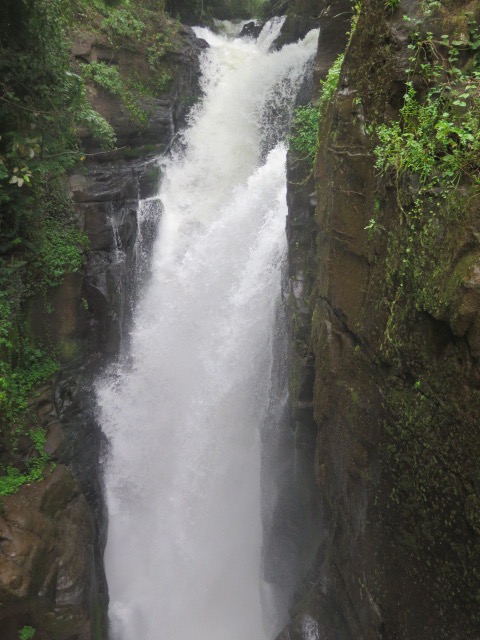
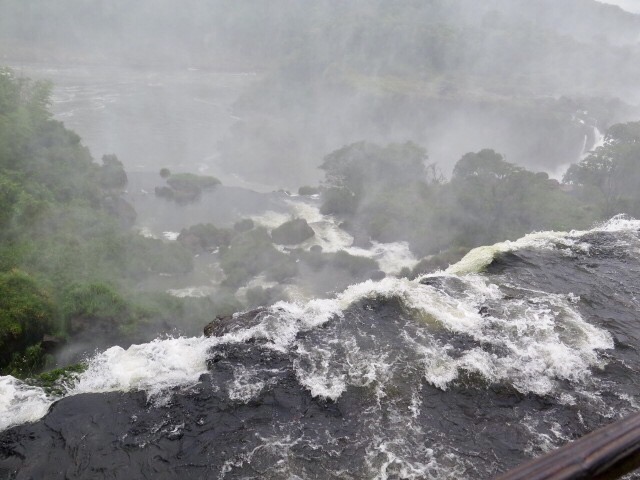
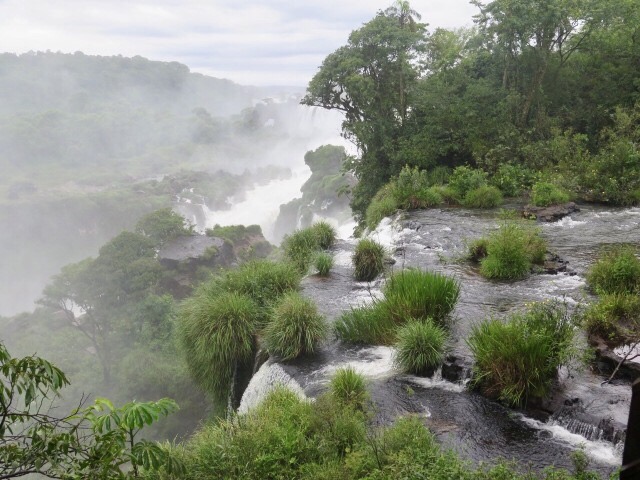
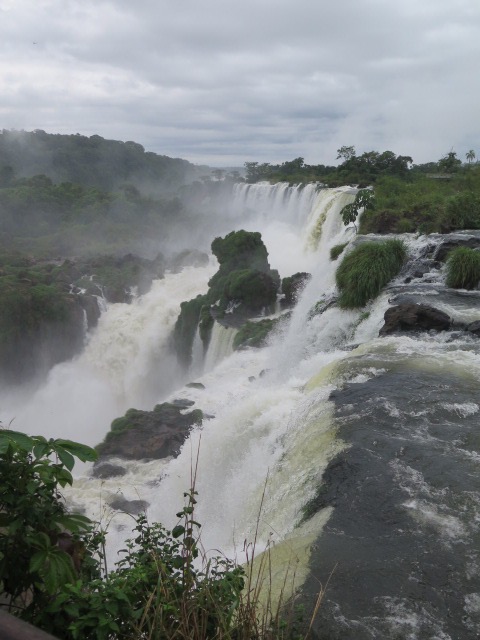
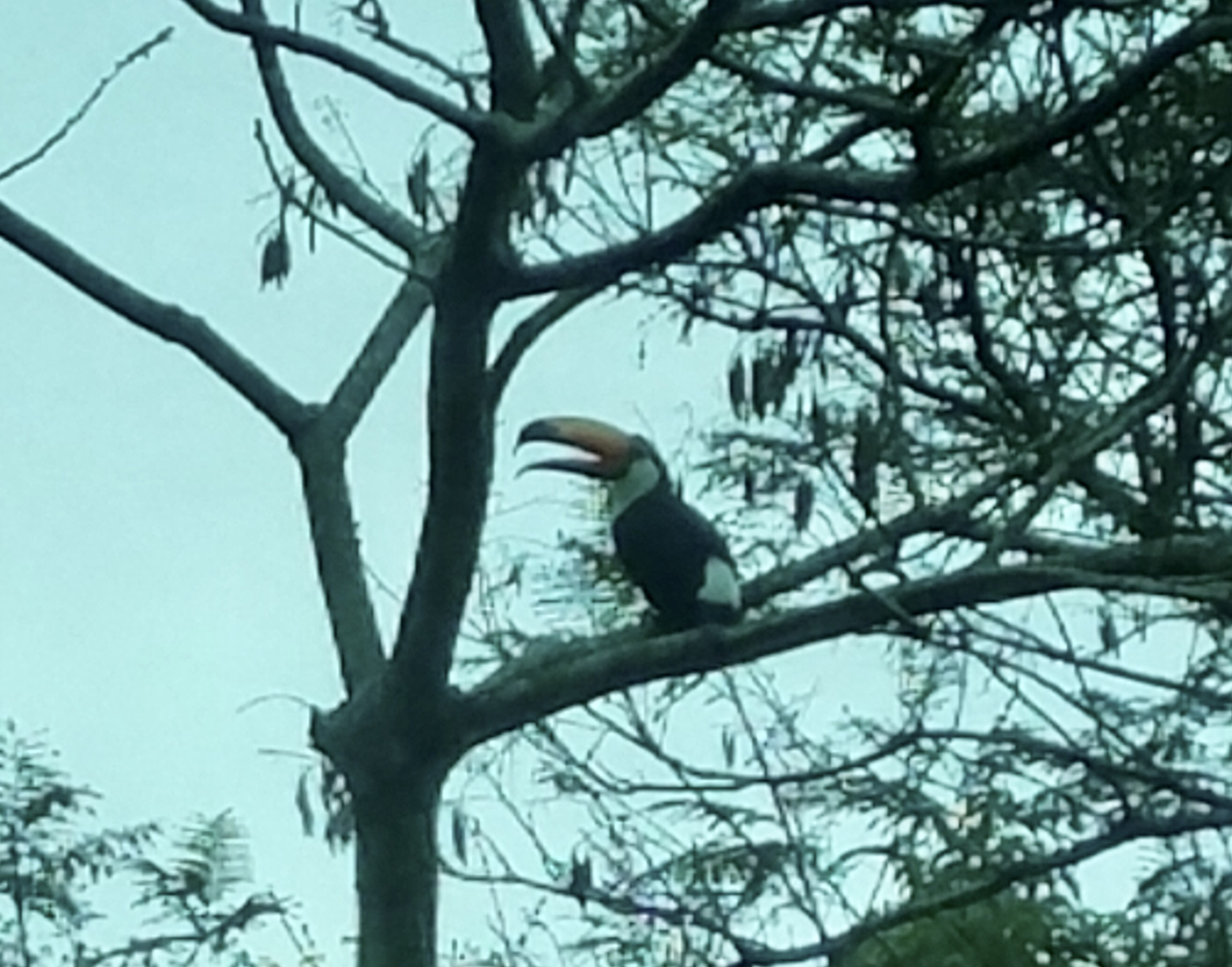
Our cruise ended today in Buenos Aires. We checked into our hotel, then headed to the airport for a quick trip to Iguazú National Park, a UNESCO World Heritage Site, in the northeastern tip of Argentina. We had heard about the falls during a presentation on the ship, and made a last-minute decision to go there. The Iguazú River (Iguaçu in Brazil) flows between Argentina and Brazil, and spreads almost two miles in width, and drops over 150 feet from 275 waterfalls. Over 2,000 species of plants are represented in the park, as are over 200 species of birds, plus black capuchin monkeys, coatis, jaguars, puma, possum and many more animals. We even saw a few toucans on the way from the airport to our hotel.

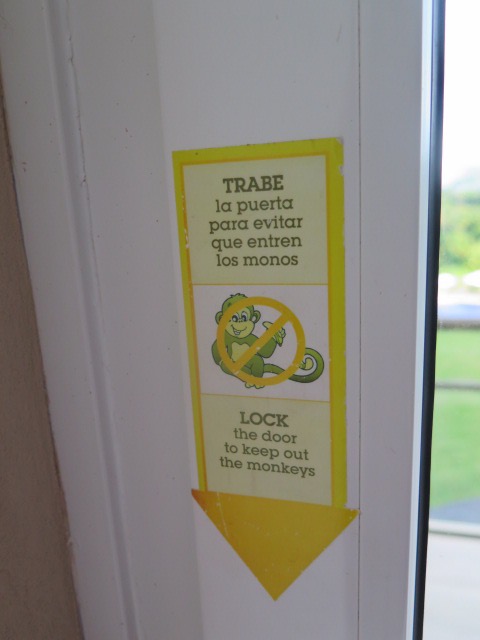
Our hotel, the Sheraton Iguazú, is actually inside the park, and our room afforded us some amazing views of the falls, with the mist rising above them, and the roar in our ears. The grounds were beautiful as well. We were warned when we checked in that we needed to be sure to lock our balcony door to keep the monkeys out.

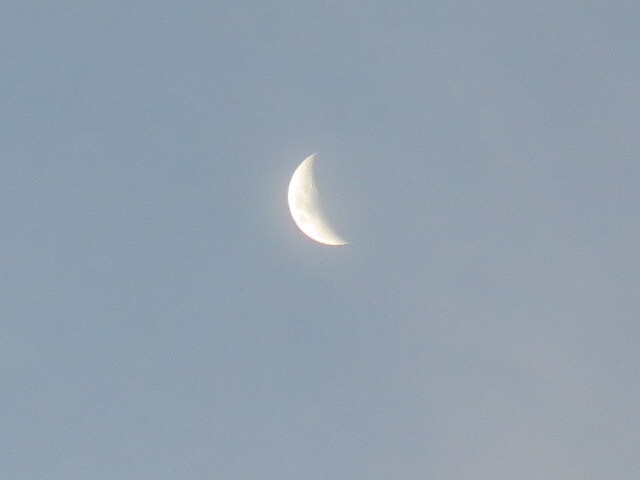
We enjoyed the pool as well as a beautiful sunset and view of the moon tonight as well.


Saturday, March 4

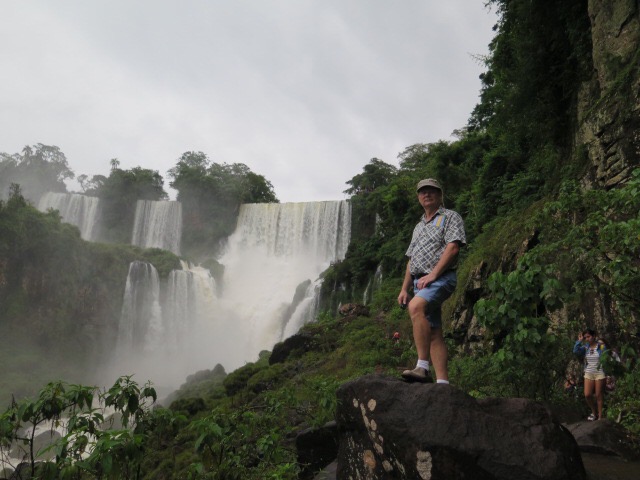
The park opens at 8 am, and we were up early to make the most of our day here. After checking the map, we headed out on the Paseo Superior (upper loop.) There is also a Circular Inferior (lower loop,) which we also walked. We foolish Americans thought Superior meant the better route, so we took it first. Actually, both loops were fabulous. Each one was about 1 mile long, and took 1.5 – 2 hours each to do them justice. This a rainforest, so very humid. That, plus a light rain at times, caused us to look like drowned rats by the end of our visit.

It’s hard to explain how stunning this park is. We were presented with OMG moments every few feet. The falls were uncountable, and ranged in size from a few feet to hundreds of feet across.


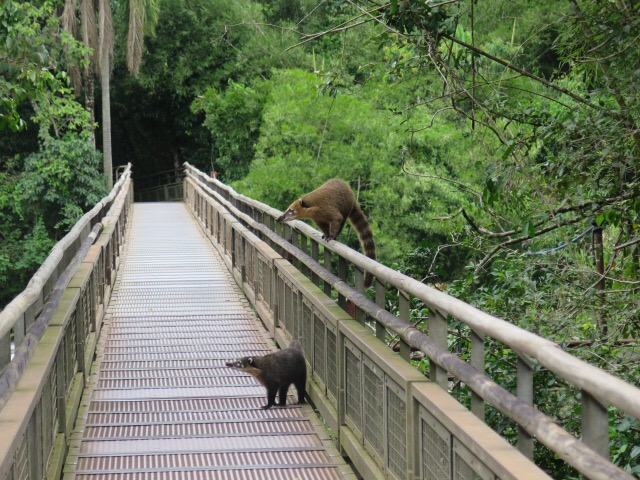
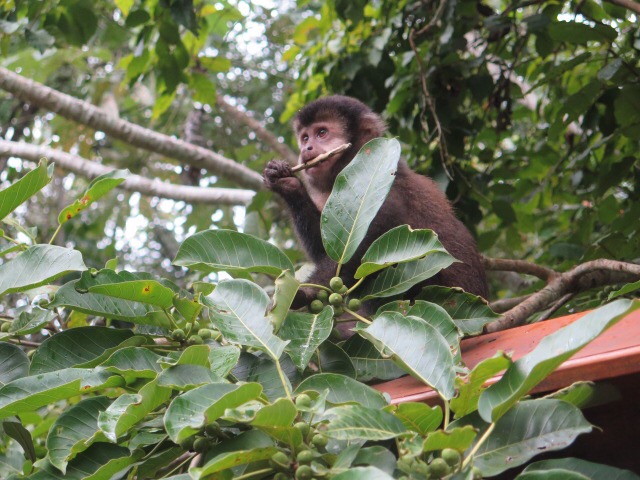
We almost forgot to look out for the flowers and wildlife. However, we didn’t miss the coatis and the black capuchin monkeys.


We flew back to Buenos Aires late this afternoon, tired but so very, very happy with this delightful diversion.

Posted in Argentina, Iguazu National Park, South America Travel, UNESCO World Heritage Site | Tagged , | Leave a comment

I See a Hill

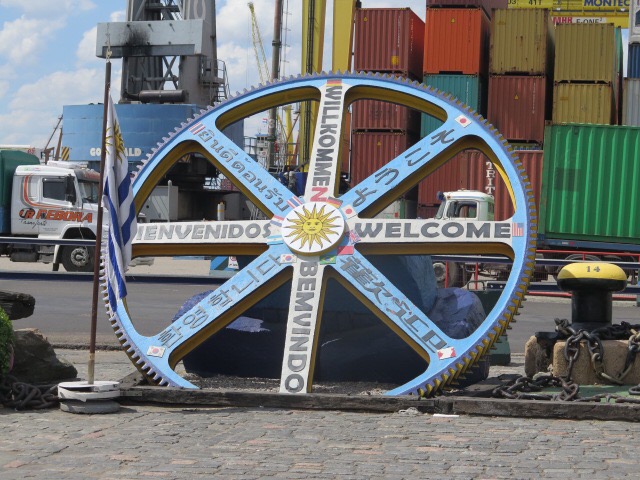
That’s one explanation for the name of Montevideo, Uruguay. The other is “sixth mountain from east to west.” Neither one is very romantic, is it?

Wednesday, March 1, 2017

Another sea day on Ash Wednesday this year. This is the first day of Lent in the Roman Catholic tradition. The origin is actually non-Christian, as is common for many Christian holy days. The Church often incorporated traditions from the local non-Christians to make their religion more familiar to their converts. In the old Nordic religion, it was believed that putting ashes on the forehead would assure the protection of Odin. Wednesday is named for Odin – Odin’s Day. The Norse practice actually came from the Vedic Indian religion. Ashes were believed to be the seed of the Indian fire god, Agni. It may also be an abbreviated form of “sackcloth and ashes.” All religions and cultures seem to borrow from each other.

Lent, itself, has changed over the centuries. In the early days of Christianity, there was discussion of a period of time for self-examination and repentance, it was only a few days. In the year 325, there was discussion of a 40-day period, but it may have been only for people preparing for baptism. It originally started on a Sunday, but was changed to Wednesday in the 600’s to reflect the 40 day period leading up to Easter.

We also had a shuffleboard rematch today, and unfortunately, the men won. We went for best two out of three, but again, they prevailed. I think the ship was listing in their favor.

Following the games, we enjoyed a short presentation by magician Jonathan Levit, called Magic Castle at Sea. Levit has a long resume as an actor, television host and producer as well, appearing on such shows as “The X-Files,” “Paranormal USA,” and “Miracle Hunters.” He performed a few tricks, but was primarily promoting  Magic Castle, which bills itself as “The Academy of Magical Arts.” Located in Hollywood, California, admittance is restricted to members and their guests. We received tickets that allow us to enter if we are ever in the neighborhood. Maybe we will.

Tonight’s after dinner show was “That’s Opera!” starring tenor Stefan Mullen and soprano Marianna Prizzon. They were accompanied by several vocalist, and the Serenity dancers and orchestra. We had heard them rehearsing the other day, and were excited to see them perform. No disappointments. They performed songs from “The Marriage of Figaro,” “Phantom of the Opera,” “Pagliacci,” and others that I admit I was not familiar with. It was a wonderful program, one that made my heart swell. I could have listened for much longer.

Thursday, March 2

Montevideo, Uruguay


Uruguay’s population is 3.4 million, and about half live in Montevideo, the capital city. We were told that it is the least corrupt country in South America. José Mujica was president of Uruguay between 2010 and 2015. He had been a fighter in the 1960’s and 1970’s with the Tupamaros, a left-wing urban guerilla group. Mujica was imprisoned for 13 years. Following that, he entered politics. He donated 80% of his salary to charity, believing that the president should not live better than the people he governed. He is beloved by many Uruguayans, who affectionately call him “Pepe.”

We were also told that more beef is consumed per person than anywhere else in the world. Mate Tea is ubiquitous, made from the dried leaves of the Yerba Mate plant. You can find thermoses, mugs and straws for mate on every corner of the city. The Yerba Mate plant is a member of the holly family. Apparently, it gives the same energy that coffee gives, without the jitters that some of us experience.


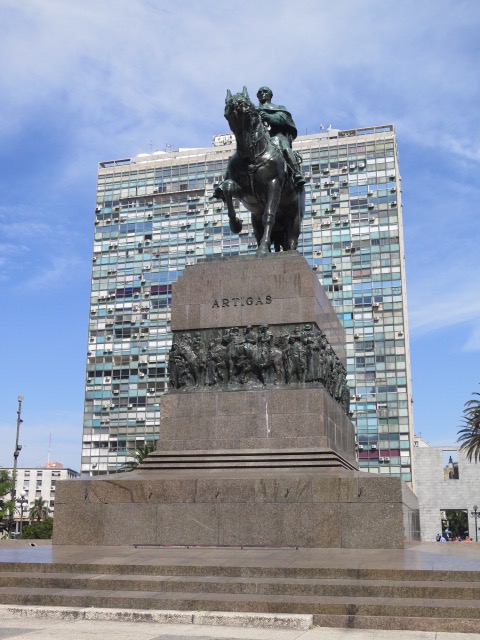
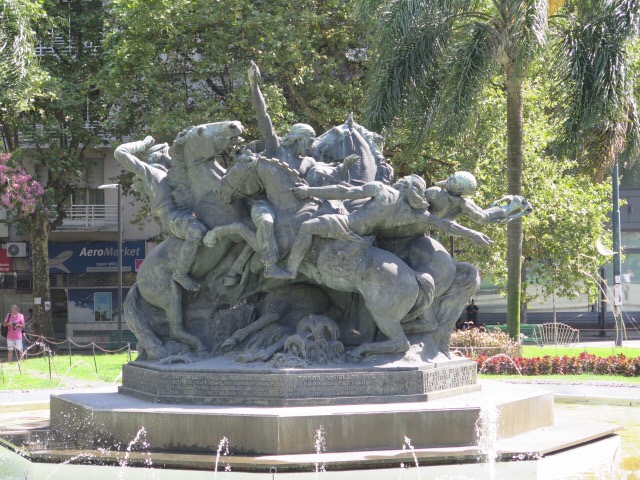
Uruguay is nestled between Argentina and Brazil, and both countries have tried to claim the area at one time or another. Of course, they had to get in line behind Spain and Portugal, and even Britain. The city of Montevideo was established in 1724 by Bruno Mauricio de Zabala, a Spanish soldier. The country finally achieved its independence in 1830, after several turnovers. General José Artigas led the fight for Uruguayan independence, and is sometimes called the “father of Uruguayan nationhood.” We located his statue at Independence Plaza.


It was hot, hot, hot today – the temperature reached 97 degrees Fahrenheit – made my Minnesota blood boil. These beautiful, sunny days area getting boring – NOT!!! Speaking of hot, they love tango here, maybe even more than in Argentina!

Rather than take a tour, we decided to just walk around this lovely city, and enjoy the fresh air. It’s a lively town, with plenty of steakhouse, cafes, and shopping, of course.


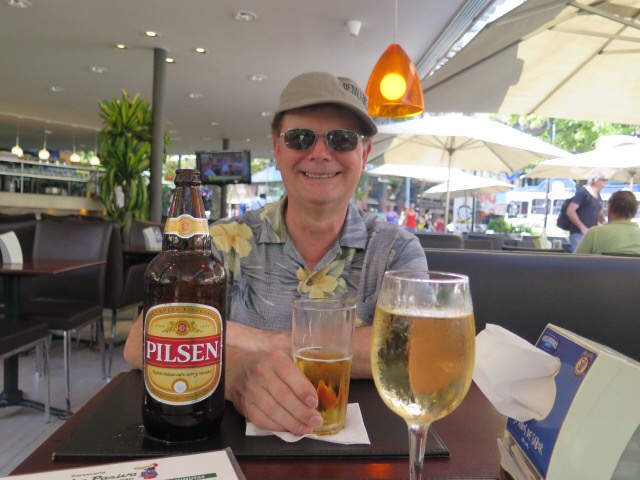
We stopped at an outdoor cafe for wine (me) and beer (Mark,) accompanied by french fries. We thought we were getting normal servings, but for about $15 US, Mark had a quart of beer, I had half a bottle of wine, and we both shared a good sized plate of fries. We then staggered back to the ship to enjoy some ice cream, take a nap, and finish packing. Sadly, we are disembarking tomorrow, but we will spend a few more days in Buenos Aires before returning to the frigid zone of Minnesota.

Posted in Crystal Cruises, South America Travel, Uncategorized, Uruguay | 1 Comment

More Penguins!

Monday, February 27, 2017

Today was a sea day, so there isn’t much to report, except I played my very first game of Shuffleboard today. Yes, I know that’s an old people’s game, but, face it, I’m getting older every day. I was pretty pathetic at first, until one of my teammates gave me some pointers. I did get better, but still was the worst member of the team, although I did manage to score 7 of the necessary points to win. And my team won! Four couples, men vs women (they thought it would be a shoo-in for them,) and we wiped up the floor (or the board) with them. I might just be willing to play this game again.

Tuesday, February 28

We arrived in Puerto Madryn, Argentina early this morning, and got up really, really early this morning to get on a bus for a 2.5 hour ride to Punta Tombo, a peninsula about 130 miles south of the city. It was totally worth it.

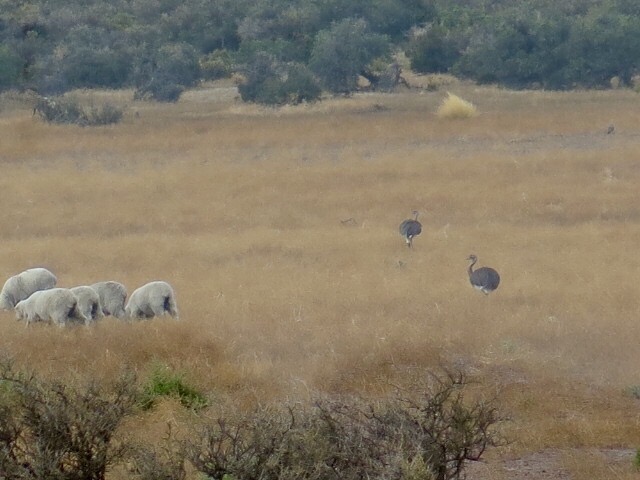
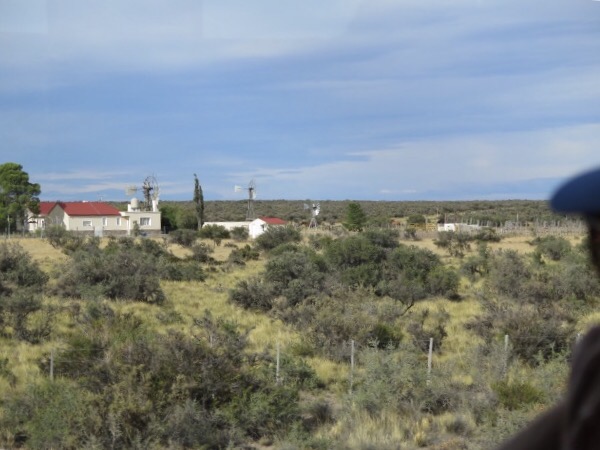
This part of Argentina is desert, receiving less than a foot of rain per year. It’s somewhat flat, but not completely – the terrain is defined as steppes or plateaus. There is no fresh groundwater here – all of it must be brought in. The only trees we saw were planted. The only things that grow naturally are scrub brush and grass. Homes in the city have freshwater cisterns on the roofs. As you get farther from the city, there is no electricity either. The farmers use windmills to generate power. We didn’t see any crops, but did see sheep. There are also reas (similar to the emu) and guanacos (small camels) that share the land with the sheep.


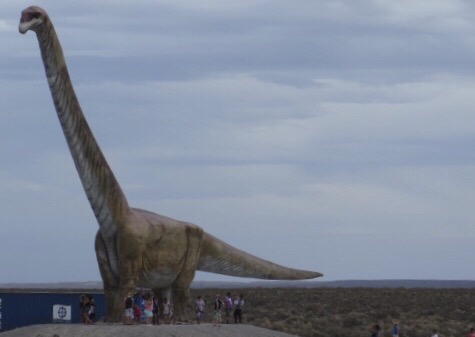
Argentinosaurus, the largest known dinosaur to walk the earth, was discovered in this region in 2014. It’s estimated to have been about 110 feet long, and to have weighed about 70 tons. The Argentines are understandably proud of this find, and they recently (just last week) installed a life-size statue along the highway.


This area was settled by Welsh immigrants between 1865 and 1914. Each received 247 acres of land from the Argentine government in return for farming the land. Many of these settlers had been miners in Wales, but they learned how to farm and many became successful sheep ranchers. One of those successful ranching families donated about .8 square mile of land to the government, and that land now comprises the Punta Tombo Nature Preserve.

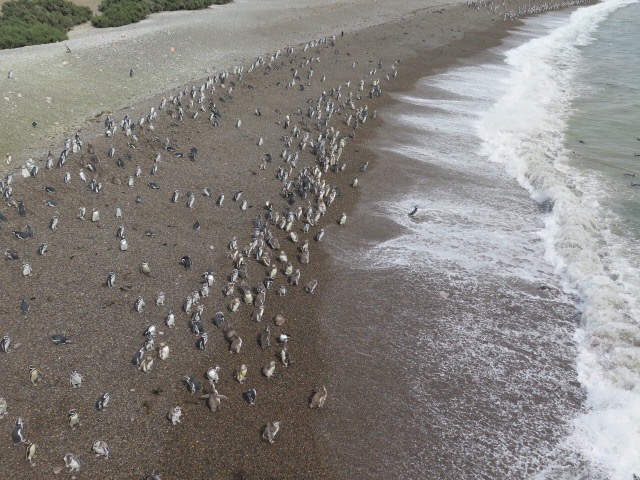
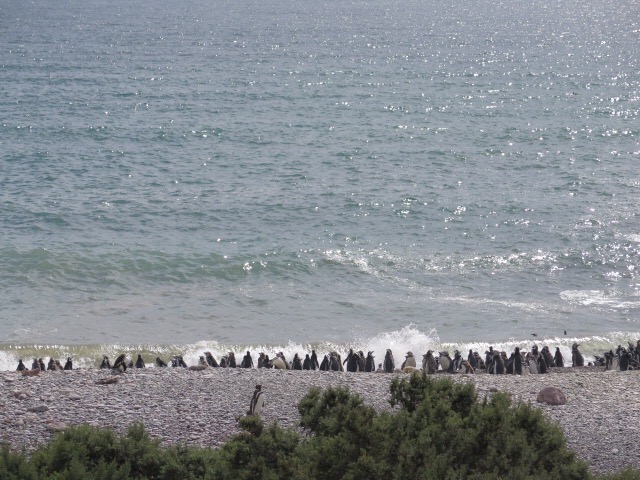
Punta Tombo is home to 210,000 pairs of breeding Magellanic penguins. These penguins burrow holes in the ground, often under shrubs, for their nests. They winter in the waters near Brazil, and swim 3,700 miles to Punta Tombo every year to lay their eggs. Each nesting pair lays two eggs, which, if all goes well, will hatch in November. The incubation period is 40 – 42 days, and both parents share the task. The chicks grow very quickly, they need to be independent within 2 – 2.5 months. At the end of summer, they return to Brazil. The juveniles are grey and white, while the adults are black and white. It’s believed that the Magellanic penguins may live for 30 -35 years.

We were treated immediately upon entry to the park by the sight of a darling penguin walking toward us on the boardwalk, as if coming to welcome us. We made way for it to get to wherever it was going. The Magellanic are much smaller than the King and Gentoos that we saw earlier on this trip. These ones barely come up to my knee. They move about freely in the preserve, so we were treated to many “up close and personal” views. It was simply delightful. Many of the juveniles were molting – down everywhere.


There were several groups of guanaco in the park as well, again, not far away at all.


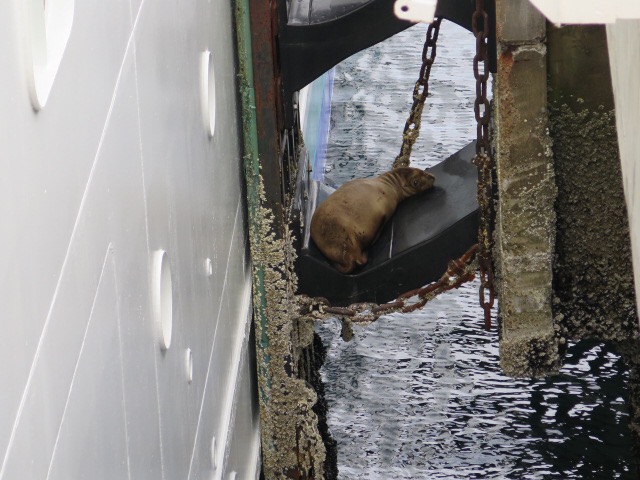
We returned to the ship after a long day, only to experience another delight. As we were boarding, we saw a sea lion resting on one of the ship’s fenders, between the ship and the dock.


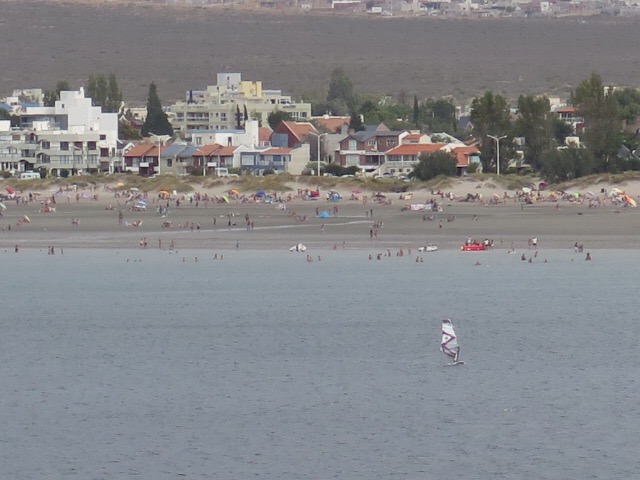
This was the end of a four-day weekend, and we saw lots of people enjoying the beaches in Puerto Madryn, or sailing or kayaking in the sea.

Posted in Argentina, Crystal Cruises, Penguins, South America Travel | Tagged | Leave a comment

Penguins, penguins!

Sunday, February 26, 2017

After arriving early this morning at Port Stanley in the Falklands, we tendered to shore for an excursion to Bluff Cove Lagoon, a family farm owned by Hattie and Kevin Kilmartin. It can be a difficult tender ride to shore, anywhere from 25 – 45 minutes depending on the weather. Today, the weather was in our favor, with partly sunny skies and calm seas. We were told that there was rain and strong wind yesterday, and had we arrived then, we wouldn’t have been able to go to shore.

Stanley is the only town in the Falklands. There are about 2,200 people who live year round in Stanley, with another 600 plus outside of the town. In addition, there are about 2,000 military and contract personnel on the islands. Most of the land outside of town, aside from the military base, is farm land. There don’t appear to be many crops grown here, except for use as animal feed, but there are over one million sheep and about 5,000 cattle. Fruits and vegetables have to be imported.

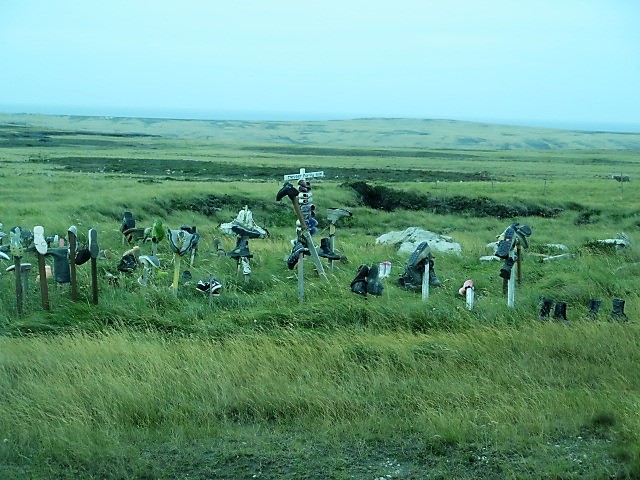
But we were here to see penguins, not cows and sheep, so we boarded a van for a short ride out of Fort Stanley, on Darwin Road, which was built in 1985 after the Falkland War. Prior to the war, there were no roads outside of Stanley, but the British beefed up their operations there, building an airforce base and this road to get there. We passed a “shoe shrine” on what is known locally as Boot Hill. Nobody knows for sure how or why it exists, although our guide believes that the military personnel and families keep it up to date.

IMG_0765

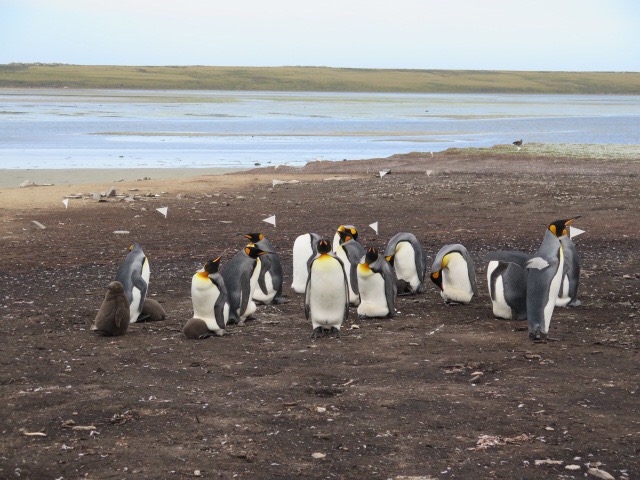
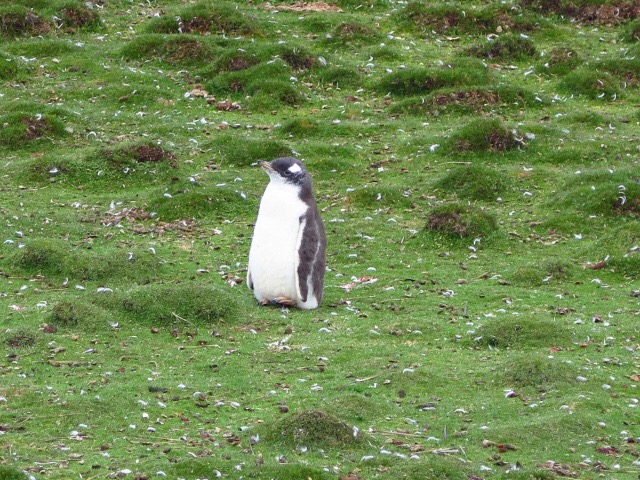
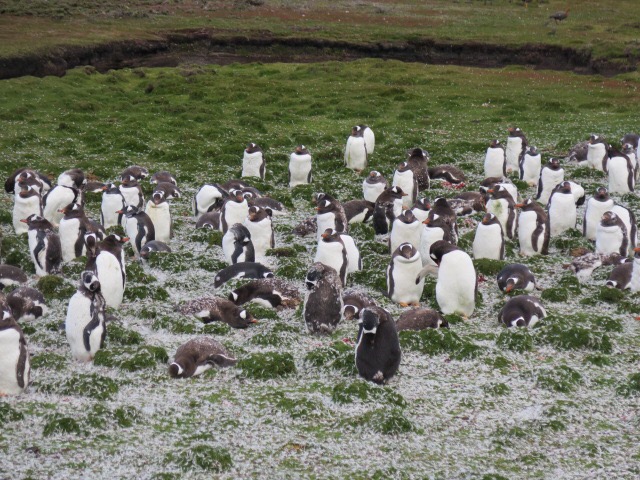
We then got on a Land Rover for a cross country trek to the farm. We were richly rewarded, with a small colony of King Penguins and a few of their young, plus a much larger colony of Gentoo Penguins.

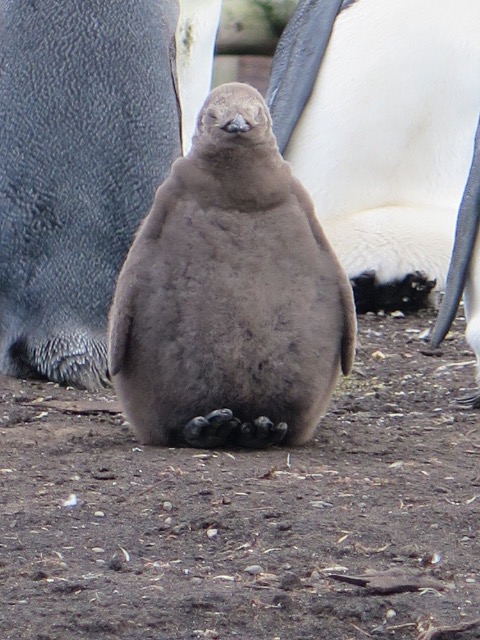
The King chicks were still brown and very fuzzy looking.


The Gentoos breed earlier in the year, so their chicks are mostly full-grown, but still somewhat downy. The ground around them was covered with down that the chicks have been shedding.

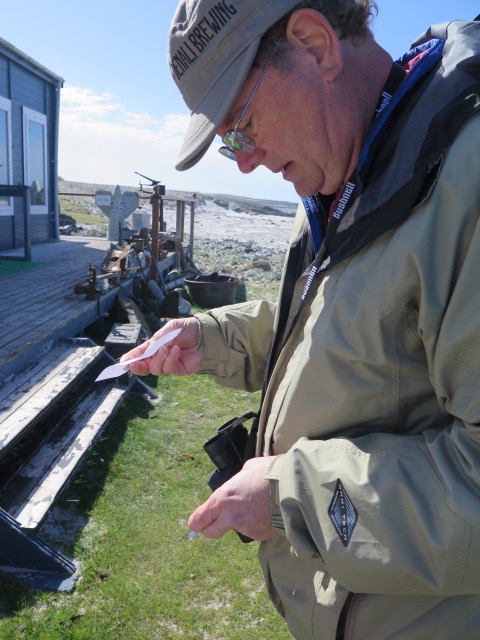
Did you know that there was an annular eclipse today, at least in this part of the world? We didn’t know ahead of time, so didn’t bring the proper eyewear to observe the eclipse. Mark is very resourceful, and he created a pinhole projector so we could see it vicariously. He’s so clever!

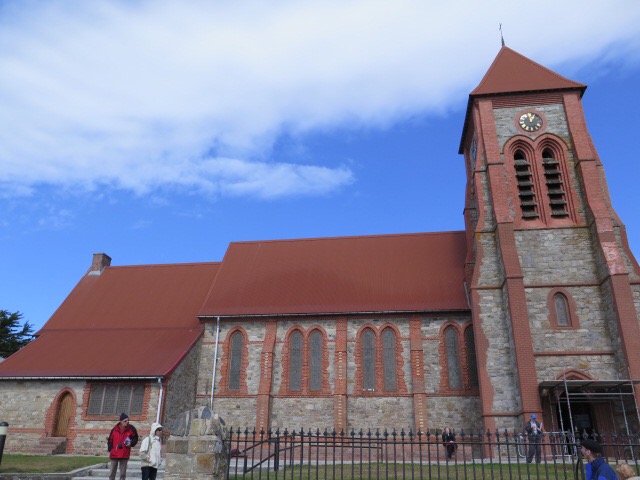
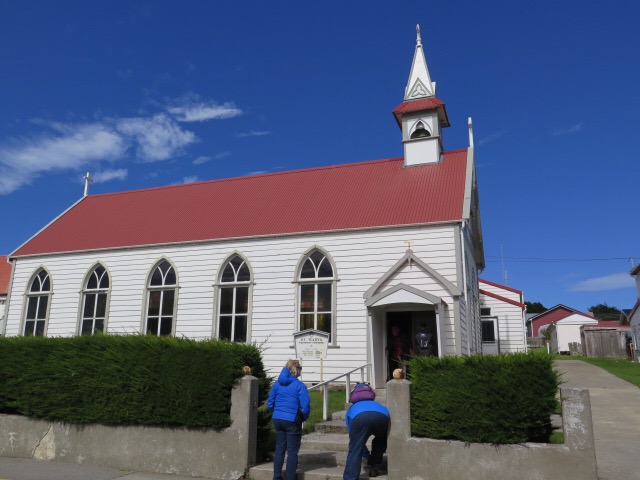
We spent a little time in the lovely downtown area, visiting the Falklands War Memorial as well as a few shops. We walked by both the Catholic and the Anglican churches, and couldn’t help but notice that, as usual, the Anglicans appear to have more money.


Fishing (especially squid) is the biggest industry in the Falklands, with sufficient revenue from commercial fishing licenses to provide health care to all of the residents, and cover university education in England for every student who can pass the exams to qualify. Most of the students do return to the Falklands after completing their education. Tourism is the second largest industry, and sheep farming is probably third.

Temperatures in the winter range from 40 – 54 degrees in winter, and 50 – 61 degrees in summer. The temperatures are modulated by the ocean year round. The Falklands can, however, experience gale force winds, as was the case yesterday.

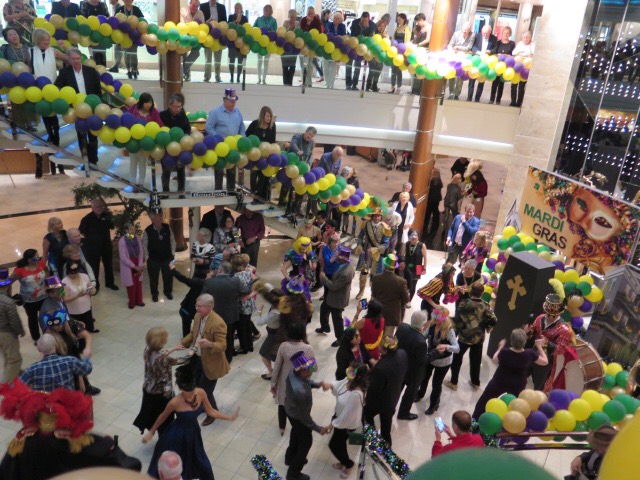
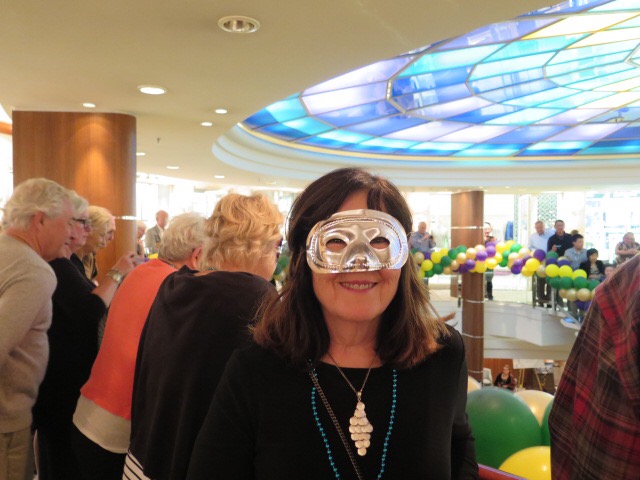
There was an early Mardi Gras celebration on board the ship tonight, with great Dixie Land music and dancing.

Posted in Crystal Cruises, Falkland Islands, Penguins, South America Travel, Uncategorized | Tagged , | 2 Comments

Falkland Islands or Islas Malvinas?

Saturday, February 25, 2017

We are sailing the Drake Passage on our way to the Falkland Islands, or, if you are Argentine, Islas Malvinas. It’s foggy and a bit windier today. We’ve been warned to expect gale force winds in the afternoon. We’ve seen several albatross skimming along above the waves, looking for fish. They are large birds and have the ability to soar on updrafts for long periods of time, not unlike the eagles we see flying over the Mississippi River and the lakes of Minnesota.

The Falklands consist of two main islands and 776 smaller ones. It has been a British Crown colony since the mid-1800’s, and most of the inhabitants there are of British descent. Argentina has long maintained, and still does, that the islands belong under their government.

We enjoyed a couple of talks by General Sir Michael Rose, retired British Army general, who lists among his many credits the command of Special Service operations during the Falklands War. Argentina invaded the Falklands in early April, 1982. I recall at the time thinking that this was a foolish move on their part. I was of the impression that the British military was much stronger and had more resources.

I didn’t know my history at all. Argentina had a larger Air Force and more warships, plus the advantage of proximity. However, it sounds like they were outclassed by the British in strategic thinking and planning. Both sides made mistakes, some of which caused the war to last longer than necessary. The Argentines could have won if they had worked on strategy. During this 74 day war, about 1,000 people lost their lives and almost 2,500 were wounded. The British did win, and diplomatic relations were reestablished between the two countries in 1989. However, in 1994, Argentina added its claim to the territories was added to its constitution.

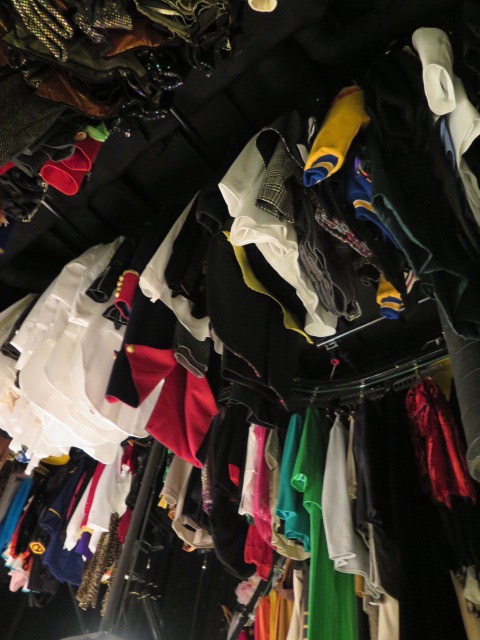
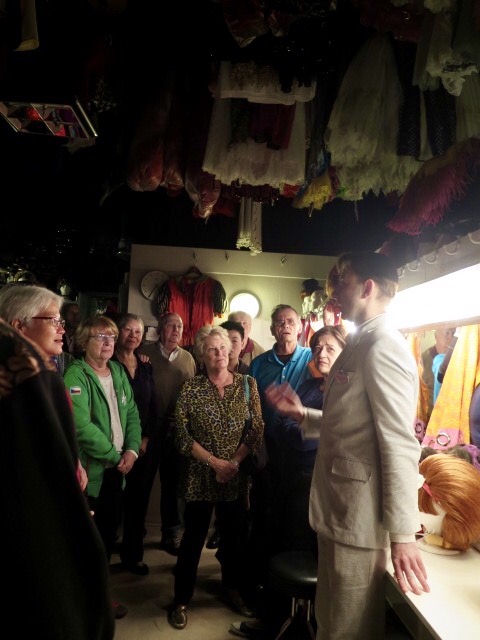
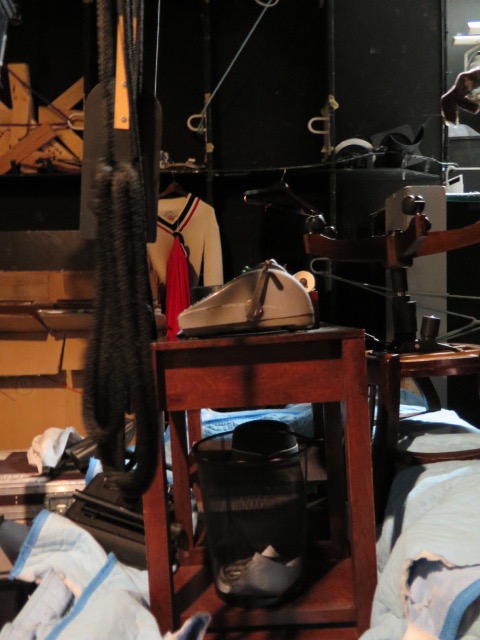
Crystal offered a backstage tour this afternoon, which we took advantage of. It’s amazing to see how many costumes and props they can fit into a relatively small space. Costumes hang from the ceiling, props are hung on the walls, tonight’s costumes are arranged on the dressing room chairs for easy access. The tour guides are a married couple, both dancers, who have been doing this for many years. He has been on this ship for 9 years. He talked about the challenges of dancing on a moving stage. He has to judge whether to delay or accelerate a move in order to land properly.

The performers go through a two-month training at the Los Angeles headquarters, then another month on board, getting familiar with the ship and the stage, all before their first performance. Many of the costumes are made by NBC, and it was easy to see the quality. Our guide mentioned that sometimes they are too realistic, i.e. a coat designed for a movie set may be too warm for dancing.

We enjoyed a show after dinner featuring songs from the British Invasion. For the under 60 crowd, I can only say,”look it up.”

Posted in Argentina, Crystal Cruises, Falkland Islands, South America Travel | Tagged , , | Leave a comment

Following Shackleton

Friday, February 24, 2017

Whales and penguins over breakfast – yes!

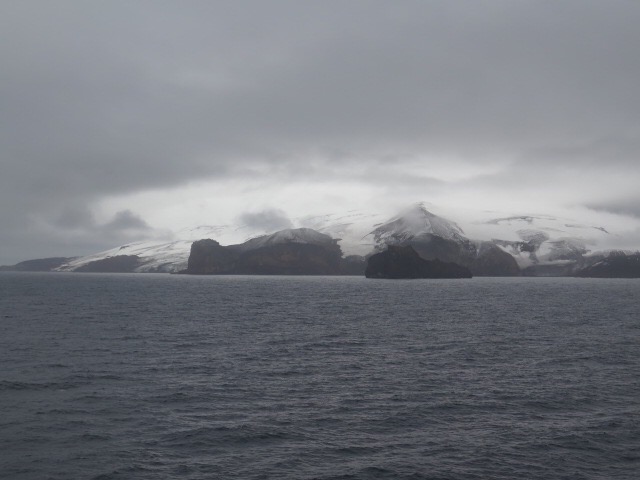
We sailed past Elephant Island in the fog this morning, where Ernest Shackleton and his crew had landed after having to abandon their ship, the Endurance, which had been crushed by pack ice in 1915. Shackleton wanted to reach the South Pole, one of many adventurers who hoped to be the first to reach the pole. His ship was named the Endurance, inspired by his family’s motto: “By endurance, we conquer.”


Shackleton and his crew of 28 set sail from South Georgia Island in December, 1914, the beginning of summer in Antarctica. Unfortunately, they ran into pack-ice just a day’s journey from land on Antarctica. They were soon solidly iced in, and remained there for about 10 months until the Endurance was toppled by the ice and ultimately crushed. There was no hope except to retrieve their provisions from the ship, load up their sleds and lifeboats, and tow all toward open water. This took over five months. They then entered the water and sailed three lifeboats to Elephant Island, where they set up camp at Camp Wild in Cape Valentine, with no food sources except penguins and seaweed or kelp.

Shackleton was aware that there would probably be no ships passing near until the following summer, so he and five crew members decided to take one of the lifeboats to South Georgia Island where there were whaling stations. South Georgia was almost 800 miles away; the sun was only visible 3 days during this trip (necessary for calculating direction;) and yet they reached the island after 11 days, starving and thirsty. They landed near a fresh water stream, and located some (delicious) albatross hatchlings to eat. Unfortunately, they landed on the wrong side of the island, and had to hike 21 miles over the ice covered mountains to reach a whaling station.

Even then, it took three attempts to reach the crew who were still on Elephant Island. In spite of tremendous odds, Ernest Shackleton managed to bring all of his men home. For me, he is the epitome of a hero, a leader to be emulated. I had read “Endurance,” by Frank Worsley, probably about 17 years ago, and I was very impressed with Shackleton’s story. I really didn’t comprehend the difficulties they faced until I could actually see the desolate, ice covered, islands here in Antarctica. I’ve ordered another copy of the book to read again.

The sun came out, yet again, so amazing. The waves are a little higher today, but who cares if we have sun? We saw whales and penguins at breakfast, and fishing birds this afternoon. What a day! We’re so lucky to have this experience.

Posted in Antarctica | Tagged , , | 3 Comments

But Wait! There’s More! South Shetlands

Thursday, February 23, 2017

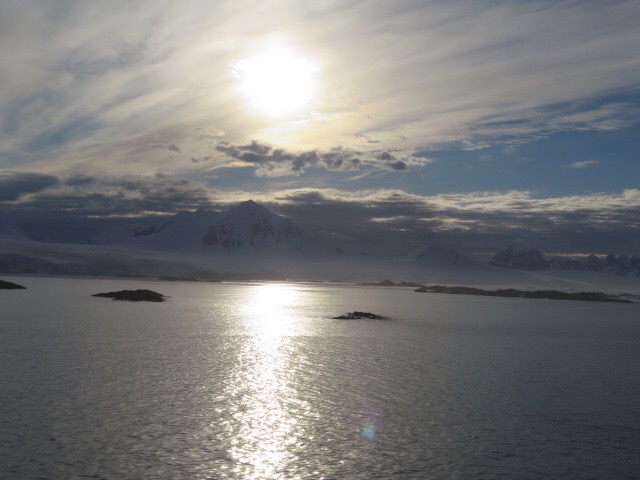
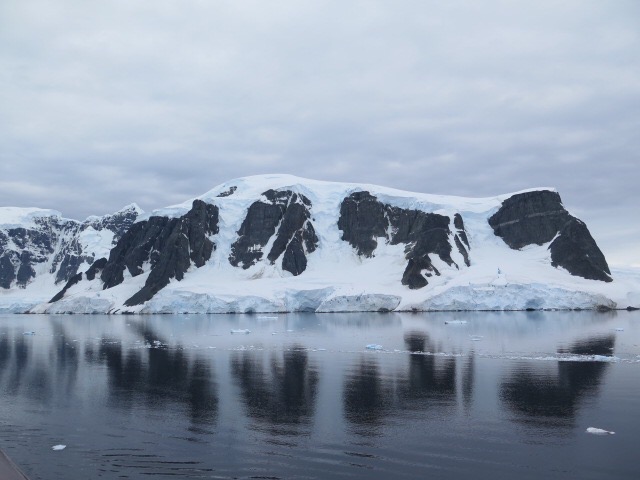
The morning started out cloudy, and there was a little rain and snow early on. The seas remain fairly calm. We sailed along the South Shetland Island Archipelago today. I thought we saw lots of glaciers in Alaska. I thought we saw lots of glaciers in Chile. Antarctica puts them to shame.

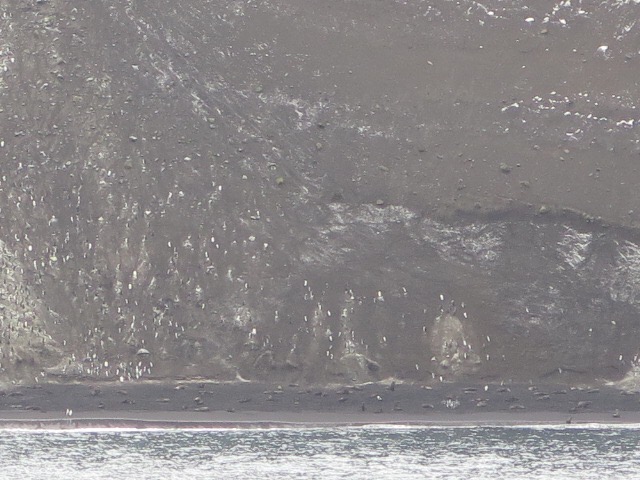
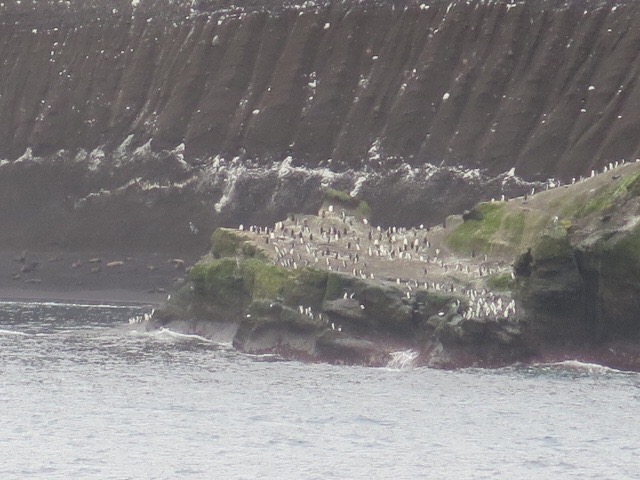
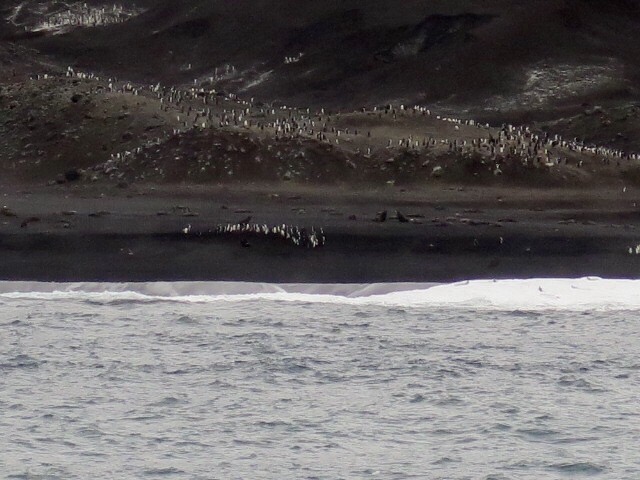
Decepcion Island is the caldera of an active volcano which last erupted in 1970. The center of the island provides safe harbor, so is frequently visited by tourists. There are also a couple of research stations here. Decepcion is home to about 100,000 nesting pairs of chinstrap penguins. Although too large to enter the harbor, our ship spent about 30 minutes here to give us the opportunity to see them. Fortunately, the island was on our side of the ship, so we could ooh and ahh from our balcony. We saw penguins on the beach, on the hills, and in the water. We also saw several seals on the beach and swimming in the ocean.

The sun came out this afternoon, and because the weather is so good, the Captain decided to take a detour into Admiralty Bay along King George Island, the largest of the South Shetland Islands, with more, yes even more, glaciers and amazing views and penguins and seals. There are numerous research stations here as well as the southernmost lighthouse in the world, at the Henryk Arctowski Station, which we sailed by.

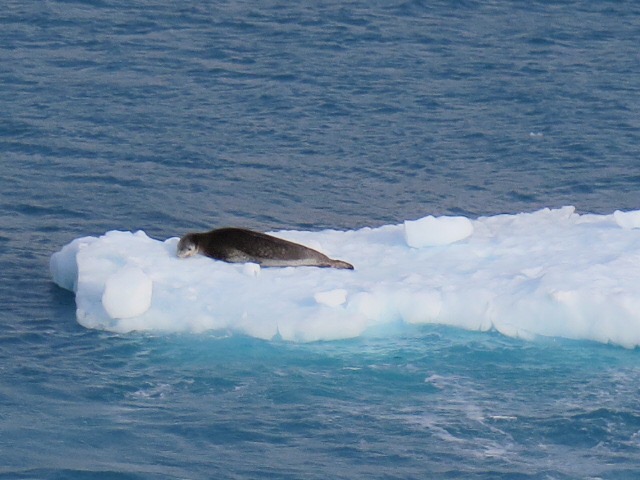
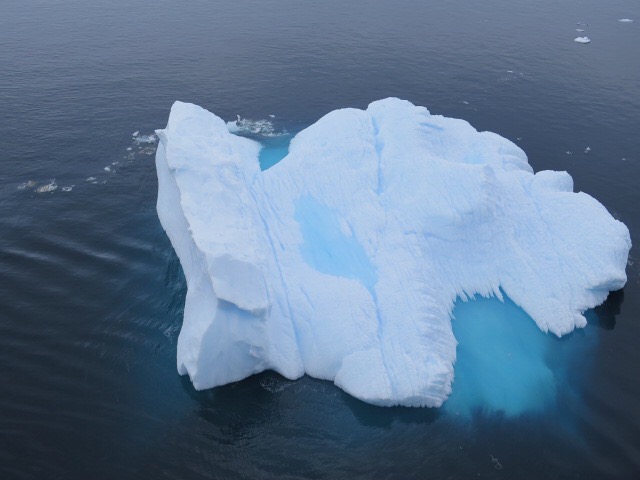
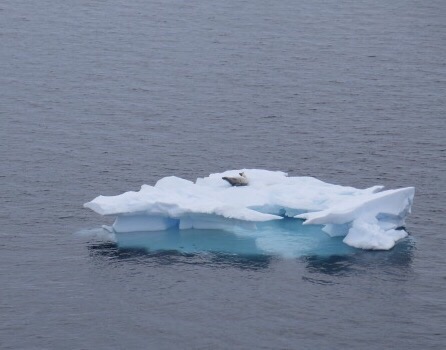
The seal above was enormous. One of Serenity’s tender boats was out in the bay with photographers, and when they pulled up to this ice berg, we could really appreciate the size.


This was a little bittersweet for us because we would have flown to this island had we been able to fly to Antarctica from Punta Arenas last week. Still, we have no complaints.

Posted in Antarctica, Crystal Cruises, Penquins | Tagged , , , | 3 Comments

Screaming 60’s?

Monday, February 21, 2017

This is the term given to the gale force winds that are not unusual in this latitude. Fortunately, it didn’t apply today, and even the Captain is surprised at how calm the seas are. We are cruising to Palmer Station in Antarctica, with the expectation of arriving tomorrow morning around 4:30 am. I probably won’t wake up for that.

It’s a sea day, so we’ve been attending some lectures and classes. There are some very good speakers on board: General Michael Hayden, former head of CIA and of NSA, and the highest-ranking intelligence officer in the armed forces, who spoke a few times about issues of national security;  Rob Caskie  who told stories about early expeditions to find the South Pole; Martin Frost former US Representative from Texas, former DCCC Chair, and chair of the House Democratic Caucus,  Ken Rees, former Controller of News and Current Affairs for HTV television in the UK; Tony Leon, former Ambassador from South Africa to Argentina;  Robert Schrire, South Africa political analyst based at the University of Cape Town; and Marc Ginsberg, former US Ambassador to Morocco.

I took a beginning Spanish class today so I would know more that the basics (por favor, gracias and baños.) It was a very good class, Berlitz style, and my brain was hurting by the end of the hour. I just hope I can remember some of it tomorrow. Mi hombre es Kathleen. Mi espousal es Mark. Yo soy de Los Estados Unidas.

We have another formal night, and I’m kind of getting sick of wearing a long gown (can’t believe I would ever say that,) and I know Mark is getting tired of the tux. No one said beauty was easy.

Tuesday, February 22, 2017

Again, the seas are remarkably calm. We can’t believe our luck. Our ship picked up several scientists from Palmer Research Station at about 8am. Two Zodiacs brought them to our ship. They look so small, yet move so very fast in these cold waters. Each one carried 10 people.


While waiting for the Palmer Research team to reach and board our ship, we gawked at the glaciers, the ice bergs, the mountains, the seals, whales and penguins. It was a gorgeous morning – something we did not expect.

We enjoyed a presentation by Bob Farrell, station manager at Palmer Station, and Randy Jones, lab manager. The Palmer Station, located on Anvers Island, is one of 3 permanent stations that the US maintains in Antarctica. Research by the United States Antarctic Program is funded by the National Science Foundation, and includes research for fundamental knowledge of the Antarctic Continent, research on Antarctica’s role in global systems, and research using Antarctica as a platform, i.e. climate. The Palmer Long Term Ecological Research Program is a member of the Long Term Ecological Research Network, funded by the National Science Foundation. Sea life is being studied for possible uses in the medical area, with promising data for the treatment of melanomas and other cancers.


The maximum population at Palmer Station is 44, including 23 support staff, a physician and 20 scientists. There are two research ships. The station is powered by two redundant diesel generators, and has two redundant water systems. Everyone must pass a physical before going to the station. The on staff physician can perform minor surgeries, but if there is a medical emergency, it’s necessary to wait for a ship to take the patient to the mainland. There is no way to land an airplane at this station.

Antarctica’s largest land animal is a wingless fly, the belgica antarctica, the southernmost insect in the world. Penguins and sea lions are considered ocean animals. Changes have been observed in the penguin populations since the 70’s, with decreases in the Adele and increases in the Gentoo. This doesn’t mean that the Adele is endangered, but that it is moving to other locations.

You can find more information, as well as a webcam, at the US Antarctic Program Portal.

Antarctica is the fifth largest continent, covering 5.4 million square miles. (I don’t know how that compares to the newly discovered continent, mostly submerged, of Zealandia.) In spite of the fact that 98% of the continent is covered by ice averaging more than one mile in thickness, it is a desert with only about 8 inches of precipitation per year along the coast and less inland, although there are numerous lakes and rivers, and even a mountain range, under the ice. Recorded temperatures have reached almost 130 below fahrenheit. There is some vegetation and a few species of animal here (the largest being the fly I mentioned earlier.) About 1,000 – 5,000 scientists reside here during the year, at the 30 plus stations on the continent.

The weight of the ice has caused the continent to sink by .3 – .6 miles. The glaciers have been retreating over the past years. In the 1970’s, the glacier was just outside of Palmer Station, now it’s about a mile away. There are numerous lakes and rivers under the ice. The continent is covered with mountains as well, the highest being Mount Vinson at 16,066 feet.  It appears these mountains are an extension of the Andes.

The continent is a condominium, governed by the Atlantic Treaty System since December 1959. Among other things, the treaty provides that the continent shall be used for peaceful purposes only, that there will be freedom of scientific investigation, and that the results of that investigation shall be shared freely. No interference with nature. No fishing for food. All food must be brought in by ship, all garbage must be removed.

Crystal sent a care package back with the Palmer crew, including 80 pounds of lamb as well as some fresh fruits and vegetables. While having lunch, we overheard at least one of the crew exclaiming about the mangoes – a real treat.

As we sailed back east and north past Anvers Island, we were treated to fabulous views of glaciers, mountains, icebergs, seals, and penguins. It was difficult to tear ourselves away from the unbelievable scenery. One of the staff on Crystal told us that this was even better than going through the Northwest Passage last summer. I won’t bore you with the 200 photos I took today, but will offer a sample.

Posted in Antarctica, Crystal Cruises | Tagged , , , , , , | 1 Comment

Cape Horn and the Ferocious Fifties

Monday, February 20, 2017

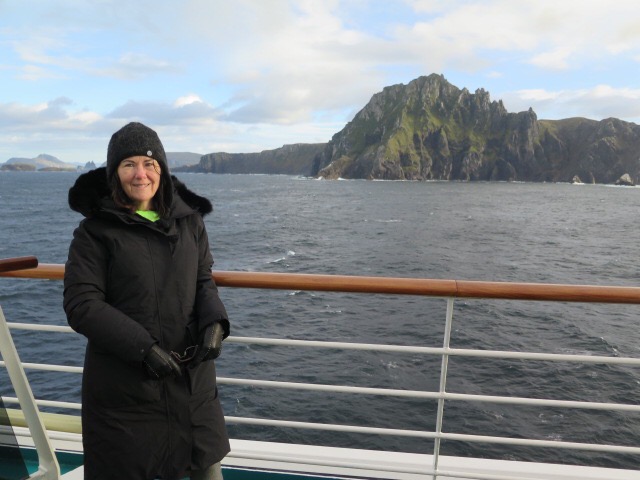
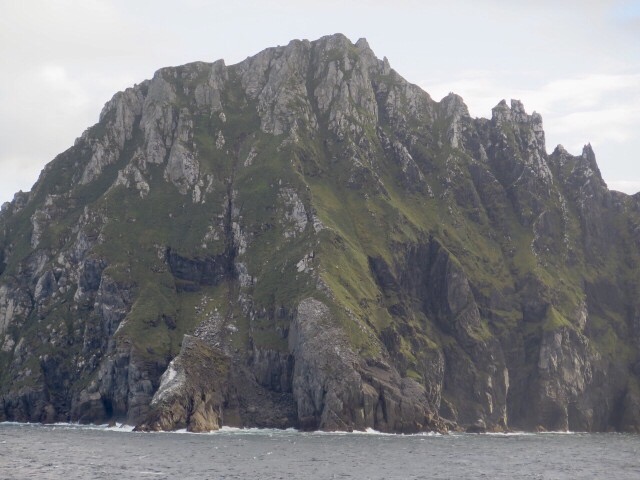
We got up early today to witness the rounding of Cape Horn. The cape was named for the town of Hoorn in the Netherlands, where Captain Willem Corneliszoon Schouten was looking for an alternate passage to the Strait of Magellan. The captain discovered a high pointed promontory that he mistakenly thought was the southernmost end of the South American continent. Instead, it is a small island. Although the waterway here is much wider than that of the Strait, the wind can be ferocious, and many ships have failed in navigating around the Cape. Perhaps the best known navigator to fail was by William Bligh, later captain of the HMS Bounty.

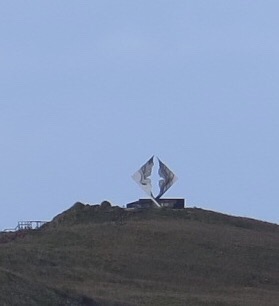
About 25 years ago, a memorial was created by José Balcells, and sponsored by the Cape Horn Captains Brotherhood to memorialize the many people who have died here. The memorial incorporates the shape of the albatross. The following poem by Sara Vial is included at the memorial:

I, the albatross that awaits for you at the end of the world…

I, the forgotten soul of the sailors lost that crossed Cape Horn from all the seas of the world.

But die they did not in the fierce waves,

for today towards eternity in my wings they soar

in the last crevice of the Antarctic winds.”

The wind was very strong, yet we were told that it was actually pretty calm for the Cape, where gale force winds can create waves of up to 65 feet. This area, near the 50th parallel, is know as the Ferocious Fifties. When we were heading south, I thought we would be blown off the deck. It was very difficult to remain upright, and most people only ventured out for a minute or two – just long enough to get a photo – then scurrying back to the warmth inside. Once again, I was so happy that I had my down parka with me.


There are several islands, many of which are craggy and others, clearly older, that looked like they had grass growing on them. We crossed from the Atlantic Ocean back to the Pacific Ocean, then the ship headed up to the northern side of the island where it was less windy. For at least one sailor, it was a good day near the Cape. The sky was mostly sunny all day, something that happens only about 35% of the year.

The Chilean Navy Station and Lighthouse are actually located about one mile east-northeast of Cape Horn itself.


We are now heading into the Southern Ocean. It will be a few days before we get close to Elephant Island, the northernmost part of Antarctica (as always, weather permitting.)

Posted in Antarctica, South America Travel | Tagged , , , | Leave a comment