The Smoke That Thunders

Thursday, January 4, 2018

I’m feeling much better this morning. We did walk to a nearby pharmacy to get some electrolyte powder to mix into our water. I don’t want another experience like yesterday!

The grounds are beautiful at the Royal Livingstone Hotel in Zambia. We saw several zebras on the grounds, as well as some Vervet monkeys. We heard that there was a giraffe as well, but we didn’t see it.

In the morning, we took a boat ride on the Zambezi River to Livingstone Island, which is the place where David Livingstone first viewed Victoria Falls in 1855. The island is inaccessible for about 4 months each year because the water level is too high. Locally named Mosi-o-Tunya which means The Smoke That Thunders, the falls stretch a little over a mile, and are 355 feet in height, making this the world’s largest waterfall. When water level is at its highest, the mist is heavy enough to block views of the river below.

From the island, we could view much of the falls. Also, several people were swimming in the Devil’s Pool, taking them right to the edge of the falls. It’s only possible to swim here during a few months of the year, when the water level is low enough.

730F1C5C-E74D-4523-8A26-2A0D8187CE91

Following a lovely lunch on the island, we returned to the mainland, then walked to the park, less than a mile from our hotel. We visited several vantage points, and got to see rainbows at several locations.

We weren’t the only ones visiting the falls, several baboons walked across the bridge, climbed the hills, rifles the trash cans, in the park. I actually saw one baboon nursing a newborn whose pink skin was still visible under its fur.

It would have been possible to cross the Victoria Falls Bridge and gone to Zimbabwe had we planned earlier. It was very close, but we didn’t know if we had enough time to do that, so we skipped it.

In the evening, we boarded the Royal Livingstone Express for a short ride to the Victoria Falls Bridge. During the ride, we learned more about the history of the train and South Africa. It was built in the 1920’s by Northern British Locomotive Works. It was restored in 2005, and has been operating as a dinner train since then. We enjoyed a delicious meal on board, then returned to our hotel to pack for yet another travel day.

Posted in Africa, Baboons, Victoria Falls, Zambia, Zebras | Leave a comment

Xakanaxa Camp

Happy New Year! January 1, 2018

No game drive this morning as we had a long journey to our next camp, Xakanaxa, in the Moremi Game Reserve.

Rains arrived at Mashatu during the night, accompanied by lots of thunder and lightning. It was as though Mother Nature decided to have a New Year’s Eve party with fireworks. We walked up to the main lounge carrying our umbrellas, only then wondering if we were actually carrying lighting rods. Vivi, the expedition coordinator, said that our flight would be delayed an hour. However, things cleared up and we managed to leave almost on time. We made a stop at Francistown to refuel, then a second stop in Maun to transfer to smaller airplanes. Ours was a six passenger plane made in Australia. Everyone had a window, allowing us to see the ground below.

Flying over the Okavango Delta, we could see salt flats that had developed after the waters subsided from their high levels. Much of the delta was under water about ten years ago, and many parts were inaccessible by land vehicle. Now, the vehicles and the animals can access more of the delta.

We landed in Xakanaxa (the x is pronounced like hk), then had a short ride to our camp, arriving there around 3:30. There was enough time to see our tented lodging, grab a snack and head out. Okavango is not the traditional delta that flows into a river, rather the water flows into the delta, then fans out. Some ocean water can flow in as well, which kills the trees that become surrounded by the water. The delta has several islands which were created from termite mounds.

The environment has changed significantly from one camp to the next. MalaMala was quite arid, with trees but very little vegetation on the ground. The wildlife was more elusive, with the exception of the impala. Mashatu had more flowers and trees, and there was more wildlife, including lots of impala. Xakanaxa is lush, much of it swampy with tall grasses, and the wildlife is abundant, with more birds and larger flocks of animals. Each of the camps has some of the same animals, especially impala, but some species are found at only one or two.

We have seen so many birds tonight – hornbills, storks, herons, geese, hoopoes, kites, eagles, ibis, vultures, and others that I can’t remember. We stopped at a lake that was surrounded by several different types of waterfowl. There were also two crocodiles in residence.

Driving through the park, we, of course, saw lots of impala, including what I called a day care center. There were a couple of adult females keeping watch over a couple dozen very young impala.

We saw waterbucks, larger than those at MalaMala. Moremi is home to the red lechwe, an antelope that has a splayed hoof which allowing it to wade easily through the water, where it spends most of its time eating the tall grasses. The red lechwe is not a fast runner, but is a powerful swimmer, which helps protect it from predators.

There are also zebras here, but their coloring is different from the ones we saw in Mashatu. They seem to be smaller as well. We were fortunate to see some young zebras among the herds. We were also fortunate to witness several of the zebras straddle a termite mound to scratch their bellies.

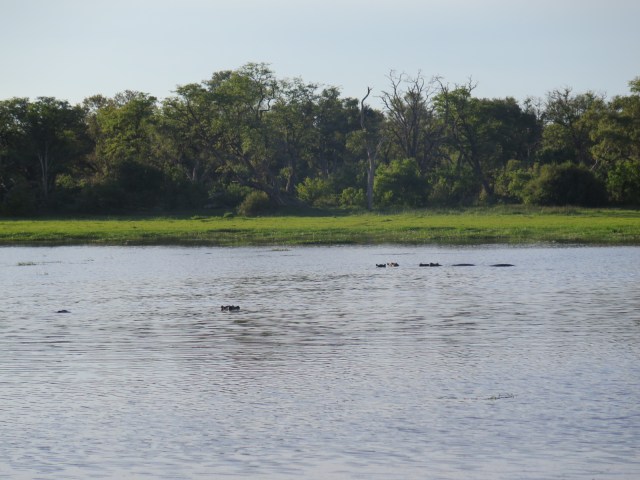
There are many, many hippos here. In fact, there is a young hippo (dubbed Oscar by the staff) that regularly walks through the camp around 6pm. We stopped for “sundowners,” a break with drinks and snacks, along side a lake that had at least 15 hippos trying to beat the heat. I could sympathize – the temperatures can reach 100 degrees here. The hippos put on quite a show for us, grumbling, splashing water, yawning, and watching us watch them.

5DD6CBA9-4366-4414-87BC-666F4B058A39

Watching us watching them

We were treated to another beautiful sunset, followed by a magnificent storm tonight. I wish I could capture the lightning on film. This is the beginning of the rainy season here in Moremi.

85BA6F0E-25A6-4957-B2B3-2D6163246106

Posted in Africa, Botswana, Hippos, Zebras | 1 Comment

Evening in Xakanaxa

January 2, 2018, evening

This evening’s event was a boat ride on the channels of the Khwai River, lined with pampas grasses, papyrus, and waterlilies. The animals don’t eat the pampas grass so it can grow quite tall. Among the water plants were water lilies, water chestnuts and salvinia molesta, an invasive plant from South America that is choking off some of the waterways.

It was such a pleasure to be on the water, with its cooling effects on yet another hot day. Early on, we cruised past a dead tree that was playing host to three waterfowl – an African Darter flanked by a white breasted cormorant on the left and a reed cormorant on the right.

There was a group of about 8 hippos with a baby, possibly only a few months old. Needless to say, the hippos weren’t as pleased to see us as we were to see them. There was some grumbling and yawning. The “yawning” is actually an aggressive behavior, an attempt to warn off any interlopers. The baby is always kept between two female adults, to protect it from crocodiles. Yes, we did see a few crocs as well.

We stopped for sundowners at a small island in the channel. I’ll miss this when we return home.

We returned to our lodging to pack yet again. Living out of a suitcase is getting old.

Posted in Africa, Botswana, Hippos, National Geographic, Okavango Delta, Wildlife Refuge | Leave a comment

Morning in Xakanaxa

Tuesday morning, January 2, 2018

Every night I think we couldn’t possible top the experiences of the day, and the next day I am continually proved wrong.

We were told to be careful this morning as a bull elephant had been sighted in camp around 6am. Bill Branch said he had seen fresh tracks, and we pointed out the other evidence of a visit from a big elephant – a large pile of scat. It’s easy to identify the elephant’s scat because of its size and because it’s full of grass. Elephants will also eat leaves and tree bark. Many trees show evidence of an elephant’s meal. They also knock down trees and bushes as they are passing through.

34291FF1-8F2C-457A-BEDA-5D0F6B5546DD

Things were a bit wetter today, but that probably makes it easier to find fresh tracks. Our guide today, Lets, did an excellent job of finding interesting wildlife for us. He looks for the tracks along the road and listens for the sounds to determine which direction to go. We found vervet monkeys foraging among the zebras, a herd of bush bucks (distinguishable by a round white “target” on their rumps.) This sign, like the “M” on the back of the impala allows the rest of the herd to see each other in the bush.

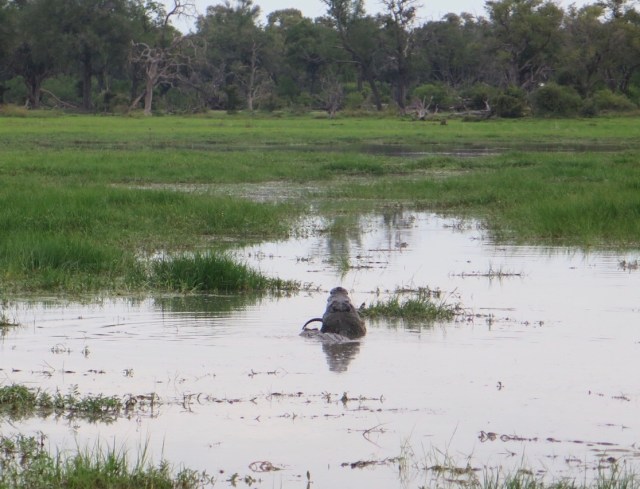
Lets spied several Nile crocodiles in a nearby pond. One was very large, certainly longer than 12 feet (they can grow to almost 20 feet.) It had captured an impala or red lechwe and was working on consuming it. To “cut” the prey into manageable sizes, the crocodile thrashes it around in the water. As the croc swam away with its meal, several others followed it, perhaps hoping for some leftovers?

B34B9180-A517-4131-ABFC-56F5CE94D258

We listened to a couple of African fish eagles call to each other. We saw a few brown snake eagles, which feed mainly on snakes, but will also eat lizards and small game birds. Our guide noticed some swallows raising a fuss in a tree, so pulled over and saw a python in the tree. This was a relatively young python, but he still looked scary to me.

There were a few giraffes in the distance. These ones are a little darker in color than the ones in Mashatu, both the background and the spots. Lets could see that they were looking at something, so he headed off to find out what that was.

To our delight, there were two male lions resting in the shade. They are brothers about two years apart in age. The older one has a darker, fuller mane. Initially, they were lying down perhaps 100 fee apart from each other, but then the younger one walked down and laid down beside his brother – what a sight to see! Then, the lions obliged us by getting up and taking a short walk to another clearing. Here, each picked a spot, then sat down to pose for us.

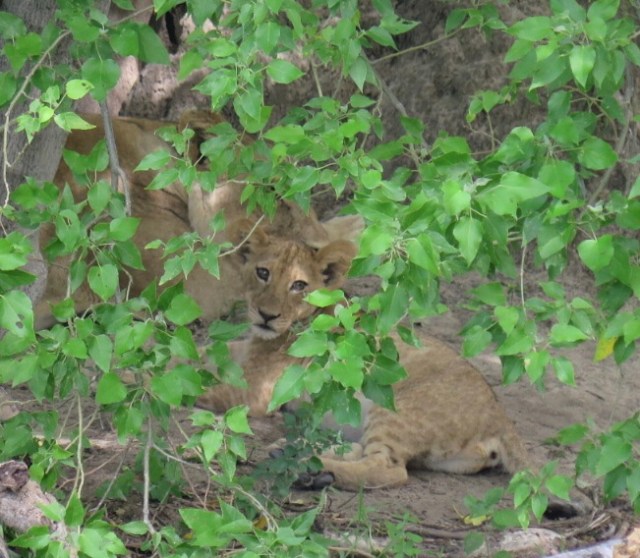
Lets asked if we wanted to see a female lion with cubs. Of course! They were lying near a termite mound under a tree. It was difficult to make them out, but the female looked very large. Bill confirmed that, saying he didn’t think he’d ever seen one so big. There are four cubs, but I could only make out two of them. One rolled over and sat up so we could see his adorable face.

A9BEADF8-D557-425C-922A-7ECACDFBD579

It was another fabulous morning.

Posted in Africa, Botswana, Hippos, Lions, National Geographic, Okavango Delta, Wildlife Refuge | Leave a comment

Pawprints, Poop and Plants

Sunday morning, New Year’s Eve 2017

We signed up for a walking game drive to get a different perspective. Also, we’re ready for some physical activity. Riding in the safari vehicles is great for getting around and seeing many animals, but we wanted to see things a little more closely. We really expected many of the others in our group would opt for this as well, so were surprised to see only one other couple. This was wonderful since we could all see and hear what our guide was saying.

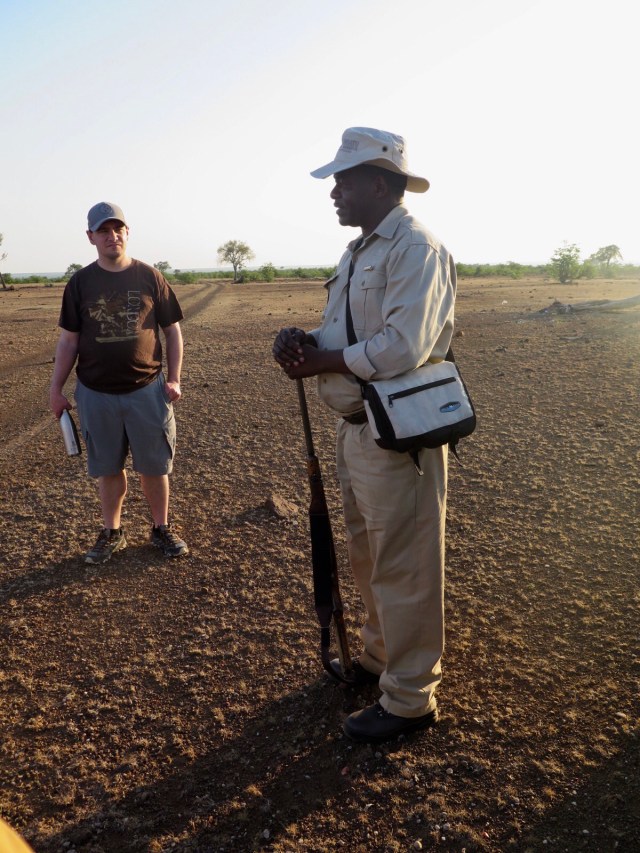
Our guide was Bellamy, who was very knowledgeable. He carried a 458 magnum rifle. That will impress on anyone the risks of being on foot in this area. Bellamy told us to walk single file, and the last person was told to check behind us to see if we were being tracked. We would be following the tracks we found this morning, and other animals might be following those tracks as well.

B0AD5E08-CDCC-4426-889F-03E3295276F9

One of the first things we did was examine some scat – truly romantic. Bellamy explained that the white chunks came from a hyena. The hyena eats everything, including the bones which contain calcium. The brown chunks belong to a jackal. An ostrich had rested nearby and fluffed its wings, leaving an outline of its body. Giraffe had also left prints. If the scat and/or the prints are fresh, you know that the animal passed by recently and then you can look for its tracks and begin following them.

Bellamy showed us where an aardvark had been digging for termites. He pointed out a den that had been occupied at one time by an aardvark and possibly a jackal after that.

A clearing surrounded by short mopane trees indicates that elephants have been feeding there. Elephants must feed about 20 hours per day to get the nutrition they need. They eat grasses, leaves, even tree bark. The leaves of the mopane tree contain 23% protein which, although not digestible by humans, but are a good source of nutrition for the animals. The constant feeding by elephants keeps the surrounding trees short.

The mopane tree is home to the mopane worm, which is actually a caterpillar. Mopane moths emerge at the beginning of summer, do not feed and live for two or three days, long enough to mate and lay their eggs on tree leaves. The eggs hatch in the summer, and the caterpillars feed on the leaves of the tree where they were laid. When they reach their maximum size, many are harvested by the locals, who boil them in salt water and then dry them. They can be eaten as a snack or added to other food, where they take on that food’s flavor. There is concern about over harvesting (at least 10% of the caterpillars need to mature to the moth stage in order to maintain a sustainable population.) Recently, the government of Botswana began licensing mopane worm harvesters to try to control the size of the harvest.

We passed a small watering hole that had been used recently by elephants, as evidenced by the footprints around it. As we were walking along, we were noticed by a group of giraffes. One of them kept an eye on us, assessing where we were going, to decided if we were a threat. When we climbed to the top of a small hill, we could see for miles, and spied giraffes, zebra, impala, wildebeests and elephants.

We were picked up by a driver and embarked on a short game drive. There were herds of wildebeest with several young, as well as kudus and zebras. We got lucky and saw a pair of cheetahs, sisters, resting in the shade. It’s easy to confuse the cheetah with the leopard. The cheetah has shorter legs and a longer, sleeker body. Also, the cheetah has spots while the leopard has a pattern of yellow spots each framed in black. While the cheetah relies on short bursts of speed to take down its prey, the leopard is slower and must stalk its prey, moving very slowly until close enough to pounce.

While taking a break, we noticed a hornbill in a Mashatu tree above us. It had caught a lizard and was working on eating it. Then, off to find the lions again. This time, the male was here, but sleeping – must have had a nice meal.

We headed back to the lodge so we could have a nice meal as well. We rise very early, and have our coffee and juice and a little fruit, then go on the game drives. We stop during the drive for snacks and beverages. We have brunch when we return to the lodge. We have tea around 3:30 (and sweets if you want them,) then head out on a game drive. We stop for “sundowners” (more snacks and wine or beer,) finish the drive and have dinner. We are well fed.


Posted in Africa, Botswana, Elephants, Giraffes, Wildlife Refuge | Leave a comment

New Year’s Eve at Mashatu

Sunday, December 31, 2017, evening.

This afternoon, we relaxed at the camp and enjoyed the wildlife just outside our windows.

On this evening’s game drive, we spotted a troop of baboons, feeding on and along the road. It was delightful to watch them, there were many young ones, some of them small enough to still ride under the mother’s belly. This troop had two males that provided protection for the females and their young. We watched for a while, and then they all started heading up the hill across the road. We could see them walking along the ridge like a parade of baboons.

There was a large elephant feeding along our route as well. She wasn’t too happy to see us there. They don’t want any other animals nearby, and that includes people. We had attended a lecture by Bill Branch, talking about elephant behavior and vulnerabilities. Elephants breathe only through the trunk. If a predator, any big cat or a crocodile, can manage to grab the trunk and squeeze, the elephant will die of suffocation. Also, the elephant flaps its ears to cool down. There are large blood vessels on the back of the ear, if it can catch the air, the blood in the vessels will cool down and circulate that coolness throughout the body.

Quickly moving on, we paid a visit to the site where the young impala had been killed the day before. The young leopard was up in the tree where his mother had stored her kill, and was enjoying some dinner. Then, we decided to see if the lions were still around. This time, the male was sitting up posing for all of his admirers. He’s a beautiful animal and he seems to know it. The guides call him Fabio because of his full bodied mane. The females were there too, and one appears to be pregnant.

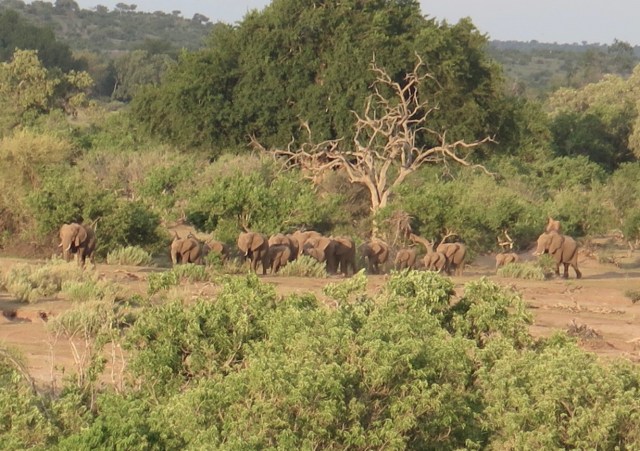
Again we stopped for sundowners. The guides set up a couple of tables with snacks and beverages and we drank in our beautiful surroundings. Tonight, we were in time to see two parades of elephants heading to the water. It was magnificent! There were elephants of all ages.

1E030EA9-FF9C-41C8-951E-EA7BBA6E297B

We had a lovely dinner tonight. The area was decorated for New Year’s Eve. Some of us stayed up a little later, enjoying the music and dancing a bit. I don’t think anyone saw midnight, though.

Posted in Africa, Botswana, Elephants, Leopards, Lions, Uncategorized | Leave a comment

Archaeology and Views

Afternoon, Saturday, December 30, 2017

We listened to a short lecture by Dr. Grant Hall, an archaeologist with the University of Pretoria. He spoke about the Iron Age archaeology of Mashatu project that he has been working on. Different peoples have lived at this site for at least 1,000 years.

Following the lecture, we got back on the safari vehicles to visit the site, Mmamagwe Hill, which was about an hour’s drive from here, a very bumpy ride by the way. On the way, we stopped at a pond where we finally saw some crocodiles, or at least the tops of their heads. When we arrived at the site, Dr. Hall discussed some his findings and told us to keep our eyes open for bits of pottery or other items.

Then, we headed uphill to the top of a butte located very near the archaeological site. It was a bit of a trek, but well worth it for the views that this spot afforded.

After snacks and beverages, we clambered back down, got in our vehicles and drove back in the very dark night. We were so exhausted that we skipped dinner and went straight to bed.

Posted in Archaeology, Uncategorized | Leave a comment

First Morning at Mashatu

Saturday, December 30, 2017

To beat the heat, we started this morning’s game drive really, really early – 5:15am. We were rewarded with a beautiful sunrise. The terrain is very different from the game preserve at MalaMala. There is a lot more greenery here, with lovely yellow flowers everywhere, the thorn flower.

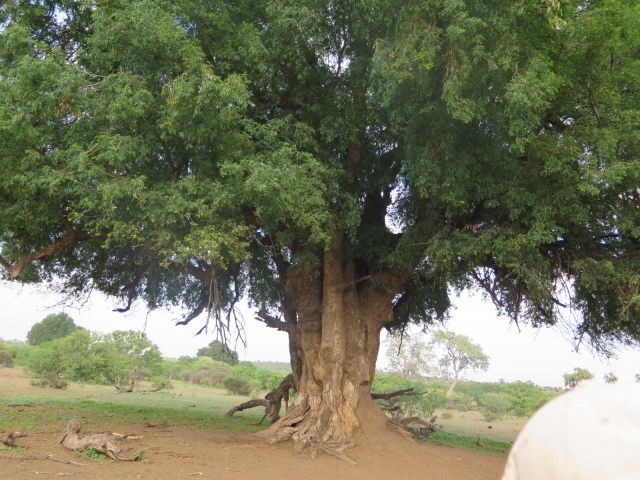
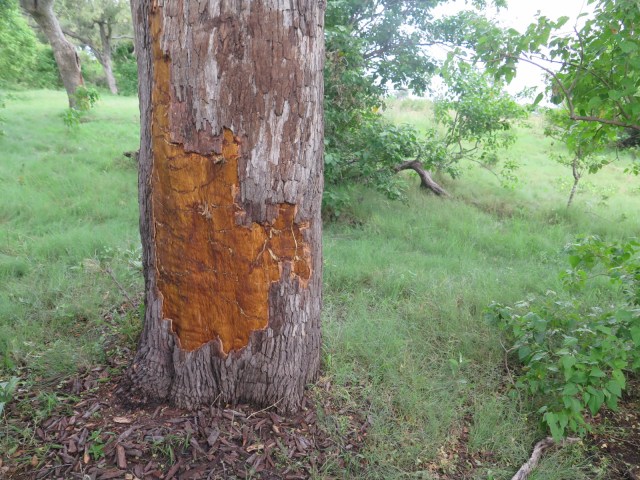
The trees are mostly quite short because they are constantly being eaten by elephants. The Mashatu tree is an exception. Many are quite old, tall with very thick trunks. Many of these majestic trees grow in termite mounds. Baboons eat the fruit of the Mashatu, then sit on termite mounds to defecate, thus releasing the seeds. The Mashatu tree, also called the Nyala tree, takes moisture and nutrients from the termite mound. The Mashatu tree can live for up to 600 years, and attain a girth of nearly 100 feet.

5E36C0D6-928E-4170-92C0-F7C205280DC2

When crossing a dry river bed, we saw some lion prints, large ones from a male. While hunting for the lion, we saw a few ostriches, and a group of female elephants with young ones. The oldest elephant in this group might be 40-50, while the youngest is only two months old. They were somewhat skittish and we learned later that a very young elephant had died the day before. We did see it later and it did not appear to have been killed, but rather had died of natural causes. It may have been injured and was unable to nurse, and then succumbed to yesterday’s heat.

We found two lions resting by some bushes nearby. These two are sisters, about ten years old. We didn’t find the male that’s with them.

We were fortunate enough to see elands, jackals, warthogs, more zebras and giraffes, impalas and wildebeest as we drove along.

There were a few white storks, as well as kori bustards, the largest flying bird at almost 40 pounds.

Today, we found a mother leopard and her cub (about 8 months old) resting in the riverbed under the shade of a Mashatu tree. All of a sudden, the mother got up and the cub scampered up higher to safety. The mother had sighted a baby impala on the other side of the riverbed, and she went to get it. She was successful. It’s hard to see the babies get killed, but that’s simply part of life here.

Posted in Africa, Elephants, Giraffes, Jackals, Kudus, Leopards, Ostriches, Warthogs, Wildlife Refuge, Zebras | Leave a comment

Leaving MalaMala

Thursday, December 29, 2017

We had to pack up last night and put our checked luggage outside the door at 6am. We scurried around, trying to make sure we had the items that we needed close at hand in our carry on bags. We were so limited in how much we could bring along, both in weight and size, that it is a challenge every time we need to repack.

Those storm clouds we saw last night brought rain. There was still a light drizzle this morning. We donned some rain ponchos and headed out for our final drive at this camp. By the way, it’s hot here and those ponchos just made it worse. We were so happy when the rain stopped.

Besides elephants and impalas, we got to see a couple of nyalas, and a blue wildebeest (gnu) resting in the midst of a large herd of impala. He obliged us by standing up and looking at us. There are two species of wildebeest, the black and the blue. The black wildebeest has a white, long horse-like tail, and a dark brown or black coat. The blue wildebeest, which is far more common, is brown a tawny brown, but becomes more bluish gray as an adult, and it has a dark tail.

We found some giraffe bones, but alas, no giraffes. We did, however, see another female leopard. She is not the same one we saw on our first day. Like any big cat, the leopard is territorial. This particular leopard was walking and marking her territory. She would growl occasionally to let any other leopards who might be in earshot know that this was her space.

There was a herd of male impalas nearby. When the first impala spotted the leopard, he started snorting. This snorting serves a dual purpose – to warn the rest of the herd and to let the leopard know she had been spotted. A healthy impala can easily escape a leopard if it’s aware of one. Basically, the impala is taunting the leopard, Soon, the other males were snorting and even following the leopard to warn it away. At the same time, we saw a vervet monkey in a nearby tree. The monkey was making quite a ruckus, warning any members of its group of the danger on the ground.

Following this morning’s drive, we were taken to the airport to catch a flight to our next destination, Mashatu Lodge in Botswana. We were all boarded and ready to go when the crew discovered a little problem with the fuel pressure, so we got off again. Fortunately, they were able to correct the problem, although we took off about two hours late again.

The crew was kind enough to set up a little “tea” for us, with waters or soda, and snack bars.

There were no further issues and we landed safely. We then rode to the camp in open air vehicles. It was a 40 minute drive in blistering heat. I was not doing well by the time we reached the camp so decided to skip tonight’s game drive. Tomorrow, I will bring my Gatorade along. Mark was under the weather too, possibly a cold coming on, so he stayed back as well. We’re both disappointed because we don’t want to miss a thing. As a small consolation, we did finally see some giraffes (lots of them) on the ride to the camp.


Posted in Uncategorized | Leave a comment

Evening at MalaMala

Still December 28, 2017

The Nat Geo expert, Bill Branch, gave a talk about Africa at noon today. He discussed its geology, both historical (as part of Gondwanaland) as well as current. Unlike many of the other continents, it has not drifted into any of the other continental plates. I was surprised to learn how much of Africa was desert, not just the Sahara, which is the newest and the largest in the world, but also the Namib, which is along the southwest coast of the continent. Perhaps only 1/3 of the continent is not arid. Africa is the largest of the seven recognized continents (Zealandia may be an eight continent, although most of it is submerged.) Africa’s aridness is due to the fact that warm winds blow west onto the eastern side, and cold winds blow north along the western side.

The Limpopo River was once comparable to South America’s Amazon. It still separates South Africa from Botswana and Zambia, areas we’ll be visiting in the next few days.

We got a little earlier start on tonight’s game drive. Almost immediately, we came upon a group of baboons near the river. There were several adults and juveniles eating the foliage between the river and the road.

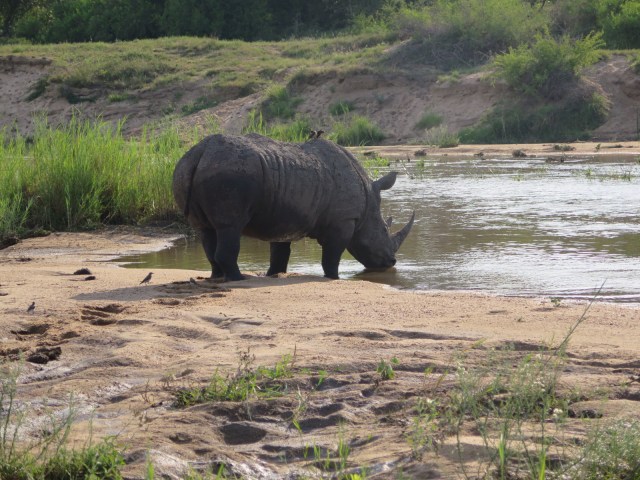
We left them to their foraging, and next came upon another white rhinoceros. This one was not as agitated by our presence as the one we saw earlier, so we spent a little more time watching it dine. The white rhinoceros has a wide mouth and jaw which enables it to almost scoop up the grasses. This wide mouth distinguishes it from the black rhino which we haven’t seen yet. We were instructed by our ranger, Tim, not to take smart phone photos and post them on any social media because poachers can learn where the rhinos are from the location info on the photo. I had heard that some places are capturing rhinos and then shaving down their horns to make them less valuable. Tim said that it really doesn’t deter the poachers because there is still some horn left that can be harvested, and the prices that the poachers receive is astronomical. He thinks they will be extinct in the wild within the next ten years – tragic!

E14DA413-99C2-48C8-97E2-26C23C60AE8B

Next we saw several waterbucks, and a vervet monkey in a tree nearby. We got to watch some water buffalos grazing. This animal is considered to be one of the most dangerous to hunt. They can weigh nearly a ton and they tend to be belligerent. Even lions are hesitant to take one on unless it is ill or injured. There were several birds grooming the water buffalos. This bird is the only bird, other than the woodpecker, that move up and down. Some even hang on to the underbelly. The water buffalo is covered with thousands of ticks which the birds eat. Ticks are so prevalent that some animals actually become anemic. Sounds like northern Minnesota.

The sky tonight was truly stunning. Shortly before sunset, storm clouds began coming in and blocking the sun. The edges of the clouds were brilliant from the sun’s reflection. We stopped just before sunset for “sundowners,” snacks and beverages. While we were enjoying our repast, a small praying mantis landed on the arm of one of our fellow travelers. It couldn’t have been more than half an inch long, neon green in color with darker green spots. It looks like an alien creature from a sci-fi movie.

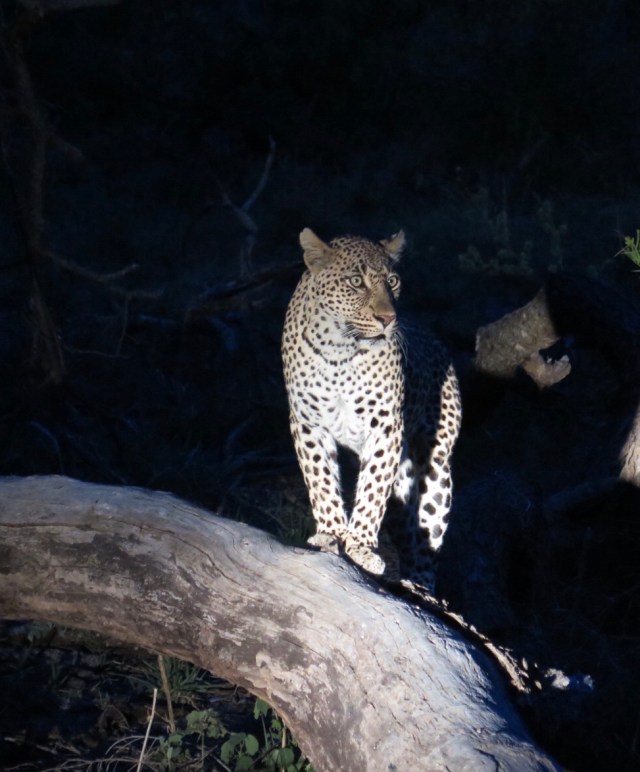
Back on the hunt, we found more baboons and elephants. At dusk, Tim learned that there was a leopard on a nearby bridge. We hurried over to watch this female. They are even more beautiful at night than in the daytime.

7606D3A7-A1DC-4399-8DD5-77A5757B3BA3

We had another delicious dinner back at the camp, and were again entertained by several of the staff there.


Posted in Africa, Leopards, Rhinos, Wildlife Refuge | Leave a comment