Frozen Waters One: New Zealand

February, 2014

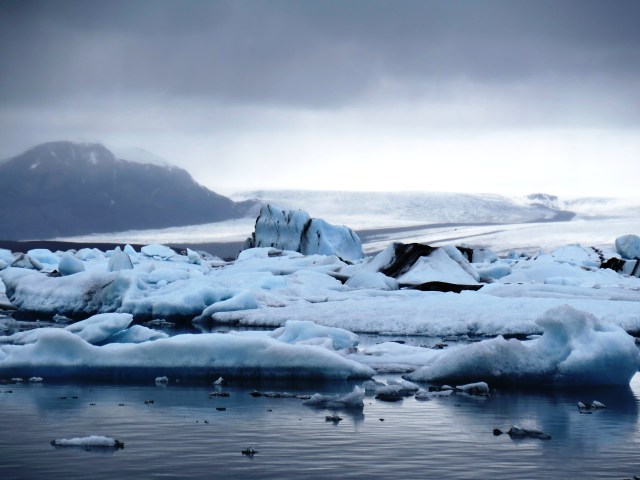
A glacier is a slowly moving river of ice. Its own weight causes the movement. In fact, to qualify as a glacier, the ice must be thick enough to sink and move on its own weight. Glaciers form where the accumulation of snow exceeds the melt off, or ablation. Most of earth’s glaciers are found in the Arctic and Antarctic, but they are also found in mountain ranges. They are found on every continent, and on some high-latitude islands like New Zealand or Papua New Guinea. Glaciers cover about 10% of the world’s land, with over 5 million square miles of ice.

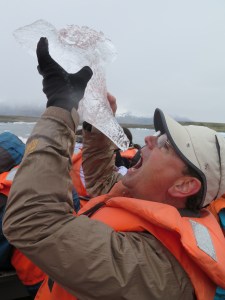
The aqua color that we often see in glacial ice is due to the fact that air bubbles are squeezed out of the ice, causing it to become denser, and making the ice appear blue. Also, like ocean water, the ice reflects colors at the blue end of the spectrum, while absorbing colors at the red end of the spectrum.

DSCN0402

Note the blue color in the crevasses

The National Snow & Ice Data Center lists twelve types of glacier: mountain, tidewater, piedmont, hanging, cirque, ice apron, rock, ice shelf, ice field, ice cap, ice stream, and ice sheet. The glaciers on the South Island of New Zealand are categorized as mid-altitude mountain glaciers. Mountain glaciers develop in high mountainous regions, often flowing out of icefields that span several peaks or even a mountain range.

There are over 3,000 glaciers on the South Island, most of them in the Southern Alps mountain range in Fiordland National Park. New Zealand’s glaciers have been retreating since the late 1800’s, and the rate of retreat has accelerated since 1920, and several of the retreating glaciers have created glacial lakes. A few glaciers have advanced, but the loss of glacier mass far exceeds its creation. We are fortunate to have seen them when we did.

While visiting Milford Sound on the South Island of New Zealand, we had an opportunity to take a flight from Milford to Queenstown that passed over several glaciers. This was my first view of glaciers anywhere, so it was very exciting. There are several glaciers in the area, and we may have seen any of these: Rob Roy, Jura, Dart, Donne, Olivine, Mt. Tutoko, or Grant. Why wasn’t I taking notes!!

On a side note, Milford Sound is not a sound at all, but a fiord (New Zealand spelling). A sound is formed when a river valley is flooded by the sea, a fjord is formed when a glacier retreats, and sea water fills the resulting valley.


Posted in Glaciers, New Zealand Travel | Tagged , , , , | 1 Comment

Falling Waters Twenty-Five: Wrapping Up

This is the final post in my waterfall series, that is, until I see some more. I believe there were about 70 so far.

January, 2016 – The Big Island of Hawaii

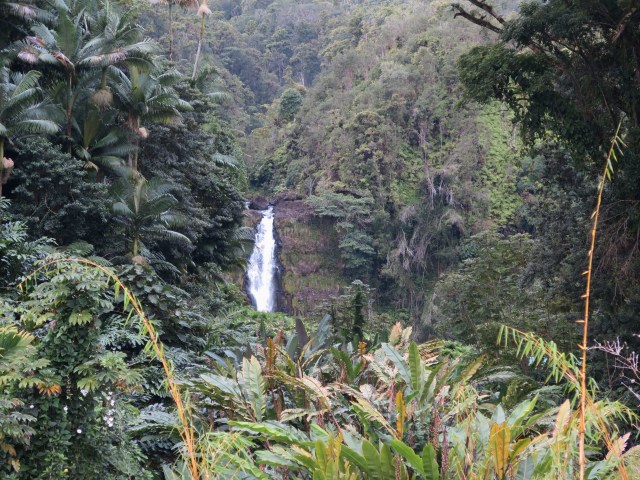
Akaka Falls State Park, located a few miles north of Hilo, is home to two waterfalls, Kahūnā and Akaka. As you walk along the path, you will be treated to some smaller waterfalls before you arrive at the main show.

Akaka Falls is a 442 foot waterfall located on the Kolekole Stream. In the Hawaiian language, Akaka means a split.

Kahūnā is slightly smaller, at 400 feet. It’s also more hidden, and thus difficult to see in its entirety. IMG_5395

On an earlier visit in February, 2011, we took a helicopter ride over Mauna Loa volcano, where we saw some more lovely falls.

August, 2017 – Winnewissa Falls, Pipestone, Minnesota

This lovely little waterfall is located in Pipestone National Monument in the southeast corner of Minnesota. Winnewissa comes from the Dakota verb “winawizi,” meaning to be jealous or envious.

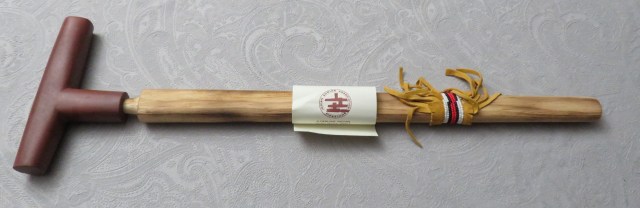
The falls are situated in the pipestone quarry at the Monument. Native Americans have come here for thousands of years to quarry the Catlinite stone for ceremonial items, particularly pipes. The stone is still quarried, and you can purchase your very own pipe here at Pipestone.

IMG_7312

Posted in Hawaii, Hawaii Travel, Minnesota, National Monument, Waterfalls | Tagged , , , | Leave a comment

Falling Waters Twenty Four: Multnomah Falls, Oregon

July, 2018

IMG_6893


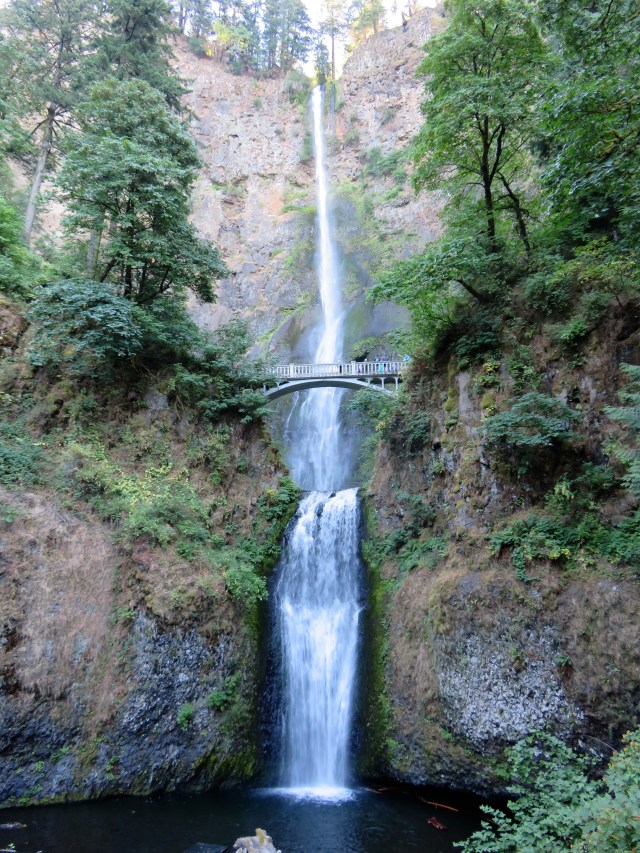
Some of the approaches to Multnomah Falls were closed following the wildfires of 2017.  The waterfall, itself, was evacuated for a while. There is a parking lot next to the falls that fills up early. We beat the crowds by getting there by 8:30 am. That was fortunate, because the lot was full just a few hours later. Over 2 million people visit the falls every year.

This is the tallest waterfall in the State of Oregon, with a total drop of 620 feet, It first drops 543 feet into an upper plunge pool, meanders another 8 feet, then plunges another 69 feet to the bottom. The flow is usually highest in the winter and spring. A sign at the site claims that Multnomah is the second tallest waterfall in the United States, but the evidence does not support that. Even if it isn’t the second tallest, it certainly is stunningly beautiful, and well worth a visit.

There is an observation bridge, the Benson Bridge (built in 1914, and named for the man who owned the falls at the time) that passes in front of the first drop. At this point, there is a path to the top of the falls, but that has been closed due to rock slides. Work is being done to make these paths safe again.

Upper Fall and Plunge Pool

Lower Fall and Multnomah Creek

Multnomah Falls is one of 77 waterfalls on the Oregon side of the Columbia River Gorge. This waterfall developed about 15,000 years ago, on Multnomah Creek, which is fed by underground springs from Larch Mountain. Beneath the falls, the creek empties into Benson Lake, and eventually into the Columbia River.

According to a Wasco legend, the waterfall was formed after the daughter of a Multnomah chief sacrificed herself to the Great Spirit to save their village from a plague by jumping from the cliff. After her death, her father asked the Great Spirit to give a sign that his daughter had been welcomed into the land of the spirits. Almost at once, water began to flow over the cliff, creating the waterfall. Another Native American legend says that Multnomah Falls was created to win the heart of a young princess who wanted a hidden place to bathe. Personally, I prefer the first story.

Multnomah Falls were noted in journals by Lewis and Clark during their 1805 expedition, when they traveled through the Columbia River Gorge.

While you’re in the area, and are interested in some magnificent views of the Gorge, pay a visit to Vista House, situated on a bluff 723 feet above the Columbia River.


Posted in Oregon, Road Trip, Waterfalls | Tagged , , | Leave a comment

Falling Waters Twenty-Three: Washington State’s National Parks

July, 2018

Mount Rainier National Park is home to over 150 waterfalls. We weren’t on a hunt for waterfalls, though, so we only saw a few. The largest one was Nisqually Valley Falls, which is fed by the Nisqually Glacier, at least in part. It drops about 300 feet over two drops.

While in Olympic National Park, we hiked to Gatton Creek Falls, which drops 60 feet in a staircase style. While walking the path, we enjoyed the many wildflowers and ferns in addition to the sound of the rushing water.

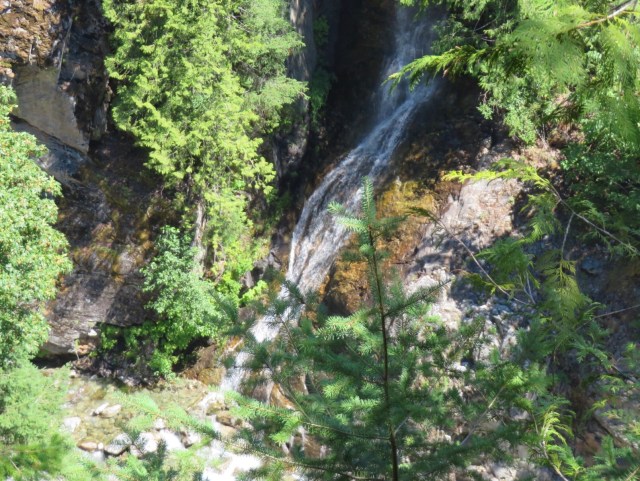
As its name implies, North Cascades National Park has many waterfalls, but, again we only saw a couple of them. We took the Happy Creek Nature Trail Happy Creek trail, but didn’t reach the top of the waterfall.  However, we enjoyed the lower part of the flow.

7419A845-45C8-40B1-A23E-6E8855EE1EEF

Gorge Creek Falls

Posted in Mount Rainier National Park, National Parks, Nisqually Glacier, Olympic National Park | Tagged , , , , | Leave a comment

Falling Waters Twenty-Two: Réunion and Mauritius

January, 2018

9707C37B-CF06-4AFD-953B-D2D495095007Near the end of a South African and Indian Ocean cruise, we stopped at the islands of Réunion and Mauritius. We really only saw one waterfall on the Island of Réunion, along the road as we traveled from one location to another, and I have no idea of its name, but I’m including it in anyway.

Mauritius, on the other hand, offered a few more opportunities. Black River Gorges National Park is home to Alexandra Falls. This is a lovely waterfall, but is almost overshadowed by the views of the gorge itself.

Not far away is the stunning Chamarel Waterfalls, with a drop of 312 feet over a vertical cliff.

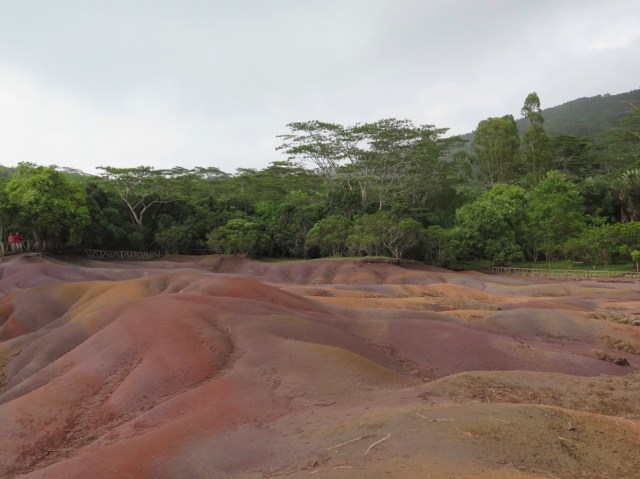
If you’re there, it’s well worth a side trip to stop at Seven Coloured Earths.

2B99B118-46A8-41FF-984C-F2E7028191F9

We also spent a few days in Dubai, United Arab Emirates. Now, the UAE is a desert country, but in Dubai, if it doesn’t exist naturally, they will build it, hoping you will come. So, the Dubai Mall built The Waterfall, an 80 foot indoor waterfall, in 2008.

Posted in Dubai, Indian Ocean, Mauritius, Waterfalls | Tagged , , , , | Leave a comment

Falling Waters Twenty-One: Southeastern Minnesota

October 5, 2018

We thought it was high time we saw some of the waterfalls we drive by in Southeastern Minnesota. It wasn’t raining today, unusual this year, so we went exploring.

First, is the non-waterfall – Zumbro Falls. The city dates to the mid-1800’s. A grist-mill dam created the falls at the original location of the. Numerous floods over the years swept away the dam and the waterfall. Needless to say, we didn’t stop here.

We saw our first waterfall 40 miles west of Zumbro Falls, in Nerstrand Big Woods State Park. Established in 1945, the park has eleven miles of hiking trails, four miles of snowmobile trails, and a mile of snowshoe trail. It also has a lovely waterfall, called Hidden Falls.

Nerstrand Big Woods State Park is comprised of two, nearly horizontal, layers: a layer of glacial drift about 150 feet thick over a layer of limestone. The limestone is buried in most parts of the park, but is visible at Hidden Falls on Prairie Creek. As the creek flowed over the hard limestone bedrock, lower layers of soft shale bedrock eroded faster and undercut the limestone, creating a rock shelf with a waterfall.

You can walk across the creek to continue hiking through the park.

We then drove east to the City of Cannon Falls, through rolling farmland. The fall colors are not at peak yet, but it still made for a beautiful drive.

Cannon Falls experienced a very bad storm a couple of weeks ago, and there is still evidence of the damage, with fences down, homes damaged, and many trees uprooted. With all of the rain recently, the waterfall has a good, strong flow.

The waterfall, for which the city is named, is located on the Little Cannon River, less than a mile from where it empties into the Cannon River. Take a walk in Minnieska Park for some good views of the falls.

I especially liked the stelae that were posted in the park, with the message, in several languages: “May Peace Prevail on Earth.”

Our last stop was seventeen miles north of Cannon Falls. Hastings is home to Vermillion Falls at Vermillion Falls State Park. This 100 foot waterfall on the Vermillion River is located next to Ardent Mills flour mill. The original mill, built in 1853, and powered by Vermillion Falls, was the first operating mill in Minnesota Graham flour was invented here, a key ingredient in graham crackers, so when you are enjoying your S’mores, remember it’s possible in part because of the mill in Hastings.

The park is home to a white squirrel. We have black squirrels at home, which are probably variants of the eastern grey squirrel. I’d not seen a white one before. It might be an albino, but more likely, is another variant of the eastern grey squirrel. It was difficult to get close enough to get a good shot of it, as it was pretty skittish.

CA4C4A1B-D0A7-4617-987F-14DF4DC6E47C

Posted in Minnesota, Waterfalls | Tagged , , , , | Leave a comment

Falling Waters Twenty: Victoria Falls, Zambia

20180104_135308

January, 2018

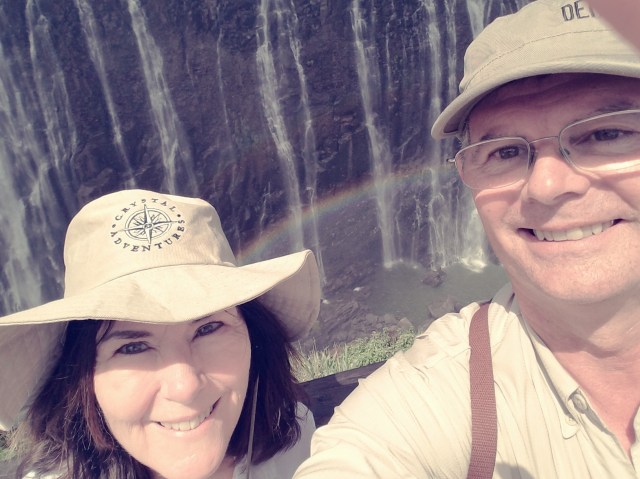
Victoria Falls is famous for being the largest waterfall system in the world, with a total width of over a mile (5,600 feet) and a height of 355 feet. It was named for Queen Victoria in 1855 by David Livingstone, the first European to lay eyes on its splendor. The indigenous Lozi people called it Mosi-oa-Tunya, “The Smoke That Thunders.”

We flew into Victoria Falls and were treated to some amazing aerial views of the falls.

We stayed at the Royal Livingstone Hotel, and could see the falls’ mist from our room. We first took a boat ride to the Livingstone Island where we could view much of the falls. The island is inaccessible for about 4 months each year because the water level is too high. When at its highest, the mist is heavy enough to block views of the river below.

We then walked to the park t for views from several vantage points, and were able to see rainbows at several locations.

It’s possible to visit the falls from the Zimbabwe side by crossing the nearby Victoria Falls Bridge.


Posted in Africa, Waterfalls, Zambia | Tagged | Leave a comment

Spelunking and Spam in Southern Minnesota

October 2, 2018

Spelunking, from the Latin word spēlunca meaning cave, is a term that has fallen out of favor with “cavers,” who consider spelunkers to be untrained and unknowledgeable compared to themselves. Nonetheless, I think it’s a lovely word, and will continue, in my own untrained and unknowledgeable way, to use it.

By the way, the scientific study of caves is referred to as “speleology,” not “caveology.”

54539C8C-5342-47BF-86BA-C5FA4311323DWe’d seen signs for Niagara Cave, and decided to check it out for ourselves. The cave is located southeast of Rochester, Minnesota, just one mile from the Iowa border.

On our first attempt, on a warm sunny day, our GPS did recognize the cave, but it got confused as we got closer. We took a few wrong turns, driving through beautiful farmland, on white limestone gravel roads, before we finally found it. Unfortunately, we weren’t dressed appropriately. Shorts and sandals were not recommended. We were told that the one hour tour included 500 steps, dripping water with potential slippery areas, and the underground temperature was only about 50 degrees.

So we left, with plans to return. On our second attempt, this time properly attired with jackets, jeans and sturdy shoes, we had just as much difficulty locating the cave, and we toured different areas of Minnesota farmland on the way. It was worth the effort, though. If you choose to go, and we do recommend it, allow a little extra time for unplanned exploration.


Niagara is a limestone cave under Minnesota crop land that was owned by John Kennedy in the early 1900’s. The cave was discovered in 1924 when Phil Todd, who was operating the farmland, had three little pigs escape and then disappear. Todd enlisted his nephews to help look for the pigs. After an extensive search, the boys found that the pigs had fallen through a narrow crack in a sinkhole. They got some ropes and lights and ventured down into the hole where they found the pigs on a rock ledge. They also found vast rooms and passageways that extended beyond what they could see with their lights.

Todd’s nephews told others of this amazing find, but most people didn’t believe them. Eight years later, some cave explorers, Joe Flynn, Leo Tekippe and Al Cremer from Decorah, Iowa heard about it, and decided to explore. After several hours they came upon an underground waterfall, fed by subsurface streams. The explorers decided to develop the cave and leased the land from Mr. Kennedy. They spent two years preparing walkways, adding staircases and bridges, and installing a lighting system. Niagara was opened to the public in 1934.

There is a Wishing Well (coins no longer allowed), a wedding chapel, the Crystal Chapel which hosted its first wedding in 1935, an Echo Chamber (Mark tested his pipes here.) The flow of water creates interesting flowstone deposits on the walls of the cave.


The cave has several fossils that are hundreds of millions of years old, including cephalopodsfisheriteshorn corals, and gastropods.


We learned how to remember the difference between stalactites and stalagmites. A stalactite, with a “c” drops from the “ceiling,” a stalagmite, with a “g” rises from the ground. I supposed true geologists would laugh at this, but we untrained and unknowledgeable folks won’t be offended.

Some types of stalactites we saw were “ribbon,” “soda straws,” “shark tooth,”


We explored several narrow passages with ceilings as high as 100 feet, or as low as five feet. This is not a comfortable place for the claustrophobic.


Perhaps the most exciting part of the tour was the underground waterfall, with a 60 foot drop.


It did seem like we walked 500 steps, only half, of course, were going up, but we built up an appetite, so we headed west about 60 miles to Austin, Minnesota, the home of Spam!!! This is the edible kind of spam. The museum is located downtown, with a store attached so you can buy souvenirs, including Spam. We went home with a sample pack of twelve varieties. Perhaps we can throw a Spam party when we get home.


The museum proved to be quite informative. Spam is canned cooked meat produced by Hormel Foods Corporation. It was first introduced in 1937, and was used by England’s and Russia’s military as well as our own during World War II.  and gained popularity worldwide after its use during World War II. There are currently 14 varieties, including garlic, hot and spicy, bacon, teriyaki, chorizo, and Tocino (only available in the Philippines. We sampled a few while visiting the museum. You can also find hundreds of recipes from around the world.


Hormel Foods was founded by George A. Hormel in Austin in 1891, and has since become a multi-brand corporation with over $4 billion in sales internationally, including almost 400 million cans of Spam. Their Project SPAMMY program donates 2.5 million cans of fortified chicken product to children in Guatemala to address malnutrition there.

The Hormel family maintains a presence in Austin through The Hormel Foundation, which allocated over $8 million in grants to the community. The Hormel Institute in Austin is a cancer research department of the University of Minnesota that frequently collaborates with the nearby Mayo Clinic. These things make Austin a great place to live for its 25,000 residents.

So eat that Spam with pride!

Posted in Caving, Minnesota, USA Travel, Waterfalls | Tagged , , , , , , , | Leave a comment

Rochester, Minnesota: Medical Resort City

September, 2018

Here’s a very brief history of the Mayo Clinic, Rochester’s primary claim to fame. It was founded in the mid-1800’s, by William Worrall Mayo, who was born England in 1819 and emigrated to the United States in 1846. He held a number of positions, including pharmacist, before landing in Rochester in 1863, where he served as examining surgeon for the Minnesota State draft board during the Civil War. He opened his first clinic in Rochester that same year.

After a devastating tornado hit Rochester in 1883, killing 37 people and injuring at least 200 more, Mother Mary Alfred Moes, of the Franciscan Sisters, raised funds and supervised the construction of Rochester’s first Hospital in 1889. She convinced Dr. William Mayo to head it.

William’s sons, William James and Charles Horace, began studying medicine as young boys under their father, often attending him on his calls. After graduating from medical school, they joined their father in his practice. Several other partners joined the private practice over the years, and in 1919, they created a non-profit practice, eventually named the Mayo Clinic Foundation. The clinic added Rochester Methodist Hospital, St. Mary’s Hospital, the Eugenio Litta Children’s Hospital, plus several state-of-the-art clinic buildings, plus they added locations in Arizona and Florida.

Mother Mary Alfred Moes was not the only woman to influence the direction of health care in Rochester. Charles Horace Mayo’s wife, Edith Graham Mayo, was Saint Mary’s Hospital’s first trained nurse, anesthetist and nurse educator. She had assisted Charles in his first surgery at the hospital. She was influential in reducing hospital mortality in an era where poor anesthesia care was blamed for many deaths.

The two brothers, William H and Charles, had a very collaborative relationship, sharing the methods and knowledge they acquired individually. Their partnership was so strong that they even shared one checking account. They were very willing to share their knowledge with other physicians, and leading surgeons would come from around the world to learn from the Mayo brothers.

For more of Mayo’s history, I urge you to read the Ken Burns book “The Mayo Clinic: Faith-Hope-Science”, or watch the PBS Documentary by the same name.

247311AE-98ED-45F7-A41F-0EC4A205B415Mark and I have been using the Mayo Clinic for a few years. When we went for our first physicals there, we were very impressed by their efficiency and thoroughness. All test results, x-rays, medical records are readily available to every professional we see, usually within hours of the procedures. Follow-up tests, if needed, are scheduled right away, and often can be completed within a day or two. Not only do the medical staff have ready access to our records, we too can see the results as soon as they are available, using an app on our phones. We are given as much information as we need to make informed decisions about our own health care.

Rochester’s Mayo Clinic employs over 34,000 people, and sees over one million patients each year. The Clinic, as well as the City of Rochester, work to make these employees and visitors feel welcome. When you walk into the Nathan Landow Atrium of the Gonda Building, you immediately feel a sense of peace and calm, in spite of the numbers of people there. As Cesar Pelli, the building’s architect, said: “Healing begins when you walk in the door.”

The high ceilings and glass walls bring in the light and beauty of the outdoors. Inside, you can listen to singers or live music at the grand piano. I was not around to hear the Singing Surgeons, but I did watch a video of them performing on “Ellen” earlier this year. Beautiful!

When I walk through that atrium, I feel like I’m in a high-end resort, except that all economic and ethnic classes are welcome here. No one is expected buy an expensive drink or meal to enjoy the entertainment. It’s provided for the comfort or the patients and their families.

Dale Chihuly created the stunning glass sculpture that hangs in the Gonda Building over the Nurses’ Atrium. He left it untitled because he wanted the viewers to share the creative spirit by creating their own interpretations. He said “We wanted to create something that makes people feel good.” There are many other pieces of art throughout the buildings, an extended art gallery.

Adding to the sense of a resort are the numerous quality restaurants within walking distance of the clinic. In inclement weather, you can usually reach any destination by skyway or underground walking subway. Yes, there are some national chains, but there are also many local establishments, from casual to elegant, burgers to lobster, like Victoria’s Ristorante & Wine Bar, Terza Ristorante, Newt’s, Pescara, Chester’s, Grand Rounds Brewing, Salute Wine Bar. Most offer outdoor dining in the warm months. There are many more options, but we haven’t had a chance to try them all out yet.

Downtown Rochester hosts several outdoor events during the warm months as well. This past week, the local Boys and Girls Club hosted Tenth Annual Chili Challenge fundraiser. Every Thursday in June through August, you can enjoy beer and food while shopping at the Thursdays on First & 3rd Summer Market. One Friday a month, catch outdoor Movies in the Park at downtown’s Central Park, or enjoy Games on the Grass any day at Peace Plaza (equipment provided).

The Mayo Civic Center hosts concerts, trade shows, musicals and plays, even Presidential rallies. Art Garfunkel played here just a few weeks ago. I was disappointed that we didn’t know about it ahead of time, as we would have loved to attend. It would have been a nice follow up to the Paul Simon concert we saw recently. If you can’t guess, I was a huge Simon and Garfunkel fan, buying all of their albums, memorizing the songs and singing along (not well.)

Every good resort has shopping opportunities, and Rochester is no exception. Again, there are a few national chains, but mostly there are local boutiques and shops. This is a great place to go if you enjoy unique clothing and accessories. I know I don’t enjoy seeing my outfit walking down the street in front of me! Besides clothing, there are gifts, toys and, kitchen and entertainment items, home decor, leather goods and more. Christmas is just around the corner! You can spend a little or you can spend a lot. After all, the Mayo Clinic does attract wealthy patients from around the world.

There is plenty of lodging in the area, with more being built. There are short-term apartment options, suites hotels and traditional hotels at several price points. Even the clinic is getting in the business. They recently announced plans to add eleven floors to the 21-story Gonda Building. Four floors will be for patient care; the other seven will provide about 200  “premier” hotel rooms.
 

Posted in Mayo Clinic, Minnesota, Rochester, Minnesota | Tagged , , , , , , , , | Leave a comment

Falling Waters Nineteen: Iguazú Falls, Argentina and Brazil

20170304_104509

March, 2017

Iguazú Falls is my favorite waterfall to date, and yes, we’ve been to Victoria Falls. This waterfall is located in Iguazú Falls National Park, a UNESCO World Heritage Site.  The name means “big water” in Guarani, an accurate description. Iguazú Falls have been featured in several shows and movies, including “The Mission” in 1996, “Indiana Jones and the Kingdom of the Crystal Skull” in 2008, and as Warrior Falls, the site of  T’chulla’s battles and coronation in “Black Panther” in 2018.

The Iguazú (Iguaçu or Iguassu if you are in Brazil) River flows between Argentina and Brazil, spreading almost two miles in width and dropping over 150 feet from 275 waterfalls! When Eleanor Roosevelt visited these falls, she is reported to have said “Poor Niagara.” Now, I haven’t been to Niagara yet, so I can’t comment. Average flow here is 61,600 cubic feet per second, with a maximum record flow over 1.6 million cubic feet in 2014. Niagara’s average flow is 85,000 cubic feet, but it has never exceeded 293,000 cubic feet.

I confess that we were unaware of this treasure when we planned our cruise. We heard about it at an on-board ship presentation, and since we had a few extra days in Buenos Aires, decided to fly there for a couple of days. Our hotel was located inside the park, and our room afforded us some amazing views of the falls, with the mist rising above them, and the roar in our ears. We could even go on the roof for better views.

Those views from the hotel were just a taste of what we were to see when we headed to the park. It is difficult to describe the beauty of these waterfalls. There are two different paths around the park, an upper circuit and a lower circuit. We took both. On the upper circuit, we could look down on the falls and even walk over them in some areas.

The lower circuit gave us another perspective, allowing us to get close enough to the falls to get drenched.

The river flows around the San Martin Island, and tour companies were offering boat rides that take the riders close to island, and also allow them to view the Devil’s Throat, the highest and deepest of the falls. Other companies offer flights over the falls.

Posted in Argentina, Iguazu National Park, South America Travel, UNESCO World Heritage Site, Waterfalls | Tagged , , , , | Leave a comment