Falling Waters Eighteen: Chile and Antarctica

IMG_9258

What’s a good way to fritter away a lot of time? Start blogging about your travels. For me, it’s not just about posting my amateur photos, it’s about learning. I spend more time researching than I do writing, and I truly love every minute of it, even when, or especially when, it takes me down a long winding path to knowledge.

February, 2017

While on a cruise around South America, we visited Puerto Chacabuco in Aysén Province, at the northern end of Patagonia. I misspelled this name as Chucabaca in some earlier posts, apparently confusing it with Han Solo’s BFF, Chewbacca.

We took a choppy boat ride to Isla Carmen, also known as Deer Island.We didn’t see any deer, but did see a glacier fed waterfall on a nearby island, Isla Partida.

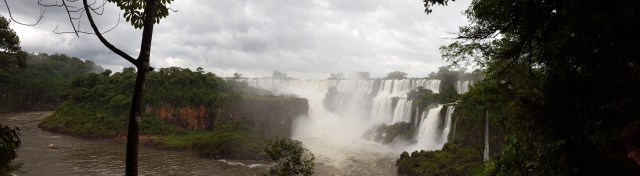
As we sailed through the Chilean Fjords, we were treated to distant views of several more waterfalls.

As we cruised further south, we encountered several glacial fed waterfalls. Amalia Glacier is located in Bernardo O’Higgins National Park, and Italia Glacier in Alberto de Agostini National Park.

Decepción Island and Admiralty Bay are both in Antarctica, in the South Shetland Islands Archipelago. These areas are home to hundreds of thousands of penguins, and we were so busy looking at them that we almost missed the waterfalls.

Posted in Antarctica, Chile, Glaciers, Patagonia, Penguins, South America Travel, Waterfalls | Tagged | 2 Comments

Workation Woman

This is an update to a post I wrote a few weeks ago about Maria Surma Manka, who has figured out how to combine work with travel. The St Cloud Times published an article by Stephanie Dickrell on September 30, 2018 that will give you a better idea of what Ms Manka has been doing.

WORKATION WOMAN

Sunday, September 30, 2018

Area woman champions ‘digital nomad’ lifestyle

North Prairie resident dubs herself as the ‘Workation Woman’

Stephanie Dickrell

St. Cloud Times USA TODAY NETWORK

NORTH PRAIRIE — Four weeks in Barcelona. Six weeks in New Zealand. Six weeks in London.

All in just a few years.

That lifestyle feels unattainable for many: too much money, too few days off, too many commitments.

But North Prairie resident Maria Surma Manka has made it her reality.

She’s dubbed herself the “Workation Woman,” as in a “working vacation.” The list above are the workations she’s taken wit h her husband, Joram Manka, and two children, August, 7, and Baron, 9.

She recently published “Next-Level Digital Nomad: A guide to traveling and working from anywhere (even with kids and a day job),” to help others take the plunge.

“The stereotype of a digital nomad is someone young, unattached, with no kids, no mortgage, no car payments,” Surma Manka said.

But she thinks families can make it work. Her sons were ages 2 and 4 when they took their first workation to Barcelona.

“It’s … exposing (the kids) to new things and teaching (them they) can do it,” Surma Manka said.

Surma Manka was first inspired by “The 4-Hour Workweek: Escape 9-5, Live Anywhere, and Join the New Rich,” by Timothy Ferriss. In it, he explains how to take mini-retirements, Surma Manka explained.

While that didn’t seem feasible for her young family, it sparked an idea. She and her husband already spent some time working remotely from home. Why not work remotely from another country?

“When else do you get the chance to change everything about your life?” Surma Manka asked. “Where you wake up in the morning, where you shop, the movies you watch, the newspapers you read, the restaurants you visit, how you get to and from work … every aspect of your life changes. If you find that exciting like I do, then I think you should do it.”


Maria Surma Manka and her family have gone to London, New Zealand and Spain for workactions, working vacations. They are shown here in 2016 in front of the Eilean Donan Castle in Scotland. (Photo: Maria Surma Manka)


Maria Surma Manka talks about details involved in living and working abroad for several months at a time during an interview Wednesday, Sept. 26, at her home near Bowlus. (Photo: Dave Schwarz, dschwarz@stcloudtimes.com)

People do that every day, moving across the country or world for jobs and relationships. The beauty of the workation is it’s temporary.

“It’s for six weeks. And that’s the best part. If everything falls apart and you hate it, you’re back home within weeks,” Surma Manka said. “It’s a low-risk way to kind of really change up your life.”

No longer a tourist

In North Prairie, the family lives in a very secluded, rural area. So they seek out uber-urban places to workation.

“Our priority is to flip our lifestyle, but also to make sure our kids are safe and the work gets done. … Any other little thing doesn’t really matter,” Surma Manka said.

The workation allowed the family to explore new places as something more than a fly-by tourist.

“Some of the best things we’ve done are things that were not on any of our lists,” Surma Manka said.

While they were in London, it happened to be the Queen’s birthday.

“We found out that they do this big huge thing in Hyde Park, where they have 40 horses that race across the field with cannons,” Surma Manka said.

The family also has a routine when traveling.

“Whenever we land in a new city, the first thing we do is find the nearest playground,” Surma Manka said. “That’s just kind of how we settle in.”

They push their kids to try new thing s and explore, but not too much. Food is always a challenge.

“We have left restaurants where we sat down and were like, our kids will not eat anything. … They’re somewhat adventurous for their age. But we’re also not going to just make life more complicated,” Surma Manka said.

The grocery store is another place to explore and experiment.

“We’ll have a cabinet full of treats that we find at the grocery story and we go and try different sweets every day,” Surma Manka said.

Regular childcare provides opportunities for parents and kids. A nanny means mom and dad can go to a coworking location or a traditional office, where they can meet other people and explore.

For the kids, they also develop a relationship with someone new. For instance, in New Zealand, the family had a nanny who would take the boys to the zoo, to museums and other places.

“They did stuff that we never got to do,” Surma Manka said. “They’d be like, ‘Mom, we went to the museum today. We want to take you and Dad.’ So they could be our tour guides too.”

Those first workation in Barcelona was success and spurred Surma Manka and the family to go again.

“We learned we could do it … we wanted to do it again,” Surma Manka said. “But it was important to take it slow, especially with kids, and not go with a bunch of preconceived ideas or plans about what we were going to do and how we were going to do it.”

The workations always have the potential to change your life, she said. When she returned from Spain, she kept one habit she and her husband developed. Don’t go to work before 9 a.m.

“How do I think about my day a little bit differently, and not be quite so ‘go go go American’ all the time?” Surma Manka said. “What if when I got back, I didn’t schedule anything before 9 o’clock?”

It’s helped.

“Just that simple act when we got back made my life so much easier, because I felt like I had a little more breathing space in the morning,” Surma Manka said. “And nothing suffered. The work still all got done.”

A major commitment

Surma Manka says a workation can be a more economical and effective way to travel. But it does take a lot of money up front.

Maria Surma Manka looks through photog albums from her travels as a digital nomad with her family during an interview Wednesday, Sept. 26, at her home near Bowlus. DAVE SCHWARZ, DSCHWARZ@STCLOUDTIMES.COM


For her family, it took a year of being disciplined with spending.

“You’re really watching everything you spend. Do we really need it or do you just want it?” Surma Manka said. They seriously evaluate any purchase over $20.

It meant sacrificing other vacations or other luxuries.

“We rarely took trips in between. We didn’t even do long weekends up north, because we were really just saving everything for those big trips,” Surma Manka said.

One family Surma Manka met did without Christmas presents, so they could go.

” You have to put things off, like house repairs,” Surma Manka said.

Lodging, childcare and air fare are usually the biggest expenses. But there are ways reduce those costs.

Credit cards which earn airline miles can help. Older children might not need as much child care. It’s different for every family.

Surma Manka said workation doesn’t have to be something only people with higher incomes can do.

“I think this idea can work, pretty much whatever your financial situation or geographical limits are,” Surma Manka said.

It doesn’t have to be for six weeks in New Zealand or Spain, she said. Consider working from a cabin up north for a week or two, or from your company’s office or factory in another city. Maybe you have a r elative somewhere you can visit.

“I think if you think about your network and you just think about what makes sense for you, it can be as big or little of a financial commitment as you want,” Surma Manka said.

The family had friends in Spain, which they relied on during their first workation. The friends helped negotiate

the language barrier and find child care. “It was an easy way for us to experiment,” Surma Manka said.

No more excuses: You can do it, too

Surma Manka said people always tell her they wish they could do what she does.

“A lot of people just don’t know where to start,” Surma Manka said. “That’s why I started the website. That’s why I decided to write the book … to start sparking some ideas.”

How do you get ready? Plan. A lot.

Surma Manka spent 15 months on and off planning the first workation to Spain. “I think this (book) will at least help save people a couple weeks of work … to at least give people a jump start,” Surma Manka said.

The book has worksheets on choosing where to go, comparing expenses, finding housing, work places and child care, when you should be planni ng what and even a packing list. For a copy or more info, visit workationwoman.com.

She even gives advice on how to ask employers and schools support. When the family traveled to London, their oldest son was in first grade.

“Everybody at Royalton … understood that education happens all the time, not just in the classroom,” she said.

The family isn’t currently planning their next workation. But they do have ideas: everything from Tokyo and Brisbane, Australia, to Scandinavia and somewhere in North America.

“We’re really open to … what makes sense for our family at the time,” she said. Regardless of her now experienced planning skills, she still gets nervous.

“For about a week before, I can’t sleep,” she said. “But I t hink just how adaptable kids and the family can be as long as you take it slow … and you set priorities.”


Maria Surma Manka and her family have gone to London, New Zealand and Spain for workations, or working vacations. They are pictured here in 2016 in front of Big Ben in London. MARIA SURMA MANKA


Posted in Workation | Tagged , | Leave a comment

Falling Waters Seventeen: Alaska

August, 2016

We were on an Alaskan cruise, and made many stops between Vancouver, British Columbia and Anchorage, Alaska. One of our early stops was in Juneau, where we took a helicopter flight to Mendenhall Glacier. Melting glacial ice often creates beautiful waterfalls, and Mendenhall is no exception.

Farther north, we caught the White Pass & Yukon Railway train that traces part of the Klondike Trail, from Skagway, Alaska to the Canadian border. Along the way, we saw small waterfalls along the railway.

Our train passed over Pitchfork Falls, and we could also see Bridal Veil in the distance.

Then we entered Glacier Bay National Park, where we enjoyed more glacial waterfalls. It was pretty foggy that day, and my photos do reflect that.

In Anchorage, we boarded another train to Talkeetna, Alaska. We stopped at Porter Lake and Glacier where we saw a few more waterfalls.

These are just of few of the glaciers in our largest state. There are 43 named waterfalls in Alaska, and it would take weeks to find them all.

Posted in Alaska, Glacier Bay National Park, National Parks, Train Travel, USA Travel, Waterfalls | Tagged , , , , | Leave a comment

Falling Waters Sixteen: Barron and Stoney Creek Falls, Australia

Stoney Creek Waterfall

February, 2014

Australia is the sixth largest country in the world, with about 3/4 the land mass of the United States. Our time was limited, so we spent our time on the east coast, primarily in Sydney and Cairns.

While in Cairns, we took the Skyrail and Kuranda Train Tour to the Kuranda Village, which is located about 20 miles NNW of the city, at an elevation of 1,083 feet. The train ride to the village takes about two hours, including a stop at Barron Falls for photos.

Before reaching Barron Falls, however, our train traverses a bridge that passes in front of and over Stoney Creek Falls, a cascade type waterfall. We had to be quick, but were lucky enough to catch some rainbows as we rode by.

Barron Falls, located in Barron Gorge National Park, is an 800 foot wide, cascade type waterfall with four drops totaling  410 feet. The volume of water can be quite high during the wet season, yet little more than a trickle the rest of the year. Barron Falls supplies hydroelectric power to the Queensland area.

This waterfall was named for Thomas Henry Bowman Barron, Chief Clerk of Police in Brisbane in the 1860s.

After visiting Kuranda Village, we took the Skyrail Rainforest Cableway back to Cairns. I heartily recommend this exhilarating 4.7 mile ride over the Kuranda Rainforest. The ride takes about 90 minutes, and affords beautiful views of the trees and foliage below (from the vantage point up to 133 feet above,) as well as Barron Falls, the hydroelectric plant and the coastline.


Posted in Australia Travel, Waterfalls | Tagged , , , , , | Leave a comment

Rochester, Minnesota, Hometown of the Mayo Clinic

Thursday, September 27, 2018

We are spending some time in Rochester, Minnesota, so decided to learn a bit more about our temporary home away from home. Like many much larger cities we’ve visited, Rochester has a Hop On Hop Off Bus (or Trolley in this case.) We were able to pick the trolley up near our apartment, and take a 90 minute ride around town, learning more about the Mayo family as well as some of the local attractions.

Founded in 1854 by George Head, who named it for his hometown in New York, the City of Rochester is the third largest city in Minnesota, with a population of about 115,000 people. When you add in the adjacent communities, the number is over 250,000. Rochester is located in Southeastern Minnesota, in the Driftless Area, a region of the Midwest that was never glaciated. Also, Rochester is in Olmsted County, one of only four counties in Minnesota that does not have a natural lake!

Rochester was developed as a stagecoach stop between St. Paul, Minnesota and Dubuque, Iowa, part of the Dubuque Stagecoach Trail. The Minnesota State DNR (Department of Natural Resources) has developed a master plan for a Stagecoach State Trail, that will run from Rochester to Owatonna. It hadn’t been determined yet in 2012 where the trail would be aligned in Rochester. Stay tuned!

The Mayo Civic Center is located just a few blocks from our apartment. Besides conferences and trade show, the Civic Center hosts plays and concerts, even a recent show by Art Garfunkel. It is home to several works of art, including a sculpture of the Mayo Brothers, a stained glass 9/11 Memorial, and an interactive tapered stainless steel sculpture. Type a message into a keyboard, and it will be converted to sound and light on the sculpture.

One day as we were looking out our apartment window, we noticed a large building on top of a hill to the north of us. Our minds are always inquiring, so we looked it up on a map, and discovered that it is Assisi Heights, the motherhouse of the Sisters of Saint Francis, the nuns who founded St. Mary’s Hospital in 1899. Our trolley took us by, although we were not able to disembark here. The facility is not open to the public, except for Sunday Masses held in the chapel.

We next drove by the George Stoppel farmstead, an 1861 limestone house, barn, and two-story smokehouse. When Stoppel first settled here, he built the barn first. For their first winter, his family, including ten children, lived in a cave alongside the barn. A small red door on the left side of the barn marks the entrance to the cave.

Rochester’s most famous resident, William Worrall Mayo, arrived here in 1863 as an examining surgeon for the Minnesota draft board headquartered in Rochester during the Civil War. His family soon followed, and he set up practice that same year. More Mayo history will follow.

Among the many stops today was the Mayowood Mansion, built by William’s son, Charles Horace Mayo.

Charles and his brother, William J, along with their father and six other physicians founded the Mayo Clinic. They practiced as a for-profit clinic, doing very well. Charles used some of his fortune to purchase 3,000 acres, where he and his wife, Edith Graham Mayo built their eleven bedroom, eleven bathroom home in 1911. In addition to their home, Mayo created a lake, had several greenhouses and farms, plus a horse racing track. There was a stone barn that was used for his horses. He also adopted a feature from Ireland called a Dragon’s Tooth fence, supposedly used to discourage sheep from jumping over the fence.

Charles and his wife lived here until 1939, when their son Charles W and his wife, Alice, moved in. Grandson Charles H II and wife, Carolyn, also lived here while he was in residency at Mayo.

The family donated the mansion to the Olmsted County History Center in 1965, along with 10 acres surrounding the home. The Mayo Clinic purchased the property in 2011, and formed a partnership with the History Center, which conducts tours. Mayo has invested several millions of dollars into restoration, returning the home to original splendor. Much of the home was open to us during the tour, but several rooms have been closed to the public, as they are used by the clinic for meetings and private events. We could not take photos indoors, which was disappointing.

Charles H. Mayo designed the home. He did not stint on building and furnishing his home, including the most modern features available, including an elevator. He and his wife furnished it with items from around the world, many of which are still in the home. The grounds are beautiful, with pagodas, a sceened gazebo, and ponds.

Mayowood was home to many famous guests over the years, including Helen Keller, Franklin Delano Roosevelt, and the King of Nepal. It was not uncommon for world renowned patients to stay with their doctor when coming to Mayo for treatment. Mayowood was also known for its Annual Chrysanthemum Show during the 1920’s and 30’s when as many as 60,000 mums would be on display.

We also drove by Soldiers Field Veterans Memorial, dedicated in June, 2000. The Wall of Remembrance was created to honor veterans from Southeast Minnesota. The names of over 2,500 service men and women who died in service to our country are listed on the wall.

40C177D4-92D6-4998-A2DA-FB95DB2D5FF6

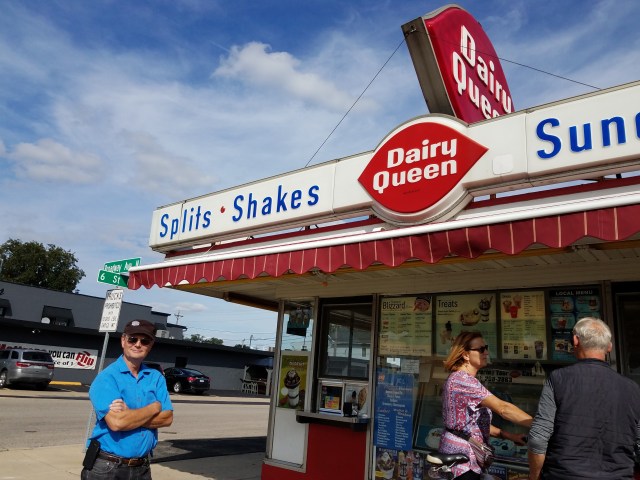
Rochester is home to the first Dairy Queen opened in Minnesota. This particular Dairy Queen opened in 1947, only seven years after the very first Dairy Queen opened in Joliet, Illinois. Mark and I are traditionalists, so we paid this site a visit a few days ago. It was a warm, windy day, and we ordered Blizzards. The staff was generous, so our cups overfloweth, and between the heat and the wind, it was all we could do to stay ahead of the melt. A fair amount ended up on my shirt and jeans. Then, the yellow jackets decided to join us, so we quickly retreated to our car. Nonetheless, it was well worth the hardships we bore!
20180924_151906

By the way, Rochester is the second windiest city in the United States, according to the Weather Channel‘s Top Ten List of Windiest Cities in America, second only to Amarillo, Texas. I checked the list, and was surprised that Grand Forks, North Dakota, wasn’t among the top ten. I lived there for a while, and lost a garbage can to the wind while I lived there! I never did find it – probably ended up in the river. So, I am a bit skeptical of this claim.

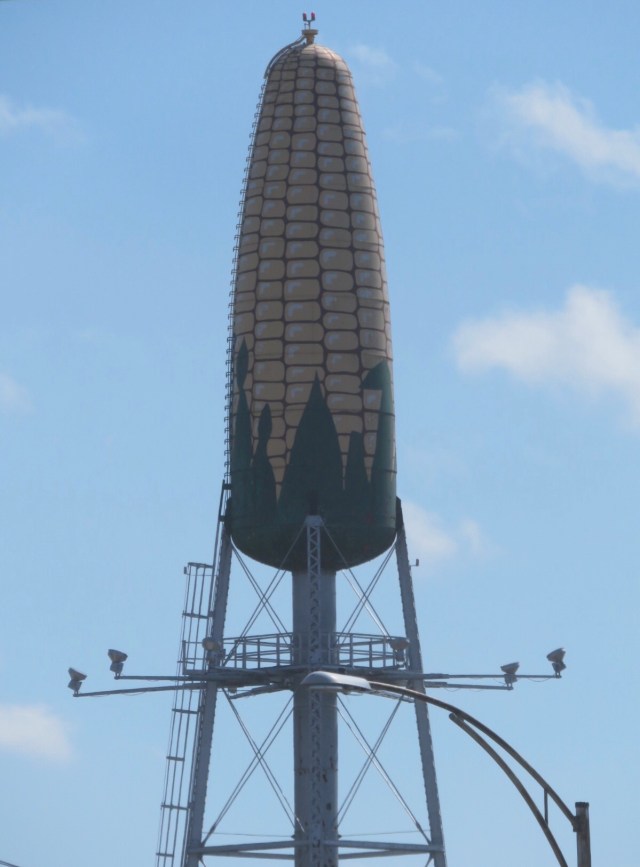
Rochester has a corny claim to fame: It’s home to possibly the only Corn Cob Water Tower in the country. It’s part of a former Libby Foods cannery, now owned by Seneca Foods. Who knows how many cans of corn were processed here? Unfortunately, Seneca announced that seasonal canning will be discontinued here later in 2018.
02AFDD8F-6B49-4268-9DEE-926E7050557C


Posted in Mayo Clinic, Minnesota, Rochester, Minnesota, Uncategorized | Tagged , , , , , | 1 Comment

Falling Waters Fifteen: Bowen and Stirling, Milford Sound, New Zealand

January, 2014

On our way to Milford Sound on New Zealand’s southern island, we passed several glacier fed waterfalls.


Milford Sound, itself, is home to two more stunning waterfalls: Lady Bowen and Stirling.

Lady Bowen Falls greets you just a few minutes after beginning any cruise on Milford Sound. This 530 foot waterfall is the tallest in the sound, and it powers a small hydroelectric plant that provides power for the Milford Sound settlement. This fall was named for Lady Diamantina Bowen, wife of George Bowen, the fifth governor of New Zealand. Governor Bowen was appointed in 1867 he is credited with reconciling the Māori to British rule, and bringing about the end of the New Zealand wars. Diamantina was a Venetian Countess, born in the Ionian Islands. She was very popular in New Zealand, and many other places, besides this waterfall, were named for her.

The Māori name for this waterfall is Hine Te Awa, meaning “girl on the river.”


Stirling Falls is the second tallest waterfall in the sound, at about 510 feet. This one drops vertically over a cliff, creating a mist. Our boat came up very close for photo ops, and everyone rushed to that side. Fortunately, the boat didn’t capsize. Legend says that the waterfall’s water makes people younger. Almost five years later, I’m still waiting for that to happen.

This waterfall was named for Admiral Sir James Stirling, a British naval officer who “discovered” the falls. He was very active in the government of Australia, but doesn’t seem to factor in that of New Zealand. He didn’t do anything to earn the name, just happened to be the first European to claim it.

The Māori name for Stirling Falls is Piopiotahi, which means “a single piopio,” an extinct, thrush-like native bird. By the way, that is also the The  Māori name for Milford Sound, and there’s a story behind the name. According to legend, a man named Māui brought a thrush with him from Hawaiki, the mythological home of the Polynesians before they spread across the Pacific. Māui challenged Hine-nui-te-po, the Goddess of Death, to a duel, the prize being eternal life for mankind if he won. Of course the goddess won, by crushing Māui to death between her thighs, and his little thrush (piopio) flew south to mourn, giving birth to Piopiotahi.


The sun was shining, which helped offset the soaking we received. It actually felt pretty good, but it was challenging to keep the lens dry when taking these photos.

Posted in Glaciers, New Zealand Travel, Waterfalls | Tagged , , , , , , | Leave a comment

Falling Waters Fourteen: Karekare and The Chasm, New Zealand

January, 2014

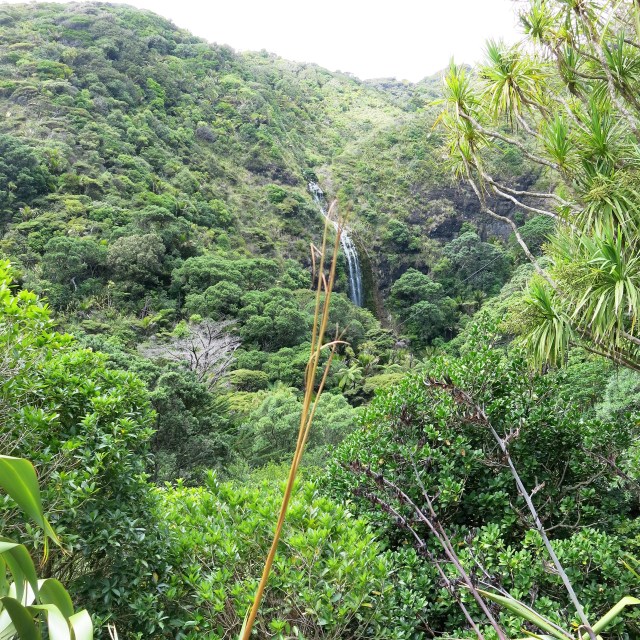
I move to the Southern Hemisphere now. Like Iceland, New Zealand is a country with many beautiful waterfalls, not 10,000, but 249 named falls. This is according to Land Information for New Zealand, the department charged with managing land. We saw only a few, as our stay was short, only a week.

Karekare Falls is located on New Zealand’s north island, about 25 miles from Auckland, or about an hour’s drive. You can see it from the road as you approach. This fall was featured in the 1993 movie, “The Piano.”

Karekare10

You can park your car on the road, or in the nearby parking lot, and take a short walk to the falls. You will walk past some lovely cascades on the way.

When you reach the end of the path, you will be delighted by the view of this 100 foot fall. It’s hard to believe this fall is so close to the road, since the area feels so secluded. Karekare is a horsetail fall, one where the water maintains contact with the bedrock most of the time, often creating a mist – the tail. This differed from a plunge waterfall like Bridalveil in Yellowstone, which drops straight from the top.

As long as you’re in the neighborhood, stop at nearby Piha Beach, a black iron-sand beach much loved by surfers.

When we were there, it was possible to hike to the top of Karekare, but that option has been closed since early in 2018 to protect against kauri dieback disease. The kauri tree was heavily logged in the 1800’s, and only about 10% of the forest remained by 1950. The wood from the kauri tree repels insects, and it lasts a very long time, so it was very popular for construction and shipbuilding. Kauri dieback has been spreading through kauri forests on the mainland, further endangering the few remaining trees.

The Chasm is well worth a stop on the way to Milford Sound on New Zealand’s southern island. The walk from the parking lot is only about .25 mile, and fairly flat with safety railings. The Chasm is on the Cleddau River, and is created when the waters force their way through a narrow, rocky valley. You can hear the roar of the falls from the road. As you walk the path, notice how the thundering water has sculpted the rocks.

The Chasm is a tumbling waterfall, more like a cascade, I think, but it is stunning in its own way, for the pure power of the water flow, and the beautiful path it has created.


Posted in New Zealand Travel, Waterfalls | Tagged , , | Leave a comment

Falling Waters Thirteen: Seljalandsfoss and Öxarárfoss, Iceland

Seljalandsfoss5

May, 2014

We certainly have seen a lot of waterfalls on our travels. Seljalandsfoss was the first one where we could actually walk behind it – pretty cool!

Seljalandsfoss (I’ve double and triple checked the spelling and I’m still not sure it’s correct) is located in the south region of Iceland, not far from Skógafoss, on the Seljalandsfoss River, and fed by one of the same glaciers, Eyjafjallajökull. It’s about 80 feet wide and drops almost 200 feet.

By the way, the Eyjafjallajökull glacier is located by the volcano, by the same name, that erupted in 2010, disrupting travel plans in Europe and the Atlantic. Currently, another volcano near this location, Katla, is being watched because of increased carbon dioxide emissions. It will erupt someday, but no one knows how soon. Of course, Iceland is the land of fire and ice, so this should not come as a surprise.

We stopped at this beautiful waterfall late in the day, giving us some beautiful (almost) sunset views. In May, the sun doesn’t set before 10pm, but we were delighted to stay up late for this opportunity. We walked up a path along the side to reach the cave behind the waterfall, and then enjoyed the view from that perspective.

There is a human-made waterfall at Þingvellir National ParkÖxarárfoss, which was created in the Middle Ages to provide water for the members of and visitors to the Icelandic parliament that met there. We actually saw the waterfall from a distance, but were treated to its lower flow when touring the park.

And, of course, there were more waterfalls along the road.

Posted in Iceland, UNESCO World Heritage Site, Volcano, Waterfalls | Tagged , , , | Leave a comment

Falling Waters Twelve: Skógafoss, Iceland

May, 2014

If you watch the History Channel series, Vikings, you will have seen this waterfall. In season 5, the character Floki sets sail alone from Norway and washes up on a strange land. In his explorations, he comes upon a waterfall that suddenly starts flowing backwards, which convinces him that he is in the land of the Norse gods, Asgard.

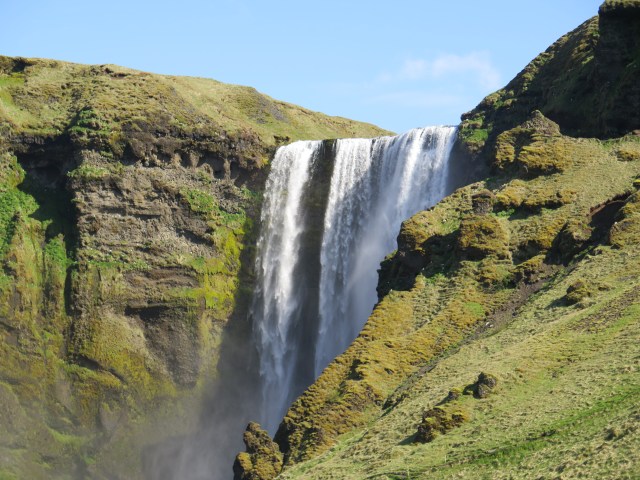
When I saw this scene, I immediately recognized the waterfall as Skógafoss, located near Iceland’s south shore, along the Southern Ring Road. Skógafoss is created where the Skógá River flows over cliffs that formed an earlier coastline. It is fed by two separate glaciers, Eyjafjallajokull and Myrdalsjokull. It is about 50 feet wide and drops almost 200 feet, with a mist that creates beautiful rainbows on a a sunny day.

Skógafoss has also featured in “Thor: The Dark World” and “The Secret Life of Walter Mitty.” It is a very popular destination for tourists and residents alike. We were impressed with its beauty even before we reached the waterfall.

If you climb to the top of the waterfall, and follow the river upstream, there are many more dramatic waterfalls. Unfortunately, we did not have time to do that. We did walk close enough to it to get fairly wet, a small price to pay for the beauty we witnessed. It’s possible to visit in the winter as well, but you do need to watch for ice.

There is a legend attached to Skógafoss, of course. It is said that a Viking named Thrasi hid his gold under the falls. Many have tried to find the gold and one young man almost succeeded. He tied a rope to the ring of the chest handle and pulled, but only managed to retried the ring. This ring was later used for a church door at the nearby village of Skógar.

IMG_0489

Iceland is home to thousands of waterfalls, as many waterfalls as there are lakes in Minnesota – yes, 10,000! This is due to frequent snow and rainfall as well as to glacial melt in the summers. We drove by several on our way to visit Skógafoss, but I can’t tell you their names.

Imagine having a waterfall in your backyard.

Posted in Glaciers, Iceland, Waterfalls | Tagged , , , | Leave a comment

Falling Waters Eleven: Gullfoss, Iceland

May, 2014 and January, 2017

Iceland in the spring and summer does not compare to Iceland in the winter. On our first trip in May, we had 21 hours of daylight, and dusk for the other three. We would lose track of the time, suddenly realizing at almost midnight that we had to get up in about six hours. Without blackout shades, we probably wouldn’t have been able to sleep. Temperatures rarely climb above 50 degrees Fahrenheit.

In January, it was almost the opposite, with only about 4 hours of daylight. We got up in the dark, had breakfast in the dark, had dinner in the dark. Even we Minnesotans were craving sun by the end of the trip. On the other hand, winter temperatures are often warmer in Iceland than they are at home, because of the ocean effect.

Waterfalls look dramatically different as well from one season to the next. Gullfoss Waterfall, meaning Golden Waterfall, is located in Southwest Iceland, on the Hvítá (White) River, fed by the Langjökull glacier. This glacial water contains a lot of sediment, giving it a brown color, and on a sunny day, it takes on a golden hue.   Gullfoss is a popular stop on Iceland’s Golden Circle. Gullfoss’ average flow during summer is about 4,900 cubic feet per second, while in winter it is only 2,800 cubic feet per second. That’s still pretty impressive, though, especially when surrounded by ice and snow.

Gullfoss is often listed as one of the most beautiful waterfalls in the world. Granted, we haven’t seen them all, but this one is probably our second favorite…so far.

IM000098.JPG

In the early 1900’s, some foreign investors wanted to build a hydroelectric powerplant to harness the power from Gullfoss. Sigríður Tómasdóttir, daughter of Tómas Tómasson who owned the land where the waterfall was located, protested vehemently. She knew that such a plan would destroy Gullfoss forever. She threatened to kill herself by throwing herself into the waterfall. Sigríður walked 75 miles barefoot, with bleeding feet, from Gullfoss to Reykjavik to protest the powerplant. She won her battle and Gullfoss retains its pristine beauty to this day, for which we are very grateful. There is a memorial plaque of Sigríður that depicts her profile at the top of the falls. She does look determined!

The Hvítá river flows down into a wide curved three-step “staircase” and then plunges in two stages (36 feet and 69 feet) into a 105 feet deep crevice, creating quite a bit of mist. The crevice is about 66 ft wide and 1.6 miles in length, and extends perpendicular to the flow of the river. There are several viewing locations, both above the falls and alongside them.

May, 2014

January, 2017 – Note the frozen falls in the lower left hand photo.

It’s become quite popular to get married in Iceland, even in the winter. We saw several couples getting wedding photos at Gullfoss and by geysers when we were there in January. I felt sorry for the freezing brides in their sleeveless dresses. However, if you get married in Iceland, you will have some of the most stunning backgrounds in the world for your wedding photos.


Posted in Iceland, Uncategorized, Waterfall wedding, Waterfalls | Tagged , , , , | Leave a comment