Mashpi Dragonfly and Waterfalls

Thursday afternoon, January 10, 2019

Mashpi Lodge has a an open-air cable car ride – The Dragonfly, which carries its passengers on a 45 minute ride over the forest canopy, at up to 650’ above the ground. The setup looks similar to a ski lift, with two main stations and six towers. At one point, riders can disembark to hike to a waterfall and enjoy a swim. The ride is about 1.25 miles each way, and the cars move at about 160’ per minute, giving the riders plenty of time to examine the trees and plants below and around them.

As we rode above the canopy, we enjoyed views of the river flowing through the forest, a couple of waterfalls,  and all of the vegetation, including the Mashpi Magnolia tree. We could see our lodge and the Life Center from a distance.

After the Dragonfly ride, we took a hike to one of the waterfalls. It was tough going, down a narrow, twisting and muddy path, but well worth the effort. The return hike back up gave us a workout that we could still feel the next day.

Posted in Ecuador, International Travel, National Geographic, South America Travel, Waterfalls | Tagged , | Leave a comment

Mashpi Cloud Forest

Thursday morning, January 10, 2019

What’s a cloud forest? How does it differ from a rainforest? These were questions we had after coming to Mashpi. The area feels and looks like some of the rainforests we’ve visited. The difference is that a cloud forest is almost always covered in fog. Low-level clouds are frequently at the same altitude as the plants. We rarely see the sun here, and it rains most days for an hour or so. Since we are close to the equator, the temperature doesn’t vary much throughout the year, between 71-75 degrees. This provides a long growing season so the trees and plants grow quite tall and large.

This morning, we visited the Hummingbird Garden at Mashpi Lodge. Of the 130 species of hummingbird in Ecuador, 22 can be found here. Hummingbirds have the fastest metabolism of all warm-blooded animals, their hearts beating more than 1,200 times a minute. They can hover like a drone as well as fly in all directions – forward, back, side to side, and all around. This was the first time we had ever seen them perch, although they don’t sit still for long. When they do, they move so fast that they may already be out of sight by the time the camera fires.

We were told the names of some of the hummingbirds that came to the garden, but I don’t remember most of them. I can remember, however, how delightfully mesmerizing and beautiful they are. Unlike the mostly brown ones we see at home, these are blue, green, red, yellow, black, and all combinations of colors. As I watched them flit from tree to feeder and back again, I couldn’t help but wonder if they are the inspiration for fairies.

Besides filling the hummingbird feeders (which are quickly emptied), the staff put out pieces of banana, and where there’s nectar and fruit, there will be other creatures wanting to get their share, including a squirrel that grabbed an entire banana and took it up into a tree.


Posted in Cloud Forest, Ecuador, National Geographic, South America Travel | Tagged , , , | Leave a comment

Quito to Mashpi: 70 miles in 3.5 Hours

Wednesday, January 9, 2019

We left Quito at 9am to head to Mashpi Lodge. The lodge is only about 70 miles away as the crow flies, but it takes 3.5 – 4.5 hours to traverse the 135 miles of winding road to get there, descending about 6,000’ and crossing the equator three times. Ecuador’s topography makes it difficult to get anywhere in a short time.

On our way, we stopped at Tulipe Archaeological Site. This was the home of the Yumbo culture between 800 and 1660 AD. It’s speculated that they left the area after a major eruption of Pichincha Volcano in 1660. About 2,000 pyramids and mounts have been unearthed here. Surrounding roads show that they regularly traveled to the coast, probably trading with other people along the way. The roads were dug several feet into the ground, so that they were partly sheltered.

The Yumbos built ceremonial pools that were located to align with certain points in the sky. Several have been excavated at this site.

Mashpi Lodge is a National Geographic Unique Lodge of the World, meaning that it is a boutique hotel in an extraordinary place with a demonstrated commitment to sustainability, authenticity and excellence. The lodge had to go through a rigorous evaluation process, and must be committed to protecting the cultural and natural heritage, embracing sustainable tourism practices.

The lodge is nestled on a plateau in the Andes, at about 3,100 feet above sea level. The large windows make us feel like we’re staying in a treehouse.

When we arrived, we received a short orientation, then set out for our first activity: a visit to the Life Center. It was about a 1.5 mile hike through Jurassic Park.

At the Life Center, we were able to observe several birds and animals in their natural habitat. Guides put out bananas to attract the birds. An agouti and a tayra also joined the feast.

There is also a butterfly farm here, with several species of orchid as well, where we learned about the metamorphosis from egg to butterfly. Most of the butterflies here are the large Owl butterfly, with its fluorescent upper wings that contrast with the brown, black and white under wing that are most often displayed. Their caterpillars look like something out of Aliens.

Owl Butterfly

So much beauty in one place. We were definitely exhausted by the end of the day.

Posted in Archaeology, Butterflies, Ecuador, Hummingbirds, National Geographic, South America Travel, Wildflowers | Tagged , , , , | Leave a comment

Quito City Tour

Tuesday, January 8, 2019

We enjoyed a tour of central Quito this morning. The day was a bit cloudy, with a drizzle that turned into a heavier rain by afternoon. This is the beginning of the rainy season for Ecuador, and our guide was very happy to see the rain as the city has been very dry. With just a little rain, the flowers bloom and the plants and trees green up.

Our first stop was at the top of El Panecillo, a hill of volcanic origin, located south of central Quito, with panoramic views of the city. It’s also a favorite place to fly kites, and we did see a few trapped in the trees along the way. The hill provided a good view of the Basilica del Voto Nacional, a neo-Gothic building constructed over a period of almost 100 years. It seems many of Quito’s churches took several decades to be built. We had a good view of our hotel which is situated across from San Francisco Church and plaza.

There is a 250’ monument to the Virgin Mary at the top of El Panecillo, designed by Agustín de la Herrán Matorras in 1976. It was inspired by a statue in the San Francisco Church called The Dancing Madonna because she is not standing in a prayerful pose, but rather a joyful one. These Madonnas are said to be the only ones in the world with wings.

We paid another visit to the San Francisco Church, then made our way to the Church of La Compañia de Jesus, built by the Jesuit priests. Construction of this church happened over a period of years from 1605 to 1765. The interior design is baroque, very ornate with carved stone and wood covered in gold leaf. No photos were allowed.

We also stopped at Independence Square (Plaza Grande), home of Carondelet Palace (presidential palace built in the early 1800’s), the seat of Ecuadorean Government. On the other side of the square is the municipal government headquarters. On a third side is the home of the Archbishop of Quito.

The center of the square is graced by the Independence Monument which was erected in the early 1900’s. There were many people enjoying the beautiful flowers and trees  today.

We walked down a few of the streets and visited a local market. We always enjoy visiting the markets since they give a better sense of the foods and culture of the countries we visit. At this market, there is a large section devoted to natural medicine. Customers come here to get a “prescription” for whatever ails them, usually a concoction of herbs that may be rubbed on the body steeped for a tea or bathing. We saw one young child being “cleansed” with herbs that were being rubbed on her.

There were no flies at this market, apparently there isn’t enough oxygen at this altitude for them – one good reason to live here. Another reason – there are no mosquitoes here! Among the interesting products for sale were cow’s hooves, used in a stew enjoyed by the local people.

Traffic is very heavy in Quito, and the streets are quite narrow in the older part of the city. There are many buses bringing people in to work, and the streets are barely wide enough to accommodate them. The population of the city is about 2.3 million and another 300,000 come into the city for work. The daily commute has become long and frustrating, so the city decided to build a subway system, the Quito Metro, to alleviate the problem. There will be 15 stations running from south of the city to north of the city, with one stop across from San Francisco Square. Construction began in January, 2016, and the tunneling was completed this past October. The city hopes to have it on line by July, 2019.

Posted in Ecuador, South America Travel | Tagged , , , , , | Leave a comment

Quito, a First World Heritage Site

Monday, January 7

In 1978, Quito, the capital city of Ecuador, became one  of the first cities to be named a World Cultural Heritage Site by UNESCO. Located about 15 miles south of the equator, with an elevation of 9,350’, Quito is the second-highest capital city in the world. (LaPaz, Bolivia is the highest, at 11,942’.)

                                Views from the terrace on top of Casa Gangotena

Quito is located on the eastern slopes of Pichincha, an active volcano in the Andes. An eruption in 1999 covered the city with several inches of ash, and a small eruption in 2000 killed two volcanologists who were working on the lava dome.

This area has been populated for over 10,000 years. The ancient village of Cotocollao (1500 BC) was located in NW Quito, and covered about 64 acres. The Cotocollao people extracted and exported obsidian.

Spain invaded in 1534 and founded the city of Quito. In 1556, it was named “Muy Noble y Muy Leal Ciudad de San Francisco de Quito, the Very Noble and Loyal City of San Francisco of Quito. Wouldn’t that be a lot to put in your address book?

The residents of Ecuador made a move for independence in the early 1800’s, achieving their goal in 1822, under the leadership of Simón Bolivar. Political unrest, however, continued into the mid-1900’s, with numerous uprisings and battles.
Quito’s historic center has been well preserved, and it’s considered to be one of the most important historic areas in Latin America.

Our hotel is located across the street from the Church and Monastery of St Francis, or Iglesia y Convento de San Francisco. Facing the San Francisco Plaza, the convent was built between 1536 – 1604, and includes three churches and several courtyards.

The exterior of the San Francisco is Late Renaissance in style, while the interior is more Baroque, with Moorish influences. The church is very ornate, with elaborate carvings, coffered ceilings, and gold painted altars. The church went through an extensive renovation between 2000 – 2010.

In 1932, the Franciscan Community purchased a pipe organ that was brought over from Spain. To make space in the choir loft, twenty choir stalls were removed. Sixty-one remain.

The convent houses a museum of over 3,500 pieces of colonial art, much of it religious. Several pieces are currently being restored.

Continuing our quest for Ecuadorean culture, we stopped in at Yumbos Artisanal Chocolate shop, where we sampled several chocolates of varying percentages of cocoa, from 60% – 100%, plus some with ginger, chili peppers, or coffee. I loved the coffee flavored one, but opted to purchase a couple 85% bars, as well as some cacao nibs to brew for tea (can’t wait to try it), and a brick of 100% cocoa for baking. They also have some delicious syrups and sauces, plus cacao butter soaps, lip balms and cosmetics.  Yumbos is a small factory that uses cocoa that has been designated “fine and aromatic.” All chocolates are made by hand without artificial colors, flavors or preservatives. Yumbos exports chocolates to Canada, and you can order them on line from Nala Foods of Hamilton, Ontario.

I think we’re going back tomorrow to get some more chocolate bars.

After dinner, we headed up to the terrace to see the city lights. It was absolutely gorgeous.

Posted in Chocolate, Ecuador, South America Travel, UNESCO World Heritage Site, Wildlife Refuge | Tagged , , , | Leave a comment

Getting in Touch With Nature in Ecuador and Peru

Sunday, January 6, 2019

We flew from Minneapolis to Quito, Ecuador today, the first leg in another voyage of discovery. We will spend a few days in Quito, then head to the cloud forest area of Ecuador. After that, we head to the Galápagos, then the upper Amazon of Peru, and finally the Lake Titicaca area. We’re excited about the opportunity to see so many birds, butterflies and other animals in their natural habitat. I’m personally excited to sample the chocolate for which Ecuador is known. Then there are the textiles and jewelry to investigate.

As usual, the worst part is getting through the airport. The security lines at MSP were horrendous, even the Precheck lines. I’ve read that some TSA agents are calling in sick during the government shutdown. Some are working other jobs during the shutdown so they can pay their bills. Can’t say that I blame them. Granted, they will be paid after the shutdown is over, but that doesn’t put food on the table today!

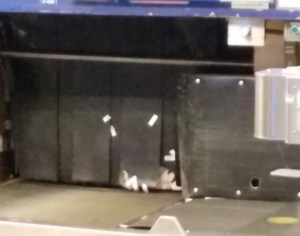
When we checked our bags, we noticed that the door flaps over the conveyor belt was covered with baggage tags (the ones that are adhered to the side or top of your suitcase). I wondered if that is the reason why some bags get lost.

20190106_0928025280833708311803560.jpg

I found an article that actually explains the entire baggage handling process:  “How Baggage Handling Works” on the website HowStuffWorks. I won’t explain the process here (although I did find it fascinating), but I will say that I feel more confident about the effectiveness of the whole baggage handling process.

When we did reach security, my backpack had to be x-rayed three times! After the second time, the agent put it in a different bin. How can a different bin make a difference??? But it did. I think it’s time for us to look into CLEAR.

Everything was smooth after that. We arrived in Quito a little after 11pm, and at our hotel shortly after midnight.

We are staying at Casa Gangotena, a beautiful hotel with only 31 rooms, and located in the heart of the city, across from San Francisco Convent and Plaza. The building was a mansion owned by the Gangotena family. It was purchased in 2000 by Metropolitan Touring, who converted it to a boutique hotel. The building is included in Quito’s cultural heritage inventory.


Posted in Air Travel, Ecuador, Peru | Tagged , , , | Leave a comment

The Joy of Lists!

January, 2019

Several years ago I started using a checklist for our trips. I won’t say that it prevents all problems, but it certainly reduces them. I use an Excel spreadsheet ( reflects my background as an accountant/business manager). accountant 09I’m sure there are many other options available, including apps for your smartphone.  I created a template, which gets revised regularly, based on our experiences. I’ve added sections for international travel, for cold and hot weather climates, and for vacation rentals or timeshares. I can pick and choose which categories to include.

I save the template to a new sheet and then add dates and destinations. I often refer to old sheets when planning a similar itinerary.

The list includes things like reservation and ticket information, travel books, travel planning docsmedications, toiletries, electronics and their respective chargers, power adapters, passports, backpacks, binoculars, toothbrushes, and so on. I even list the clothing we bring, just in case our luggage gets lost.

Here are a few things we consider essential to our travels:

Expandable tote bag – I use a Longchamp foldable nylon bag, which I call my expando-bag. In fact, I wore the first one out after about ten years. They are waterproof, come in several sizes, and fold up to a size that fits easily into your suitcase. It can work as an additional checked bag if you are successful in your shopping.

Backpacks – I have a couple. I use a firm leather one in lieu of a purse for air travel. It holds my travel documents, puzzle book, iPad, and anything else I’ll want on the airplane, plus it leaves my hands free.

The other backpack is a Longchamp bag. This one is foldable and waterproof as well, and almost impossible for anyone to open when it’s on your back. The drawstring and straps are of one piece, tightening up when you are wearing it. Apparently, the nylon bags are no longer available, but the feature is available in leather (much more expensive).

Go Girl – This little kit puts a woman on equal standing as a man, when she’s in the woods, or stranded somewhere without access to a toilet.

Electrolyte Powders – These can be mixed with a bottle of water to prevent heat exhaustion, dehydration, or combat altitude sickness. Gaterade, Propel and G2 all carry these products.

Hand Sanitizer or Alcohol Wipes, Neosporin, Immodium

alcoholic beverages 02Rum Runner Flasks – If you have some leftover wine or alcohol, but don’t want to pack a glass bottle, simply pour the liquid into one of these plastic flasks. Some people have been known to use them to smuggle alcohol onto a cruise ship. I confess to knowing some of these people.

Stain Remover and Wine Remover – Don’t forget the wine opener as well.

Lip Balm and Body Lotion – Air travel is notorious for drying out the skin.

Hats and Suncreen

Umbrellas

Portable Charger – We use Anker power banks. They come in several sizes, depending on your needs, and are quite inexpensive. You can charge one or more devices, usually a couple of times before needed to recharge the Anker.

Reading Materials – You never know when you might be stuck waiting for a delayed flight.

Satellite Communication Device – This is a device that keeps you connected around the globe. You can send a text message with your location to family and friends so they can track your travel, or you can send an SOS if you run into difficulty, like getting lost in the desert, being stranded in the middle of the ocean, or any other emergency. There is a small monthly fee for the service, which is more than offset by your peace of mind. We have used both DeLorme inReach and Spot Satellite Messenger.

And now, I’m ready for my next trip. I hope you can join me.
 

Posted in Air Travel, International Travel, Road Trip, Train Travel, USA Travel | Tagged , , , , | Leave a comment

Who Loves to Fly? No one!

December, 2018

My husband and I love each other, and we love traveling, but there are some aspects of AIRPLANE - BOARDING 3travel that can test the bounds of that love. For us, the most challenging part of any trip is getting there, especially if air travel is involved. Once we’re at our destination, we can relax and begin enjoying each other’s company again. We recently discussed this, with the goal of making air travel less onerous. Here are some of the things that cause the most stress for one or the other, or both, of us, plus the steps we take to reduce that stress:

  • ESCAPING CROWDCrowds: We both hate them, but I can navigate them better, so I take charge and find the paths of least resistance. My husband finds this more challenging, so we hold hands to be sure we don’t lose each other as I weave my way through. It may not reduce the amount of the stress, but it does reduce the duration.
  • Noise: This is especially stressful for me, and I can (usually do) become very short-tempered. We used to go to a restaurant for a drink and/or a meal, but for me, that just concentrated the noise into a small place. We agreed to spend a little bit more to visit an airport lounge, where we could both relax.
  • Slowly moving lines: I think we can all agree that the security line is the worst. We signed up for Global Entry a few years ago, which also confers TSA Precheck privileges. The Precheck line moves much more quickly than the regular lines. We usually don’t have to take our shoes, belts or jackets off (unless there is a lot of metal on them). We don’t have to remove our electronics or liquids from our bags (3-1-1 liquids rule still applies).
  • Last-minute changes or delays: Not much we can do about this, but we can check the departures board for gate changes. We’ve also signed up for flight notifications from the airline, and have the airline’s app on our smart phones (which also tracks our DELAYED FLIGHTbags so we know when they’ve hit baggage claim). If the delay is weather-related, the airline has no obligation to provide meal or hotel vouchers. If the delay is mechanical, they may provide vouchers, but you probably have to ask for them. Ask the gate agent for regular updates, but be aware that he/she might not really know what’s going on or how long it will take. If you can get on an alternative flight, take it! Just remember that people with connecting flights will get priority. The airline may have a rule regarding how long to wait before bringing in another airplane (ask the gate agent about this). We were on a flight recently that was delayed for eight hours before the airline decided to bring in another plane. Do be patient and polite with the gate agent. It’s not his/her fault that the flight is delayed. If you want to be treated with respect and consideration, remember it’s a two-way street.

Other things we do to make the flight easier:

  • Purchase the highest class of service we can afford. Granted, this eats into the travel budget, so it might mean we skimp somewhere else. We are more willing to take a lower class of service for a short flight, two hours or less. If you need or want to recline, make sure your seats have that capability (some exit row seats don’t). If you want to keep your carry-ons handy even during takeoff, stay away from bulkhead. The website Seat Guru gives passenger reviews of seats on the airplane. Simply enter your airline, flight number, and date to pull up a seat map. Stay away from red colored seats as they are considered bad. For those colored yellow (be aware there are some issues), or a combination of yellow/green, click on the seat to read the comments. Green are considered good, and white are standard.
  • Board as early as allowed. This allows us time to get settled in before the lines back up. Also, it’s much easier to find space for our carry-on bags if we’re among the early boarders.
  • Purchase bottled water or fill our own after security. I get very dehydrated on flights, and I don’t want to wait for a small glass of water when I’m thirsty.
  • Bring a few snacks in case we do encounter a delay, and don’t want to purchase what the flight has on board.
  • Load movies, e-books, television shows on your smartphone, iPad or other tablet. Bring your own headsets (you can always use them to discourage an overly chatty person sitting next to you, or muffle the wails of a crying baby). Make sure the movie or show can be watched off-line. Netflix streaming service, iTunes and Google Play have that option (and there are certainly others). Just be sure you have downloaded or activated them while you still have access to WIFI.
  • We haven’t traveled with babies for many years, but I do recommend bringing a BABY CRYING 04bottle to give them when the airplane is climbing or beginning its landing procedure. Sucking on the bottle will help your baby’s ears equalize, reducing any discomfort (plus it keeps baby hydrated). A pacifier can work well too. For children over age 3, bring some chewing gum.
  • Finally, grin and bear it!
Posted in Air Travel | Tagged , , , , , , | 4 Comments

Dengue and Malaria and Zika, Oh My!

December, 2018

It’s virtually impossible to avoid picking up some illness when traveling. The passenger SNEEZERin front of, behind, or beside you hacks throughout the entire 8 hours of the flight. Fellow cruise passengers are sneezing all over the buffet. You really want to try the kava at a South Pacific ceremony – it would be impolite to say no. What harm can a margarita made in Mexico do to you, unless it’s made from tap water?

MOSQUITO 8The mosquitoes back home might not bother you, but those in Egypt or Costa Rica could cause itching that keeps you awake all night, plus give you some exotic diseases. Maybe you don’t have biting flies back home, but parts of Africa have tsetse flies, and they also carry nasty diseases.

As soon as you know you will be traveling to a foreign country, check the Centers for Disease Control and Prevention website for health information. Enter the country name, and you will get a list of recommendations for immunizations and/or medications. It’s important to do this early because some immunizations need to be done several months before travel. Some require a booster after a few months. If you are traveling to areas where Yellow Fever is a risk, you may need to provide proof of that immunization before being allowed back into the US. We carry our Yellow Fever cards with our Passports.

By the way, Yellow Fever vaccine has been unavailable in many locations in the US. You may need to travel a few hours to get to a clinic that has it. An interactive map on the CDC site will show you where the closest clinic is.

If you have the option, visit a doctor who specializes in travel medicine. He/she will be able to provide more advice about the areas you will be traveling to, and will probably have the necessary serums and medications on hand. Remember to ask for altitude sickness and motion sickness medications or treatments if you are susceptible to either of these.

SAILOR - SEA SICKPack the Immodium. Ask your doctor for a prescription for Cipro. Stock up on some 41nU2XQVEoL._AC_UL130_electrolye powders like Gaterade or Propel (G2 is a low-cal option), available in cartons or packets. All of these items can help if you get diarrhea.

We picked up a Norwalk type virus on a cruise, just because I wanted to participate in a kava ceremony in Fiji. Big Mistake. We went a week without eating because everything went through us, even water.  Our primary tourist attraction became the toilets, since we often had to race each other to get to them. Dehydration was a real concern, for which the electrolyte powders can help (assuming you have access to clean water.)

The electrolyte powders can also help with altitude sickness (which might feel like the worst hangover you’ve ever had), and with heat exhaustion (which could lead to collapsing in a South African airport, on the verge of heat stroke), as well as with dehydration. None of these are good for your health.

1ef44716-c119-494b-8be6-b11da7930743_1.c04c382aab1dc17d5b33117d1a728daeSpray your shirts, pants and socks with Permethrin Insect Repellent Treatment. This is powerful stuff, so read the directions before applying. Bring Deet. Insects consider me to be a delicacy so I also  pack some mosquito nets to cover our hats and faces. By the way, Permethrin is effective against ticks, so you might want to spray your gardening and hiking clothing at home too.

Many people take Airborne or Emergen-C before and during air travel. Personally, I think it helps me, but my husband doesn’t think it works for him. Hard to know how effective these things are, but what do you have to lose?

Seriously, there is room in your suitcase for these things. You’ve been looking forward to this trip for a long time – make sure you can enjoy it.


Posted in International Travel, Uncategorized | Tagged , | Leave a comment

Where’s My PASSPORT!!!???

LOST TICKETDecember, 2018

Or, perhaps I should ask “where’s my driver’s license?” I’ve actually lost my license twice when traveling.

The first time was on Bourbon Street in New Orleans. I was sober at the time, but when purchasing something to remedy that situation, my license fell out of my wallet. Panic!! I called my neighbor and let her into my house (Control4 Home Automation with a smartphone app), and told her where my passport was. She took it to my office where they overnighted it to me. Fortunately, a very nice person found my license and mailed it back to me.

The second time was in Los Angeles. I discovered the loss when standing in line for security at LAX. Panic!! No time to have the neighbor come to my rescue. I learned that it is possible to board the airplane, but you will go through a more thorough search and will be required to answer some questions. If the TSA agent can confirm your identity, you will be allowed to fly.

Now, my passport goes with me whenever I fly, so I have a backup plan if I lose that license again. Amtrak also requires an ID, so it’s just best to bring it wherever you travel.

As we prepare for our next overseas trip, I’m busy figuring out what we need to pack, where we need to be and when, how to survive many hours in flight, all with minimal stress. Good luck with that, right?

Over the years, we’ve learned a few things to make it easier, which I’m sharing with you (if you are interested, that is.)

PASSPORTS:PASSPORT 6

You may already know that many countries require your passport to be valid for at least six months past your travel date. Did you also know that some countries require a minimum number of blank pages for entry. For instance, when we traveled to South Africa, we needed two pages for each entry and exit. Since we entered and exited twice, that meant four blank pages. You can no longer order extra pages for your passport, so if you’re running short, you will need to renew it.

Consider making a photocopy of your passport and storing it in your wallet or another place separate from your real one. In some countries, the UK for one, hotels are required to record your information, which they can get from a photocopy, so you might want to bring a few copies along. The hotel may ask to keep your passport, but they should be able to get by with the photocopy. Also, give a copy to a trusted friend or family member in case of emergency. Finally, we keep a copy in Google Drive so we can access it from anywhere with cellphone or WIFI access.

GLOBAL ENTRY VS TSA Pre✓®

TSA Pre✓® costs $85 for 5 years, but is only good for travel within the US, wherever TSA Pre✓® is available. Global Entry costs only $15 more, is also good for 5 years, and it is good for travel within the US and for re-entering the US. It also works in several few international airports, check on-line to see if you can take advantage of that benefit. Global Entry gives you the same TSA Pre✓® benefits, so the price difference is very little to pay if you will be traveling internationally. When entering through a major airport, like MSP, you go to a kiosk at passport control where you scan your passport and your fingerprints. Once your identity is confirmed, you continue on to customs, without stopping at the passport desk.

You can apply on-line for Global Entry or TSA Pre✓® at the U.S. Department of Homeland Security You will be contacted within 24 hours to set up an interview appointment at an enrollment center. Ours was at MSP airport. They take your fingerprints, and ask a few questions. If approved, you will receive your Global Entry card in 4-6 weeks.

There are also programs for frequent travel to Canada (Nexus) or to Mexico (Sentri). Both of them include TSA Pre✓®, when flying, and each gives you expedited pedestrian or vehicle entry across the applicable border. We have not tried either of these.

PEOPLE STANDING IN LINE 1It really is gratifying to walk past the lines of people waiting to see a border agent.

BTW: If you have to replace your passport before the Global Entry expiration date, you will need to update your profile on-line.

MSP is one of about 40 airports that also offer CLEAR, a biometric service using your irises and fingerprints. It allows you to go to a much shorter screening line to get to security. It doesn’t replace TSA Pre✓® or Global Entry, but it does get you to the head of the line much more quickly when traveling in the US. You will still need at least TSA Pre✓® to avoid taking off your shoes and removing your laptop. Clear costs $179 per year, probably worth it for frequent travelers, and certain credit cards will give you credit towards the fee. Up to 3 family members can be added for $50 each. We haven’t opted for it yet, but if screening lines get too long, even with TSA Pre✓®, we may give it a try. UPDATE: We did purchase CLEAR in late 2019. We love it!

COMMUNICATION:

Ask your cellphone provider if there is coverage in the countries where you will be traveling. If not, consider purchasing a SIM card when you get to your destination. If you have WIFI access, there are quite a few apps that let you call, text, even video chat without additional fees. We’ve used both Google Hangouts and WhatsApp.

We have not used any translation apps, but there are quite a few out there, and they might be worth looking into.

GETTING AROUND:

Uber is everywhere. If you haven’t already tried it, download the app and take a ride before you go so you can see just how it works. We’ve used it in several cities with very few mishaps. You prepay for the ride (tip included, but you always add more). There are a few options regarding vehicle size, shared rides, etc, that you can select if you wish. You will be notified of your driver’s name, the type of vehicle he/she is driving, and car license, so you know what car to get into. You can also track your vehicle’s approach on your phone, which is especially helpful in busy traffic.

I did have one issue that I reported to Uber (the driver drove through a stop sign), and the fare was refunded. I wasn’t expecting a refund, simply wanted them to know about a safety concern. Great service!

We haven’t tried Lyft yet. That service is widely available in the US, but not internationally except for Ontario, Canada.

If you want to use local public transit, check out the Transit app. It works in most large US cities, and it’s available in several cities in Canada and Mexico as well as overseas. This app will give you information about all of the local transit options (bus, subway, metro, light-rail, etc.), along with their schedules. Simply enter your destination to find the best methods to get there from your current location. You can also find bike sharing locations.

If you ever visit downtown Minneapolis, there is an app for the skyway system, called SkyWayNav. This link is for the android version. I wasn’t able to find an iPhone version. It’s not perfect, but you won’t mind too much when the outdoor temperature is 20 below!

CURRENCY:

It’s nice to have some local currency for incidentals. Your bank might be able to purchase some for you ahead of time, or you can look for an ATM when you arrive at the airport. I usually try to bring some Euros home with us since we will probably travel to Europe in the future.

On one trip to Italy, I forgot to stop at the ATM in the airport. I had about 45 Euros in coin, which was enough to pay our driver, but not enough for a tip. I’m sure our driver didn’t appreciate getting a handful of coins, nor getting stiffed for a tip. It was embarrassing! Our hotel used that driver fairly often, so I was able to leave a tip for him the next day.

CREDIT CARDS:

Use a card that doesn’t charge foreign transaction fees. There are several out there. Frequently, you can get better exchange rates through the card than you can at a local exchange bureau. Be sure, though, to contact the credit card company to let them know which countries you will be traveling in so your card doesn’t get shut down for fraud concerns. Yes, this has happened to us, though not overseas. We use American Express for most purchases, but also bring a VISA or MasterCard for those few places that don’t accept AMEX.

That’s enough for today. Happy travels!


Posted in International Travel | Tagged , , , , , , , , | 1 Comment